
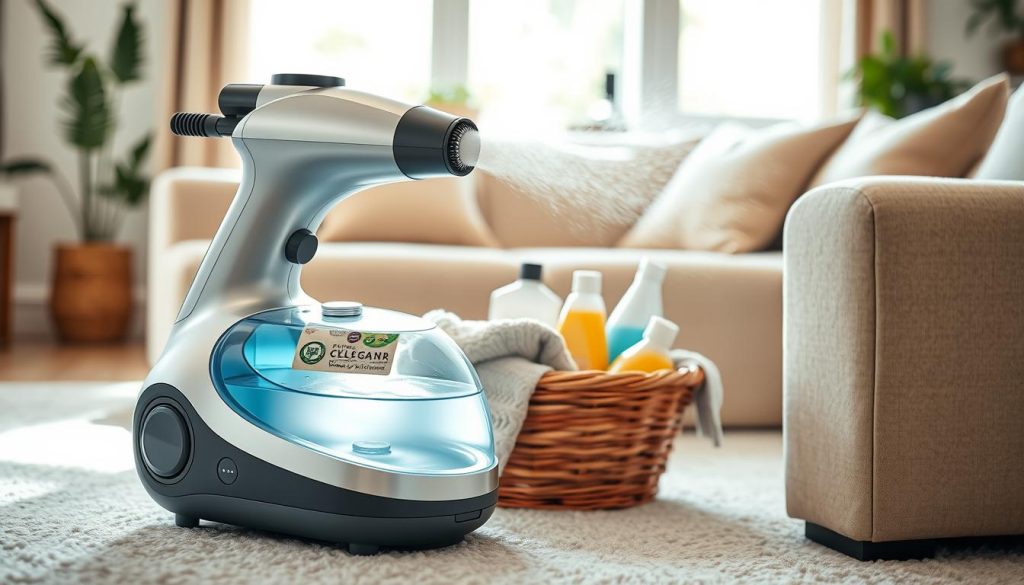
We introduce what a sofa steam cleaner machine is and what people often mean by it. In Singapore flats, effective cleaning means removing spills, pet hair and dulling without leaving marks.
We clarify that steam devices and spray-extraction units solve different problems. We match the right tool to the right mess rather than oversell one method.
Our roundup tests real-life stains: snack crumbs, drink spills and tired cushions. We compare brands you can buy locally — including Shark, Bissell and Dirt Devil — using practical criteria.
We focus on effectiveness, ease of use, portability and maintenance. We also explain how fabric type, flat size and storage shape which option suits your home.
Readers will learn how to prepare safely, follow a gentle upholstery cleaning process and maintain their kit so it keeps performing between uses.
Why we recommend regular upholstery cleaning for Singapore homes
A simple routine of upkeep makes upholstery last longer in humid, busy homes.
Loosening stubborn dirt to keep fabrics looking good for years to come
Daily use, spilled food and Singapore’s humidity all make upholstered items look tired faster. Regular light cleaning stops dirt from packing into fibres and becoming stubborn stains later.
Removing pet hair, allergens and mites from fabric surfaces
Fabric traps pet hair, dust and microscopic mites that affect comfort and health. We recommend weekly vacuuming with an upholstery nozzle — turbo nozzles help lift hair and mites from deep pile.
Extending the lifetime of furniture, armchairs, mattresses and car seats
Routine care protects cushions, armchairs, mattress covers and car seats so they perform well for years. Light, frequent attention saves time compared with fighting set-in marks later.
- Practical cadence: a quick vacuum weekly and a deeper clean periodically; increase frequency with pets or young children.
- Hygiene first: regular upkeep reduces allergens and keeps rooms fresher.
- Controlled moisture: brief, targeted cleaning and correct drying avoid water damage and odours.
For more on when humidity demands extra care, see our guide on upholstery cleaning in Singapore and practical steps for deep cleaning at home with a carpet extractor in this walkthrough: how to clean upholstery with a carpet.
Our testing-inspired criteria for choosing the right machine
To choose the right kit for a Singapore home we measure how well each device reduces visible stains and odour in one pass.
Effectiveness on red wine, chocolate and grease. We define effective cleaning as clear stain reduction, less lingering smell and fewer repeat passes. Tests use real red wine, melted chocolate and butter-type grease to compare results in under ten minutes per spot.
Ease of use in tight spaces. Compact living rooms need short hoses, nimble nozzles and attachments that reach cushion tufts and narrow gaps. We note whether a nozzle allows precision spray and suction without contorting the hose.
Portability and storage. Weight, a firm carry handle and neat cord or hose organisation matter in small flats. Good design saves time when we move between rooms and stow gear after a quick clean.
Water tank design and dirty water handling. Separate clean and dirty water tanks are essential. We favour visible dirty water, clear fill lines on the water tank and an emptying action that is fast and tidy mid-clean.
Maintenance features that reduce chores. Self-clean cycles and rinse-through hose tools—like the HydroRinse style—cut the “I’ll do it later” excuse. Removable attachments that rinse easily help prevent smells and blockages.
- Setup signals: clear fill lines, intuitive controls and stable tanks.
- Performance signals: visible stain lift on red wine and chocolate with minimal passes.
- Usability signals: hoses that don’t kink and nozzles that sit flat against fabric.
Sofa steam cleaner machine vs spray extraction vs sprays: what works best
Selecting between hot-detail, extraction and spray methods comes down to scope: spot, deep fibres or quick touch-ups.
Detail nozzle and microfibre for spot work
Where it excels: small, localised spots. Angle a detail nozzle rather than holding it vertical and press a microfibre cloth to capture residue as it lifts.
Check fabric heat sensitivity first. Some textiles will discolour or shrink under high heat.
Spray extraction for reaching deep fibres
Spray extraction sprays a measured water and detergent mix into the pile, then vacuums it out. That controlled spray-in plus suction-out is the best way to lift soil from deep fibres and gives a quicker dry than hand washing.
Sprays for quick marks and minimal setup
For tiny marks, a trigger spray is the fastest option. It needs more manual agitation and may not shift older stains, but it is the easiest remove when time is short.
- Plain terms: choose sprays for fast touch-ups, detail nozzles for precise spots and extraction for a full deep clean.
- Trade-offs: tanks and upkeep for machines; scrubbing and less lift for sprays.
- Scenarios: fresh spill on a cushion — detail or spray; whole-cushion refresh — extraction; car-seat snack mess — a compact cleaner or spray, depending on severity.
Before we clean: fabric checks, prep and stain triage
Good results start with a short pre-clean checklist that protects fabric and speeds drying. We inspect tags and test a hidden area before any wet work.

Reading care codes and choosing the right method
Look for W, S, W‑S or X on the label. W means water-based solutions are fine. S asks for solvent products. X needs professional attention.
Vacuum first, then treat
We remove crumbs and grit with a vacuum and an upholstery nozzle to avoid abrasive damage during wet cleaning.
Act fast on fresh stains
For fresh stains, blot with white cloths. Never rub — rubbing pushes liquid deeper and can harm fibres.
Patch-test and prepare tools
We patch-test in a hidden seam to check colour and water resistance. Keep microfibre cloths, a small brush and white towels nearby.
“A quick patch test and a good vacuum pass will protect colour and speed drying.”
| Cleaning code | Allowed | Avoid | Action |
|---|---|---|---|
| W | Water solutions | Strong solvents | Patch-test, blot fresh stains |
| S | Solvent cleaners | Water | Use solvent method or pro |
| W‑S | Either | Harsh chemicals | Test small area first |
| X | Professional care | Home products | Consult specialist |
How we deep-clean sofas with a spray extraction machine
Our step-by-step approach for spray extraction focuses on controlled wetting and careful extraction to avoid marks.
Filling the water tank and dosing detergent correctly
We always vacuum first to lift loose grit. Then we follow fill lines in the water tank and add detergent exactly per the maker’s dose. Incorrect dilution leaves residue that attracts dirt.
Spraying, dwell time and slow suction passes
We spray evenly, keeping roughly 10 cm from the fabric, and let the solution sit for a few minutes so grime loosens. Next, we place the nozzle and make slow suction passes to pull dirty water from upholstery fibres.
Prevent marks, rinse and finish
We wet connected sections evenly to prevent water marks. Repeat until the extracted water runs clear. If spot treatment used strong detergent, we rinse with clean water to remove residue.
Drying and follow-up
Allow ample drying time and increase ventilation to reduce moisture. Avoid use until the next day. Once dry, we vacuum again to lift fibres and remove any last residue.
“Controlled dosing and slow suction are the difference between a good clean and a lasting one.”
| Step | Key action | Goal |
|---|---|---|
| Prepare | Vacuum, check fabric code | Remove grit, protect fibres |
| Fill | Use water tank fill lines and dose detergent | Correct dilution, no residue |
| Treat | Even spray, wait minutes, slow suction | Pull out dirty water, lift stains |
| Rinse & dry | Optional clear water rinse, ventilate | Remove detergent, reduce moisture |
Top pick for powerful stain removal: Shark StainStriker
When maximum stain-lifting power matters, our tests kept returning to one standout model. The Shark StainStriker led all units for visible stain reduction and consistent extraction in trial spots.
Why we rate its stain-lifting performance for deep clean tasks
Performance: In comparative trials the StainStriker removed more set-in stains in fewer passes. We found it excels on old marks and frequent accidents where a light spot treatment fails.
Real outcome: more effective removing of visible marks and less lingering dinginess across seating areas. Its extraction power makes it our go-to for a true deep clean.
When to choose it for multi-surface jobs beyond the sofa
It is versatile across carpets, car interiors and stair runners, so one unit handles several surfaces without a loss of suction. We recommend it for busy households and pet owners who need dependable stain control.
- Best for: set-in stains and tough stains that resist quick sprays.
- Not ideal for: rare spot cleaning where a compact option suffices.
- Buying tip: prioritise this cleaner if you want extraction-based cleaning across multiple surfaces.
Best easy-to-use portable: Bissell Little Green
We recommend the Bissell Little Green for shoppers who need a portable option that is simple to set up and easy to steer into tight gaps. Its compact build makes it practical for small Singapore flats and for cleaning car seats and other small upholstered items.
Compact build and targeted attachments
Attachments reach crevices, cushion seams and car-seat joins. That reach helps lift loose grit before any wet work.
Soak-and-suction technique for fresh marks
For best results on fresh stains we fully soak the affected area within fabric tolerance, pause briefly, then use a steady soak-and-suction rhythm. If a stain clings, we stop extraction, agitate gently with a brush, then resume to avoid grinding grit into fibres.
Control overspray and protect surroundings
The spray can be erratic. We protect nearby furniture and the floor with towels and small mats, work in sections and use short trigger bursts to reduce overspray.
Easy rinse and upkeep
Maintenance is a strength: the HydroRinse hose rinse cycles water through the hose into the dirty tank. That simple process cuts odours and keeps performance consistent between uses.
| Feature | Benefit | When to choose |
|---|---|---|
| Compact build | Easy storage in small flats | Limited space, car seats |
| Targeted attachments | Access to crevices and cushion seams | Spot cleaning and detail work |
| HydroRinse hose | Simplifies post-clean rinse | Reduce odour, keep unit fresh |
Best value suction: Dirt Devil Portable Carpet and Upholstery Cleaner
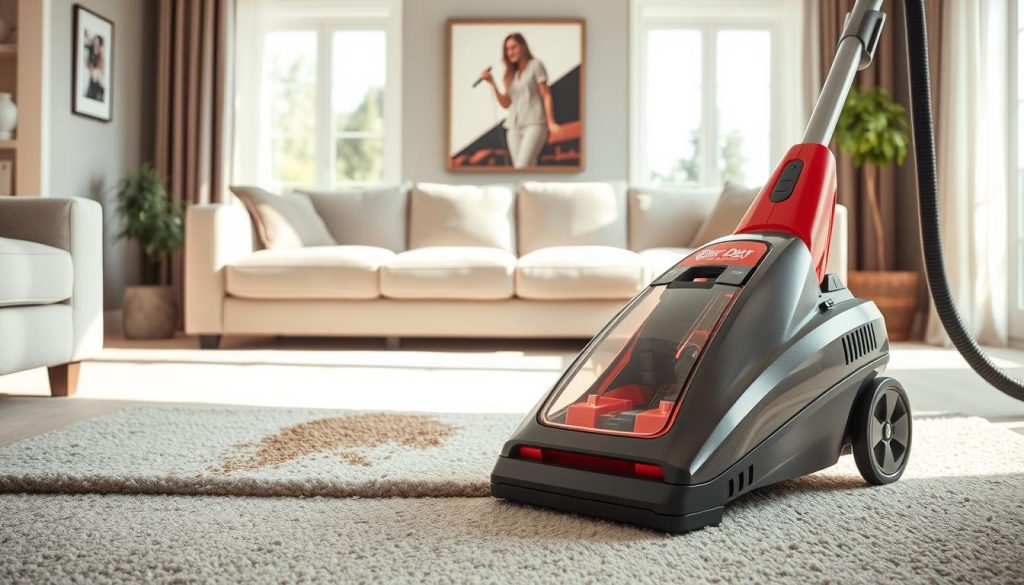
For households after strong extraction without a high price, we rate the Dirt Devil Portable for its impressive suction. It pulls visible staining rather than simply wetting fabric, so results appear faster.
Fewer passes on red wine: the suction strength often means one or two passes clear a fresh red wine mark. That speed matters when we clean several cushions in one session.
Attachment shape and spot work
The main head has sharp corners that reach edges and seams more easily than round nozzles. We still keep a small brush or a microfibre cloth for chocolate lodged in tufts; agitation helps lift stuck debris.
Solution use and dilution strategy
Running straight solution can deplete the tank fast. We dilute per the maker’s guidance to stretch runtime and plan refills for longer sessions to avoid stopping mid-clean.
Keep the hose fresh
The unit includes a self-cleaning hose routine: attach the hose to the rinse port and run water into the dirty tank. We use this after every session to stop stale smells and keep performance steady.
- Value pick: strong suction for the price.
- Visible feedback: clear head shows extraction progress.
- Practical tip: dilute solution and run the self-clean cycle after use.
“Visible extraction and a tidy self-clean routine make this a dependable, budget-friendly choice for regular upkeep.”
Steam cleaner alternatives available in Singapore retailers
For targeted household jobs, a compact steam device can cut chemical use while still removing odours and allergens. We view these units as complementary tools rather than replacements for full extraction systems.
What a handheld device can sanitise with just water
Handheld units sanitise many areas using only water. They kill germs, reduce allergens and lift light marks without detergents.
Common uses: windows, mirrors, curtains, fridge interiors and oven tops.
Where this method excels around the home
They work especially well on tiled floors, kitchen splashbacks and fabric curtains. High heat tackles grease on oven backs and hob surrounds where wiping alone fails.
We advise caution on upholstery; patch-test first as heat and moisture can affect some finishes and fibres.
Brands and features to look for locally
Singapore retailers commonly stock Kärcher and Leifheit. Prioritise units with detail nozzles, fabric cloths and accessory kits for varied surfaces.
“A handheld unit is a handy household ally, not a deep-fibre replacement.”
| Feature | Best for | Why it matters |
|---|---|---|
| Detail nozzle | Crevices, grout | Precision cleaning without overspray |
| Fabric cloth | Curtains, soft surfaces | Protects fibres and captures residue |
| High-temperature output | Floors, grease | Breaks down oils and sanitises |
Targeted stain playbook for sofa upholstery
A clear, stepwise approach helps us tackle the most common stains with confidence. Start by identifying the mark, then act fast and blot — never rub — with a clean, dry cloth.
Red wine response
For fresh red wine, pour mineral water onto the spot and blot. Sprinkle salt or cornflour to absorb excess liquid and lift the colour.
For dried red wine, apply a mix of vinegar or lemon juice and leave to dwell for about 15 minutes. Dab with a clean cloth and rinse with cold water.
Grease and oily marks
Work warm water with a little washing-up or liquid soap from the edge inward to contain the halo. Agitate gently, then rinse or extract until residue clears.
Water‑soluble test and method
About 90% of marks are water‑soluble. Test with a white cloth and lukewarm water. Use gentle rotating dabs to lift colour without damaging the fabric.
Non‑water‑soluble stains
Patch-test a universal stain remover on a hidden seam. If safe, dab the remover on a colour‑fast cloth, treat the spot and then rinse or extract all residue.
Detail‑nozzle spot technique
For tiny spots, angle the detail nozzle and hold a microfibre cloth against the area to capture lifted matter. Avoid this on heat‑sensitive fabric to prevent distortion.
“Identify, blot, then choose water-based dabbing, degreasing wash, solvent-style remover, or a detail nozzle spot treatment.”
Aftercare that keeps sofas cleaner for longer
After a deep clean, thoughtful aftercare protects performance and stops unpleasant smells from returning. A short routine after every session prevents residue from building up and keeps tools ready for the next job.
Empty and rinse tanks straight away
Empty the dirty water tank immediately and rinse it until the water runs clear. If we used detergent, we also flush the clean-water tank to remove residue.
Wash nozzles, bristles and hoses
Detach nozzles, brushes and hoses and rinse them with warm water. Use a soft brush on bristles to lift trapped fibres and crumbs.
Dry parts fully before reassembly to prevent musty smells and bacterial growth.
Drying strategies for Singapore homes
Ventilate the room and use a fan or air‑con airflow to speed drying without overcooling fabric. Separate cushions and prop them so trapped moisture escapes.
Check for damp patches; surfaces should be dry to the touch and free from closed-up smells before daily use.
Optional textile protection
For high-traffic seating or light-coloured fabric, consider a textile impregnation spray. A suitable protector can repel spills and make future spot work faster and less frequent.
“Aftercare is where most units win or lose: clean tanks and dry parts keep performance high and odours away.”
Conclusion
Our final takeaway is simple: match method to mark, fabric and room for the best result. Pair the right tool — hot-detail, spray extraction or a quick spray — with the job size and material to save time and avoid harm.
For decision making: the Shark StainStriker is our pick for power, the Bissell Little Green for portable ease, and the Dirt Devil for strong value suction. Choose the model that fits your home, storage and typical marks so you will actually use it.
Work safely: check fabric codes, patch-test, vacuum first, blot fresh spills and avoid over-wetting. Stain removal is a process — use multiple controlled passes, rinse or extract residue, and prioritise drying and ventilation.
Maintain tanks, hoses and tools after every session to keep performance and prevent smells. For a short guide comparing methods, see our note on steam vs upholstery cleaner.

