
We begin by setting clear expectations. In Singapore homes, what you pay usually covers diagnosis, labour, parts and any call-out fees. Knowing this helps us budget without surprises.
Minor fixes often mean a filter or sensor clean. Major faults can involve a motor or control board and take longer to fix.
We will explain the key factors that drive price: complexity, parts availability, unit size and quality level. This helps us spot fair quotes quickly.
We also distinguish routine upkeep — cleaning and timely filter changes — from genuine breakdowns that need a technician. Regular service extends lifespan and protects air quality, lowering long‑term spend.
Finally, we preview our step‑by‑step approach: diagnose first, learn typical price ranges, reduce spend through maintenance, then choose repair versus replacement using a value framework. For broader context see this whole-home guide.
How we diagnose air purifier problems before paying for repairs
Before calling in parts, we listen, look and log symptoms to narrow down the likely fault. We start with short observations taken during normal use. This helps us avoid unnecessary work and expense.
Performance red flags
Weak airflow, poor air quality readings or repeated overheating often point to restriction or motor strain. A clogged filter or internal dust will reduce flow and worsen readings.
Noise and vibration clues
Rattling, whining or humming can indicate bearing wear or fan imbalance. Irregular fan speed or slow starts typically map to motor or bearing faults and guide the likely fix.
Power and control issues
Flickering displays, random shut‑offs or unresponsive buttons usually mean a control board or power supply issue. These are risky to open at home and we recommend a qualified technician.
Quick checks we can do safely
Inspect the filter, look for visible dust at intakes and check the housing for cracks or loose parts that cause rattles or air leaks. These checks often rule out simple causes.
Stop‑now note: if you smell burning, see melted plastic, or the unit overheats repeatedly, switch it off and seek professional service immediately.
Documenting symptoms — when it happens, which fan speed and any recent filter changes — speeds diagnosis and reduces labour time, so we pay only for the work needed.
Air purifier repair cost in Singapore: typical price ranges and what drives them
We group faults into minor, moderate and major bands so we can compare quotes quickly.

Typical repair cost ranges to expect
Minor work covers filter swaps and simple cleaning. Benchmarks for small jobs vary depending on the parts needed.
Moderate faults—like electronics or circuit board fixes—cost more than minor upkeep. Major component failure, typically a motor, is the priciest to fix.
Repair costs by job type
- Filter replacement: cheap parts, low labour.
- Circuit board repair: parts plus diagnostic time increases the bill.
- Motor or major component: highest parts and downtime impact.
Labour and service call pricing
Hourly rates in benchmarks vary widely, as do routine maintenance call fees. In Singapore, expect costs to depend on the unit and scope.
Unit, parts and brand factors
Large or integrated systems need more time and specialised parts. Limited parts supply or niche brands raises both costs and downtime.
| Job type | Notes |
|---|---|
| Filter replacement | Low labour; routine upkeep |
| Circuit board repair | Diagnostics matter |
| Motor / major component | Highest parts and downtime |
| Service call / maintenance | Package pricing often available for multiple units |
Quick checklist: confirm diagnosis fee, inclusions (parts, labour, testing), call‑out charges and warranty on work.
Our cost-saving maintenance plan to reduce repair costs over time
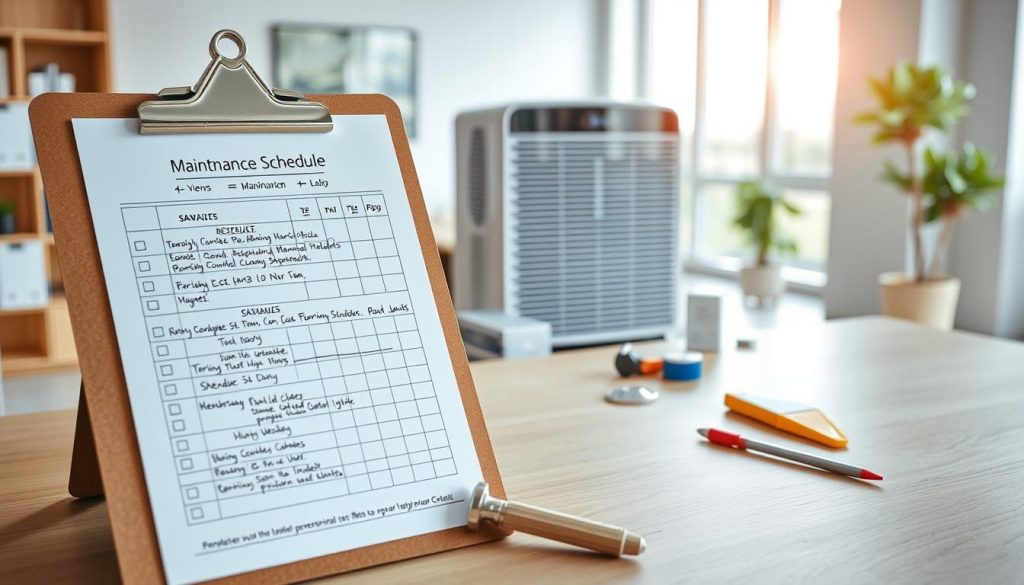
A short, repeatable maintenance routine is the best way to reduce future service bills. We recommend a simple schedule that is easy to follow in a Singapore home and that keeps the unit running efficiently.
Filter care routines
Clean the mesh pre-filter every 2–4 weeks. This prevents heavy dust build-up and keeps the fan working smoothly.
Replace the main filter about every 12 months, more often if you have pets, renovation dust, or heavy use. Treat this as an annual budgeting line.
Deep cleaning and refurbishment
A full internal clean every few years restores airflow, cuts noise, lowers operating temperature and reduces motor strain.
Blueair-style refurbishment is a common option for ageing units. That work often fixes weak flow, loud fan operation and overheating.
Right schedule, longer lifespan
With annual professional inspections and regular upkeep many systems reach a 10–15 year lifespan. That makes modest service fees a good investment.
“Track dates, filter model and cleaning frequency so we can spot declines early and avoid repeat repairs.”
- Easy checklist: clean pre-filter every 2–4 weeks; annual filter change; deep clean when performance drops.
- Call a pro if: persistent overheating, electrical smells, unstable speeds or repeated shut‑offs.
- Record keeping: log dates and notes to correlate maintenance with system life and costs.
| Task | Frequency | Why it helps |
|---|---|---|
| Pre-filter clean | 2–4 weeks | Preserves airflow; keeps fan efficient |
| Main filter replacement | ~12 months | Maintains performance; budgets predictable parts |
| Deep clean / refurbishment | Every 2–4 years (or as needed) | Restores flow; reduces motor strain and noise |
When we repair vs replacement: making a value-based decision
We weigh the total outlay against expected lifespan to decide whether to fix or replace.
Compare total costs, not just the headline quote. Add the quoted work, the chance of follow‑on repairs, and the remaining service years. Then contrast that with a replacement price, warranty coverage and likely performance gains.
Repair is often cheaper than replacement, but not always
We run a quick equation: quoted parts and labour + likely extra visits ≤ value of keeping the unit. If that holds, we choose repair.
If not, replacement usually gives better value and fewer disruptions.
Age and cumulative failures: when older units stop making sense
Multiple, repeated faults or units older than ~10 years often signal hidden wear. In such cases small bills add up fast.
Rule of thumb: for ageing units, once expected repair costs reach the point where replacement makes more sense (using Blueair as reference), replacement becomes attractive.
Brand example for budgeting: Blueair
“If a Blueair needs a motor plus other parts on a ten‑year unit, totals can approach a new purchase; act on the full estimate, not individual invoices.”
- Check the quote for itemised parts and testing.
- Ask about written warranties on parts and labour.
- Confirm technicians’ experience with your purifier brands and systems.
| Issue / symptom | When replacement makes sense |
|---|---|
| Sensor cleaning / replacement | Minor; usually repair |
| Bearing noise / tuning | Repair unless repeated |
| Control board / power supply | Consider age; combine parts raises totals |
| Motor / major component | Replace if unit ≥10 years or multiple faults |
Final checklist for choosing a repair service in Singapore: confirm technicians’ track record with your purifier brands, demand transparent pricing and testing steps, and secure a clear warranty on parts and labour.
Conclusion
To wrap up, our approach focuses on early action, clear quotes and simple upkeep that extends service life. We start by diagnosing symptoms before asking for work. That ensures we pay only for what is needed.
Keep routine cleaning, reduce dust build‑up and act promptly on noise, overheating or unstable operation. These small steps stop minor faults from becoming major ones.
Good value is transparent pricing, a clear scope of work and a warranty that restores steady airflow and reliable cleaning rather than a short‑term patch.
For Singapore homes: keep a short maintenance log, gather 2–3 comparable quotes for non‑trivial jobs, and choose the option that protects our indoor air and budget over the long run.

