

We sifted the 2024 line-up to create a practical round-up for Singapore shoppers who compare regional listings. This short guide explains what a multipurpose machine is, why it helps hard-floor homes, and how we judge performance.
What matters: suction, hygiene, ease of upkeep and value for money. We focus on everyday messes — dust, tracked grit, food spills and pet hair — that flats in the city see most often.
Our shortlist includes PHILIPS SpeedPro Max Aqua XC8349, Dyson V12s Detect Slim Submarine, Russell Taylors Wet & Dry V10i, Dibea HC26, PHILIPS SpeedPro Aqua FC6728 and Airbot iClean OMNI X. Each model earns a clear “best for” tag such as hard floors, manoeuvrability, suction, smart features, long run time or cyclonic tech.
We will weigh trade-offs — heavier units versus stronger force, larger tanks versus storage — and interpret specs like Pa alongside brush design and dirty-water handling so you can pick with confidence.
Who this wet-and-dry vacuum roundup is for in Singapore
We wrote this guide for Singapore households that need a single machine to handle spills, pet hair and everyday dust. Our aim is to point readers in homes with many hard surfaces towards practical, time-saving options.
Hard-floor homes and HDB flats with frequent spills
If your flat uses tile, vinyl, laminate or sealed wood, routine mopping can feel repetitive. A combined unit speeds up cleaning by lifting liquid and debris in one pass.
In compact HDB layouts, smaller footprints and easier manoeuvring matter. We stress models that store neatly and reach narrow walkways.
Pet owners dealing with hair, dander and muddy pawprints
For homes with pets, hair pick-up and dander control are top priorities. Look for anti-tangle brush rolls and good filtration to cut allergens.
Machines that handle muddy pawprints without smearing save time and reduce effort when pets track in dirt.
Busy households prioritising speed, hygiene and low effort
Working families want quick workflows: vacuum plus wipe in one sweep, clean-water separation and self-clean cycles. These features lower ongoing fuss, though regular rinsing and emptying remain necessary.
- When to choose one: if spills and greasy messes outnumber dry dust.
- When a dry-only tool suffices: mostly dusty homes with rugs and little liquid mess.
| Household type | Key need | Feature to prioritise |
|---|---|---|
| Hard-floor flats | Fast wet pickup | Combined mop head, small storage |
| Pet homes | Hair and dander removal | Anti-tangle brush, HEPA-style filter |
| Busy families | Low ongoing effort | Self-clean cycle, clean/dirty water separation |
For further model detail and testing notes, see our curated list at TechRadar’s roundup.
At-a-glance comparison of our recommended models
Below is a compact comparison that pairs each model’s headline suction with ownership highlights. We focus on practical notes: what each model suits, likely battery time, footprint at the dock and whether clean/dirty water separation is used.
Suction numbers vary by testing method; treat the figures as a guide rather than a direct cross-brand comparison.
| Model | Best for | Price tier | Suction (Pa/AW) | Battery time |
|---|---|---|---|---|
| PHILIPS XC8349 | Manoeuvrability on hard floors | Budget | 5,000Pa | ~30–40 min |
| Dyson V12s Detect Slim | Stain removal & fine dust | Flagship | 150AW | ~40–60 min |
| Russell Taylors V10i | Powerful suction for mixed messes | Premium | 13,000Pa | ~30–45 min |
| Dibea HC26 | Smart controls & self-clean | Mid-range | 16,000Pa | ~35–50 min |
| PHILIPS FC6728 | Long run for larger areas | Mid-range | 5,000Pa | ~50–70 min |
| Airbot iClean OMNI X | Cyclonic power & sensing | Flagship | 20,000Pa | ~30–40 min |
Quick ownership notes: PHILIPS models use compact docks and favour smaller tanks. Dyson and Airbot are heavier in use but offer premium power and displays. Dibea adds self-clean cycles; Russell Taylors focuses on raw suction. Most models separate clean and dirty water; check tank access if you dislike frequent rinsing.
Note: suction metrics are measured differently across brands; real-world performance depends on nozzle design, brush roll and filtration as much as headline figures.
- Who should buy which model: Choose the Dyson for stain-sensitive homes, Airbot for sensing-led cleaning, Russell Taylors for sheer power, PHILIPS for run time or compact storage and Dibea for low-maintenance cycles.
- Practical tip: If long battery time matters, prioritise models listing longer runtime and check charge-dock footprint for tight Singapore flats.
How we chose and compared wet-dry vacuums for real homes
We focused on tasks households face most: lifting liquid spills, trapping hair and reaching skirting-board corners. Our aim was to judge machines by practical results rather than only lab numbers.
Cleaning performance on hard floors, edges and corners
Head shape, side clearance and brush coverage matter when cleaning right up to skirting. We checked how each head reached corners without leaving a dust line.
Wet pickup, stain removal and handling sticky spills
Consistent water delivery and firm roller contact make the difference for streak-free finishes. We measured how quickly floors dried after a single pass.
Suction power and debris capture for dust, dirt and hair
We treat suction as part of a system: brush agitation, seals and filters influence debris pick-up more than headline Pa alone.
Battery life, run time and charge time considerations
We set session-based guidance: short kitchen jobs need less battery than a full flat pass. We also noted recharge time so users avoid mid-clean interruptions.
Tank capacity and separation of clean water vs dirty water
Separate tanks are vital to stop re-depositing grime. We compared usable capacity and ease of access for emptying and refills.
Maintenance burden: self-clean cycles, drying and odour control
Self-clean helps, but we still expect regular emptying and drying to prevent mould. Filters and brush rolls that are quick to rinse scored higher.
Weight, manoeuvrability and reaching under furniture
We prioritised models that turn in narrow aisles and slide under low-profile beds. Weight distribution often matters more than total mass for daily use.
Best wet and dry vacuum cleaner malaysia
In tight city homes, a premium multi‑tool that switches between liquid pickup and precise dust removal earns its keep.
Our top pick for hard floors: Dyson V12s Detect Slim Submarine Wet & Dry
Why we position the Dyson V12s as our top pick: it combines a Submarine™ Wet Roller Head for sticky stains and spills with a Fluffy Optic™ Cleaner Head that exposes invisible dust on tiles and laminate.
Why we rate it for stains, liquids and invisible dust
The Submarine™ head targets kitchen spills without smearing, so a single pass lifts residue and liquid. The Fluffy Optic™ uses lighting to reveal fine dust, improving confidence in routine cleaning.
Best use cases in Singapore homes and small apartments
For compact flats, the Motorbar™ head and Hair Screw Tool handle hair without tangling. The docking station and wand clip make storage and charging neat in limited spaces.
Considerations: the unit is a premium option and can feel heavy during long sessions. It needs regular upkeep to keep seals and rollers performing at their best.
| Feature | Benefit | Ideal for |
|---|---|---|
| Submarine™ Wet Roller Head | Removes sticky stains and liquid mess quickly | Kitchen spills, dining accidents |
| Fluffy Optic™ Cleaner Head | Reveals fine dust for thorough cleaning | Tiles, laminate, short‑pile areas |
| Motorbar™ + Hair Screw Tool | Reduces tangles and improves hair pick‑up | Pet owners, long hair households |
Best manoeuvrable design for everyday cleaning
We value a compact design that lets us steer quickly around chair legs and into tight corners. In small Singapore flats, easier steering reduces friction and makes routine cleaning more likely.
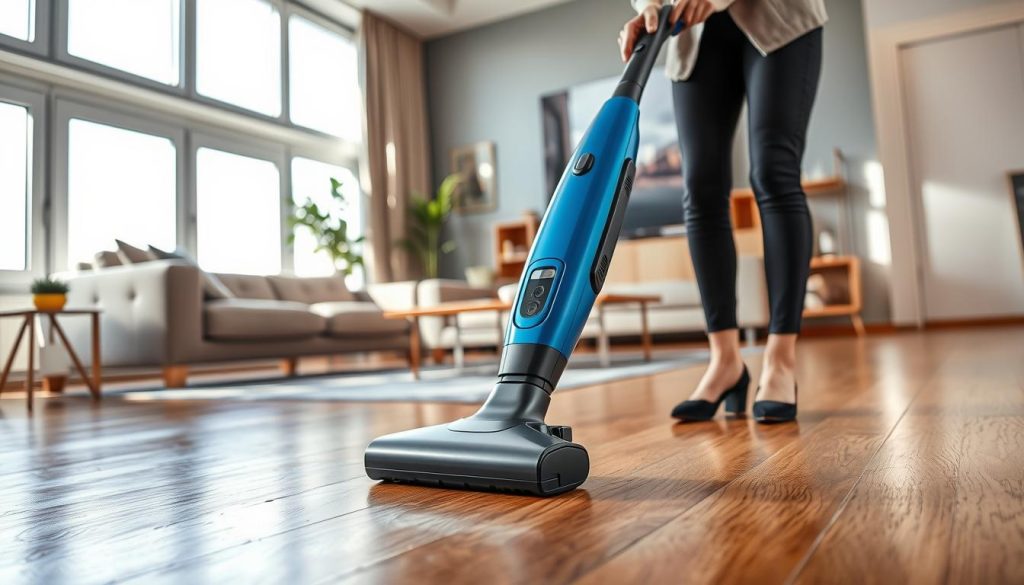
PHILIPS SpeedPro Max Aqua XC8349 highlights
The XC8349 pairs a 2‑in‑1 vacuum-and-wipe nozzle with 360° suction. It captures up to 99.7% of dust in each stroke, which helps the device feel efficient on hard floor surfaces.
Integrated tools reach under low furniture. That makes clearing dust under beds and sofas simpler in compact rooms.
Vacuum-and-wipe nozzle benefits for sticky spots and hygiene
The combined nozzle removes sticky spots in one pass. This streamlines chores because we rarely need a separate mop for light spills.
Hygiene gains are practical: quicker removal of residues reduces the chance of bacteria-friendly film in kitchens and entryways.
Battery time expectations and where it fits best
Battery modes map to real sessions. Eco offers up to 80 minutes for large refreshes. Normal lasts about 35 minutes for usual chores. Turbo gives 28 minutes for tougher stains.
We recommend eco for full flat passes, normal for weekday touch-ups and turbo for quick spot work. The runtime and compact design make this a strong solution for urban use.
Best powerful suction for mixed messes
Our focus here is on machines that combine strong pull with reliable filtration for varied household messes.
Russell Taylors V10i key specs and performance
The V10i uses a 350W BLDC motor rated at 30Kpa. In practice this means faster pick-up of heavier debris and firmer pull-through on textured tile, marble and sealed wood.
Up to 45 minutes run time suits a full flat refresh without frequent recharge. We position this model for homes where raw suction matters more than featherweight handling.
Filtration system breakdown
The four-stage system is cyclone, cylinder, HEPA and sponge. Cyclone action removes large grit. The cylinder and HEPA trap fine dust and pollen.
The sponge layer captures residual moisture, which helps keep exhaust air cleaner for allergy-sensitive households.
Hygienic separation of clean water and dirty water
The tank design keeps clean water or formula separate from dirty water and dry debris. Each pass uses a fresher solution and reduces re-depositing of dirt.
We value the hands-free self-clean dock for lowering odour and trapped debris in brushes and tubes, while noting routine rinsing of tanks and parts remains necessary.
Best smart features for guided cleaning
Smart controls turn chores into quick, repeatable routines. We find guided features help households finish tasks with more confidence and less guesswork.
Dibea HC26 LED display and voice prompts
The HC26 pairs a clear LED display with spoken prompts to show mode, battery and alerts. This reduces stopping to check settings.
Who benefits:
- Homes sharing chores—helpers and family members follow the same cues.
- Busy users who prefer visual status over menus.
Electrolysed water sterilisation
This system uses tap water to create a mild sanitising solution that claims up to 99.9% germ removal. It adds a hygienic boost for hard floors without chemical refills.
The process converts ordinary water into an active cleaning solution on demand. That lowers reliance on bottled products.
Self-cleaning plus cool-air drying
One-click self-cleaning flushes brushes and paths. Centrifugal cool-air drying then reduces trapped moisture. In Singapore’s humidity this cuts mould and stale smells.
Practical note: self-cleaning saves time, but we still recommend routine tank emptying and occasional deep rinses to keep suction and performance stable. The extra tech may increase price, so weigh the benefit against your maintenance habits.
Best long operation time for larger cleaning sessions
When a single cordless unit must tackle several rooms, operation time becomes the defining feature. The PHILIPS SpeedPro Aqua FC6728 is built for those longer sessions so we can finish bedrooms, living areas and the kitchen in one go.
PHILIPS SpeedPro Aqua FC6728 as a vacuum, mop and handheld
The FC6728 is a 3-in-1 tool: a vacuum for crumbs, a mop for light spills and a handheld for shelves and sofa crumbs. Switching modes is quick, so we avoid stopping to fetch another device.
LED nozzle lighting for dust on hard floors
LEDs in the nozzle reveal dust in darker corners and under furniture. The 180° suction nozzle reaches edges and narrow gaps with less fiddling.
Key practical points:
- 21.6V battery delivers up to 50 minutes of run time—useful for medium-to-larger flats.
- Washable microfibre pads cut ongoing costs and are kinder to the environment for frequent mopping.
- We position the unit for users who want one cordless solution for varied cleaning tasks without constant recharges.
Best cyclonic tech for adaptive cleaning power
The Airbot iClean OMNI X reacts to what it senses under the brush, changing effort automatically.
Its infrared dust sensors form a smart system that detects debris levels. When the sensors spot more dust, motor speed rises. In cleaner areas the motor eases off. This adaptive approach saves energy and cuts unnecessary wear.
The built-in processor chip improves power efficiency by around 60%, so sessions feel longer without extra charging. The LED touchscreen shows speed settings and tracks battery life at a glance. Fewer surprises mid-clean mean we plan full-room passes with more confidence.
The detachable 1.1kg handle adds reach for sofas, curtains and car interiors. It makes multi-surface work simpler, though holding it overhead for long periods can tire some users.
| Feature | Benefit | Ideal surfaces |
|---|---|---|
| Infrared dust sensing | Adaptive suction to save energy | Tiles, short-pile carpet |
| LED touchscreen | Clear speed and battery life display | Whole-room sessions |
| Detachable 1.1kg handle | Handy for upholstery and car work | Sofas, curtains, windows |
Practical note: The model suits mixed surfaces and wet uses, but performance on soft, heavily soiled upholstery depends on the head chosen. Test the head for your fabrics before committing.
Choosing the right type of wet-dry vacuum for your floors
Start by matching the machine’s capabilities to your most common floor tasks. The right choice depends on whether you have mostly hard surfaces, a mix with rugs or prefer hands-off upkeep.
Hard-floor-only washers
What they do: specialise in mopping, fast drying and handling frequent spills. They often include self-propelled heads for even coverage.
Limitations: not suitable for carpets or rugs. If you mainly have tile, vinyl or sealed wood, this system gives excellent cleaning for liquid messes.
Combo systems with swappable floorheads
What they do: swap heads to tackle carpets for dry pick-up, then attach a mop head for hard surfaces. They suit mixed homes.
Trade-off: water tanks are usually smaller and mopping force is lighter than a dedicated washer.
Robot vacuum and mop options
What they do: provide hands-off maintenance and keep floors presentable between deeper sessions.
“Robots complement deep cleaning; they do not replace manual scrubbing of dried-on spills.”
For a detailed product guide and local buying options, see our partner link at wet and dry system guide.
What to look for before you buy
We focus on clear, practical checks that match a model to your routine. Start by deciding which chores matter most: pet hair, kitchen spills or whole‑flat refreshes. This helps narrow the choice quickly.
Suction and airflow versus real-world performance on debris
Numbers help, but context matters. High suction figures and strong air flow signal potential, yet real performance depends on head sealing, nozzle shape and how debris is channelled into the tank.
Look for tests or reviews showing pick‑up of larger crumbs and fine dust on hard floors. That tells you whether reported suction converts to usable performance.
Brush roll design for hair, pets and edge cleaning
Prefer anti‑tangle brush designs if you have long hair or many pets. Brushes that reach the skirting and maintain contact at edges remove more trapped debris.
Replaceable or washable rolls reduce upkeep. Check whether the brush is easy to remove and rinse.
Water tank volume and whether it suits your floor area
Tank capacity determines how often you must refill or empty. As a benchmark, models with ~0.85L clean and ~0.72L dirty tanks give a sense of larger capacity.
For flats over two bedrooms, aim for higher water capacity to cut interruptions during a full floor pass.
Noise levels and comfort for shared spaces
Noise matters in shared apartments. Expect around 65dB in high modes for some units; quieter modes are useful for evening runs or when others are home.
Docking, storage and charging footprint
Check the dock’s footprint and whether it includes self‑clean or drying features. Where a unit lives—kitchen corner or service yard—affects convenience and tidiness.
“Empty and rinse dirty tanks after use to avoid odour and preserve performance.”
Quick comparison checklist
| Item | What to check | Why it matters |
|---|---|---|
| Head types included | Wet/mop nozzle, motorised brush, crevice tool | Versatility for floor edges, upholstery and spills |
| Spare pads/filters | Included extras and washable parts | Reduces running cost and maintenance downtime |
| Dock features | Self‑clean, drying, compact footprint | Saves time and lowers mould/odour risk |
| Noise and modes | dB at max, quiet mode availability | Comfort for shared living and night use |
Final tip: choose a model that balances suction with head design, sufficient water capacity and a dock that fits your storage space. That yields better long‑term performance for Singapore homes.
Maintenance checklist to keep performance high
C small habits after every session stop odour, blockages and loss of suction before they start.
After each use we empty the dirty water tank and give it a quick rinse. Stagnant water breeds smells and residue that reduce hygiene and clog the system.
Emptying and rinsing the dirty water tank
Do this every time: remove the tank, pour away waste, then rinse with tap water until residue clears.
If you store the unit in a cupboard, let the tank air-dry fully. Damp tanks invite mould and affect the next clean.
Cleaning and drying the brush roll
Remove hair and fibres from the brush after each session. Use scissors if needed and rinse the roll when it’s safe to do so.
Dry the brush completely before reassembly. Storing a damp brush often causes bad smells and shortens brush life.
Filter care to protect suction and indoor air quality
Check filters weekly: tap out dust, rinse washable units and replace disposable filters per the maker’s schedule.
Clogged filters reduce suction and send poorer air back into the room. Clean filters keep air quality stable.
How self-clean systems help — and their limits
Self-clean docks flush paths and lessen manual effort. They reduce odour risk but do not replace emptying tanks or drying parts.
We still inspect seals and brush bearings after any automated cycle to spot trapped debris early.
Avoid these common mistakes
- Leaving dirty water overnight in the tank.
- Storing the brush while it is still damp.
- Running the machine with visibly clogged filters.
| Task | After every use | Weekly |
|---|---|---|
| Dirty water tank | Empty & rinse | Deep rinse & air‑dry |
| Brush roll | Remove hair; rinse if wet | Inspect bearings; full dry |
| Filters | Tap and check | Rinse washable; replace disposable |
Wet-dry cleaning tips for common Singapore messes
We adopt simple routines to handle kitchen grease, monsoon grit and pet hair without adding fuss. Small, repeatable steps save time and protect surfaces.
Kitchen grease, sauce splashes and drink spills
Pre-pass the area on suction-only to remove crumbs and loose dirt. This stops oily smears when you apply liquid cleaning.
For grease, use a controlled wet pass rather than an aggressive soak. Move slowly over sticky spots so the head lifts residue instead of spreading it.
After lifting a spill, run a quick drying pass to reduce slip risk and speed floor recovery.
Monsoon-season grit, fine dust and tracked-in debris
At entryways we sweep or suction high-traffic trails daily. This prevents grit from scratching sealed surfaces during longer sessions.
Use LED-lit nozzles to spot fine dust missed in dim corners. Frequent light cleans beat large, grout-scouring jobs later.
Pet hair on hard floors and low-pile rugs
Start with an anti-tangle brush or hair-screw tool to pick up fur and loose debris. Remove trapped hair before any wet work to avoid clogging the roller.
For pawprints and residue, follow with a targeted wet pass that lifts marks without soaking low-pile carpets. Avoid heavy saturation on rugs.
- Slow passes on sticky patches improve pick-up.
- Top up clean water when the solution looks cloudy.
- Empty and rinse tanks immediately after use to stop odour and build-up.
| Mess type | First step | Follow-up |
|---|---|---|
| Grease & sauces | Suction-only pre-pass | Controlled wet pass, quick dry |
| Monsoon grit & dust | Entryway suction, LED check | Frequent light cleans to avoid scratches |
| Pet hair & pawprints | Anti-tangle brush, remove hair | Spot wet pass; avoid soaking carpets |
Where to buy and how to compare value in Singapore
To judge real value we compare upfront price with likely running costs, spare parts and accessory ecosystems. We start with authorised stores, then check major marketplaces like Lazada and Shopee for promotions.
What to check in listings: accessories, warranty and consumables
Confirm which floorheads and tools ship with the model. Look for spare pads, filters and a dock or charging stand in the package.
Verify warranty coverage for motor and battery. Authorised retailers often handle longer or clearer service terms.
Check whether a proprietary cleaning solution or specific pads are required. Those extras raise running costs over time.
Balancing price with run time, features and maintenance effort
Compare the total cost: purchase price plus the likely spend on pads, solutions and replacement filters. This gives a clearer view of ownership cost than the tag alone.
Match run time and battery claims to your home size and how you use the device. Longer sessions need larger batteries; short, frequent cleans favour compact models.
| What to weigh | How to decide | Why it matters |
|---|---|---|
| Included tools | Check list in the listing | Reduces early accessory purchases |
| Consumables | Note pads, filters, solution | Drives long‑term cost |
| Warranty & service | Prefer authorised sellers | Protects battery and motor claims |
Decision rubric: choose the model that matches your floor mix, tolerance for maintenance and storage limits. If you want low fuss, prioritise self‑clean and smart drying. For small flats, lower upfront cost with basic features may be the smarter choice.
Conclusion
Wrapping up, we urge readers to choose the unit they will actually use and maintain. A strong, practical match beats headline specs when daily cleaning is the aim.
Recap: our shortlist suits different needs — manoeuvrable models for compact flats, power-heavy machines for mixed surfaces, and long‑run options for larger passes. Match your choice to hard floors, mixed carpets and how often spills occur.
Hygiene matters: a clear clean‑water/dirty‑water separation keeps floors genuinely cleaner rather than just looking wet. That system reduces cross‑contamination and uplifts indoor hygiene.
Maintenance remains essential: empty tanks, dry rollers and check filters. Shortlist two models, compare accessories and warranty, then pick one that fits your storage and weekly routine. For a practical buying checklist see our whole-house cleaning checklist.

