

We examine how support and upkeep shape long-term ownership in Singapore. ModernHome SG frames high humidity and urban pollution as reasons to invest, and we weigh costs across the models covered.
Our lens looks beyond specs. We compare brands and retailers on filters, reminders, setup, responsiveness and warranty handling so owners avoid surprise costs.
We name clear category winners and who each model suits. Highlights include NNIO Twister as the top pick, CUCKOO for premium buyers and Arden for value seekers.
Readers will find practical guides: room-size advice, glossaries, red flags and a Singapore buying checklist. Our aim is better indoor air and clean air without costly downtime or unsupported devices.
Why air purifier service ratings matter in Singapore homes
We focus on how aftercare shapes real ownership costs and daily comfort in Singapore homes.
Singapore’s high humidity and periodic haze bring frequent odours, cooking fumes and renovation VOCs.
These triggers raise particulate matter and reduce perceived air quality. Small particles worsen sleep and concentration.
High humidity, indoor air pollution, and everyday triggers
Homes here run units daily in bedrooms and living rooms. That increases filter wear and the need for clear consumables guidance.
What “good service” looks like beyond the machine’s performance
Good support means quick answers, fair warranty handling and simple troubleshooting for first-time buyers.
- Easy access to replacement parts keeps long-term performance steady.
- Transparent costs prevent surprises from frequent filter changes.
- Practical guidance helps maintain clean air output over months.
| Trigger | Measurable effect | Owner action |
|---|---|---|
| High humidity | Musty odours, mould spores | More frequent filter checks |
| Cooking & dust | Rise in particles and PM | Daily run time, replace filters sooner |
| Haze & renovation VOCs | Spikes in air pollution | Use higher fan mode, monitor sensors |
How we score air purifier service ratings
Our scoring weighs how easily buyers can keep a unit working well over years, not just the spec sheet.
After-sales support and warranty handling
We test responsiveness, clarity of warranty terms and repair turnarounds. Quick fault resolution and clear repair paths reduce downtime and owner frustration.
Filter availability, pricing transparency and reminders
We check whether genuine filters are sold locally, whether part numbers and lifespans are stated, and if replacement reminders are built into the app or device.
Delivery, installation and setup help
We expect safe packaging, clear manuals and sensible first-run guidance. For bulky units, optional installation and measured delivery rate matter.
Livability checks and market red flags
We score quiet operation, a logical control panel and easy use first. We penalise overstated room size claims, display shut-off that defeats cleaning, high energy consumption, noisy fans and vague marketing claims.
| Scoring Pillar | Key Checks | Why it matters |
|---|---|---|
| Support | Response time, warranty clarity | Reduces repair downtime |
| Consumables | Filter stock, pricing, reminders | Predictable running costs |
| Livability | Quiet operation, fan speed control | Comfort for sleep and calls |
Quick glossary of specs we reference in our reviews
To cut through jargon, we translate key technical terms into practical buying signals.
CADR and clean air delivery rate explained simply
CADR measures clean air delivery — how much cleaned cubic metres a unit moves per minute. It beats vague “covers X sqm” claims because it ties performance to measurable output.
Translating air delivery rate to real rooms
For a typical HDB bedroom, a modest air delivery rate that achieves 4 air changes per hour will suffice. Larger living rooms need higher numbers and careful placement to avoid dead spots.
Filtration, activated carbon and sensors
HEPA filters, true HEPA and HEPA‑13/14 labels matter, but real differences are often academic. Non‑HEPA particle filters can help if marketed honestly.
Activated carbon targets odours, gases and VOCs; the amount and media design affect results.
An air quality indicator and PM2.5 sensors show trends, not perfect readings. Auto mode can help in haze or cooking but may switch speeds more than some users like.
| Spec | What it means | Practical tip |
|---|---|---|
| Clean air delivery | Volume of cleaned air per minute | Use for apples‑to‑apples comparisons |
| Air changes per hour | How many times room air is replaced per hour | Aim for 4 ACH for bedrooms; higher for haze/allergy days |
| Activated carbon | Adsorbs gases, odours, VOCs | Check carbon volume and layer design |
How to choose the right purifier-service combo for your room size
Begin with the room and its use, then pick a model that meets that demand.
For small spaces and bedrooms we prioritise sleep mode and truly low noise. Compact models such as the Philips 800 Series Compact suit small rooms and keep disturbance to a minimum.
Home office setups
In a home office we value steady fan speed and quiet operation for calls. Choose units with clear maintenance indicators so upkeep is simple during busy weeks.
Larger living rooms
For larger living rooms you need powerful enough airflow to avoid dead spots. The Electrolux Pure A9 is positioned for bigger room size and stronger circulation.
- Match CADR/airflow to the room, then pick support level based on filter replacement frequency.
- Prioritise sleep mode that keeps cleaning effective while staying quiet.
- Look for fan speed options that remain stable during calls and long runs.
| Room type | Top priority | Suggested feature |
|---|---|---|
| Small room / bedroom | Low noise, sleep mode | Compact unit, silent fan settings |
| Home office | Stable fan speed, quiet operation | Stepped speeds, clear indicators |
| Large living room | Strong circulation, avoid dead spots | High airflow, good placement/wheels |
Our top pick for most people in Singapore
Our top pick focuses on practical comfort: steady airflow, simple upkeep and quiet, efficient running. We chose a model that blends a fan’s circulation with credible filtration to suit humid, compact homes.
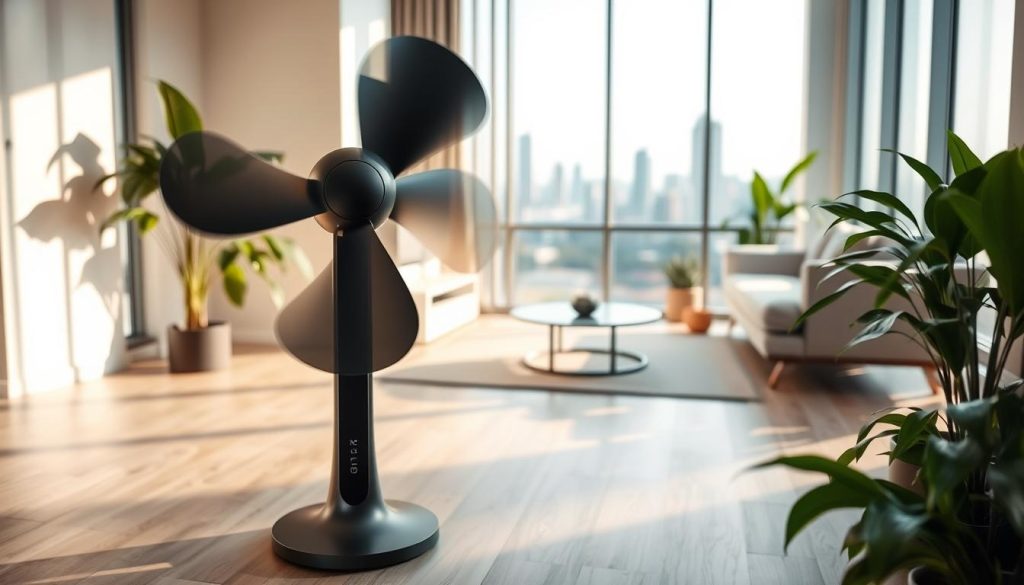
NNIO Twister BLDC Purifying Air Circulator Fan: why it leads overall value
NNIO Twister earns our recommendation for combining a BLDC motor with multi-stage filtration and 360° circulation in a neat design. The BLDC motor gives strong performance while staying remarkably quiet and energy efficient.
What we liked: powerful yet quiet operation and 360° air circulation
We liked how the fan spreads cleaned air to reduce stagnant corners. That helps perceived comfort in humid Singapore rooms and shortens run times during peak cooking or haze days.
Service considerations: maintenance guidance and long-term running comfort
We expect clear maintenance guidance, easy-to-find filter replacements and prompt support for sensor or mode questions. At purchase, check warranty registration steps, where filters are stocked and whether reminders are on‑device or in the documentation.
“A purifier-fan hybrid must stay quiet enough for sleep and focused work while remaining affordable to run.”
Best premium pick for dual-function comfort
For buyers who need both humidity control and robust cleaning, the CUCKOO C+ Model blends features into a single footprint, pairing multi-stage HEPA filtration with deodorisation and an intelligent humidity sensor.
CUCKOO C+ Model: who it’s for
We recommend this model for air‑conditioned bedrooms and households that prefer one device for moisture and particle management. The unit suits users who want quiet operation and reliable night-time comfort, with an easy-to-read filter replacement indicator.
Service considerations: water tank upkeep and filter replacement indicator
Dual-function units add a water routine. Verify how the manufacturer recommends tank cleaning and mould prevention before purchase.
- Ask about recommended tank-clean intervals and any anti-mould features.
- Confirm how warranty handles water-related faults and part replacement availability.
- Check transparent timelines and pricing for filters and activated carbon cartridges.
The filter replacement indicator is valuable when a device runs nightly. It reduces guesswork and helps maintain HEPA filtration performance over time.
“Premium buyers keep devices longer, so accessible troubleshooting and clear maintenance guidance are as important as headline features.”
Best value pick for straightforward air cleaning
Value models win when they combine dependable cleaning, simple controls and low running costs.
Arden: ideal use cases and room fit
The Arden offers HEPA filtration with a CADR aimed at medium rooms. We find it well suited to a home office, smaller living areas and bedrooms where set‑and‑forget operation matters.
The unit has multiple fan speeds, a timer and a clear control panel. Its light weight makes moving between rooms practical in compact Singapore flats.
Service considerations: timer, portability, and filter change reminders
We expect transparent filter ordering, honest lead times and simple warranty submission at this price point.
Filter change reminders prevent unnoticed performance drops and cut owner frustration. Test fan noise and the control panel during the return window.
- Estimate filter life by usage: nightly use shortens intervals versus occasional runs.
- Check how replacement filters are sold locally and typical delivery times.
- Confirm whether reminders are on the device or in documentation.
“A straightforward unit that is portable and predictable usually delivers the best value for most homes.”
For a wider comparison of best picks, see our recommended list at best air purifier picks.
Best for hands-off auto mode control
We prize auto modes that work in the background — reacting when needed, then staying silent.
Blueair Classic: why we rate its auto-adjust experience
The Blueair Classic blends multi-stage HEPA plus carbon filtration with an on-board sensor and a compact vertical design, offering a sensible auto mode that avoids constant fan speed jumps.
What “hands-off” really means: the unit should step up promptly after cooking or a pollution spike, then settle to a quiet level that keeps rooms comfortable for sleep and calls.
- Sensor behaviour: stable tuning boosts trust; erratic ramping does not.
- Filter access: easy swaps and genuine replacements matter because auto modes encourage longer daily runtime.
- Support checks: look for clear guidance on sensor cleaning, calibration tips and firmware or app help.
| Check | Why it matters | How we test |
|---|---|---|
| Sensor guidance | Keeps auto mode accurate | We review cleaning and calibration instructions |
| Noise in auto | Affects sleep and calls | We measure fan speed changes and dBA during cycles |
| Filter supply | Running cost and uptime | We check genuine part availability and replacement ease |
| Firmware/app support | Fixes and refinements over time | We note update frequency and troubleshooting resources |
Do a simple at-home check: cook briefly, watch how fast the unit reacts and whether it returns to low noise smoothly. The best auto mode is the one you hardly notice — except for steadier clean air and better sleep.
“Auto control that stays calm yet responsive is the most helpful feature for busy Singapore homes.”
Best for families who want safer airflow design
Families often prize safe design above flashy specs when a device shares living space with children.
Futur Living Blade-less Fan with Air Purifier (via ModernHome SG) pairs a bladeless fan and built‑in HEPA filtration. The bladeless form reduces pinch points, and multiple wind modes give comfort in living rooms and bedrooms.
Child lock and safe operation
We check how the child lock works in practice. Confirm it prevents accidental mode changes and whether the lock stays active after power cuts.
Child lock behaviour matters most for curious toddlers. Stable controls cut the risk of sudden speed changes and make daily use calmer.
Service considerations: day-to-day handling and easy placement
Hybrid units need support for both fan and filter upkeep. Ask whether the vendor advises on airflow tips and on replacing filters.
- Easy placement: compact footprint and stable base make the unit simple to move and clean behind.
- Filters: check local stock and delivery time as family use raises run hours.
- Performance & quality: confirm quiet operation in night mode for bedrooms.
“Fast, clear support is crucial when a device becomes part of daily family routines.”
| Family priority | What to check | Why it matters |
|---|---|---|
| Child safety | Child lock persistence, bladeless design | Prevents accidental changes and finger injuries |
| Daily handling | Compact size, stability, easy move | Simplifies cleaning and placement in small rooms |
| Running costs | Filter availability, replacement intervals | High runtime increases consumable use |
Best for allergy-focused HEPA filtration with extra sterilisation layers
When allergies drive your choice, look for true capture efficiency and clear evidence for any extra sanitising tech. We compare two premium options that pair high-efficiency filtration with additive layers aimed at reducing particles and biological triggers.
Sterra Moon True HEPA-13
The Sterra Moon combines a true HEPA-13 stage with ionic technology and UV‑C disinfection. It suits households with persistent dust sensitivity, sinus issues or frequent sneezing indoors.
Ask the vendor how ionic output is controlled and whether UV‑C exposure is fully enclosed. Clear maintenance instructions matter for safe, effective operation.
Wells Interior (HEPA14, sensor suite)
The Wells Interior uses hospital‑grade HEPA14, multiple sensors (air quality, micro dust, odours, light) and an award-winning design. It covers ~19.8m², measures 360×173×360mm.
Better sensing improves auto behaviour — but only if calibration and support are reliable.
Premium ownership and support
- Filter sourcing: predictable genuine filters and clear lead times.
- Documentation: maintenance routines for HEPA filtration, activated carbon layers and electronics.
- Support: responsive channels and fair warranty handling for sensors and UV modules.
Focus on sustained performance and livability — complex features help only when backed by clear upkeep and reliable parts.
Best smart air option for app-first households
For households that prefer control from a phone, connectivity and dependable app behaviour matter more than flashy specs.
Xiaomi Smart Air Purifier 4 Pro: app control, voice support, and live display
We find Xiaomi excels with a clear app, voice commands and a real‑time display. Its HEPA plus activated carbon stack is practical and the control panel within the app is intuitive.
Samsung Air Cleaner: SmartThings control, 3‑way airflow, and hidden wheels
Samsung suits SmartThings households. It covers large rooms up to 60m², offers Auto and Sleep modes, numeric display and the hidden wheels make moving the unit effortless.
Electrolux Pure A9: app monitoring for larger rooms with design appeal
Electrolux targets larger spaces and style‑minded buyers, pairing good performance with detailed app monitoring and neat design that fits living areas.
Service considerations: connectivity reliability and software support
We expect stable pairing, regular firmware updates and clear troubleshooting steps. Good support must include pairing guides, privacy/account instructions and prompt help for sensor faults.
| Model | Key smart features | Practical benefit |
|---|---|---|
| Xiaomi 4 Pro | App + voice, live display, filter tracking | Fast response after cooking, easy scheduling |
| Samsung Air Cleaner | SmartThings, numeric display, hidden wheels | Large room coverage, easy portability |
| Electrolux Pure A9 | App monitoring, premium design, remote control | Better oversight for bigger rooms, stable performance |
“Smart features only pay off when connectivity and support keep them working day to day.”
Best compact choice for small rooms
For many Singapore flats, a modest device placed well gives better real‑world results than a higher‑spec unit in the wrong spot.
Philips 800 Series Compact: one-button control and quiet operation
We recommend the Philips 800 Series Compact for small spaces. It pairs a true HEPA filter with simple one‑button control and quiet operation suited to bedrooms.
The one‑button approach makes easy use immediate. Fewer settings mean less chance of misconfiguration and faster adoption for first‑time owners.
Quiet operation matters near beds. In sleep mode the unit runs low and keeps disturbance to a minimum while maintaining steady performance for a single room.
- Expect it to cover a small room — not whole‑home cleaning; check real CADR claims.
- Look for clear reset steps and quick access to replacement filters so upkeep is straightforward.
- Place it near airflow paths, clear of furniture, and not tucked in a corner for best results.
Compact designs often give the best balance of cost, noise and upkeep for tight Singapore rooms.
Best for balanced sensing and on-device controls
On-device displays and separate sensor pods suit buyers who want quick feedback without relying on apps. The TruSens Z-3500 pairs HEPA filtration and UV‑C with dual airflow, a touch display and a remote sensor pod to sample real room conditions.
TruSens Z‑3500: separate sensor pod and touch display usability
We liked the touch control panel for fast adjustments in shared rooms. Local controls mean fewer pairing problems and clearer responses during cooking or busy evenings.
The separate sensor pod helps by measuring away from the unit’s immediate flow, so readings better reflect true air quality. Accurate sensing encourages consistent use and improves long‑term performance.
Service considerations: sensor accuracy, cleaning, and support
Good support must include sensor placement guidance, practical cleaning intervals and clear advice on reading trends. Sensors collect dust and need attention; they are not “fit and forget”.
- Easy use: clear display dimming and responsive touch controls for night use.
- Filters: expect genuine replacements and clear sourcing information for this price bracket.
- Support: documentation that shows where to place the pod and how to clean it safely.
“Accurate sensing builds trust; when owners trust the display they use the unit more consistently.”
| Feature | Why it matters | What we check |
|---|---|---|
| Separate sensor pod | More representative room readings | Placement guidance and cord length |
| Touch control panel | Faster adjustments, fewer connectivity faults | Visibility, dimming, responsiveness |
| HEPA + UV‑C | Particle capture plus surface sanitisation | Filter fit, genuine part availability |
For a broader comparison of leading models and hands‑on tests, see our curated list at best air purifier guide.
Best for humidifying plus purification in air-conditioned bedrooms
Humidity control plus filtration can transform bedroom comfort in air‑conditioned homes. AC often dries throats and skin; adding measured moisture improves sleep without trading off clean air.
Daikin Streamer MCK55: humidity control and energy-efficient operation
Daikin Streamer MCK55 blends humidifying and filtration with clear humidity controls and low running costs. Available via ModernHome SG, it suits nightly use in a typical bedroom where energy efficiency matters.
Hitachi EP-L110E: humidifying capacity, PM2.5 sensor, and Auto Self Clean
Hitachi EP‑L110E targets larger rooms with ~800 mL per hour humidifying capacity, a PM2.5 sensor and an Auto Self Clean pre‑filter. Its glass touch panel and coverage up to 79 m² make it a stronger choice for living spaces that need higher throughput.
Service considerations: cleaning schedules, consumables, and maintenance burden
Humidifying units demand regular tank and internal cleaning to avoid deposits and odour. Self‑clean features reduce effort but do not remove the need for weekly checks.
- Expect both filters and water‑related parts; confirm local availability and pricing.
- Ask about cleaning checklists, recommended weekly/monthly tasks, and whether reminders are provided.
- Verify warranty terms for humidifying functions — water faults are often handled differently by brands.
| Model | Key humidify feature | Practical note |
|---|---|---|
| Daikin MCK55 | Energy‑efficient humidity control | Good for nightly bedroom use; lower running costs |
| Hitachi EP‑L110E | ~800 mL/hr + Auto Self Clean | Higher capacity; easier maintenance but larger coverage |
“A unit only delivers clean air and comfort if owners follow cleaning routines; self‑clean helps, but it is not a substitute for basic upkeep.”
Models we’re cautious about and what to watch for when comparing ratings
Not every model that looks impressive on paper performs well in a real home. We flag specific behaviours that tend to cause long‑term frustration in Singapore flats: inflated coverage claims, display tricks that reduce overnight cleaning, high running costs and noisy or uneven fans.
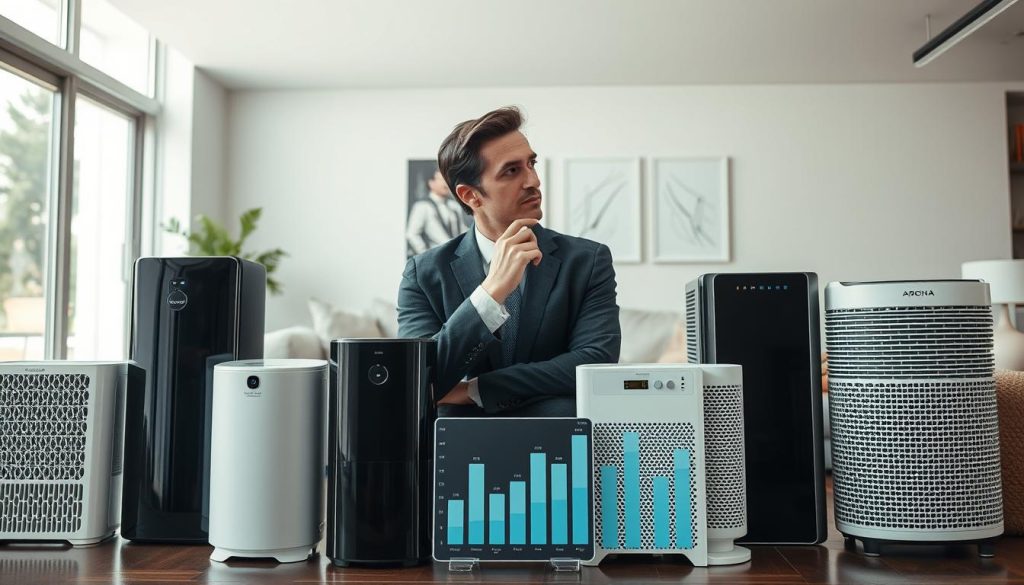
Coverage claims vs realistic air delivery rate
Manufacturers sometimes state a room size that sounds useful but does not match measured airflow. Check the published air delivery rate and compare it to realistic per hour targets for the room you have.
If a model lists a large room yet shows low airflow numbers, assume the coverage is optimistic.
Display shut-off and overnight performance
Some devices turn the display off only when Sleep mode is active. That may also lock fan speed to the lowest setting.
This limits actual overnight cleaning. We prefer units that allow low‑noise display dimming without forcing minimal fan speed.
Energy consumption and noise pitfalls
A cheap upfront price can hide a costly electricity bill. Look for wattage at practical fan speeds, not just on the spec page’s low setting.
Noise matters beyond dB figures. Rattles, harsh tones and sudden ramping spoil quiet operation and long‑term satisfaction.
Marketing overstatements and dubious lab claims
Watch for unverifiable lab reports, vague filtration terms and coverage figures that contradict airflow data. Brands with little track record may also overpromise features.
“Repeated frustration with displays, noise and running costs usually appears in user feedback long before hardware fails.”
| Warning sign | What to check | Practical action |
|---|---|---|
| Inflated room size | Compare stated room with air delivery rate | Use CADR-equivalent airflow or vendor test numbers |
| Display-off = Sleep mode | Does display dim without forcing lowest fan? | Test overnight behaviour in-store or on trial |
| High listed performance, low airflow | Conflicting specs or vague testing conditions | Request measured airflow at real speeds |
| Questionable lab claims | No verifiable test lab or unclear methodology | Avoid models lacking independent test reports |
Checklist: sanity‑check airflow numbers, test Sleep mode behaviour, compare wattage at mid/high speeds and read owner comments for noise and display quirks. That keeps buying choices realistic and long‑term satisfaction higher.
Where to buy in Singapore and what to check before you pay
Choosing where to buy can be as important as which model you pick. We favour long‑standing brand stores and established retailers for smoother returns and clearer warranty paths.
Authorised retailers vs marketplaces
Authorised retailers — brand stores (Daikin, Samsung, Xiaomi) and chains like Courts or Best Denki — usually simplify returns, verify serials and honour local warranty claims.
Marketplaces can offer lower prices but seller quality varies. If buying from Shopee, Lazada or Amazon, confirm the seller is authorised and check refund windows.
Filter costs and estimating running costs
Before checkout, total the price of replacement filters, expected replacement frequency and your typical daily runtime to estimate annual costs.
- Find OEM filter prices and check if multi‑packs or subscriptions are available.
- Multiply filter cost by the number of changes per year for a realistic budget.
- Remember heavy nightly use in a bedroom or kitchen raises replacement needs.
Delivery, setup and proof of purchase
Top-rated delivery includes scheduled slots, careful handling and brief first‑run guidance for sensors and modes.
Keep receipts, warranty cards and a short unboxing video. That documentation speeds returns if defects, unusual noise or display faults appear early.
| Buying channel | What to check | Benefit |
|---|---|---|
| Brand store / authorised retailer | Serial eligibility, local support contact | Clear warranty claims, genuine parts |
| Major marketplace | Seller authorisation, return window | Potential savings but variable support |
| Third‑party seller | Filter stock, lead times, OEM replacements | Avoid long downtime from scarce parts |
Good purchase checks reduce downtime, protect performance and keep quality steady for years, not weeks.
Conclusion
We leave you with one practical rule: run the right device for your room every day. In Singapore, upkeep, genuine filters and prompt support decide whether a unit continues to deliver clean air or becomes a costly shelf item.
Our top pick remains the NNIO Twister; CUCKOO suits premium buyers and Arden is the best value choice for simple needs. These selections balance performance, usability and realistic upkeep.
Prioritise honest specs, controllable displays and quiet operation. Budget for filter changes from day one and confirm local availability and support before you pay.
Choose the best-supported purifier you will actually run every day. For last checks, return to the glossary and buying checklist to finish your decision with confidence.

