

We offer a clear, practical start for anyone tackling odour in carpeted rooms. This introduction sets expectations for a step‑by‑step process, from fresh accidents to older, embedded issues.
We outline the two main sources we will address: general pet odour from fur and oils, and stronger scents from urine reacting with bacteria. In Singapore, high humidity slows drying and can trap scents indoors, so speed matters.
Acting quickly limits stains, discolouration and repeat soiling. Our preview covers household staples like baking soda and white vinegar, bio‑enzymatic cleaners and deeper extraction methods.
When DIY ends: if odour reaches the underlay or padding, professional extraction is often the smarter option. For more practical tips, see this short guide on removing odours.
Why dog smells linger in carpets and underlay
Many carpets keep smelling because everyday residues bind with moisture and microbes beneath the surface. We start with a short view of what stays trapped and why it will not disappear with a quick surface clean.
Pet dander, fur and natural oils
Pet hair and shed skin sink into pile and collect natural oils. These organic deposits hold scent molecules even after vacuuming.
Liquid accidents and padding contamination
Urine often soaks through the top layer and reaches the underlay. Once padding is wet, surface cleaners may remove only what is visible while the source remains underneath.
Microbes that change the odour
Urine compounds feed bacteria. Those microbes produce by‑products that smell sharp or ammonia‑like when left too long. This chemical action explains why old spots can smell stronger than fresh ones.
Outdoor dirt, dampness and spread
Damp paws, mud and rainwater bring outdoor grime inside. In humid Singapore homes, moisture supports bacterial growth and slows drying, so an affected area can spread and persist.
Tip: Identifying whether the issue is general pet odour or a urine hot spot helps us choose the right treatment.
Health and hygiene risks we shouldn’t ignore
What seems like a lingering scent may actually be a health risk in disguise. We must treat contaminated patches as more than an annoyance and act with care.
Dried crystals and respiratory irritation
Dried urine can form tiny crystals that irritate skin and airways when disturbed. Vacuuming or brisk foot traffic can loft particles into the air and worsen symptoms for sensitive people.
Bacteria exposure and infection pathways
Bacteria in soiled fibres can cause infection if it meets broken skin. Cuts, eczema or grazes raise the risk, so we must avoid contact and clean thoroughly rather than masking the odour.
Vulnerable household members and safer choices
Pregnant people and those with weakened immunity face greater concern; parasites like Toxoplasma gondii are a specific risk. We recommend ventilating the room, keeping pets away from treated areas, and never mixing chemical cleaners.
- Prefer enzymatic products that break down organic matter at the source.
- Adopt a clean-at-source mindset: remove contaminants rather than covering them.
What we do first when an accident happens on carpet
When an accident happens, our first minutes shape whether a spot becomes a short-lived nuisance or a permanent mark. We keep actions simple and effective so anyone can respond, even at 2 a.m.

Blotting versus rubbing
Blot, don’t rub. Use paper towels or a clean cloth and press firmly from the outside in. This lifts liquid away and stops spread.
Rubbing creates friction and pushes residue deeper into fibres, which makes stains harder to shift and may set discolouration.
Vacuuming dry residue first
If the mess has dried, we vacuum thoroughly before any wet solution. Removing solids prevents muddying and avoids trapping particles in damp fibres.
Why speed matters
Fast action reduces stain setting and limits bacterial growth. Less time for microbes means easier odour control and fewer repeat accidents at the same area.
“Act quickly, use a clean cloth, and plan a full clean the next morning.”
Preparing the carpet for odour removal and effective carpet cleaning
Before any cleaner or machine arrives, we set the stage for an effective treatment. Proper preparation prevents dry residue from turning into stubborn grime and helps each method perform as intended.
Thorough vacuuming lifts hair and odour particles
Start with a slow, methodical vacuum. Use a HEPA filter if you have one. Make several passes over lounging spots and edges where pet oils collect most.
Removing hair and dander first stops us from turning loose particles into damp, trapped matter during wet cleaning.
Spot-check the fibre and colourfastness
Test any product on an inconspicuous patch before widespread use. Apply a small amount, wait a few minutes and blot.
If colour or texture changes, choose a gentler cleaner or consult a professional rather than risking damage.
Plan airflow, drying and moisture control
In humid Singapore, drying takes longer. We avoid excess water and never leave the area damp overnight.
Set fans, open windows and run ventilation. Quick drying reduces the chance of mould and mildew and keeps the area fresh clean.
- Vacuum slow passes, focus on edges and favourite areas
- Spot-test any solution before use
- Avoid over-wetting — limit added water
- Allow sufficient drying time with fans and ventilation
Prep is a repeatable routine.When we make this a habit, each carpet cleaning session starts from a cleaner baseline and gives better results over time.
How to get rid of dog smell in house carpet with baking soda and white vinegar
We use a pantry-based routine that is fast and gentle. It targets urine at source and helps freshen the affected area without heavy chemicals.
Tools and materials
- Vacuum with hose attachment
- White vinegar and plain water
- Baking soda
- Clean cloths or sponge
- Optional: carpet shampooer for larger jobs
Step one: extract liquid
Remove as much urine as possible first. Use paper towels or a clean cloth and press gently. A vacuum with wet‑dry suction helps when available.
Vinegar application and dwell time
Pour or spray white vinegar lightly over the affected area so fibres are damp, not soaked. Let sit for several minutes — typically 5–10 minutes for spot treatment — then blot.
Blotting technique
Press and lift repeatedly. Rotate the cloth to a clean section each pass. Continue until little transfers. This reduces stains and most odour carriers.
Neutralise with baking soda solution
Mix 1 cup water with 1 tablespoon baking soda and apply sparingly. Blot again and allow the area to dry fully. Baking soda helps absorb and neutralise lingering smells.
“Repeat the process only after the area is dry; this lets us judge effectiveness and avoid over‑wetting.”
| Stage | Action | Typical time |
|---|---|---|
| Extraction | Blot/suction liquid | 1–3 minutes |
| Vinegar dwell | Dampen fibres with white vinegar | 5–10 minutes |
| Neutralise | Apply water + baking soda solution and blot | 2–5 minutes, then drying time |
When to repeat: Older urine may need a second or third pass. Wait until fully dry between rounds and test a small patch first for colourfastness. Ventilate and keep pets away until the area is completely dry.
For larger or persistent problems, our short guide on professional removal options explains next steps and product choices.
Deodorising general “doggy” smell across larger carpeted areas
Treating broad areas needs a different routine than spot work; we aim for even coverage and careful removal.
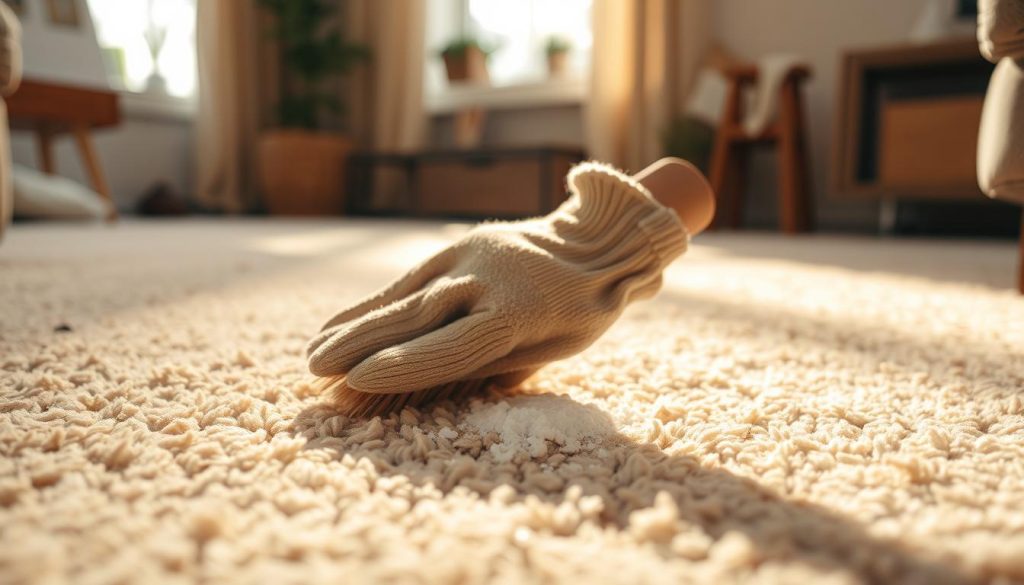
Whole‑carpet method: Sprinkle baking soda evenly over the carpet. Work the powder lightly into fibres with a soft brush when needed. For rugs, we typically let sit around an hour; for larger rooms, 20–60 minutes depending on intensity.
Vacuum technique and zoning
Work one zone at a time. Close doors to avoid tracking powder through the home. This keeps adjacent areas tidy and stops shoes moving residue around.
Use slow, overlapping passes with the vacuum. Focus on edges and under furniture lines where smells often concentrate. Repeat passes until no visible residue remains.
“Thorough removal matters: leftover soda dulls fibres and attracts soil.”
| Step | Action | Why it matters |
|---|---|---|
| Distribute | Evenly sprinkle baking soda | Absorbs odours across fibres |
| Let sit | 20–60 minutes depending on strength | Allows powder to capture smell molecules |
| Vacuum | Slow, overlapping passes; edges last | Removes powder and lifts trapped particles |
Maintenance plan: Repeat a few times a year for a fresh clean between deeper cleaning sessions. Keep pets off treated areas while the powder sits and ventilate the room to avoid dustiness.
When household remedies aren’t enough: choosing enzymatic cleaners
C. If smells come back after drying, we reach for a product built to break organic residues rather than mask them.
Why enzymatic action matters. Bio‑enzymatic cleaners combine enzymes and beneficial bacteria that digest urine proteins and other organic matter. This is a true source removal method rather than a surface cover‑up.
What enzymes and bacteria do
Enzymes act as catalysts that split complex molecules into smaller parts. Beneficial bacteria then consume those fragments, eliminating the fuel for odour formation.
Choosing the right product in Singapore
Look for labels that state “pet stain and odour” or bio‑enzymatic. Check for clear dwell‑time guidance and a note that the solution is safe for carpets and pets.
Application basics
Lightly saturate the area so the solution reaches underlying residue. Follow the bottle instructions for dwell time — many products advise up to 10 minutes, sometimes longer for deep spots.
Blot, do not over‑wet. After the dwell period, blot with a clean cloth and allow complete drying. Avoid rinsing away enzymes too soon; patience improves removal.
Safety and realistic expectations
Avoid harsh chemical cleaners that can harm fibres, leave strong odours, and pose a risk to pets and people. Keep pets away until the area is dry, ventilate well, and never mix cleaners (especially bleach with acids).
“Enzymatic products often deliver the best results for recurring urine patches, because they break organic matter at the source.”
| Situation | Suggested product feature | Typical action |
|---|---|---|
| Recurring urine odour | Bio‑enzymatic, pet‑safe | Saturate, dwell 5–10 min, blot, allow to dry |
| Older, set spots | Longer dwell time on label | Apply cold water mix if recommended, repeat after drying |
| General pet smells across room | Room‑safe enzymatic spray | Spot treat hot spots; use whole‑room methods separately |
Using machines for deeper cleaning without setting the smell
Using powered equipment lets us remove trapped moisture and residues that manual methods miss. Machines give stronger suction and more consistent results on busy carpeted areas.
Spot-cleaning machines for pet accidents and strong suction benefits
Portable spot cleaners spray a cleaning solution and vacuum it back out. Their real advantage is suction that lifts contaminated water rather than leaving it behind.
We use a gentle enzymatic solution first, let it work, then extract. This limits residue and reduces the chance of repeat odour.
Full-size shampooers for bigger areas and routine refreshes
Full-size shampooers suit larger rooms and regular refreshes. They cover areas quickly and provide even extraction across the pile.
For seasonal deep work, we run the machine slowly and avoid over-wetting. Multiple passes with strong extraction beat a single heavy rinse.
Steam cleaning do’s and don’ts for pet smells
Steam lifts grime and allergens, but we avoid direct heat on urine spots. High temperatures can bind odour into fibres and make stains harder to remove.
“Never use hot steam on active urine stains; heat can set the odour.”
Post-clean drying to prevent mould and mildew in damp weather
After any machine use, thorough drying is essential. In Singapore, we clean earlier in the day and boost airflow with fans and open windows.
- Aim for strong extraction so less water remains
- Run fans and dehumidifiers until fully dry
- Keep pets away while the area dries
| Machine | Best for | Key benefit |
|---|---|---|
| Portable spot cleaner | Small accidents and local stains | Targeted spray + strong suction |
| Full-size shampooer | Large areas and routine refreshes | Even coverage, efficient extraction |
| Steam cleaner | Deep cleaning (avoid urine) | Removes grime and allergens; risk of setting odour if hot |
When we should call professional carpet cleaning services in Singapore
When repeated cleaning fails, professional intervention often delivers the decisive solution. We look for clear signs that the issue lies beneath the fibres or keeps returning after drying.
Signs the problem is under the surface
Call a pro if the same spot attracts repeat soiling, odour returns after it seems dry, or the scent appears to come from below the pile. These signals often mean padding or underlay contamination.
Questions we ask cleaners before booking
Ask about pet odour removal, the extraction method they use and how they control moisture to prevent mould. Also query what products they apply and whether residues are pet‑safe.
Preparing the area and keeping pets safe
Clear small furniture and mark problem areas. Share details of past treatments and ensure windows and fans can run during drying.
Keep pets away until the area is fully dry and any recommended off‑limits period has passed. Consider temporary separation during treatment to avoid stress or accidental contact.
“Professional extraction is often the most effective route for stubborn odours, especially in humid Singapore conditions.”
For extra guidance on follow-up cleaning steps, see our linked cleaning steps.
Conclusion
We finish by summarising a clear, repeatable process for lasting freshness. Diagnose the source, act fast on accidents, and prep with thorough vacuuming before any treatment.
For spot work, simple pantry solutions such as baking soda and vinegar often work well when used with careful blotting, correct dwell time and full drying. If organic residue persists, choose a bio‑enzymatic solution that breaks matter down at the source.
Avoid heat on urine; extraction and drying matter more than hot steam. Keep a regular cleaning routine and seasonal deodorising. If odour keeps returning, we treat it as underlay contamination and book professional carpet cleaning services in Singapore.
, With the right choice and a steady routine, we can remove dog odour and keep our home comfortable for people and pets.

