

We begin this guide with clear expectations. In Singapore’s humid flats and air‑conditioned homes, allergens come mainly from mite droppings and remains rather than bites. Controlling these particles needs the right features, not just frequent sweeping.
In practical terms, our review defines the phrase above by three essentials: strong pickup from fabric and carpet, true filtration that keeps particles out of indoor air, and design choices that make regular cleaning easy to keep up.
This guide is for families with allergies or asthma, pet owners, and anyone who wakes congested. We explain why mites thrive locally, why ordinary cleaning can fall short, and what science supports effective control.
We will compare brands and model types, note key technology and tools, and focus on performance for mattresses, upholstery and bin‑emptying to reduce exposure. Use this section to decide if you should read on with your household needs in mind.
– We focus on features that reduce allergen spread, not price alone.
– Readers will learn which model types and technology suit Singapore homes.
Why dust mites are a problem in Singapore homes
Singapore’s year‑round heat and humidity make tiny household arthropods a persistent problem. We need to look past visible dust and see why these microscopic relatives of spiders matter to health and comfort.
How allergens trigger sneezing and asthma symptoms
Dust mites and their waste release proteins that act as airborne allergens. When inhaled they can cause sneezing, itchy or watery eyes, nasal congestion and asthma flare‑ups.
Even when mites are not visible, fragments and droppings linger in bedding and soft furnishings. That’s why routine cleaning that only clears surface dust may still leave a high allergen load.
Why warm, humid air helps mites thrive
Mites feed on dead skin and multiply faster in warm, damp conditions. In our flats and apartments they find ideal habitats in mattresses, carpets, upholstered sofas and rugs.
Air‑conditioning cycles, closed windows and long hours spent on beds or couches amplify exposure. A pet that sheds adds dander and extra food for these tiny creatures, complicating allergy control.
Why everyday vacuuming often fails against dust mite allergens
Daily brushing and quick passes can create a false sense of safety when allergens still linger deep in fabrics. We often see a clean floor and assume the job is done, yet most allergen sources sit below the visible surface.
Microscopic mites and allergens hide deep in fibres, not on the surface
Allergen fragments and faecal particles embed in mattress springs, rugs and upholstery. A tidy surface does not mean low allergen levels.
Soft textiles trap more dust and need agitation and sustained airflow to pull material from deep pile. Quick passes are unlikely to reach this depth.
When the wrong vacuum stirs particles back into the air
Poor filtration or unsealed designs let fine dust escape. Some vacuums blow more particles into the room than they collect.
We note that a cleaner built for hard floors may underperform on soft surfaces unless it has proper agitation and containment. That is why true HEPA capture and sealed bins matter for effective removal.
| Common issue | Impact on allergens | What to check |
|---|---|---|
| Surface-only passes | Leaves deep fibres loaded with dust | Use brush roll and slow passes on soft areas |
| Poor filtration | Releases fine particles into air | Choose HEPA-rated systems and sealed bins |
| Wrong tool for the job | Low removal from mattresses and upholstery | Pick heads made for fabrics and strong suction |
Our aim is realistic: not zero mites overnight, but marked reduction through the right tools and steady cleaning routines. The next section explains the science behind HEPA capture and other features that make this possible.
What science says about removing dust mites with a vacuum cleaner
Scientific studies give us measurable benchmarks to compare claims about allergen removal. This helps us pick features that work in Singapore homes where mattresses and upholstery matter most.
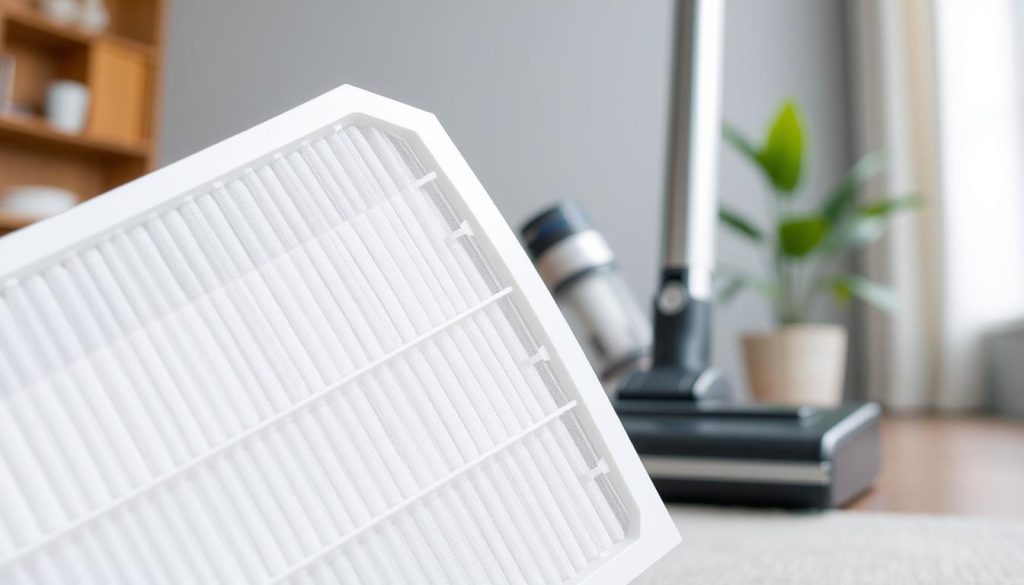
HEPA-filter vacuuming can cut dust mite allergens in rugs by up to 97%
Journal data shows HEPA filtration used correctly can reduce allergen levels in rugs by up to 97%. That number is a useful benchmark when comparing product specifications and real‑world performance.
UV-C technology can kill almost all live mites on soft surfaces in seconds
Recent reviews report that UV light technology kills live mites on soft surfaces quickly. UV‑C complements suction by targeting living organisms while airflow removes fragments and waste.
“Capture, kill and containment together move the needle on allergen control.”
- Use HEPA filters with sealed airflow and the right head for deep pile.
- Treat mattresses and upholstery with UV where recommended, but still extract residues.
- Judge claims by system design, not single labels.
| Feature | Primary effect | Notes |
|---|---|---|
| HEPA / hepa filter | Removes fine allergen particles | Up to 97% reduction in rugs in trials when sealed and used properly |
| UV-C technology | Kills live mites on contact | Acts in seconds; best used alongside extraction |
| System integrity | Prevents re‑emission | Airflow, seals and tool design determine real outcomes |
Our takeaway: Look for verified hepa systems, consider UV‑C where appropriate, and demand sealed containment. These are the non‑negotiables we explain next.
Best vacuum cleaners for dust mites: the non-negotiable features we look for
Not all advertised specs matter; we focus on design elements that cut allergen exposure in practice.
True HEPA capture and sealed filtration
Look for genuine hepa filter systems that state 99.97% capture at ~0.3 microns. Avoid vague labels such as “HEPA-type” which often fall short.
Filtration must pair with a well‑sealed body. Without seals, captured particles can leak back into the room.
UV‑C sterilisation for mattresses and pillows
UV light that targets soft surfaces helps kill live mites quickly. Good designs combine direct UV exposure with immediate suction to remove residues.
Suction, airflow and agitation suited to fabrics
High suction alone is not enough. We prioritise units that balance suction and airflow and include motorised brushes or beater bars to agitate fibres.
Handheld tools or a dedicated handheld vacuum format make beds, cushions and toys easier to treat.
Sealed bins and safe emptying
Allergen locks and sealed dust containers cut the risk of second‑exposure when emptying. Simple binless designs can still spread particles if not sealed correctly.
| Feature | Why it matters | What to check |
|---|---|---|
| True HEPA (99.97%) | Removes fine allergen particles | Look for certified ratings and replaceable hepa filter cartridges |
| UV‑C integration | Kills live mites on contact | Direct exposure, safety cutoffs, paired suction |
| Suction & agitation | Extracts from deep pile and mattress layers | Measure airflow, motorised brush heads, adjustable power |
| Sealed bin / allergen lock | Reduces exposure when emptying | One‑way closures, disposable liners or sealed cartridges |
Choosing the right vacuum type for your home and lifestyle
Our choice of device should match household routines, storage limits and the surfaces we treat most often.
Start by mapping hotspots: mattresses, sofas and carpets need different tools than mainly hard‑floor flats. Consider who lives with you — a family with a pet needs different daily options than a single renter.
Upright and canister options for deep carpets and whole‑home cleaning
Upright and canister units deliver sustained suction and strong brush agitation. They suit large living rooms and high‑pile carpet where extraction depth matters.
Choose models with sealed filtration, replaceable HEPA and good tool sets if you plan regular deep cleaning across the home.
Stick and handheld choices for quick passes and soft surfaces
Stick machines are handy for daily floor maintenance in smaller flats. They are lighter and faster but often have smaller dust bins and limited runtime.
A dedicated handheld or handheld vacuum is invaluable for mattresses, cushions and toys. We recommend this as a companion tool for families and pet households.
Robot and mop combos for automated maintenance
Robot units automate routine cleaning between deep sessions. They reduce settled particles on floors and help keep allergen levels lower day‑to‑day.
Remember: automation is not a substitute for deep extraction. Look for self‑emptying, sealed storage and strong filtration when choosing a robot model.
- Practical cues: storage space, noise tolerance and how often you will clean.
- Check runtime and bin size if deep cleaning is important.
- Prioritise filtration, sealing and suction over shape or brand alone.
Filtration, emissions and indoor air: what “clean” really means
When we judge how “clean” a home is, we must measure what the machine releases into the air as well as what it picks up.
Clean means two things: visible removal of dust and low emissions of fine particles during use. A unit that captures fibres but leaks tiny particles can worsen symptoms while you clean.
Why low emissions matter while you clean
Low emissions reduce immediate exposure. When a device has weak seals or a poor filter, it can re‑emit allergen fragments into the air and undo the benefits of cleaning.
In Singapore’s flats, where indoor air often recirculates, controlling what returns to the air is as important as extraction.
What reputable testing actually measures
Independent labs test multiple factors that matter to our choice: debris pickup on carpet and hard floors, manoeuvrability, suction strength and emissions.
- Suction and airflow: measured with gauges at empty, +100g and +200g wood‑flour loads to show how performance holds up as the bin fills.
- Emissions: quantified with a laser spectrometer after adding wood flour, to count particles released into the air during operation.
- Overall efficiency: how much dust stays captured as you move through a room, not just on the first pass.
“A model that keeps airflow steady as the bin fills will outperform one with higher peak suction but rapid drop‑off.”
When shopping in Singapore, look for independent lab data or certification on HEPA and sealed systems rather than marketing claims alone. That evidence tells us which tools actually reduce airborne particles during cleaning.
Where to vacuum for the biggest dust mite reduction
We concentrate effort where it pays off most. A few targeted passes on key surfaces give faster allergen removal than whole‑house rushes.
Mattresses and bed frames: the main battleground
Start with mattresses and bed frames because prolonged exposure happens here and these places host high mite populations.
Routine: slow, overlapping lanes, extra work on seams and edges. Use a mattress tool or a UV‑capable cleaner to combine suction and sterilisation.
Carpets and rugs: pulling allergens from deep pile
Carpets trap droppings and dead bodies deep in fibres. Agitation plus strong extraction is essential to pull particles up, not just remove visible debris.
Sofas, upholstered chairs and curtains: overlooked hotspots
Furniture and curtains collect settled dust from daily use and airflow. Treat them regularly; soft furniture is a steady source of airborne allergen when disturbed.
Pillows, cushions and soft toys: high-contact items
Quick passes between hot washes keep allergen levels lower day to day. Focus on seams and creases where material gathers.
- Priority checklist: mattresses → pillows/cushions → sofas → carpets → curtains.
- When time is short, treat the bed and pillow first for the biggest symptom relief.
- Empty or replace bags and sealed bins carefully to avoid re‑exposure after cleaning.
Robot vacuum and mop features that matter for dust mites
Robot mop‑vacuum combos earn their keep when they run often and target problem zones. We use them to keep settled particles low between manual deep cleaning of mattresses and upholstery.
High suction thresholds and smart mapping
Look for high suction numbers: at least 7,800 Pa is a sensible baseline and premium models push toward 12,000 Pa to pull debris from edges and low‑pile carpets. Strong suction paired with smart mapping and dirt detection lets the unit focus on hotspots under beds, near sofas and around pet areas.
Sealed, self‑emptying storage
Self‑emptying bases with sealed bins reduce our contact with collected material and stop re‑emission when the robot docks. Choose models with one‑way valves or sealed bags to protect sensitive users during bin changes.
Mop washing and drying to avoid damp problems
Automatic mop washing and a drying cycle prevent damp pads that could create small humid pockets. Controlled water use and heated drying cut odour and lower the chance of encouraging mites and mould.
“Robots are part of a system: they lower day‑to‑day load, while handheld or mattress tools still handle core reservoirs.”
- They improve floor and air cleanliness through frequent passes.
- They work best alongside mattress treatment and occasional deep suction of carpets.
- In pet homes, robots reduce dander and tracked debris that settles into fabric.
How we recommend using your vacuum for better allergy control
We recommend clear, repeatable steps you can fit into a busy Singapore schedule to reduce allergen exposure each day. A routine combines targeted cleaning, humidity control and simple laundry habits.
Vacuum frequency and bedroom priorities
High-risk areas: vacuum 2–3 times per week using strong suction and a genuine HEPA system. Increase this during haze, heavy use or when symptoms rise.
Focus first on the bedroom: treat mattresses, bed frames, floor edges and nearby soft furniture. These spots affect night‑time symptoms and morning congestion most.
How to vacuum to reduce re‑exposure
Make slow, overlapping passes with the correct tool. Use a motorised mattress or upholstery head where available.
Empty sealed bins outdoors or into a closed bag to limit plume and avoid stirring captured material back into the air.
Humidity control: ventilate and keep indoor humidity below 60%
Dust mites multiply at 60–80% humidity. We advise keeping indoor humidity below 60%, ideally under 50%.
Ventilate rooms for about two hours a day, use sensible air‑conditioning settings and run a dehumidifier where needed to stabilise indoor air.
Pairing cleaning with hot washing and sun‑drying
Vacuuming removes many particles but cannot reach all fibres. Hot washing bedding and sun‑drying covers add effective, non‑chemical removal.
Wash pillowcases, sheets and removable covers regularly and expose them to direct sunlight when possible to reduce living mites and allergen load.
- Daily quick pass: a short clean of visible dust and high‑contact items each day.
- Deeper routine: targeted 2–3 times weekly cleans of beds and soft furnishings.
- Before night: focus on the bed to lower night‑time exposure and improve sleep.
| Action | Frequency | Key benefit |
|---|---|---|
| Mattress and pillows | 2–3 times/week + hot wash fortnightly | Reduces night‑time allergen exposure |
| Upholstery and cushions | 2–3 times/week | Removes embedded particles and dander |
| Floors and rugs | Quick daily pass; deep clean weekly | Controls settled dust and lowers airborne re‑emission |
| Ventilation & humidity | Ventilate ~2 hours/day; keep | Slows population growth of mites |
Our view: allergy control is cumulative. Small, repeatable actions done at the right times beat occasional intensive cleaning that is hard to sustain.
Conclusion
We finish with a simple aim: choose a machine that removes dust mite allergens from soft surfaces while keeping emissions low so you are not breathing what you just picked up.
Carry these priorities into checkout: true HEPA capture, sustained suction, effective mattress and upholstery tools, and a sealed disposal system that limits exposure when you empty the bin.
Singapore’s warm, humid flats make consistency more valuable than one-off deep cleans. Use a robot as a maintenance helper and a handheld or mattress tool for targeted treatment of beds and sofas.
Match your choice to floor type, carpet presence and your family’s sensitivity. Prefer verified performance and sealed systems over vague marketing claims.
Use this guide as a checklist and pair purchase decisions with regular routines. For model details on robot suction and sealed bases see our reference to Narwal’s specifications here, and for tips on keeping canisters hygienic consult this short maintenance guide here.

