

We present a clear, product-roundup approach to help Singapore households choose the right tools for allergen control. Our focus is on practical outcomes: fewer allergies, lower allergen build-up and a healthier home environment.
We set realistic expectations. No single device solves every problem, but features like sealed filtration, strong suction and smart containment can materially reduce allergens in daily life.
We explain the difference between tiny dust mites and general debris, and why selecting between full-size models, handheld mattress options and robot systems is about matching the tool to problem areas. Our roundup covers handheld mattress cleaners, cordless stick devices, robot mop combos, carpet-focused models, pet-focused options and a budget pick.
We compare performance, usability and maintenance so readers can buy with confidence. Recommendations prioritise allergen control for those managing sensitivities, including flat dwellers who need quiet, frequent cleaning for better health.
Why dust mites are a bigger problem in Singapore homes
Singapore’s humid climate makes microscopic household pests a year‑round concern. Warm, moist air helps dust mites thrive in beds, rugs and sofas. They feed on the skin flakes people shed while sleeping or lounging.
How humidity and warmth help mites thrive in bedding, carpets and upholstery
High humidity keeps soft furnishings comfortable for these tiny creatures. Air‑conditioning cycles can trap moisture and limit ventilation, so carpets and cushions stay hospitable.
What triggers allergies: mite waste and broken‑down bodies, not bites
Allergic reactions come from droppings and decayed bodies, not bites. Those particles become airborne and irritate airways in sensitive people.
- Soft toys, mattresses and upholstery are primary exposure points.
- Carpets can act as long‑term reservoirs for allergens.
- Humidity control (aim under 60%, ideally below 50%) complements cleaning.
| Risk factor | Why it matters | Quick action |
|---|---|---|
| High humidity | Supports reproduction and survival | Use dehumidifiers; keep RH |
| Soft furnishings | Trap skin flakes and allergens | Launder covers; use targeted cleaners |
| Carpets | Deep fibres hold particles long term | Regular deep cleaning and agitation |
Because these organisms hide deep in fibres, surface tidying alone is not enough. For practical steps on treating mattresses, see our guide on sanitising a mattress like a pro. We follow this logic through the rest of the article, pairing humidity control with targeted cleaning and equipment choices.
What the science says about vacuuming dust mite allergens
Controlled studies give a clear view on what actually reduces household allergen loads. A major trial in the Journal of Allergy and Clinical Immunology found that true hepa filter vacuuming can cut allergens in rugs by up to 97% when done properly.
HEPA filtration delivers measurable allergen reduction
We stress that a genuine hepa filter plus sealed airflow matters. Marketing often uses “HEPA” loosely, but tests and reviews show a labelled hepa filter only helps if the unit prevents blowback.
UV-C kills live organisms on soft fabric
Clinical Reviews in Allergy & Immunology (2023) reported UV-C technology can kill almost all live organisms on a soft surface in seconds. That makes UV-C useful for mattresses and upholstery.
Important limits: UV-C does not replace mechanical pickup. Suction and agitation still remove embedded particles. Together, sealed hepa systems and targeted UV-C give fewer airborne allergens, calmer nights and clearer breathing. This evidence backbone guides our testing priorities and buyer guidance later in the article.
What to look for in a vacuum cleaner for dust mites and allergies
Choosing the right machine means prioritising features that trap and remove allergens rather than just moving them around. We focus on three non-negotiables: capture, containment and usability for frequent cleaning in Singapore homes.
True HEPA filtration and sealed airflow
True HEPA filtration rated to 0.3 microns at 99.97% is essential. Pairing a hepa filter with a fully sealed airflow path prevents blowback so trapped particles do not re-enter the air.
UV-C for mattresses and upholstery
UV-C sterilisation is worth paying for when treating mattresses and sofas. It kills live organisms on contact, but it must be used alongside mechanical pickup to remove residue.
Suction, brush design and emptying
Look for suction power tuned for soft furnishings, not only hard floors. A motor with adjustable power helps clean both rugs and sofas.
Brush heads that agitate fibres and anti-tangle rollers lift embedded hair and pet dander. Allergen-safe emptying — sealed bins, bagged systems or self-emptying bases — reduces exposure when you clear the unit.
| Feature | Why it matters | Recommended |
|---|---|---|
| HEPA filter + sealed path | Stops recirculation of fine particles | True HEPA with gasketed seals |
| UV-C | Kills live organisms on fabric | Handheld mattress unit or integrated head |
| Brush & suction | Removes embedded hair and fibres | Variable power, anti-tangle brush |
Best vacuum dust mites: our top picks for Singapore
Our shortlist groups machines by the jobs they do best, from mattress care to whole‑flat cleaning.
Handheld mattress unit with UV‑C and HEPA
Who it suits: those who prioritise mattress and sofa treatment. These handheld models combine UV‑C sterilisation and true HEPA capture for targeted allergen control.
Cordless stick for whole‑home control
Who it suits: flats that need quick, frequent cleaning. Cordless sticks balance suction, reach and sealed bins for low‑exposure emptying.
Robot mop for daily maintenance
Who it suits: busy households. Robot mop models pair vacuuming with mopping and often offer sealed self‑emptying and HEPA or antibacterial filtration for reduced exposure.
Carpets, pet hair and budget picks
We also list a carpet‑focused model for deep fibre agitation and a pet‑focused option for hair and dander. For cost‑conscious buyers, a budget choice offers effective filtration and decent pickup.
| Category | Key strength | Ideal for |
|---|---|---|
| Handheld mattress | UV‑C + HEPA capture | Pillows, mattresses, upholstery |
| Cordless stick | Whole‑home agility, sealed bin | Hard floors, rugs, quick cleans |
| Robot mop | Automated daily cleaning | Maintenance between deep cleans |
| Carpet deep‑clean | High agitation, strong suction | Thick rugs and high‑traffic carpets |
Handheld mattress vacuums for beds, pillows and sofas
A handheld model made for mattresses lets us target seams and pillows with precision. These devices focus on soft furnishings where particles gather deep in fibres. They pair targeted pickup with technologies designed for fabric care.
When a dedicated tool makes more sense than a full-size cleaner
We find a handheld works better on raised seams and cushions. Full-size machines are excellent for floors but can miss tight folds and pillow faces.
Using a compact unit means we can slow down and cover each area methodically. That contact time improves results on soft surfaces.
What we prioritise: UV-C coverage, tuned suction and fabric-safe heads
UV-C that reaches the contact area helps kill live organisms on fabric in seconds. We only trust units that place the lamp close to the surface while moving at a steady pace.
Suction tuned for soft textiles lifts embedded particles without pulling or snagging. Brush heads should glide and protect delicate weaves.
Allergen containment and cleaning the filter without re-exposure
Seals, filter quality and exhaust design determine whether a device improves indoor air or stirs particles back out. We look for gasketed paths and replaceable filters that trap fine particulate.
For safe maintenance, empty bins and wash or remove filters over a rubbish bag, outside if possible. That reduces the chance of reintroducing allergens into the air.
Routine tips for lasting results
Integrate short, weekly handheld sessions: mattress seams, pillow faces and sofa cushions. Repeat treatments build improvement over time and cut reliance on occasional deep cleans.
Cordless stick vacuums that help reduce allergens across floors and furniture
For many Singapore homes, a cordless stick is the tool we reach for between deep cleans. Quick daily passes cut allergen build-up across floors and on low furniture without the hassle of a cord.
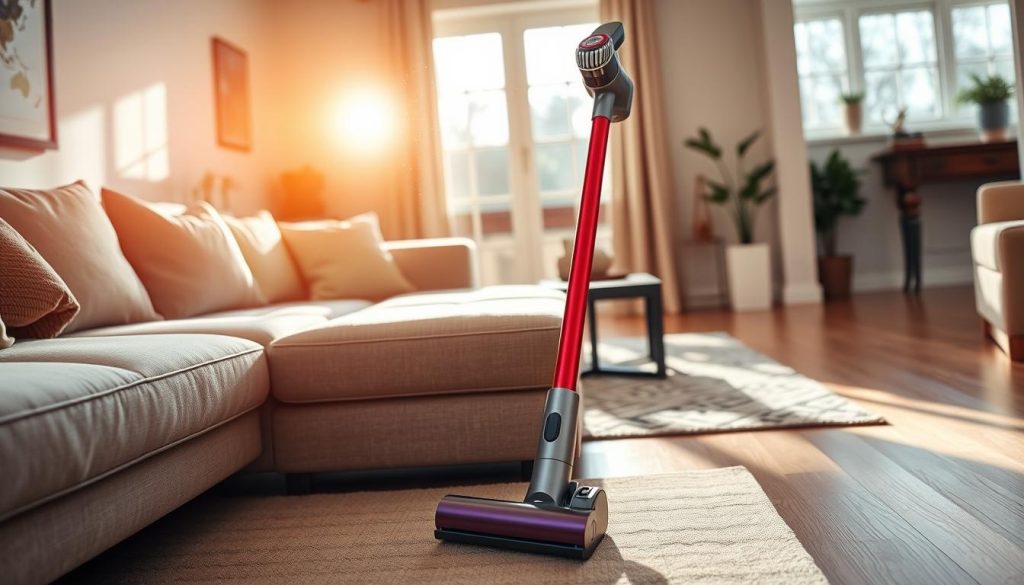
Tineco Pure One Station: strong pickup with low noise and light handling
In our tests the Tineco Pure One Station achieved 99.8% debris pickup in one minute. It is pleasantly low-noise, lightweight and easy to manoeuvre. The front light helps us spot fine particles under beds and along skirting.
Where it may fall short: edges and very fine particles
It struggled with corners and some very small items (for example, orzo). That means a crevice tool or a second pass is often needed to clear tight edges.
Value check for Singapore buyers
The dock does not require wall mounting and offers neat storage. Built-in WiFi and AI voice add convenience, but they come at a premium price. We advise weighing dock convenience and smart features against how often you really need them.
- Who should buy: flats needing whole‑home, frequent maintenance.
- Who still needs a mattress tool: people with bed‑focused symptoms should keep a dedicated handheld for seams and upholstery.
Robot vacuum mops for smart, low-effort dust mite control
We value robot mop systems for their steady, low-effort cleaning that trims daily particle load across mixed floors and rugs. Consistent passes reduce the baseline accumulation that feeds household allergen problems.
How strong suction and mapping help maintain cleaner carpets and hard floors
Suction strength matters: aim for at least 7,800 Pa for deeper removal from fabric and low-pile carpets. That power lifts embedded dirt and hair rather than only skimming surfaces.
Mapping—LiDAR or AI mapping—keeps the robot focused on high-traffic areas so busy zones get regular attention. Accurate coverage means we spend less time chasing missed spots.
Why sealed self-emptying matters for allergy sufferers
Sealed self-emptying bases cut direct contact with collected particles during disposal. For people managing allergy symptoms, that containment reduces the chance of stirring allergens back into the air when we empty bins.
Mop washing and drying to avoid creating mite-friendly moisture
Automatic mop washing and high‑temperature drying prevent damp pads from lingering in humid Singapore conditions. Machines that wash and dry pads between cycles stop moisture build-up that can encourage pests and mould.
Where robots excel — and where they still need support
- Strengths: daily maintenance on hard floors and low-pile carpets; set-and-forget consistency across areas.
- Limitations: mattresses, upholstery and deep carpet pile still need handheld or full-size treatment for thorough allergen removal.
- Buying tip: match suction power and mapping features to your layout. Condos with mixed flooring and pet hair benefit from stronger suction plus anti-tangle brushes.
Narwal picks for deep hygiene and allergen control
For hands-off hygiene, Narwal’s range focuses on sealed handling and rigorous mop care.
Narwal Freo Z Ultra
Why it stands out: 12,000 Pa suction and dual AI camera avoidance give strong floor cleaning and better obstacle handling.
The base station washes mops up to 75°C, which helps reduce residue transfer between rooms and improves hygiene.
Narwal Freo X Ultra
Why we recommend it for quiet homes: 8,200 Pa suction with DirtSense-style boosting and a 53 dB “whisper-quiet” runtime.
Auto mop lift protects carpets and lets the unit work at night or during home office hours with minimal disturbance.
Narwal Freo X Plus
Allergy-conscious value: 7,800 Pa suction, a zero-tangling brush and up to seven weeks of dust storage to reduce handling frequency.
Its anti-tangle brush is practical where long hair or pet hair builds up daily.
Narwal S20 Pro
Top performance option: Antibacterial filter with >99.9% rate and up to 20,000 Pa suction for deep pickup under beds and sofas.
Fold-flat 180° articulation plus AI DirtSense and solution dispensing/drying make it ideal for hard-to-reach zones.
How to choose: Match suction and brush type to your floors and hair load, pick quieter models if you need night runs, and prefer longer dust storage or antibacterial filtration if you want less handling.
| Model | Suction (Pa) | Key hygiene feature | Best for |
|---|---|---|---|
| Narwal Freo Z Ultra | 12,000 | Base wash up to 75°C; dual AI avoidance | Deep hygiene, mixed floors |
| Narwal Freo X Ultra | 8,200 | DirtSense boosting; 53 dB quiet | Night runs, WFH flats |
| Narwal Freo X Plus | 7,800 | Zero-tangle brush; 7-week dust storage | Pet hair, low-maintenance users |
| Narwal S20 Pro | Up to 20,000 | Antibacterial filter >99.9%; fold-flat 180° | Under-furniture cleaning; allergy-focused homes |
Where to vacuum for the biggest dust mite impact
A targeted plan saves time: focus on the places that release the most airborne particles so each clean has measurable benefit.
Mattresses and bed frames
Highest-priority zone. Mattresses hold skin flakes and warm, humid conditions help dust mites reproduce. Work seams, edges and the bed base with a handheld mattress tool for direct pickup and sterilisation.
For a step-by-step routine, see our mattress treatment guide.
Upholstery and curtains
Soft furniture and blackout curtains trap particles and allergens out of sight. Slow, focused passes with a stick or handheld head remove settled material from seams and folds.
Carpets and rugs
Thick carpet fibres act as long-term reservoirs. We recommend agitation plus repeated passes on high-traffic areas rather than a single quick sweep to reduce embedded particles.
Pillows, cushions and plush toys
These require frequent between-wash care. Use a handheld for cushions and a quick treatment for stuffed toys, or follow guidelines to remove dust mites when laundering isn’t possible.
How we evaluate and compare vacuums in our roundup
Our comparison focuses on measurable pickup, real‑world filtration and day‑to‑day usability. We run repeatable tests in typical Singapore flats so results reflect everyday conditions, not just lab numbers.
Pickup performance on mixed debris, including fine dust and hair
We measure debris capture across mixes of fine dust, short hair and larger particles. Tests include timed one‑minute passes and corner checks.
For example, the Tineco achieved 99.8% debris pickup in a standard one‑minute test but needed extra passes for edges. That shows raw power is only part of the story.
Filtration quality: HEPA claims versus real‑world sealing
We inspect the hepa filter label and the seal path. A true hepa is useless if airflow leaks around the filter.
We also test exhaust for blowback and check replaceable filter maintenance to confirm sustained performance.
Usability: weight, head design, lights and reach under furniture
Handheld weight, swivel heads and a front light matter in tight HDB layouts. Devices that are easy to carry and reach under beds get used more often.
Maintenance: filter washing, bin emptying and ongoing costs
We score how simple it is to wash or replace filters, empty the bin without re‑exposure and buy spares. High upkeep lowers real‑world cleaning frequency.
Noise and comfort for frequent use in HDB flats and condos
We record sound levels and ergonomics. Quiet, low‑vibration cleaners encourage daily use, while loud models are left for weekends only. That difference affects long‑term allergen control.
Conclusion
Finally, we offer a simple plan to turn features into real results for home health.
Choose a vacuum with true HEPA, strong soft‑surface suction, good agitation and sealed containment rather than relying on vague labels. Evidence shows HEPA‑filter cleaning can cut allergens in rugs by up to 97%, and UV tech kills live mites on fabric in seconds.
Match tools to lifestyle: a handheld for mattresses and sofas, a cordless stick for quick whole‑home passes, and a robot mop system for daily maintenance with sealed self‑emptying and mop drying. Consistent use matters as much as specs in humid Singapore; reducing the allergen amount in key zones improves comfort over time.
Action checklist: identify hotspots, pick the right tool, and commit to a realistic cleaning rhythm to protect health and reduce allergies at home.

