

We guide readers in Singapore through a focused review of bed and mattress cleaners designed to cut allergen build-up. Our aim is clear: reduce dust and pet hair from soft surfaces using machines made for beds rather than relying on a general household unit.
We test by using a crumb-and-debris mattress method that shows real suction and pickup beyond marketing claims. We also assess filtration, sealed dust handling and everyday ergonomics so you can match a model to your flat, budget and storage limits.
Our review names top picks and why each suits different needs: Jimmy BX5 Pro for overall performance, UZK for multi-use, JIGOO for affordability, Dyson Car + Boat for cordless use, and Tineco Pure One Station for hands-off upkeep.
Expectations: we set realistic goals. This guide aims to help you choose and buy with confidence, not to provide medical advice. We focus on cleaning performance, HEPA options, UV-C features and ease of use for Singapore homes.
Key takeaways: purpose-built bed cleaners outperform general units on soft surfaces; pick by filtration, suction and lifestyle needs.
Why dust mites are a real issue in Singapore bedrooms
Singapore’s warm, humid climate and long air‑conditioning cycles create perfect conditions for tiny pests to thrive in bedding and soft furnishings. We see how moisture and trapped fibres let these organisms colonise mattresses, pillows and sofas quickly.
What they feed on: common nightly debris — flakes of skin, pet hair and general dust — supplies a steady food source. This explains why fabric surfaces become hotspots rather than hard floors.
- Soft surfaces hold particles: seams and fibres trap fine matter deeper than smooth floors.
- Symptoms stem from allergens: allergic reactions usually come from droppings and dead bodies, not bites.
- Health impact: sneezing, itchy eyes, blocked noses and asthma flare-ups affect children, older adults and sensitive households most.
For pet owners, buildup can accelerate, so consistent cleaning matters more than occasional deep cleans. We recommend treating this as an everyday home care task and choosing tools that reduce allergen load across fabric surfaces.
What science says about mattress vacuuming for allergens
We rely on peer results and trial data to judge which features reduce allergen loads on fabric surfaces. Recent studies give clear figures that help us weigh suction against filtration and sanitising tech.
HEPA-filter cleaning and allergen reduction
HEPA media matters. Some studies report HEPA-filter cleaning can cut dust mite allergens in rugs by up to 97%. We note that a solid hepa filter plus a good seal prevents most microscopic debris from escaping back into the room.
What sanitising light adds beyond suction
uv-c light serves as a surface sanitiser. A 2023 claim says UV can kill almost all live mites on fabric in seconds. Still, light does not lift or remove dead debris or flakes; suction and agitation remain essential.
Why poor filtration can worsen airborne particles
Poor seals and weak filters let tiny particles recirculate into the air. In compact Singapore flats, this effect is more noticeable. Our aim is to reduce allergen load and to disrupt habitats rather than to rid dust mites with a single feature.
Our testing approach and what we looked for in a dust mite vacuum
We set up a controlled messy-mattress scenario to measure pickup under realistic conditions. Our testing mindset favours practical results over spec sheets. We focus on what reaches the dust cup, what clings to the head, and what remains trapped in fibres.
Suction performance on a crumb-and-debris test
We run tests by scattering crumbs, lint and pet hair across a mattress. After a single pass we note residue, cup fill and any blockages. This tells us how suction and suction power behave on fabric rather than on paper specs.
Build quality and durability relative to price
We inspect material feel, dust-cup locks and seal integrity. A solid assembly predicts longer life under frequent use. We also compare expected longevity against price so people in Singapore can weigh whether premium makes sense.
Portability for beds, sofas and tight flats
Handling trials cover weight, cord reach and storage footprint. We test handheld vacuum and stick formats for agility around frames and headboards. Mobility often decides which model suits small HDB and condo layouts.
How this maps to our shortlist: units that pass the messy-mattress pickup and feel sturdy score higher for bed use, while lighter handheld cleaners win for quick spots and multi-room flexibility. For a detailed buying guide see our mattress cleaner guide.
Key features that matter most in a dust mite vacuum cleaner
We focus on the features that make a real difference when cleaning mattresses and soft furnishings in compact homes.
HEPA and multi-stage filtration
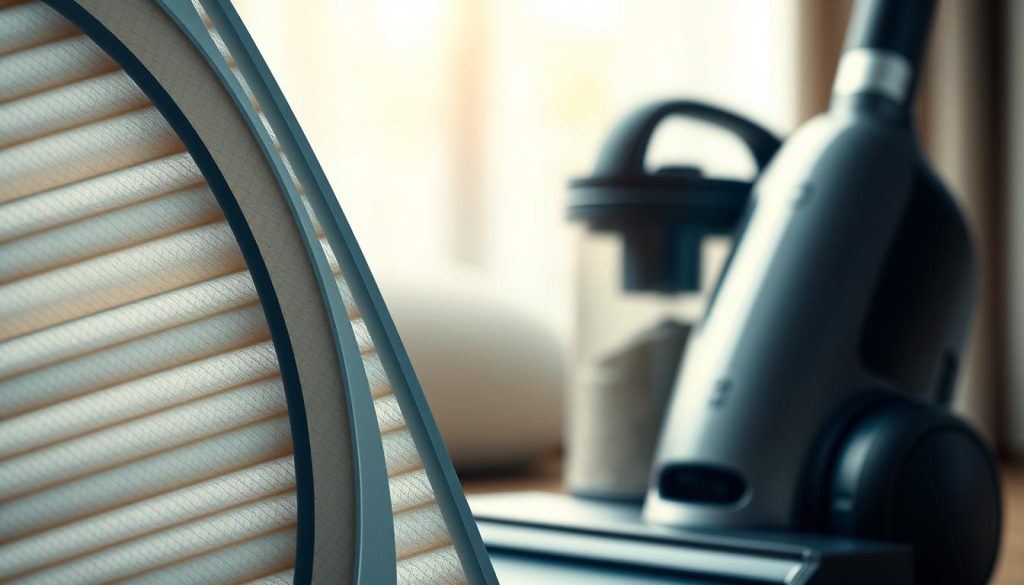
HEPA media capture up to 99.97% of airborne particles when combined with pre-filters. A multi-stage filter setup stops fine debris before it reaches the motor and returns clean air to the room.
UV-C light as sanitising support
UV-C light helps reduce live organisms on surfaces. It is useful as a complement, not a substitute, for physical removal via suction and agitation.
Suction, kPa and real-world performance
Suction power measured in kPa gives a benchmark. Higher kPa usually means stronger lift, but head design and airflow on soft fabric matter equally for real pickup.
Dust cup design and sealed emptying
A sealed dust cup and secure latch reduce release during emptying. For allergy-prone households, a clean dump matters as much as filtration.
Heat or hot-air modes
Hot-air modes can help with dehumidifying and comfort. They do not replace strong suction or good filters for particle removal.
- Quick checklist: HEPA, sealed system, usable head width, reasonable noise, easy maintenance.
| Feature | Why it matters | What to look for |
|---|---|---|
| HEPA + pre-filter | Stops microscopic particles | Replaceable HEPA, clear rating |
| Suction (kPa) | Lifts embedded debris | Higher kPa plus soft-surface head |
| Sealed dust cup | Cleaner emptying | One-touch release, tight seals |
What is the best dust mite vacuum for different needs and budgets?
Choosing a suitable machine depends on how you balance suction, filtration and daily handling around a compact Singapore flat. We match models to real-life scenarios: limited storage, pets, humid conditions and multi-room use.
Best overall for most homes
Jimmy BX5 Pro combines high airflow, a true HEPA stage and UV‑C support. For regular mattress care in humid flats, this combo offers reliable allergen reduction and consistent pickup.
Best affordable pick for targeted mattress cleaning
JIGOO J300 gives HEPA filtering and heated air at a lower price. It suits households that want focused mattress and pillow cleaning without premium extras.
Best cordless option when portability matters most
Dyson Car + Boat excels for quick spot work and car interiors. A handheld form and strong motor make it ideal where cords impede access.
Best multi-use choice for mattresses, sofas and pet beds
UZK is light, manoeuvrable and designed for soft furnishings. It balances storage and reach for owners who prefer one machine across several places.
Expectation note: our goal is to reduce allergen load and improve cleaning consistency, not to promise total eradication. Choose by suction, sealed HEPA handling and how often you’ll use the unit.
| Scenario | Recommended model | Key strength | Consideration |
|---|---|---|---|
| Regular mattress upkeep | Jimmy BX5 Pro | Strong suction + HEPA + UV‑C | Bulky for tight storage |
| Budget, targeted cleaning | JIGOO J300 | Heated air, HEPA at low cost | Fewer accessories |
| Portability and car use | Dyson Car + Boat | Handheld power and tools | No UV‑C or hot air |
| Whole-home soft furnishings | UZK | Lightweight, multi-surface | Variable suction on thick pile |
Best overall: Jimmy BX5 Pro mattress vacuum
Our hands-on trial found the Jimmy BX5 Pro combines strong agitation and filtration that suit mattress care in humid flats.
Why we like it
High-frequency tapping brush agitates fibres and helps lift embedded debris and tiny particles from seams.
Multi-stage filtration includes a true HEPA stage so expelled air stays cleaner after a pass.
UV-C light offers a sanitising layer that complements physical removal rather than replacing it.
How it performed in debris pick-up testing
In our crumb-and-debris mattress test it removed most visible lint and fine fragments in a single pass.
We noted that pickup improved when we slowed the head over seams and used repeated passes along edges.
Who it suits in Singapore
We recommend this model for regular mattress upkeep, allergy-aware families and humid bedrooms where particles accumulate faster.
Its 5-metre cord gives reach across typical flat layouts, making routine cleaning practical.
Trade-offs to know
Cord management requires a little effort since the cable does not retract.
The wider base covers more area but can need extra passes in tight crevices and deep seams.
For a broader comparison on mattress-specific units see our linked review on mattress cleaners.
Best multi-use for the whole home: UZK Bed Vacuum Cleaner
For busy homes that need one tool for many surfaces, we turned to the UZK model to see how well it moves room to room.
Where it helps beyond the bed: sofas, armchairs and pet beds benefit from quick passes. It lifts loose pet hair and surface dust between deeper cleans, making routine upkeep faster.
Lightweight handling and compact storage
We liked its low weight and narrow profile. Carrying between floors and stowing in a small cupboard suits typical Singapore flats. Some models include aromatherapy tablets for a light scent after use.
Usability realities to plan for
It is corded, so map your route room‑by‑room or use an extension lead. Suction can vary on thick pile, so you may need slower passes or extra runs on crumb clusters.
- Dust cup: holds a fair volume but fills quicker with multi-surface use.
- Filtration: HEPA plus UV and hot air support help airborne return and sanitise surfaces.
- Handheld mode: converts for small spots, handy for stairs and car interiors.
“Light enough to carry, versatile enough to refresh a whole flat — with realistic limits on raw suction power.”
Best affordable: JIGOO J300 corded mattress vacuum
A budget corded model can surprise you by lifting fine lint that has settled unseen for months.
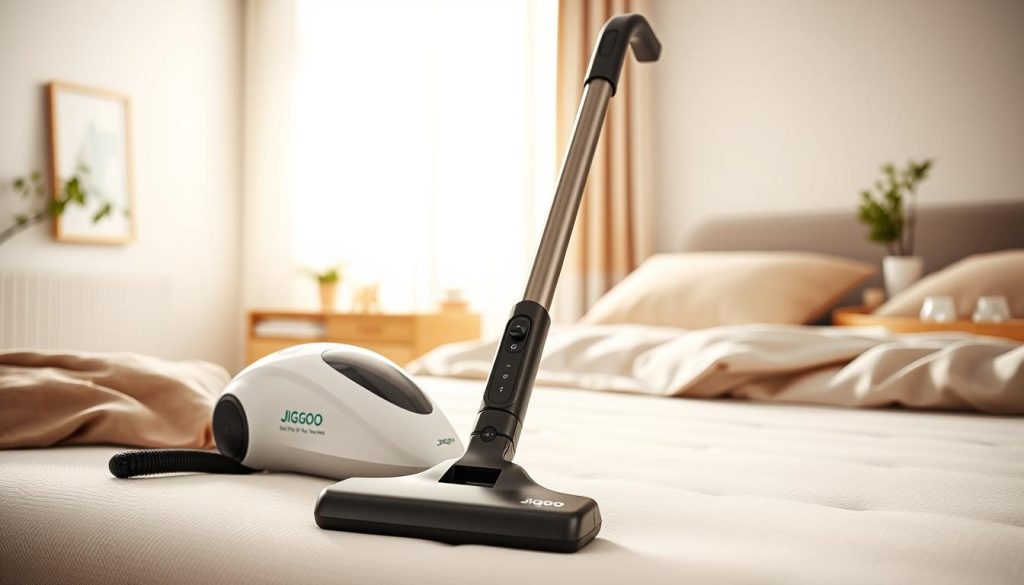
Why it represents value: the JIGOO J300 bundles a true HEPA stage, dual UV light heads and hot-air output in a compact cleaner. For a lower price, that trims airborne return and adds a sanitising step.
Cleaning performance notes: we saw tiny lint and fine dust collect in the dust cup after a single pass. Repeated slow passes over seams yielded the best results for embedded fibres.
Day-to-day usability: its small footprint makes storage in flats easy, though the corded design needs planning for reach. Mode indicators are limited, so settings feel unclear at first.
How to get rid of daily build-up: use slow, overlapping strokes along seams weekly. Keep the pre-filter and hepa filter clean and check seals before emptying the dust cup to avoid escape.
Best cordless power pick: Dyson Car + Boat Handheld Vacuum Cleaner
For many flats, a light, powerful handheld unit wins when access and speed matter most. We select a model that balances strong pull with easy handling for mattress seams, sofa gaps and car seats.
Where it wins: powerful suction and attachments for crevices
Dyson shines with a compact motor and tidy tool set. With a crevice tool and mini motorhead, it reaches seams and tight gaps that larger bases cannot.
Its powerful suction lifts visible lint and loose debris after a single pass. For quick spot work on upholstery and car interiors, it saves time.
When it’s worth paying more: versatility for beds, cars and upholstery
We recommend this option when you want one cleaner for many jobs. It doubles as a handheld vacuum and a cordless vacuum for rapid cross-room use.
Dyson units often carry a two-year warranty, which helps justify a higher price if you expect regular, multi-zone use.
What it lacks versus specialist bed machines
It does not include UV-C sanitising or hot-air modes. That means removing allergens relies mainly on suction and technique rather than heat or light.
Check the filter and sealing if allergies matter. Some households will still prefer a sealed HEPA setup for minimal airborne return.
| Aspect | Dyson Car + Boat | Notes |
|---|---|---|
| Portability | Excellent | Lightweight, cordless option for quick jobs |
| Suction | Strong | Good for lint, crumbs and pet hair |
| Sanitising features | None | No UV-C or heating; relies on physical removal |
| Filtration | High-quality washable filter | Verify HEPA claims if allergies are a concern |
“A versatile handheld that wins on reach and pull, but it does not replace specialist sanitising tools.”
Also worth considering: Tineco Pure One Station Cordless Vacuum Cleaner for allergy-focused whole-home cleaning
For whole-home allergen control, we also trialled a premium cordless station aimed at regular floor and rug upkeep.
Debris pick-up performance and why it matters for common allergens
Test result: 99.8% debris pickup in one minute under our lab run. That rate matters because allergens spread across floors, rugs and upholstery, not just beds.
Everyday experience: lightweight handling, low noise and front light
We found the unit easy to carry between rooms. Its low noise helps maintain routines without upsetting people or pets.
Front light reveals hidden dust in low light, so cleaning feels more thorough and faster.
Practical considerations: corner performance, smart features and premium price
The cleaner can struggle with corners and tiny particles. Edges in compact Singapore flats may need a follow-up crevice pass.
Smart features such as WiFi and AI voice offer convenience, but they are optional extras for households focused purely on air and health outcomes.
| Aspect | How it performs | Notes |
|---|---|---|
| Debris pickup | 99.8% in 1 minute | Strong for floors and rugs |
| Handling | Lightweight, low noise | Good for regular use |
| Corner/edge cleaning | Variable | May need extra passes or attachments |
| Smart features | WiFi, AI voice | Convenience vs. cost |
| Price | Varies by retailer | Suited to people investing in long-term health |
Who should consider it: households that want a single machine to manage allergens across floors, rugs and upholstery rather than a specialist for mattresses alone. For broader context on household allergen control see our house dust mite guide.
How we recommend using a dust mite vacuum for better results
Small technique changes let us extract more debris from seams, cushions and rugs with the same machine.
Best places to clean
Target mattress seams and edges first; these trap flakes and fibres. Move to pillows, cushions and rugs next.
Upholstered chairs and armrests collect like dust where we sit. Slow, overlapping strokes work better than quick passes.
How often to clean for allergy-prone homes
We recommend light passes twice weekly and a deeper session every two weeks. More frequent cleaning reduces rebuild time for mites and loose dust.
Extra steps that support cleaning
- Use a mattress protector to block penetration.
- Wash bedding in hot water where possible and deodorise with baking soda before a vacuum pass.
- Keep a seated hepa filter in place, follow replacement schedules and avoid overfilling the dust cup.
When vacuuming isn’t enough
Warning signs: persistent odour, worsening sleep comfort, sagging or creaking. If these appear, consider mattress replacement at about five to ten years.
“Combine routine cleaning, barrier methods and careful filter care for the best chance to get rid dust and reduce allergens.”
Conclusion
Our final note: choose a machine you will actually use, then stick to a simple routine that keeps fabric surfaces fresher and air clearer.
We picked models by plain criteria: consistent suction, sensible filtration and handling that suits small Singapore flats. For quick spots go cordless; for regular mattress care favour sealed filters and steady pull.
Summary: Jimmy BX5 Pro suits regular upkeep, UZK fits multi‑use needs, JIGOO J300 offers value, Dyson Car + Boat helps with reach and Tineco suits whole‑home upkeep.
Pick one recommended vacuum, pair it with weekly linen care and careful emptying, and consult a clinician if symptoms in people persist despite cleaning.

