

We begin by defining the task: extracting liquid from fabric and padding using wet-safe equipment, not by trying to force a standard machine to do the job.
In Singapore’s warm, humid climate, slow drying raises the risk of mould and odours. We act quickly to limit damage in living areas and protect subfloors beneath the pile.
Our priorities are clear: safety first, rapid extraction next, then correct drying and sanitising to stop problems returning.
We handle spills, minor leaks and over-wetting after a deep clean. For these we favour wet/dry extractors, carpet extractors or shampoo machines with suitable attachments because each tool has a defined role in fast removal and thorough rinsing.
Throughout this guide we set simple, step-by-step methods for homeowners, and we note when to pause and call professional help if the risk is high or moisture has penetrated padding.
The real aim is not only to remove visible liquid but to cut hidden damp in underlay and subfloor before mould can take hold.
Why we avoid using a regular vacuum cleaner on wet carpets
Using a standard household appliance on a soaked rug can create immediate electrical hazards in any Singapore home. We insist on safer options because safety is our first priority and simple mistakes cause lasting problems.
Electrical and motor risks:
How moisture reaches internal components
Moisture can travel through the intake and reach wiring, the motor and filters. That leads to short circuits, corrosion and clogging that reduce performance or cause sudden failure.
Hidden damage and long-term harm
Even if the machine seems to work after exposure, trapped damp inside seals and chambers makes smells and later faults more likely. Small faults become costly repairs.
Why pushing liquid deeper makes mould worse
If a unit is not wet-safe, suction can force moisture deeper into fibres and underlay. That creates an ideal environment for mold and mildew and raises respiratory health risks for occupants.
- Check manuals: look for explicit wet/dry approval, sealed filters and liquid tanks.
- Do not assume marketing labels imply wet-safe design.
What we use instead: the right machine and tools for water extraction
A swift, targeted extraction using the right equipment prevents lingering damp and reduces drying time.
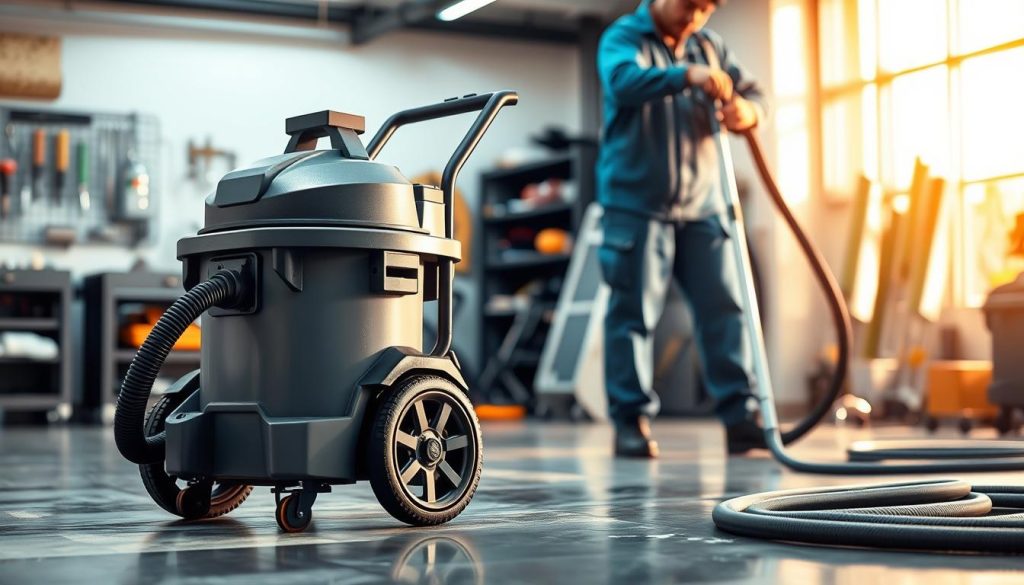
Wet/dry vacuum units are our first response. Special floor nozzles pull liquid into a separate dirty-water tank and an internal float shut-off protects the motor when the tank is full.
Professional machines often deliver 180 mbar+ suction and large 50–70 L tanks. That capacity means fewer stops and cleaner emptying via a drain hose or tilt action.
How rinse-and-extract systems work
Carpet shampooers and extractors spray a solution, agitate, then use suction to lift rinse into their dirty-water tank. Shampoo machines can extract, but suction is often weaker than hot water extraction.
- Attachments we rely on: floor nozzle for flat areas, carpet nozzle for textile surfaces and a crevice tool for skirting lines.
- Choosing the right tools reduces retained moisture and lowers mould risk in humid areas.
| Tool | Best for | Key feature |
|---|---|---|
| Wet/dry unit | Rapid spills | Large tank + float cut-off |
| Carpet extractor | Rinse and extract | Rinse solution + suction tank |
| Hot water extraction | Deep clean | Stronger suction, lifts dirt |
How we prepare the area before we start vacuuming up water
Preparation is quick but critical. We contain the affected area so moisture cannot spread into other rooms. Small steps now save time and reduce later damage.
Isolating the spill zone and protecting nearby floors and skirting
We set absorbent towels at boundaries and place temporary barriers to stop migration onto adjacent floor finishes. This protects skirting and baseboards that can wick moisture.
Practical protection: route hoses and cables carefully to cut trip risks and keep the zone sealed.
Clearing furniture safely and checking for slip hazards
We move light furniture away and lift legs from the wet zone. Protective pads under legs stop staining and transfer during the process.
We also run a slip-risk check on hard floor edges and corridors. Wet edges can become dangerously slick in a typical Singapore home.
Quick checks for padding saturation and subfloor moisture
We peel back a corner to see if the padding is saturated. If underlay holds damp, removal is often the only effective way to prevent mould, as ECOVACS advises.
We inspect seams and edges for signs of spreading moisture before deciding on extraction alone. Preparation is part of our extraction strategy, not an optional extra.
| Check | What to look for | Action |
|---|---|---|
| Edge damp | Dark seams, bubbling | Isolate and dry; consider lifting |
| Padding | Spongy, musty smell | Remove if saturated |
| Slip risk | Slick tiles or thresholds | Mark area; use mats |
Our step-by-step method to carpet cleaner vacuum up water
We follow a repeatable sequence so homeowners can act fast and safely.
Removing excess water first to reduce overall drying time
We start by extracting pooled liquid immediately. Every litre removed now shortens drying time and lowers mould risk.
Use broad, direct suction on the deepest patches before refining the surface. This saves time and reduces strain on fans later.
Slow extraction passes, overlapping strokes, and working from the outside in
Our technique is deliberate. We make slow, overlapping strokes and work from the spill edge toward the centre to avoid spreading damp.
We pause briefly at the end of each pass so suction can draw moisture from fibres rather than just skimming the top.
Emptying the tank correctly and using float shut-off protection
We empty the tank before it is completely full. A tilt drain or hose reduces splashing and keeps the unit stable.
Float shut-off systems protect the motor by stopping intake when the recovery tank reaches capacity.
Rinsing and re-extracting when cleaning solution is involved
If a cleaning solution was used, we rinse with clear water and re-extract until the recovery runs clear and the pile feels only slightly damp.
Stopping before overwetting: preventing odours, residue, and fibre damage
We stop when there is no visible pooling, the surface feels lighter underfoot and edges show no new spreading lines.
If repeated extraction does not reduce damp, we move to targeted drying and subfloor assessment rather than forcing more liquid through the pile.
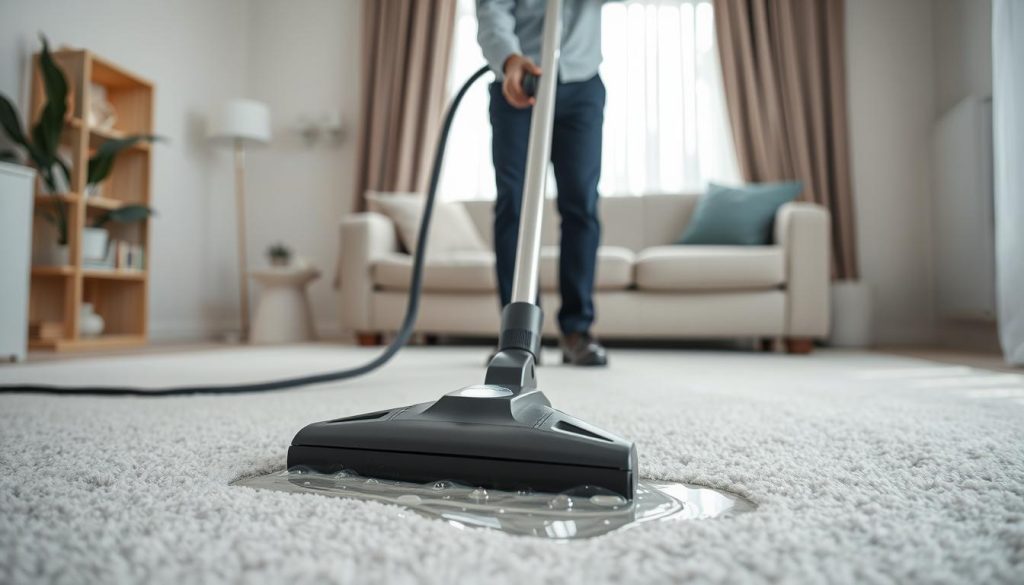
For a detailed extraction workflow and professional guidance, consult our full extraction steps extraction checklist.
Drying the carpet properly to prevent mould, mildew, and odours in humid Singapore homes
We treat drying as a controlled process, not something to leave to chance in Singapore’s climate. Rapid, managed drying reduces the risk that damp will become a long-term source of mould and bad smells.
Boosting air circulation
Airflow matters. We place fans to drive steady air across the surface and run dehumidifiers to lower room humidity.
Where possible, we ventilate without bringing in humid outdoor air. This combination speeds drying and protects health by limiting mould spore growth.
When we lift the carpet and deal with underlay
We lift the edge if moisture reached seams or the underlay feels spongy. Lifting improves airflow and reveals the true extent of saturation.
Wet underlay often needs removal. Padding traps moisture, bacteria and spores. Replacing it prevents recurring mould and odours.
Cleaning and sanitising exposed areas
After removing underlay, we clean and sanitise the exposed floor and joists. This reduces the bacterial load and lowers mould risk before re-laying materials.
For contamination or heavy soiling, we may follow with hot water extraction or steam deep cleaning, using strong recovery to avoid residue.
Confirming dryness before normal routines
We only resume a dry vacuum routine when the pile feels dry through, edges are not cool or damp, and the subfloor shows no moisture signs.
If drying stalls despite fans and dehumidifiers, we escalate to professional cleaning or water-damage support.
“Complete drying is the single most important step to prevent future mould and protect indoor health.”
For a practical how-to on routine care after drying, see our full guide on cleaning carpet floors like a pro.
Maintenance practices that keep performance high and reduce repeat water damage
Good maintenance starts long before a spill: it begins with the right detergent mix and a clear plan.
Correct chemistry matters. We follow manufacturer dilution guidance so the solution does not leave sticky residue that attracts dirt and dust. Too much shampoo needs extra rinsing and lengthens drying time.
Post-job care keeps performance steady. After each use we empty and rinse the recovery tank, wipe seals, and run a short blower or let the unit air-dry. This prevents stale smells and build-up that reduce suction and cleaning power.
Simple checks to stay ready
- Inspect filters and replace or dry them before storage to protect airflow.
- Check hoses, nozzles and seals for blockages or wear so response is fast.
- Store attachments clean and dry so tools are ready for spills in high-risk areas.
We also manage indoor humidity, act quickly on accidents, and watch entryways and dining zones closely. Regular maintenance reduces deep cleans, extends the life of textiles and machines, and helps prevent hidden damp that leads to costly repairs.
Conclusion
We prioritise wet-safe equipment, and that single choice prevents costly damage and hazards when we need to extract liquid from textile flooring.
Our workflow is simple: extract quickly with a wet dry vacuum or extractor, then dry aggressively with fans and dehumidifiers until both pile and subfloor are fully dry. This cuts the chance of musty odour and recurring mould in humid Singapore homes.
Limit shampoo and avoid overwetting; rinse-and-extract until recovery runs clear. Use hot water extraction or steam for deep cleaning when strong recovery is needed.
If underlay or base structures remain damp or drying stalls, escalate to professional cleaning to prevent long-term damage. The right process protects carpets, shortens downtime and stops repeat problems.

