

We know many households in Singapore face high humidity and fast build-up of allergens. Soft furnishings often harbour tiny creatures that worsen allergies and asthma, so cleaning must do more than look tidy.
Clinical studies show that true HEPA filtration can cut allergen levels in rugs by up to 97%, and UV‑C modules can render live mites inactive in seconds. We set expectations: the right tool reduces allergen load rather than only improving appearance.
This guide is for families with children, pet owners and anyone living in humid flats. We explain what “best” means in practice: strong pick-up on fabric, reliable filtration and a sealed design that stops particles returning to the air.
We will compare HEPA and sealed systems, UV‑C, agitation, airflow, hygienic emptying, noise and running costs. We also signpost models such as the Tineco Pure One Station and the JIGOO T600 and S100 series while keeping our focus on decision criteria, not hype.
Why dust mites matter for allergies and asthma in Singapore homes
In Singapore’s warm, humid environment we see rapid build-up of tiny organisms in soft furnishings. We want to be clear: these creatures do not bite people. Instead, their droppings and broken bodies release particles that travel in the air and trigger symptoms.
“Allergen fragments from bedding and upholstery become airborne when disturbed and can worsen breathing and sleep quality.”
Where they thrive is predictable: mattresses, pillows, fabric sofas, carpets and pet beds trap skin flakes and hold moisture. That makes these hotspots our priority for cleaning and control.
- Biology in brief: a dust mite feeds on dead skin and produces droppings; these are the main allergen source.
- Daily reality: humidity and warm indoor temperatures encourage growth and persistence.
- Night-time effect: people often feel worse on waking because bedding concentrates particles.
| Hotspot | Why it matters | Priority action |
|---|---|---|
| Mattress & pillows | Collects skin flakes, retains moisture | Targeted cleaning, sealed covers |
| Sofas & upholstery | High contact area; fabric traps particles | Regular deep cleaning and agitation |
| Carpets & rugs | Reservoir for long-term allergen build-up | Frequent cleaning and good ventilation |
For evidence-based guidance on health impacts and control measures, see our review of clinical research and a practical local primer: peer-reviewed analysis and local house‑dust mite guide.
How a vacuum actually reduces dust mite allergens
A well-designed cleaning machine removes embedded particles from fabrics and then locks them away so they cannot return to the room. This two-step action — extraction plus containment — is the practical route to fewer airborne triggers.
What the science suggests about HEPA filtration and allergen reduction
Clinical data show a true HEPA unit can reduce allergen levels in rugs by up to 97% (Journal of Allergy and Clinical Immunology). We therefore look for genuine HEPA performance and a sealed airflow path so the filter actually matters in use.
When the wrong machine can worsen indoor air
Non-HEPA or poorly sealed devices often pick up visible debris but re-release fine particles through exhaust gaps. That defeats the goal: visible cleanliness with higher airborne irritants.
- Mechanism: extraction from fibres, then trapping in a sealed chamber or cartridge.
- Buyer check: true HEPA label plus a sealed system and replaceable HEPA filter.
- Outcome: fewer airborne particles after cleaning, which can reduce triggers for allergy-prone households.
Best vacuum against dust mites: what to look for before you buy
Start with three priorities: a sealed airflow path, a genuine HEPA filter and fabric tools that lift and extract.
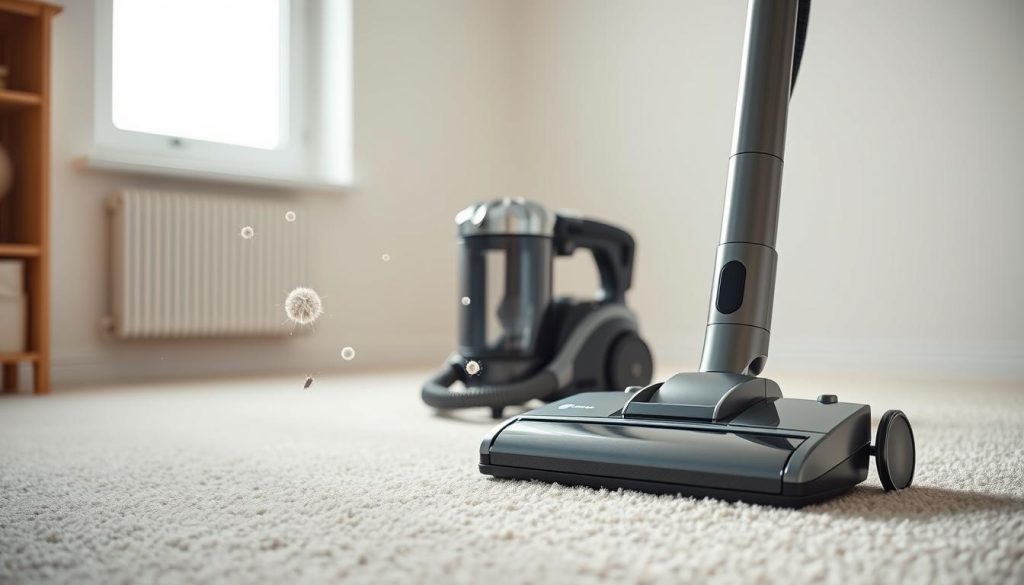
True HEPA filters and sealed systems
HEPA matters only if the system is sealed. A labelled hepa filter must sit in a closed path from nozzle to bin. Otherwise fine particles leak back into the room.
UV‑C sterilisation for soft surfaces
UV‑C is an add‑on, not a replacement for extraction. Clinical work shows rapid inactivation on fabrics, so pair UV with good suction and agitation.
Suction, tapping and thermal options
Look for consistent suction power through thick fabric, not just peak numbers. Agitation like high‑rate tapping helps dislodge embedded pet dander. Heat or a 55°C cycle and mild dehumidifying can aid hygiene in humid bedrooms.
| Feature | Must‑have | Why it matters | Nice‑to‑have |
|---|---|---|---|
| Sealed airflow | Yes | Prevents leaks of fine particles | — |
| True HEPA | Yes | Traps sub‑micron allergens | Washable pre‑filter |
| Agitation / tapping | Recommended | Lifts embedded fibres and hair | Adjustable beat rate |
| UV‑C / thermal | Optional | Inactivates live organisms when paired with extraction | Dehumidify mode |
Quick checklist: sealed system + true hepa first, then fabric attachments, consistent suction and hygienic bin release. That gives the best route to lower indoor allergens without paying for gimmicks.
Choosing the right type of vacuum for mattresses, beds and upholstery
We start by matching the machine type to how often and how deeply we need to clean. Mattresses and upholstery hide particulates in layered fabric, so the head design and filtration matter more than brand claims.
Dedicated bed units versus standard cleaners with attachments
Dedicated bed units have purpose-built heads, tapping bars and often UV‑C options. They target deep fibres and can speed up repeat deep-clean sessions for multiple beds or heavy pet bedding.
Standard cleaners with upholstery tools are versatile. When the main machine has a sealed path and true HEPA, attachments are often good enough for occasional maintenance on sofas and mattresses.
Corded or cordless: which suits our routine?
For quick daily passes we favour cordless models. They reduce friction and raise cleaning frequency.
For long, thorough sessions a corded machine keeps suction consistent across thick textiles. That makes corded units better for deep cleans where sustained power matters.
“Choose cordless for fast upkeep; choose corded when sustained suction and uninterrupted time matter.”
| Need | Recommended type | Why |
|---|---|---|
| Fast, regular upkeep | Cordless with upholstery head | Easy handling encourages frequent cleaning |
| Frequent night symptoms or many beds | Dedicated bed unit (tapping/UV‑C) | Designed for deep extraction of fabric layers |
| Infrequent deep cleans | Standard corded cleaner with good filter | Sustained power for dense upholstery at lower cost |
Performance benchmarks we prioritise when comparing vacuums
Our approach is practical: we measure cleaning speed, corner reach and how loud a unit runs so you can pick a machine that suits Singapore flats and family routines.
Debris pick-up rates and what “deep cleaning” means in real life
We define deep cleaning as measurable removal of fine dust and visible debris from fabric within a fixed time period.
As a reference point, the Tineco Pure One Station cleared 99.8% of debris in one minute in our test. That shows what strong everyday pick-up looks like in practice.
Corner and edge cleaning on bed frames, skirting and sofa seams
Even high pick-up rates can miss tight gaps. We judge head shape, edge suction and included tools for seams and skirting. Machines that include narrow nozzles or crevice heads perform better on frames and seams.
Noise level in flats and family homes when cleaning at night
Noise is a priority. A lower noise level lets you clean during naps or evenings without disturbing people in other rooms.
The Tineco tested at conversation-level sound, making it suitable for quieter routines rather than loud, disruptive sessions.
Weight, manoeuvrability and lighting for under-bed and upholstery work
Handling affects how often we clean. A lightweight unit with good manoeuvrability and a front light helps us reach under beds and into upholstery crevices.
Pro-level results come from repeatable use: a machine we actually use weekly will reduce allergens more than a more powerful model we avoid because it is heavy or noisy.
Key specifications that affect day-to-day results
Small differences in rated power and sustained suction shape real cleaning outcomes more than marketing claims.
Rated power, suction (kPa) and consistency on thick fabrics
Rated wattage gives a rough idea of a unit’s capability. However, we look for steady suction measured in kPa and how that holds when fibres load up.
Compare examples: the JIGOO T600 (700W, 15kPa) keeps stronger pull-through than the S100 Cordless (150W, 10kPa). That difference matters on mattresses and heavy upholstery.
Suction port width for faster coverage of mattresses and sofas
Port width is a true “speed” spec. A 23cm head covers more surface per pass than a 20.5–20.8cm head.
Wider ports reduce cleaning time on large mattress and sofa surfaces.
Dust cup capacity and maintenance time across multiple rooms
Capacity affects interruptions. A 0.5L cup (T600) needs emptying less often than 0.3–0.38L options.
We also check whether the system keeps airflow as the cup fills and whether the filter is quick to access and replace. Stable suction plus larger capacity equals less downtime and more consistent weekly cleaning.
“Faster coverage and stable suction are the specs that help us actually clean more often.”
| Spec | Example | Outcome |
|---|---|---|
| Rated power / suction | T600: 700W / 15kPa | Stronger deep extraction on carpets and thick covers |
| Port width | 23cm (T600, S100) | Faster mattress coverage per pass |
| Dust cup | 0.5L (T600) | Longer runs between emptying, less exposure |
Best use cases by home profile in Singapore
Singapore flats vary a lot in size and fabric coverage, so we match features to the layout and daily routine.
Our aim is practical: pick a machine that you will actually use. That lowers allergens more than owning an over‑spec device that sits in storage.
Small households and compact bedrooms: what to prioritise
For a small home we favour maneuverability and storage. A lighter unit with steady suction and a 20.8cm port is ideal for quick mattress passes and sofa touch‑ups.
Example: JIGOO J200 (500W, 13kPa, 0.3L) balances power and compactness for tight spaces.
Larger families and multi-bedroom homes: power, capacity and speed
Larger flats need wider coverage and bigger cups so we clean more rooms with fewer interruptions.
Example: JIGOO T600 (700W, 15kPa, 0.5L, 23cm) suits multi‑bed homes where speed and sustained suction matter.
Homes with babies and young children: quieter modes and gentler cleaning
We prioritise low noise and predictable operation in child‑centred environments.
Tip: look for models with a ~72dB low‑noise mode or a ‘sleeping assistance’ setting to avoid disturbing naps.
Pet-friendly homes: de-linting, hair pickup and tangle-free design
For homes with pets, de‑linting heads and tangle‑free brushes reduce hair build‑up and make daily cleaning simpler.
Example: the S100 series includes a de‑linting device, anti‑tangle brush, high‑rate tapping, UV‑C and a 55°C mode to help manage pet hair and embedded organic residue.
| Profile | Priority | Example spec |
|---|---|---|
| Small home | Storage, light handling | J200: 500W / 13kPa / 0.3L |
| Large family | Speed, capacity | T600: 700W / 15kPa / 0.5L / 23cm |
| Pet home | Hair, de-lint, tangle-free | S100: de-lint, tapping, UV‑C, 55°C |
Simple rule: the more people and pets and the more fabric surfaces you have, the higher you should prioritise capacity, port width and consistent suction to keep dust mites and allergens under control.
Where to vacuum for the biggest dust mite reduction
We adopt a room-by-room plan so effort focuses on the fabrics that hold most allergens rather than only cleaning visible floor areas.
Mattress surfaces, seams and toppers
Make slow, overlapping passes across the mattress surface. Move the head deliberately and repeat high-contact zones such as edges and where sleepers lie.
Pay special attention to seams and toppers. These trap skin flakes and dander and need extra passes to dislodge particles.
Pillows, cushions and upholstered headboards
These are often overlooked reservoirs. Vacuum pillows and cushions regularly to remove accumulated skin and fibres between washes.
Upholstered headboards collect airborne fragments; quick weekly passes reduce what settles into bedding overnight.
Sofas, fabric chairs and pet beds
Lift seat cushions where possible and target seams and crevices. Pet beds deserve frequent cleaning — they concentrate hair, skin flakes and warmth that sustain populations.
Carpets and rugs as reservoirs for dust and mites
Carpets are deep reservoirs. HEPA cleaning of rugs can cut allergen levels by up to 97%, so include a full rug pass in your routine.
“Quick midweek soft-surface passes plus a deeper weekly rotation gives the best balance for Singapore homes.”
- Quick midweek: 10–15 minute passes on beds and main seating.
- Weekly deep: full mattress, upholstery and rug cleaning with HEPA filtration.
Example models and what they do well
Different homes demand different strengths — the following examples show what each model does well. We present them as fit illustrations, not final endorsements.
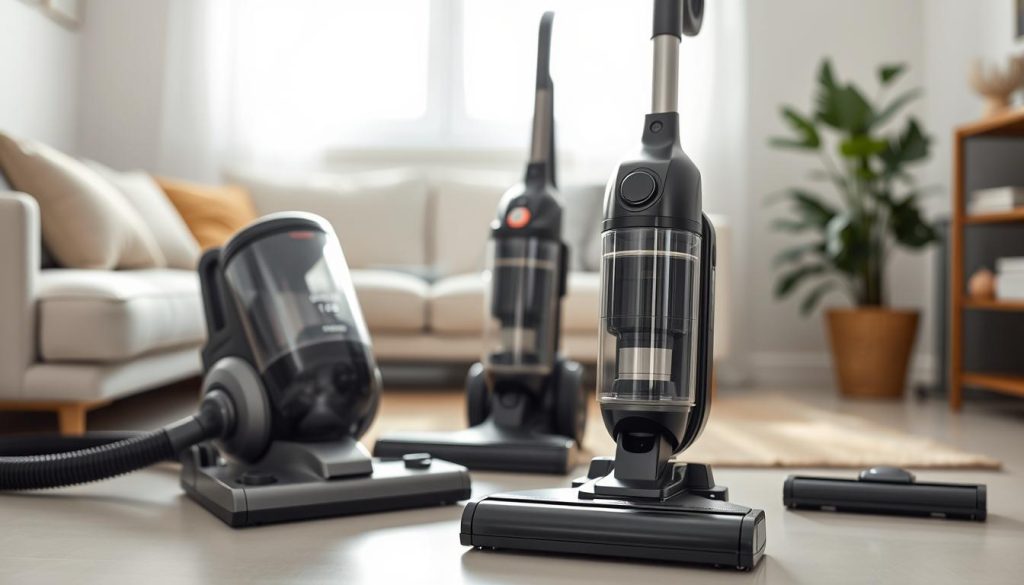
Tineco Pure One Station cordless
Where it shines: very high debris pick-up (99.8% in one minute), low noise and lightweight handling make it ideal for flats and quick daily passes.
Notes: the front light helps find fibres under furniture. It can struggle in tight corners and tiny crevices, and it is a premium-priced option.
JIGOO T600
Where it fits: higher rated power (700W) with 15kPa suction, a 23cm port and a 0.5L cup for multi-room, family cleaning where speed and capacity matter.
Notes: claimed low-noise ~72dB and wide head cut cleaning time on mattresses and sofas.
JIGOO S100 series
Where it helps: designed for households with pets — de-linting device, tangle-free brush and 80,000 beats/min tapping plus UV‑C and 55°C thermal options for surface hygiene.
Notes: dual 0.38L cups and ~76dB operation; prioritise models with sealed HEPA paths and easy maintenance.
“Match a model’s strengths to your routine: sealing and filtration first, then handling, noise and upkeep.”
| Model | Key trait | Best for |
|---|---|---|
| Tineco Pure One Station | 99.8% pick-up, low noise | Small flats, quick upkeep |
| JIGOO T600 | 700W / 15kPa, 23cm port | Large families, multi-room cleaning |
| JIGOO S100 | Tapping, UV‑C, thermal | Pet homes, deep fabric hygiene |
Budget and value in 2026: paying for the features that matter
Price speaks to features, but we focus on what lowers allergen exposure and saves household time.
When premium pricing makes sense for allergy-focused performance
Pay more when you need consistent health gains: persistent allergies or asthma, many beds, or heavy fabric use.
Premium models often add sealed HEPA filtration, steady suction and quieter operation — factors that raise cleaning frequency and reduce triggers.
How to compare cost per clean: filters, upkeep and time saved
Work out annual running costs: replacement filters, genuine parts availability in Singapore, and estimated replacement intervals.
Also factor in time. Wider ports and bigger dust cups shorten sessions. Less time spent cleaning raises real value.
“Spend on sealed HEPA and soft-surface performance first; convenience extras help only if they make you clean more often.”
| Cost element | What it buys | Impact on allergies and time |
|---|---|---|
| Upfront price | Convenience: Wi‑Fi/AI, charging station | Better user experience; modest direct health gain |
| Sealed HEPA & head design | Improved filtration and extraction | High allergy reduction; saves follow-up cleaning |
| Filters & consumables | Replacement HEPA and pre-filters | Ongoing cost; affects long-term performance |
| Time savings | Wider port, larger cup, fewer clogs | More frequent use; better sustained health outcomes |
Our bottom line: prioritise sealed filtration and soft‑surface extraction. Use Tineco’s pricing as an anchor to weigh convenience versus core features that reduce allergens. The right purchase is the unit we will actually use.
Conclusion
Choosing a machine with genuine hepa filtration and a sealed system is the practical first step to cleaner indoor air.
We prioritise a closed airflow path and true hepa, then add soft-surface tools — tapping, UV‑C or thermal options — to match household needs. Our aim is reducing allergens and improving the air people breathe, not only removing visible dust.
Focus cleaning on mattresses, pillows, upholstery and carpets: these surfaces hold the main reservoirs of dust mites and allergen fragments. The wrong machine can re‑release fine dust, so filtration and sealing matter as much as suction.
In humid Singapore homes, consistent weekly routines plus the right toolset beat occasional deep cleans. Shortlist 2–3 models, check ongoing filter costs, then pick the vacuum you will use often — especially if you manage asthma or people allergies.

