

We set clear expectations for readers in Singapore. We explain what a wet-capable vacuum can achieve with everyday dampness, dust and sudden spills in flats and HDB layouts.
We write for households with rugs, mixed floors, pets, children and frequent entertaining. Our take helps busy families pick a model that matches real life, not just lab figures.
We outline our testing mindset: we prioritise suction, tank design, brush upkeep and filter hygiene. We also avoid models that deliver poor long-term value.
We preview formats: cordless wet-dry, heavier units and robotic options, with quick links to our four top picks. Brands we reference include Dyson and Tineco as familiar benchmarks.
Finally, we cover upkeep and cost expectations in Singapore so readers can assess value beyond the price tag and promotions.
Why we’re recommending water-based and wet dry cleaning for carpets in Singapore homes
Singapore’s climate raises two practical problems: humidity that slows drying and frequent rain that brings damp footprints indoors. We find that faster extraction helps prevent musty odours and lingering wet marks.
Humidity, rain and everyday spills
High indoor humidity makes stains and damp patches harder to remove. Quick pickup after drinks or tracked-in mud reduces smell and keeps pile from matting.
When a dry vacuum isn’t enough
A standard dry vacuum clears surface dust but often misses damp debris and set-in stains. Embedded dirt acts like sandpaper on fibres and shortens a rug’s life.
- Common scenarios: drink spills, wet footprints and kids’ accidents need faster extraction to stop stickiness and odour.
- Health: dust plus moisture can worsen allergies; better filtration and extraction reduce risk.
| Issue | Dry-only tool | wet dry approach |
|---|---|---|
| Liquid spills | Often leaves residue | Removes and extracts quickly |
| Set-in stains | Limited removal | Improves lift with extraction |
| Embedded dirt | Scours fibres over time | Periodic wet pickup aids maintenance |
Realistically, wet dry tools are best for spot work and routine care. Heavy, old stains may still need professional shampooing. Expect trade-offs in weight, noise and upkeep when choosing a system.
What a wet dry vacuum is and how it differs from a dry vacuum
We define a wet dry vacuum in plain terms: it is a machine built to pick up solids and liquids safely. Models separate clean and dirty paths or tanks so damp pickup does not harm the motor.
How they handle dry messes, debris and liquid spills
Mechanically, wet-dry units add sealed tanks, different filters and water-resistant seals. That changes daily use: you can tackle crumbs, pet hair and small spills without swapping machines.
Dry messes such as crumbs and loose debris are picked up much like a dry vacuum would, though brush heads and nozzles affect performance. For liquids, the extraction path prevents smearing and collects dirty water separately.
Where “water vacuum” ends and carpet shampooing begins
Shoppers often call these machines “water” models when they mean wet pickup. True carpet shampooing uses detergent agitation and deep rinse extraction. Wet-dry units handle fresh spills and routine refreshes well, but deep-set stains and strong odours still need professional shampooing.
- Good for: quick spill response, light grime and mixed-floor upkeep.
- Not ideal for: old stains, deep fibre cleaning or soaked padding.
Water vacuum cleaner for carpet: what we look for before we recommend a model
Choosing the right machine is about matching performance to real household routines, not just spec sheets. We test units on rugs, mixed floors and homes with pets to see how they cope in daily use.
Suction power and pickup
Suction and brush interaction determine real pickup of fine dust, grit and hair. Pa figures show potential power, but brush-roll design and airflow affect how deeply a tool lifts embedded dirt.
Tanks and refill practicalities
We favour separate clean water and dirty water tanks. That limits cross-contamination and makes refills predictable.
Capacity matters: small flats need less clean water, larger homes need larger tanks to avoid repeated stops.
Brush, nozzle and edge cleaning
A low-profile brush head and narrow nozzle help reach under sofas and along skirting boards. Different pile heights change resistance, so adaptable brush design is a plus.
Filter system and allergens
HEPA-grade filter options are useful where allergies are a concern. Wet use alters filter care, so easy replacement and washable elements reduce long-term maintenance.
Handling, cord vs cordless and residue control
We balance noise and weight with manoeuvrability suited to Singapore flats. Corded reach often beats cordless runtime in minutes for whole-home sessions, but cordless models win on convenience.
Finally, check cleaning solution compatibility. Too much detergent leaves residue that attracts dirt and raises maintenance needs.
| Feature | What we test | Why it matters | Recommended spec |
|---|---|---|---|
| Suction & power | Pickup of dust, hair, grit | Removes embedded dirt; prevents fibre wear | High airflow + rotating brush |
| Tanks | Clean water vs dirty water capacity | Less refills; hygienic separation | At least dual tanks, 500ml+ clean water |
| Filter system | HEPA option and washable parts | Reduces allergens; simpler maintenance | HEPA or sealed multi-stage filter |
| Corded vs cordless | Reach in metres vs runtime in minutes | Realistic whole-home use and pauses | 30+ minutes cordless or long corded reach |
Wet-and-dry vacuum formats we see most often: drum, cordless stick and robot
Different formats suit different routines — from heavy renovation clean-ups to daily mopping runs. We break down the three formats shoppers meet in Singapore so you can match a model to your layout, storage and the types of debris you deal with.
Drum models for heavy-duty clean-ups
Drum models remain the go-to for workshops, balcony grit and renovation debris. They offer large tanks and robust intake that handle coarse waste and wet spills during projects.
Electrolux positions these units for heavier tasks where capacity and toughness matter more than compact storage.
Cordless stick options for daily upkeep
Cordless sticks combine quick vacuuming and light mopping in one pass on hard floors. They shine at everyday cleaning, quick touch-ups and caring for rugs or low-pile mats.
Limit: many cordless stick heads struggle with deep pile. Check brush compatibility if your rugs are dense.
Robot role alongside carpets and rugs
Robot models are excellent at routine dry debris control. They reduce daily dust, pet hair and crumbs, but they do not replace wet extraction when spills or sticky marks hit soft floors.
We often recommend a paired approach: a robot for regular dusting plus a spot-capable wet-dry unit for spills and deeper refreshes.
- Storage & charging: small flats may prefer stick or robot formats; drum units need more space.
- Debris type: sand and coarse grit favour drums; pet hair and crumbs suit robots and sticks.
- Use case: pair devices to cover both daily dust and occasional wet incidents without overworking one model.
Our top picks at a glance for carpet, rugs and mixed floors
To help quick decisions, we picked four machines that cover most cleaning needs in local homes. Below is a scannable shortlist with why each product earns its place and who should buy it.
Overall best: Tineco Floor One Switch S7 Stretch
Why: balanced power, dual tanks and smart sensors. Best on mixed surfaces and quick refreshes.
Who it suits: families who want a reliable all-round model. Price: premium positioning.
Best for pet hair: Bissell CrossWave X7 Cordless Pet Pro
Why: brush design lifts fur and tracked-in grit; solid runtime in minutes for regular tasks.
Who it suits: pet owners needing focused fur and spot-clean performance. Price: mid-range.
Best budget-friendly: Simplus Cordless Wet-Dry
Why: compact tanks and good power at a lower price. Ideal for flats and quick spills.
Who it suits: small-home users seeking value and easy storage. Price: budget-friendly.
Most manoeuvrable: Narwal S20 Pro
Why: AI edge sensing and long runtime; excels under low furniture and in tight spaces.
Who it suits: busy households wanting hands-off upkeep. Price: premium-leaning.
| Pick | Strength | Best surface | Approx. price |
|---|---|---|---|
| Tineco S7 Stretch | Smart sensors, dual tanks | Mixed floors, rugs | Premium |
| Bissell X7 Pet Pro | Pet hair handling, cordless power | Hard floors, low-pile rugs | Mid-range |
| Simplus Cordless | Value, compact tanks | Small flats, light rugs | Budget |
| Narwal S20 Pro | Manoeuvrability, long minutes runtime | Tight spaces, high-traffic zones | Premium |
Best overall for mixed surfaces: Tineco Floor One Switch S7 Stretch
For homes that alternate between tiles and rugs, we rate the Tineco S7 Stretch as our top overall pick. It pairs practical capacity with smart sensing to make regular upkeep faster and less fiddly.
Key specs we considered
- Clean tank: 1,000 ml clean water tank and a 720 ml dirty tank to cut refills and stops.
- Suction & power: up to 22,000 Pa suction delivers real lift on low-pile rugs and tiles.
- Runtime: up to 50 minutes in floor-washer mode — plenty for most flats.
How the smart system helps
The iLoop sensor detects changes in dirt and adjusts suction and flow automatically. This reduces over-wetting and uses less solution during light runs.
Usability notes: the LCD gives clear feedback, edge reach is good, and most users will empty the dirty tank after a full flat session.
Where it falls short
It is not aimed at heavy deep-pile extraction. We see it as a premium everyday floor-care tool that supports occasional rug spot work.
| Spec | Value | Practical effect |
|---|---|---|
| Clean tank | 1,000 ml | Fewer refills on routine cleaning |
| Dirty tank | 720 ml | Good capacity before emptying |
| Suction | Up to 22,000 Pa | Strong pickup of grit and hair |
Before buying in Singapore, check spare parts availability, warranty terms and that included accessories suit your surfaces.
Best for pet hair and tracked-in dirt: Bissell CrossWave X7 Cordless Pet Pro
Homes with pets face a steady cycle of shedding, tracked grit and sudden spills that demand fast, reliable care. We find the Bissell CrossWave X7 Cordless Pet Pro aimed squarely at that routine.
Key specs we considered
Headline figures: 820 ml clean water, 420 ml dirty tanks, up to 20,000 Pa suction and about 30 minutes runtime.
Where it shines
The brush and steady suction lift pet hair and mixed debris well. Turbo Pet mode boosts pull on stubborn spots and recent stains when used with the right cleaning solution.
For multi-room work the runtime suits targeted zones more than an entire flat. Emptying tanks after heavy sessions keeps odour and performance under control.
| Feature | Value | Benefit | Best use |
|---|---|---|---|
| Clean tank | 820 ml | Fewer refills | Quick refreshes |
| Dirty tank | 420 ml | Compact disposal | Spot work |
| Suction | Up to 20,000 Pa | Strong lift of hair & debris | Pet fur and grit |
| Runtime | ~30 minutes | Good for short sessions | Entryways & rugs |
- Routine: quick passes midweek, deeper spot sessions on weekends.
- Trade-offs: regular brush care and tank emptying.
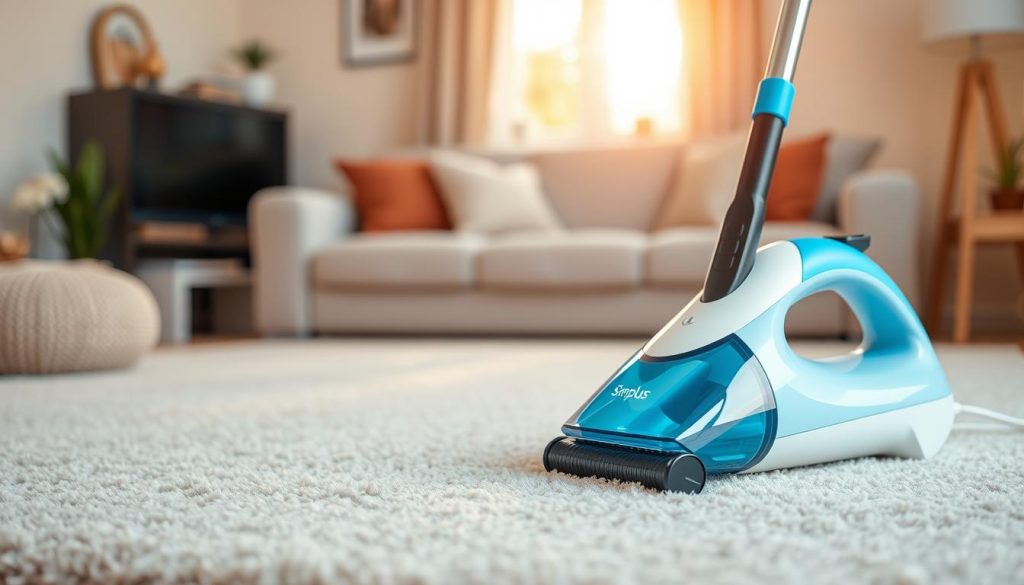
Best budget option: Simplus Cordless Wet-Dry Vacuum Cleaner
Budget options must still cover the basics that make messy incidents simple to handle.
Key specs we considered
We looked at the numbers that matter: a 500 ml clean water tank and a 550 ml dirty tank, 21,000 Pa suction and up to 50 minutes runtime.
| Spec | Value | Practical effect |
|---|---|---|
| Clean tank | 500 ml | Good for short sessions in small flats |
| Dirty tank | 550 ml | Less frequent emptying during spot work |
| Suction | 21,000 Pa | Decent power to lift grit and light stains |
| Runtime | Up to 50 minutes | Enough minutes for a full flat touch-up |
Who we think it suits in Singapore
Good fit: singles, couples and small HDB units that need a low price, compact model for quick cleaning.
Manoeuvring: the flat-fold feature helps reach corners and tuck under furniture with less effort.
Limits: this is best on light rugs and spot cleaning; it does not replace deep shampoo systems for heavy staining.
“A budget pick should solve daily messes without overcomplication.”
Before buying, check spare parts, brush durability and whether solutions are required. We also compare typical maintenance against a local cleaning cost guide to judge long-term value.
Most manoeuvrable pick: Narwal S20 Pro
Narrow hallways and tight furniture layouts mean manoeuvrability is as important as raw specs. The Narwal S20 Pro pairs a compact design with features aimed at busy Singapore homes.
Key specs we considered
Practical capacity: 790 ml clean water and 720 ml dirty tanks let us run longer sessions without frequent stops.
Performance: 20,000 Pa suction power and up to 60 minutes runtime support extended passes across mixed floor types.
Hot water mopping: this raises extraction on sticky grime and improves lift on high-traffic zones during each mopping cycle.
Why edge cleaning and smart sensing matter
Triple-sided edge cleaning keeps skirting lines and corridors tidy where most debris gathers. That reduces repeat passes along borders and saves minutes overall.
AI Dirt Sense adjusts intensity automatically. The system boosts power only where dirt is detected. That lowers wasted cycles and cuts maintenance.
| Feature | Value | Benefit |
|---|---|---|
| Clean tank | 790 ml | Longer uninterrupted runs |
| Dirty tank | 720 ml | Less emptying during sessions |
| Suction & modes | 20,000 Pa, multiple modes | Strong pickup of debris and adaptable cleaning |
| Handling | Light weight, compact dock | Easy storage and simple turns around furniture |
Summary: the S20 Pro’s mix of design, smart system and mopping capability makes it our top manoeuvrable pick for high-traffic flats that need fast, confident edge and floor care.
Electrolux wet and dry vacuums: what makes them stand out for everyday home cleaning
Electrolux models aim to bridge everyday spills and regular dust with a single, easy-to-use system. We view them as practical choices for Singapore flats that need dependable, routine performance rather than niche specialties.
All-in-one flexibility across home and car
Their wet dry tools handle kitchen spills, bathroom drips, patio debris and even light car debris. That reduces the number of separate devices in a cleaning cupboard.
Engineering highlights: Microfilter and user-friendly design
Microfilter technology traps fine dust and limits airborne particles during dry pick-up. Easy-access tanks and simple controls make daily upkeep less fiddly.
Filtration and tank choices also affect odours and hygiene when you switch between dry dust and liquid incidents. Separate tanks and washable filters cut cross-contamination and shorten maintenance time.
Buying from Electrolux Singapore
Buying direct often means free delivery, 0% instalment plans and promotions up to 47% off. That can change the effective price and make premium products easier to justify.
“Electrolux favours straightforward design and proven filtration to keep routine cleaning swift and reliable.”
Note: Electrolux offers drum and cordless stick formats; we will shortlist specific models by use case and budget in the next section.
Electrolux models we’d shortlist depending on your home and budget
Electrolux offers a neat spread of units that balance price, power and daily practicality. Below we shortlist three products that keep you within one brand while matching size, hygiene needs and routine cleaning habits.
Electrolux Flexio Power Z823 — value-focused users
Who it suits: buyers that want a robust wet dry drum with blower function and roomy on-board accessory storage. The 1600W motor gives solid power for heavy-duty tasks and coarse debris.
Electrolux 800 3-in-1 EFW81713 — premium cordless convenience
Who it suits: those after cordless freedom and a detachable hand unit. The TriAction nozzle and smart dirt detection claim 99% debris pick-up on hard floors, while a self-cleaning system lowers upkeep.
Electrolux UltimateHome 700 EFW71711 — hygiene-first households
Who it suits: families who prioritise fast drying and strict hygiene. Antibacterial tanks (99.9% elimination) and a self-cleaning nozzle cut odour and maintenance time.
| Model | Key features | Best use | Indicative price |
|---|---|---|---|
| Flexio Power Z823 | 1600W motor, drum, blower, accessory storage | Budget-heavy tasks, flats with grit | Lower price |
| EFW81713 (800) | Cordless, inverter motor, TriAction nozzle, self-cleaning | Cordless quick-ups on mixed floors | Mid‑to‑premium price |
| UltimateHome 700 | 99% pick-up, antibacterial tanks, quick drying | Hygiene-first families, frequent spills | Premium price |
Summary: the shortlist ties each model’s strengths to real outcomes: speed, hygiene and versatility. Use these pointers to compare price versus everyday value when you choose an Electrolux unit.
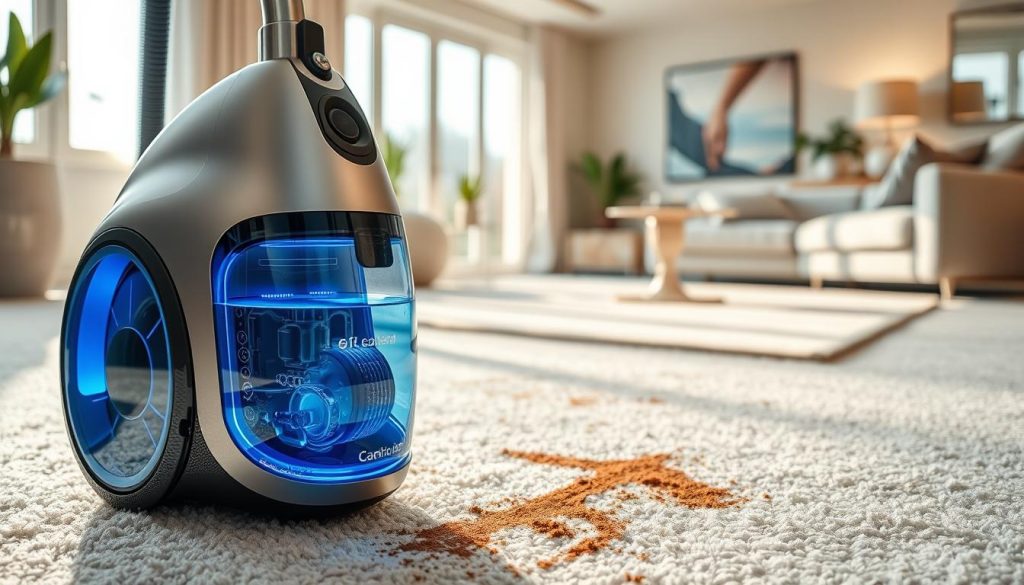
Feature deep-dive: self-cleaning system, antibacterial tanks and smart dirt detection
Good feature design turns a fiddly weekly chore into a few smart taps and less worry.
Self-cleaning systems that reduce maintenance time and odour build-up
What it does: a self-cleaning system flushes the brush, nozzle and internal pathways after use. That clears loose hair and residue and lowers trapped smells.
What it does not replace: occasional deep cleaning, drying parts and checking for hair wrap remain necessary.
Antibacterial tanks and why they matter
Antibacterial tanks claim up to 99.9% bacteria elimination on select models. This helps in hot, humid Singapore where damp components can smell quickly.
Correct use still matters: empty and rinse tanks after sessions to keep claims relevant in practice.
Smart dirt detection and auto-adjust features
Smart sensors sense dirt and optimise suction and solution flow. That prevents overwetting rugs and saves time and product.
| Feature | Practical benefit | Upkeep effect |
|---|---|---|
| Self-cleaning rinse | Less manual scrubbing | Fewer odour issues between uses |
| Antibacterial tank | Lower bacterial growth | Reduced smell; still rinse after use |
| Smart dirt detection | Efficient cleaning; less solution waste | Shorter sessions; fewer repeat passes |
“Pay for the features that solve your pains: odour, time and inconsistent results.”
How much a wet and dry vacuum costs in Singapore and what value looks like
We map typical price bands to real outcomes so shoppers can judge what to buy. Electrolux models span a wide range depending on model and promotions. Promotions in Singapore can lower that further; we watch final price, warranty and included accessories when comparing offers.
Electrolux price guide and what matters at each tier
Entry: sensible power and basic tanks, useful minutes of runtime and essential accessories. Best for small flats and light use.
Mid: stronger power delivery, larger or dual tanks and longer minutes. Good balance for couples or small families.
Premium: top power, smarter tank design, self-cleaning features and extra accessories that reduce long-term maintenance.
Hidden costs to factor in
- Cleaning solution — ongoing purchase that affects running cost and results.
- Filter and brush replacements — periodic parts that influence hygiene and performance.
- Accessories — useful nozzles add value, but rarely used extras may not be worth the price.
| Budget tier | Key gain | Ongoing costs |
|---|---|---|
| Entry | Low price, basic power | Solutions, occasional brush replacements |
| Mid | Better power, larger tanks | Filters, solutions, spare brushes |
| Premium | Smart systems, longer minutes runtime | Higher-cost parts but fewer repeat services |
“Shop promotions on final price and warranty, not headline discounts.”
Conclusion
Deciding which tool to keep comes down to how you balance everyday spills with routine dust control. Choose a wet dry option when you want one machine that handles liquids and solids. Keep a dry vacuum if your needs are mainly crumbs and regular dust.
Singapore’s humidity makes fast water extraction and odour prevention more relevant, especially at entrances and dining areas. Our four picks suit clear profiles: Tineco S7 Stretch (best overall), Bissell CrossWave X7 (pet-heavy homes), Simplus Cordless (budget flats) and Narwal S20 Pro (tight layouts and hands-off upkeep).
When comparing models look at suction, separate tanks, brush and nozzle fit, filtration, manoeuvrability and sensible runtime in minutes. Empty dirty tanks promptly, use any self-clean cycles and keep brushes and pathways clear. Treat wet-dry tools as part of a practical routine: spot-clean quickly after spills, vacuum often, and arrange deep cleaning when stains are older or widespread.

