

We put several mattress cleaners through real-world trials in Singapore homes. Our team dirtied a mattress surface with crumbs and debris, then assessed suction, filtration and ease of use on typical condo bedrooms that rely on air-conditioning and compact storage.
We explain why a dedicated mattress machine can reduce allergens and improve sleep, and why it should sit alongside regular cleaning rather than replace it. We tested models such as the Jimmy BX5 Pro, UZK, JIGOO J300 and the Dyson Car + Boat to show who each product suits.
How we tested: we judged suction (kPa), HEPA filtration, UV features, portability and real dirt pickup. Results reflect practical use, not just specifications, and include Singapore voltage and space considerations.
Note: this article is informational only and not medical advice. If you have asthma or allergies, please consult a medical professional.
Further details and step-by-step cleaning tips are available in our linked guides, including a detailed mattress review and a practical cleaning tutorial from local resources: mattress review and cleaning guide.
Why a mattress vacuum cleaner matters for cleaner sleep in Singapore homes
Portable mattress tools lift embedded material that ordinary laundering misses. Mattresses collect fine dust, shed skin, pet hair and other particles over time. Even with regular sheet washing, fibres and microscopic fragments stay trapped deep in the fabric.
What often triggers night‑time sneezing or itchy eyes are tiny droppings and fragments from mites and related allergens. These particles can also aggravate asthma and make the sleep surface feel less fresh.
Singapore’s heat and humidity make things worse. Enclosed, air‑conditioned rooms can create a cosy habitat where mites thrive and allergens accumulate if cleaning is infrequent.
Unlike a general floor cleaner, a mattress vacuum cleaner uses agitation heads and targeted suction to lift embedded debris from soft surfaces. HEPA filtration helps trap airborne allergens and can lower bacterial counts when used regularly.
“Regular bed vacuuming reduced measured allergen and bacterial load in controlled studies.”
- Practical takeaway: consistent vacuuming reduces allergen load and supports cleaner sleep.
- Combine vacuuming with washing bedding, protectors and humidity control for best results.
Our testing approach: how we reviewed vacuums for mattress cleaning
We set up a simple, repeatable test that let us judge real pickup rather than rely on spec sheets. Each trial began with the same mattress and a measured scatter of crumbs and fine debris across the surface so results were comparable.
Suction performance
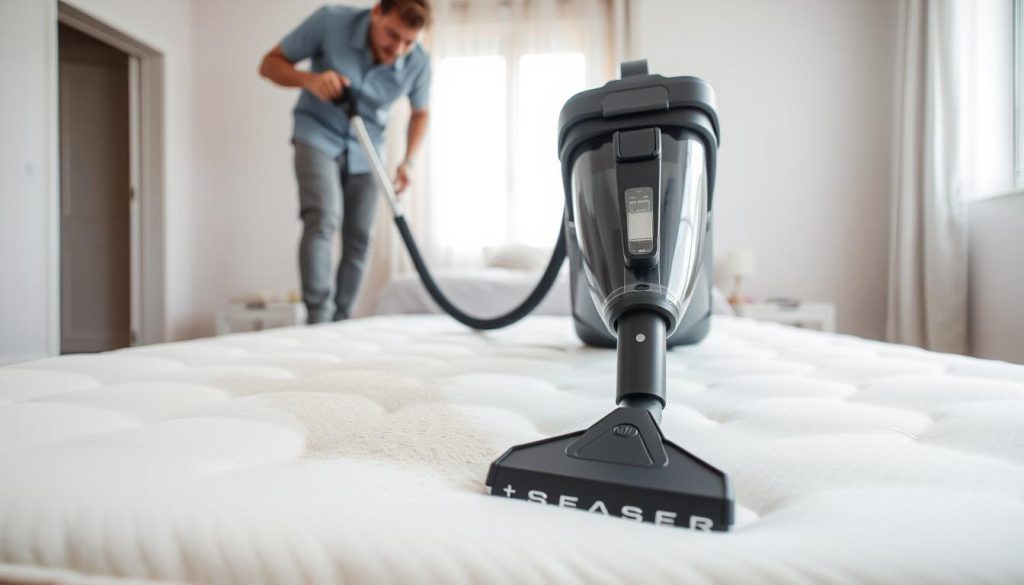
Suction performance on a crumb-covered mattress surface
We watched how many passes each machine needed to clear visible particles and noted if crumbs were pushed ahead. We checked the dust cup and filter contents to see what the unit actually picked up.
Quality of construction and durability
We inspected plastics, seals and fit-and-finish. Dust cup attachment and the ease of emptying told us whether a device would stand up to frequent use in Singapore homes.
Portability, cords and storage
Head width, weight and ergonomics affected how easy it was to reach seams and lift onto the mattress. We tested corded reach and cord storage, then compared that to a cordless design to judge real convenience.
“We focused on how a unit felt in hand — not just kPa specifications — to understand actual cleaning power.”
- Practical checks: number of passes, crumbs pushed, debris captured.
- Construction, filter and HEPA effectiveness.
- Portability, cord management and storage practicality for everyday use and shopping decisions.
Best dust mite vacuum for bed: our top tested picks
If you want a quick shortlist for Singapore flats, these models stood out in our hands‑on tests.
Jimmy BX5 Pro — best overall mattress cleaner
Why pick it: the BX5 Pro combines tapping brushes, strong suction and a HEPA filter with an integrated UV‑C light.
That mix gave the most consistent deep clean in our trials, especially on seams and fabric folds. It is corded, which suits longer sessions in a compact flat.
UZK Bed Vacuum Cleaner — multi‑use for mattresses and furniture
Why pick it: a versatile product with HEPA and UV‑C that works across sofas and chairs.
Suction varied by debris size in testing, but the unit’s portability makes it handy for small homes where one cleaner must cover many areas.
JIGOO J300 — affordable option with extra features
Why pick it: covers essentials (HEPA filter and UV light) and adds hot air for hygiene at a lower price point.
Good value for households that need routine mattress maintenance without premium cost or space for multiple tools.
Dyson Car + Boat — cordless pick with strong suction
Why pick it: cordless convenience and the most noticeable suction feel in our line‑up.
Excellent for quick clean‑ups across the home and tight corners, but lacks UV‑C and heating features found on specialist mattress machines.
“These choices help you shortlist a unit by function: deep cleaning, multi‑use, value or cordless convenience.”
- Quick guide: choose corded for extended mattress sessions; choose cordless for rapid spot cleans.
- For compact Singapore flats, favour multi‑use or compact heads to reach sofas and storage‑tight areas.
Detailed reviews: how each vacuum cleaner performed on mattress, bed and upholstery
We tested each machine across mattresses and upholstery to see how design choices affected real-world pickup and reach. Our focus was practical: what cleared a flat surface, what needed extra passes, and what struggled in seams.
Jimmy BX5 Pro
High-frequency tapping brushes and UV-C light helped loosen embedded fibres. The multi-stage system with HEPA capture reduced airborne particles noticeably.
The wider head sped up work on open areas but made seams slower. A 5-metre cord gave reach around a queen mattress. The cord is not retractable, which affects storage in small flats.
UZK Bed Vacuum Cleaner
This compact unit is portable and has UV + HEPA plus hot air. It handled lint and fine debris well on sofas.
Suction was inconsistent with larger crumbs and required multiple passes. Aromatherapy capsules are a nice touch, but the scent faded quickly.
JIGOO J300
The J300 covered essentials at a lower price. HEPA filtering, LED UV lights and hot air supported hygiene jobs.
Construction felt solid and portability scored highly. Modes were hard to read, so selecting the right setting took time.
Dyson Car + Boat
This unit delivered the strongest suction feel in our trials. Attachments and crevice ergonomics made seams and frames easier to clean.
There is no UV-C or heating feature, so buyers seeking sterilisation will miss those extras. Reservoir emptying also has a small learning curve.
| Model | Key features | On-mattress performance | Practical notes (Singapore) |
|---|---|---|---|
| Jimmy BX5 Pro | High-frequency brush, uv-c light, HEPA | Deep clean on open surface; extra passes in seams | 5m cord; sturdy build; no cord retraction |
| UZK | UV + HEPA + hot air, aromatherapy | Good on fine dust; struggles with larger crumbs | Lightweight; scent effect minimal; corded |
| JIGOO J300 | HEPA, LED UV, hot air | Strong lint pickup; simple, reliable cleaning | Compact; modes need clearer display |
| Dyson Car + Boat | Powerful motor, versatile attachments | Best suction and crevice reach | Cordless option; no UV-C; higher price |
“Each product does a solid job on open surfaces; choice comes down to features you value most.”
Practical takeaway: pick a machine that matches your routine. Wide heads speed surface work. Narrow attachments win in seams. Consider cord length and storage if you live in a compact Singapore flat.
What to look for when shopping: HEPA filter, UV-C light, suction power and allergen control
Choosing a unit means weighing tested features against marketing claims. We focus on what helps air quality and mattress hygiene in a small Singapore flat when shopping.
HEPA filtration and trapping tiny airborne particles
HEPA filters capture very small particles and stop them recirculating into the air. A true HEPA stage catches about 99.97% of particles and is useful if household members have allergies.
UV‑C sterilisation and practical limits
UV‑C light can damage the DNA of organisms on exposed fabric surfaces. It helps surface hygiene but cannot penetrate deep layers. Treat it as a bonus, not a cure‑all.
Real suction, seals and emptying
Suction and head design must work together to lift embedded dust and fibres. Ignore headline numbers alone; consider how the head agitates fabric and reaches seams.
Good seals and an easy emptying system prevent allergen blowback. Empty outside, avoid shaking, and use a sealed bin design if you or family have sensitivities.
Corded versus cordless
Corded models deliver steady power for longer jobs. Cordless options give convenience but limit run time. Choose the style that fits your routine and storage limits.
How we use a dust mite vacuum on beds, mattresses and other high-risk areas
We follow a simple, repeatable routine that fits busy Singapore homes and targets soft surfaces where allergens collect.
Routine steps:
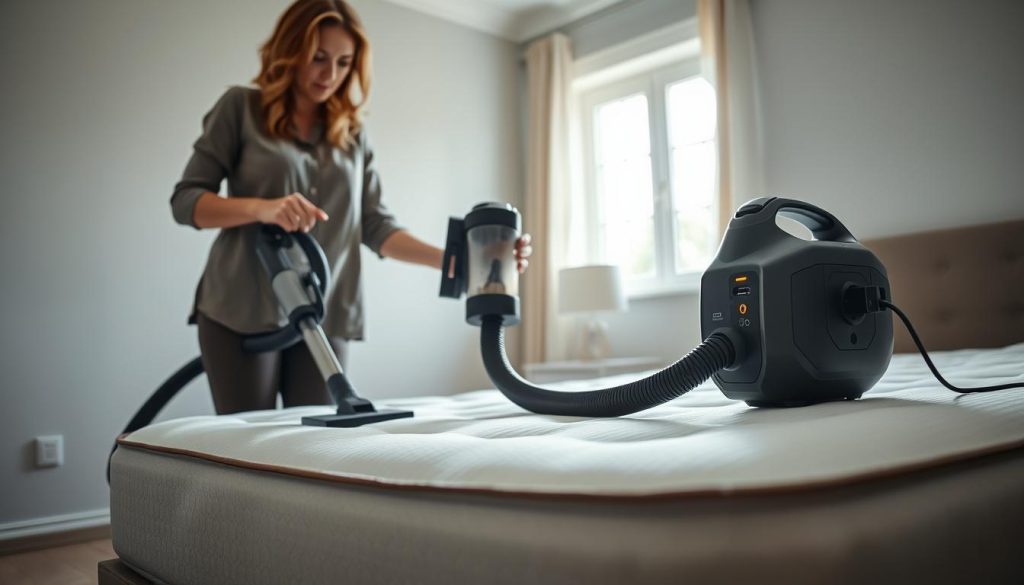
- Work in overlapping passes across the mattress surface, moving head-to-head to avoid missed strips.
- Spend extra time on seams, edges and any high-contact zones such as where you sit or read.
- Empty the dust cup outside and replace or clean the HEPA stage gently to prevent re-release into the air.
Where to vacuum beyond the mattress
We treat pillows, upholstered headboards, couches, fabric chairs, rugs and carpets as priority areas. These warm, soft surfaces trap the most particles and support mite populations.
Rotate and wash pillow covers regularly, and use crevice tools to reach seams on sofas. For carpets, shorter passes work better than frantic swipes—let the cleaner do the lifting.
Mattress hygiene add-ons
Baking soda deodorising: sprinkle a light layer, leave 30–60 minutes, then run the machine in overlapping passes. This lifts odours and surface grime without harsh chemicals.
Spot cleaning: dab stains with a baking soda + vinegar paste, blot with a damp cloth, air dry and then run the cleaner over the area.
Protectors and underneath care: fit a mattress protector and remember to vacuum under it periodically. This stops the bulk of particles reaching the core and keeps warranties intact.
“A routine that combines targeted cleaning, occasional deodorising and a protector gives a noticeable improvement in sleep comfort.”
Conclusion
We recommend choices based on common priorities: Jimmy BX5 Pro suits feature‑rich mattress cleaning, UZK fits multi‑surface flexibility, JIGOO J300 gives value, and Dyson offers cordless convenience with strong suction.
What matters most is a steady routine and correct technique on seams and edges. Use overlapping passes, empty filters carefully and store your unit where it fits your flat.
Trade‑offs are clear: corded units give steady power and reach; cordless models win on speed and storage. Feature sets such as HEPA and UV‑C complement suction, but they do not replace good technique.
Next steps: confirm warranty and returns, check filter spares and plan storage. Use this shopping checklist when you buy locally.
Medical note: this is product testing and hygiene advice only. If you have allergy symptoms, please consult a clinician.

