

We aim for a same-day reset that freshens our rooms and starts habits that keep our home neutral. A quick mix of airing rooms, a careful vacuum of soft furnishings, and mopping hard floors often makes a clear difference.
Humidity and air-conditioning cycles in Singapore mean odours linger in textiles and carpets. Our plan targets roots rather than masking scents, using baking soda, enzymatic cleaners and vinegar solutions where suitable.
We preview the hotspots we will tackle: carpet, upholstery, bedding and hidden urine areas. We will use a vacuum with a clean filter, a mop, baking soda for deodorising and an enzymatic cleaner for urine.
Success looks like a house that smells like nothing. We explain when to repeat steps and when a deeper clean is worth booking. For a handy checklist, see our quick guide.
Why our homes start smelling of dog: odour sources we can tackle
We outline the main hotspots where hair, oils and stains gather and hold scent. Identifying these sources helps us target cleaning with the biggest impact.
Fur and pet dander build-up
Fur and pet dander collect in carpets, curtains and furniture. Even when surfaces look tidy, embedded hair and dander release smells over time.
Oily skin, saliva and wet-weather odour
Singapore humidity amplifies oily skin and wet‑dog odour. Saliva on toys, throws and sofa arms and ear wax add subtle but persistent scents.
Hidden urine stains and bacteria
Urine and organic grime sink into absorbent fibres. Bacteria feed on residue, locking in odours and encouraging repeat marking if not fully neutralised.
- Hot zones: entry rugs, favourite lounging spots, curtains and baseboards.
- Our approach: remove fur and dander, neutralise organic odours, then improve airflow.
| Source | Where it hides | Why it lingers |
|---|---|---|
| Fur / hair | Carpets, sofas, curtains | Fibres trap dander and oils |
| Oily skin & saliva | Toys, throws, sofa arms | Moisture boosts scent in humid climates |
| Urine & stains | Carpet underpads, upholstery seams | Bacteria digest residues and produce odours |
How to get rid of dog smell in house with a simple same-day reset
A single, organised cleaning session can refresh rooms and make lingering odours fade. We focus on airflow, dry cleaning and then wet cleaning so we do not move dirt back across clean surfaces.
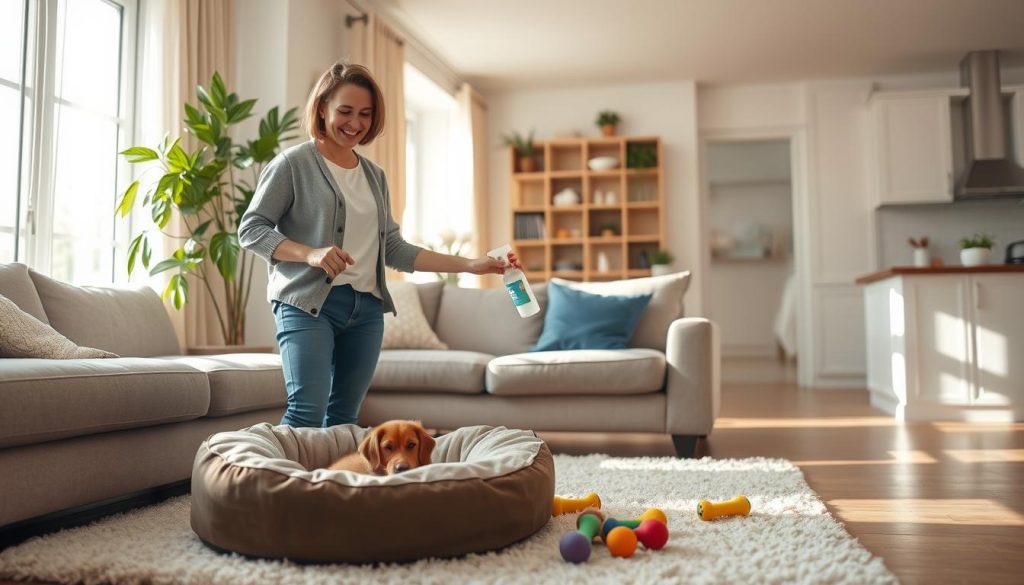
Let fresh air in
Open windows and doors where it is safe, and use fans or the air‑conditioning selectively. Good ventilation carries loosened odour out of rooms rather than leaving it circulating.
Vacuum everything (and service the filter)
We vacuum carpets, rugs, sofa creases, curtains and under cushions; dander and hair hide in edges and folds. A clean filter or an emptied canister keeps dusty air from blowing back while we work.
Quick-sweep and mop hard floors
Start with a brisk sweep to collect fur clumps, then mop to remove the thin film that traps odour—especially near water bowls, corridors and the kitchen.
- Order: ventilate → dry tasks (vacuum/sweep) → wet tasks (mop/wipe).
- Timing: aim for a one‑hour reset in small flats; allow more time for larger homes.
- Routine: repeat weekly for heavy shedders to keep the home smelling neutral.
| Task | Why it matters | Approx time |
|---|---|---|
| Ventilate | Removes airborne odour | 10–20 mins |
| Vacuum + filter | Lifts hair and dander | 20–40 mins |
| Sweep & mop | Clears grime holding odour | 15–30 mins |
Deep-clean the biggest odour magnets: carpet, rugs and upholstery
We focus on the textiles that lock in lingering scents and explain practical, low-risk methods that work in tropical Singapore homes.
Deodorise carpets with baking soda, then vacuum thoroughly
Carpet fibres trap oils and dander, so a surface spray often only masks the problem. For a simple, effective approach sprinkle baking soda evenly over the carpet and rugs.
Work it gently into the pile with a brush, leave for a few hours, then vacuum slowly with several passes. This absorbs odours and makes carpets fresher without heavy wet cleaning.
Spot-treat upholstery and fabric covers without over-wetting
Remove loose hair first using a brush or vacuum. Use a minimal amount of an appropriate cleaner for tough spots; blot rather than rub to avoid pushing moisture deep into the filling.
If covers unzip, machine wash them on a gentle cycle. Regular laundering of cushion covers, throws and curtains prevents odours from rebuilding.
Vinegar wipe for leather and steam cleaning when needed
For leather and wipe-durable furniture, mix vinegar and water in a light solution and wipe with a soft cloth. Buff dry immediately to avoid lingering dampness.
When smells have sunk in, schedule a steam clean for carpets and sofas. Steam removes embedded grime, but be aware that a sudden change in carpet odour can trigger remarking in sensitive pets.
“We found that regular baking soda treatments and washable throws cut the need for heavy cleaning by half.”
| Item | Action | Frequency |
|---|---|---|
| Carpet & rugs | Baking soda treatment + vacuum | Monthly (or as needed) |
| Upholstery | Spot-clean lightly; wash removable covers | Weekly covers; spot as needed |
| Leather & wipeable furniture | Vinegar-and-water wipe; buff dry | Monthly |
| Deep embedded odours | Steam clean | Annually or on strong odour return |
Practical ways to keep fabrics fresh: scheduled vacuuming, periodic baking soda deodorising, and using washable throws on sofas and bedding. These steps reduce heavy cleaning and maintain neutral indoor air.
Eliminate urine and “accident” smells properly to stop repeat marking
Accidents leave traces that only focused cleaning will fully remove. We must locate the exact areas before treatment. A fast, correct response saves time and prevents repeat marking.
Find problem areas fast with a blacklight and checks
At night, a handheld blacklight reveals old urine spots that glow yellow‑green. Check edges, corners, rugs and near doorways where marking is common.
Blot first, then saturate with an enzymatic cleaner
Blot fresh moisture immediately with absorbent cloths. Then saturate the whole stained zone so the cleaner reaches the backing and underlay.
Dwell time matters. Enzymatic cleaners need time to break down proteins and bacteria. Rushing this step risks locking odors back in.
Follow-up: carpet cleaning, drying, then baking soda
After the cleaner has worked, extract or steam clean the carpet area. Dry completely using fans or dehumidifiers; lingering dampness invites odours.
Once dry, apply baking soda across the spot, leave for several hours, then vacuum. This captures any remaining trace odour.
- Quick tips: repeat treatment cycles on tough stains and check neighbouring areas for wicking.
- Behaviour note: if our pet still detects traces, they may return to the same area — thorough neutralisation protects both cleaning and training efforts.
- Fabric areas: treat sofa arms, throws and beds the same way; removable covers can be washed after enzymatic treatment.
For a practical guide on cleaning urine from carpet, see cleaning urine from carpet. For stepwise carpet care, consult these carpet cleaning steps.
Wash what the dog uses most: bedding, toys and high-contact areas
A focused laundry cycle for bedding and plush toys changes room scent more than air fresheners.
Dog bed hygiene: choose beds with removable, machine-washable covers and wash them weekly. Clean the inner pad as the care label allows. If odours persist after cleaning, replacing the bed insert is often the more effective choice.
Soft toys, towels and blankets
Soft toys trap saliva, hair and dander. Rotate toys and launder plush items on a regular schedule rather than waiting for a noticeable smell.
Use quick‑dry settings or sun‑dry when possible. A splash of vinegar in the wash helps neutralise odours without perfumes.
High-touch zones
Wipe baseboards, lower walls and favourite lounging spots where coat oils collect. Persistent urine at skirting may need sealing or specialist treatment.
- Weekly: covers, throws and towels.
- Monthly: inspect and launder less-used toys.
- Practical tip: keeping pet textiles fresh reduces airborne hair and dander and lowers the need for heavy whole‑home cleaning.
| Item | Action | Frequency |
|---|---|---|
| Bedding | Wash covers; air or sun‑dry | Weekly |
| Toys & blankets | Launder; rotate | Weekly or as needed |
| Baseboards / lower walls | Wipe & inspect | Monthly |
Improve indoor air quality: filters, circulation and air purifiers
Clearing airborne particles is as important as cleaning sofas and carpets. Even after we remove hair and stains, suspended dander and fine dust can keep a faint scent circulating.
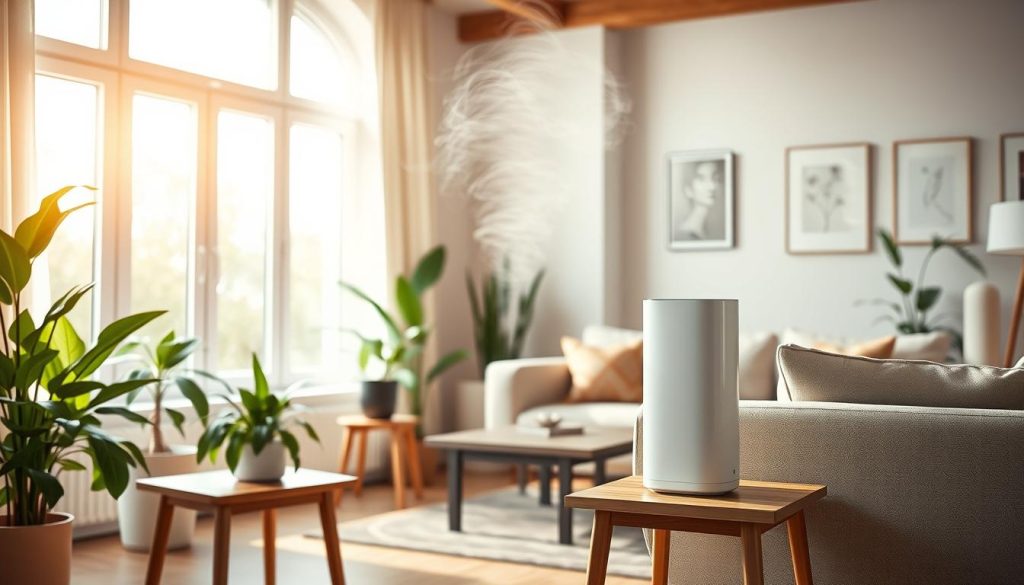
Change and upgrade filters for cleaner airflow
Replace or clean air‑conditioner and HVAC filters on schedule. Higher‑efficiency options trap finer particles, including dander, and improve overall air flow.
Use air purifiers strategically
Placing air purifiers near the pet’s bed and main living area reduces airborne particles more effectively than spreading devices thinly.
Choose units with true HEPA filtration where possible, and run them during peak activity for best results. For model ideas and pet‑focused reviews, see best air purifiers for pets.
Air‑conditioning and ventilation habits for Singapore homes
Balance AC use with short bursts of natural ventilation. Open windows briefly when humidity is lower, then run fans or the AC to avoid damp stagnation.
Fragrance choices and essential oils
We do not recommend masking odours with sprays or candles. Fragrances alter the scent but rarely neutralise sources.
Essential oils can be harmful to pets. Use diffusers only after checking safety and limit exposure; never rely on oils as the main strategy for a neutral home smelling fresh.
Quick note on DIY cleaners: baking soda vinegar mixes help for surface neutralising and laundry, but they do not replace enzymatic cleaners for urine or deep residue. Filtration and targeted cleaning remain our priority.
Conclusion
Let’s sum the practical sequence that protects fabrics, floors and indoor air from lingering scent.
Identify the source, remove hair and dander, deep‑clean textiles, neutralise accidents with an enzymatic product and keep air moving and filtered. These steps work together and prevent repeat marking when applied consistently.
We avoid masking odours. Baking soda lifts surface odour, vinegar helps wipeable items and laundry, and enzymatic cleaners treat organic stains properly. Regular vacuuming, weekly washing of bedding and checking filters keeps our home fresh.
Respond quickly to any new accident: blot, treat and dry. With the right routine, our house can stay neutral even with a dog present—no heavy chemicals or constant fragrances required.

