
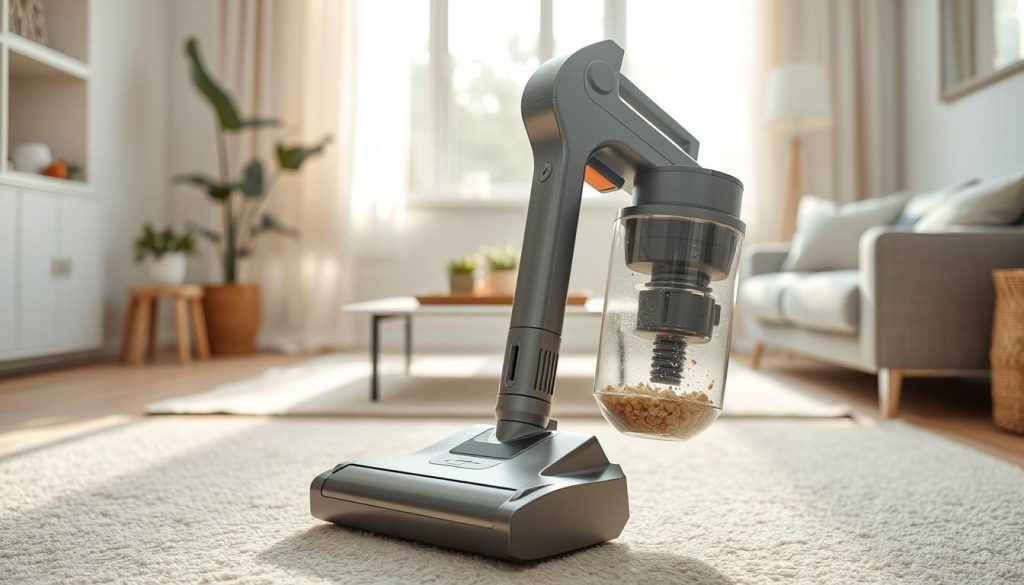
We set out to shortlist machines that suit real homes in Singapore. Our roundup focuses on practical pick-up performance, simple use, hygiene and upkeep. We will judge each model by how it performs on tiled floors, carpets and spills.
By “water and vacuum cleaner” we mean a single unit that handles dry debris as well as liquid spills. Many models pair suction with a wash function to keep floors ready for daily life.
We spotlight Electrolux models as our top-rated picks while comparing rivals such as Tineco, Bissell, Narwal, Simplus, Dyson and Shark. Buying from Electrolux Singapore can include free delivery, 0% instalment plans and promotions up to 47% off, which affects overall price and value.
Our review will help you choose by format (drum versus cordless stick), tank design, filtration, run-time and whether self-cleaning is worth paying for. In short, the best choice matches your mess profile, floor type, storage and budget.
Why wet and dry cleaning matters in Singapore homes
Singapore homes face unique daily messes that make combined wet-dry machines especially useful. Our climate and lifestyle mean grit, sudden spills and tracked-in debris are common. A single, versatile unit reduces repeat work and speeds routine cleaning.
Common local messes we see
We map everyday messes—drink splashes, kitchen drips, fine sand from parks and constant dust—to the right tool. For light crumbs and dry dust, a standard dry vacuum will do the job quickly.
For sticky residue or liquid spills, a wet dry vacuum saves time by combining suction with a controlled rinse. Pet owners benefit when paw prints and tracked-in grime are handled in one pass.
Hard floors vs rugs: choosing the right approach
Hard floors such as tile, vinyl and laminate respond well to measured water use and fast drying. Rugs need cautious wet passes and the correct brush to avoid soaking and trapped hair.
Our advice: match machine type to your routines—light, daily sessions for quick upkeep and deeper wet passes for occasional intensive cleaning.
What a wet dry vacuum is and how it differs from a dry vacuum
Think of a wet-dry device as a two-mode tool that handles liquids as well as dry debris in one go. We use these units when a single pass must clear spills, grit, pet marks or crumbs.
How it differs: a dry vacuum is built for dust, crumbs and fine particles only. The hybrid design adds sealed tanks, stronger motors and sump systems to collect liquids safely.
Wet spills, dry messes and debris: what these machines can handle
These units pick up puddles, muddy footprints, fine dust, grit, larger debris. Do not use them on hot ash, corrosive fluids or live electrical parts.
Where they work best
Ideal for balconies, cars, patios, stairwells and post-renovation clear-outs where mixed messes are common. They suit users who need one machine for varied jobs.
Trade-offs to expect
Expect extra weight, larger footprint, higher noise but greater versatility and power. Ask yourself: “How often do we face liquids?” If rarely, a better dry vacuum may suffice.
“Versatility is not just wet pickup — it is about toolsets, hose reach, and multiple cleaning modes.”
Key benefits we look for in a water and vacuum cleaner
Our priority is real-world performance that saves time in busy Singapore homes. We assess features that reduce passes, cut tool swapping and stop spills from becoming stains.
All-in-one cleaning that works
All-in-one means a single pass for vacuuming plus mopping, so routine cleaning becomes quicker. This suits flats where fast turnarounds matter after meals or playtime.
Effective suction where it counts
We treat suction as pick-up performance on grout, textured tile and in corners, not only a headline figure. Good power clears trapped dirt, crumbs and larger debris in one go.
Advanced filtration for indoor air
A quality filter reduces recirculated dust, fine particles and haze-related allergens common in urban apartments. That makes daily cleaning also a health benefit.
User-friendly design and handling
Easy-empty tanks, simple rinse routines and compact storage change whether a machine fits daily life. We favour models that balance performance with low fuss.
- Must-have: reliable suction, sealed filter, easy-empty tanks.
- Nice-to-have: self-clean modes, extra tool sets for edges.
- Choose by home: bigger tanks for families; lighter designs for small flats.
“Practical features — not specs alone — decide how useful a cleaner is in daily life.”
Wet and dry vacuum formats explained: drum vs cordless stick
Formats shape how a machine fits into our routines. The choice between a drum unit and a stick model decides capacity, storage and upkeep. We look at real use cases to help buyers match format to need.
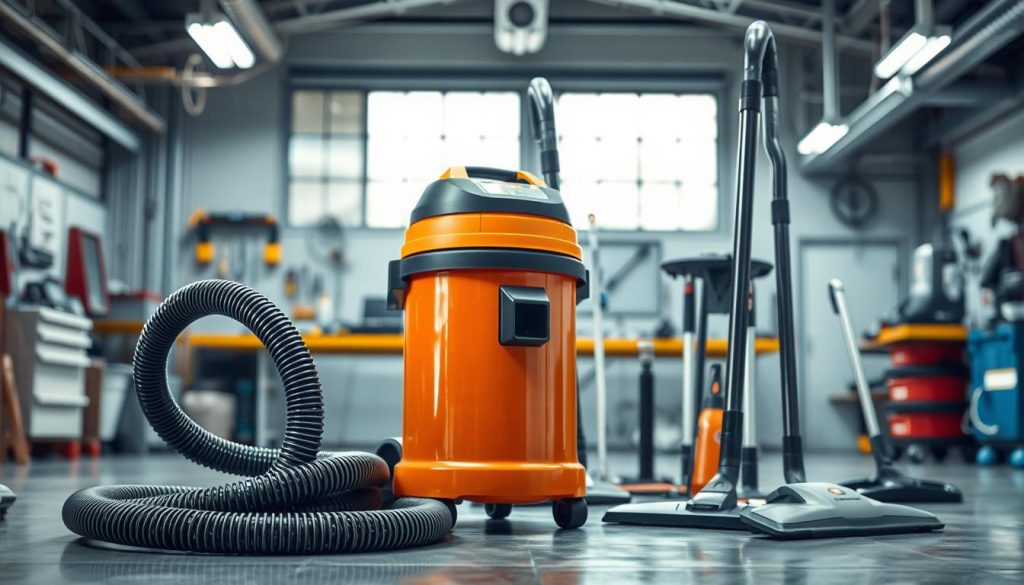
Drum models for heavy cleanups
Drum models suit renovation sites, garages and workshops. They offer large tanks, strong power and handle bulky debris with ease.
Most are corded, feature 360° bases and sometimes include a blower function for outdoor tasks.
Cordless sticks for quick hard-floor care
Cordless sticks excel on hard floors for fast passes after meals or guests arrive. They pair integrated mopping with suction for day-to-day upkeep.
Capacity, tanks and hygiene
We prefer separated clean/dirty tanks over single drums. Separation improves hygiene and simplifies rinsing within the system.
Mobility and ergonomics
Drums roll steadily; sticks offer light, agile handling in tight HDB corridors. Choose based on storage space and how often you clean.
“Pick format by mess size, not by specs alone.”
- For heavy messes: drum models, larger tanks, corded power.
- For daily upkeep: cordless sticks, easy handling, quick emptying.
What to check before you buy
Before you commit, we run through practical checks that save time and avoid regrets at home.
Tank capacity: clean vs dirty
Check tank sizes to match your routine. Larger tanks mean fewer trips to the sink but need more storage and lifting.
Prefer separate clean water and dirty-water tanks for hygiene, less smell and consistent floor results.
Suction and real-world pick-up
Compare suction by testing on hard floors for grains of rice, cereal and fine dust along edges.
We value steady pick-up over headline power numbers; look for models that clear both dry mess and wet clumps in one pass.
Filter choices
Standard filters work for routine cleaning in flats. Choose HEPA-style if allergies or fine dust are a concern.
Corded vs cordless
Plan by reach and run time. Corded units offer uninterrupted power across rooms. Cordless models need charging time but give greater manoeuvrability for short sessions.
Accessories that matter
Check included brushes, crevice nozzles and extension wands. The right toolset makes car, ceiling and skirting-board work far easier.
“Pick features that match your mess, not only the spec sheet.”
Self-cleaning system and hygiene features worth paying for
Hygiene features often decide whether a machine stays in daily use or is ignored. In humid Singapore, damp rollers and dirty tanks create smells fast. A reliable self-cleaning system reduces that risk.
Self-rinsing nozzles and brush washing
What it does: automated rinses flush the nozzle and brush path after a run. This cuts residue and lowers manual maintenance.
What it does not do: it does not replace occasional deep cleaning or full drying in open air.
Antibacterial tanks and hygiene claims
Some Electrolux models add antibacterial treatment to tanks with claims up to 99.9% reduction. This can support cleaner results and fewer odours when used correctly.
Emptying, rinsing, and drying remain essential habits even with treated tanks.
- Why it matters: dirty residue causes smells quicker than motor wear.
- Where it helps most: families who mop often, households with pets, frequent spill zones.
- Cost impact: better hygiene features lower maintenance time and raise the chances we keep the unit in regular use.
“Reduced maintenance makes daily cleaning realistic, not a chore.”
| Feature | Benefit | Limitation | Best for |
|---|---|---|---|
| Self-cleaning system | Less manual rinsing, fewer odours | Needs periodic full dry cycles | Busy households, pet owners |
| Brush wash + dry | Removes trapped hair, improves pick-up | Longer storage time if not aired | Homes with rugs, long-haired pets |
| Antibacterial tanks | Reduced bacterial load, fresher smell | Not a substitute for emptying | Families, allergy-aware users |
| Separate clean/dirty tanks | Hygienic flow, easier rinsing | More parts to store | Larger homes, frequent mopping |
Our top-rated Electrolux wet and dry vacuum cleaners
To keep decisions simple, we grouped Electrolux choices into value, premium cordless and hygiene-first tiers. This helps match a quick purchase to household needs.
Electrolux Flexio Power Z823 — budget-friendly versatility
What it is: a corded, drum-style product with 1600W power, 3-in-1 wet/dry/blow function and on-board accessory storage.
What we would buy it for: heavy pick-ups where raw power and practicality matter in small flats or garages. It handles coarse debris and offers good value for the price.
Electrolux 800 EFW81713 — premium cordless performance
What it is: a cordless model with an inverter motor, detachable hand unit, TriAction nozzle and self-cleaning features.
What we would buy it for: quick spot cleaning, cordless freedom and smart dirt detection in larger homes where run-time and agility matter most.
Electrolux UltimateHome 700 EFW71711 — hygiene-first family choice
What it is: a mid‑range product with 99% debris pick-up, antibacterial tanks (99.9% reduction) and a self-cleaning nozzle for fast floor drying.
What we would buy it for: households with kids or pets that need low-odour upkeep and easy maintenance after frequent cleaning sessions.
“We present a three-tier shortlist so you can pick by lifestyle, not by specs alone.”
- Small flats: Flexio Z823 for storage and strong power.
- Larger homes: Electrolux 800 for cordless reach and automation.
- Pet owners: UltimateHome 700 for hair handling and hygiene features.
How Electrolux features translate into everyday results
Electrolux packs purpose-built parts into each model so features deliver real results on skirting boards and tight corners.
TriAction nozzle and edge reach
TriAction heads improve contact along edges. That means fewer passes to clear the slim “dirty line” that standard heads leave beside walls.
We find up to 99% debris pick-up on select models in real tests, which matters most where crumbs and grit gather near skirtings.
Smart dirt detection and auto-adjusting performance
Smart sensing reads dirty versus clean surfaces and ups power only where needed. In practice, this avoids over-wetting mixed messes and saves run-time.
It also cuts noise and prevents unnecessary wear by keeping high-power modes for truly dirty patches.
Quick floor drying and controlled water output
Controlled water delivery speeds drying on hard floors and lowers slip risk. We use stronger settings for stubborn stains, normal for routine cleaning.
Overall, these features reduce passes and make daily upkeep faster for busy Singapore households.
“Features that cut passes and control moisture change whether a machine becomes part of daily life.”
Price guide in Singapore and how to spot good value
We map typical retail ranges so readers in Singapore can benchmark deals against normal market levels.
Typical Electrolux pricing range
What the numbers mean
Electrolux models are priced across a wide local range, depending on promotions. That spread reflects format, motor type and added automation.
What raises price: cordless convenience, inverter motors that save power, self-clean systems, and advanced brush or tank design.
Promotions and extras to watch for
Look past the sticker to benefits such as free delivery, 0% instalment plans, warranty length and bundle items. These often add more value than a headline discount.
Compare any offer with the official Electrolux range at official Electrolux range.
Budget versus premium: when to spend more
Choose budget models for occasional cleaning, smaller tanks and fewer tools. That is acceptable for light use.
We recommend premium spend when frequent wet dry work, large floor area, quick drying or low maintenance is a priority for users.
“A clear price map helps you pay for useful features, not for unused bells.”
Top alternatives we’d compare before buying
To avoid tunnel vision, we look at strong alternatives that may suit different floor types and routines. Below we outline key rivals, why they matter and where they outpoint Electrolux in real use.
Tineco Floor One Switch S7 Stretch
Why it stands out: iLoop sensing, an LCD, dual-side brush roller and high suction at 22,000 Pa. Tanks are generous at 1000/720 ml. Run-times reach up to 50 minutes for floor washing and 70 minutes for dry runs. Charge takes about 4.5 hours.
Bissell CrossWave X7 Cordless Pet Pro
Built for pets, it offers strong pickup to handle pet hair and stains with a 20,000 Pa motor, 820/420 ml tanks and about 30 minutes of runtime per charge.
Narwal S20 Pro, Simplus, Dyson and Shark
- Narwal S20 Pro: AI Dirt Sense, hot-water mopping, ~60 minutes runtime, ~3.5h charge.
- Simplus cordless: lower-cost cordless option; check tank hygiene and parts availability.
- Dyson Submarine variants: lightweight, strong filtration, 60 minutes on select models; smaller tanks.
- Shark HydroVac: antimicrobial brush roller useful where odour and hair are a worry.
“Comparing outside the brand helps validate whether a specific feature set actually matches your floors and routines.”
| Model | Key strength | Run-time (mins) |
|---|---|---|
| Tineco S7 Stretch | Smart sensing, large tanks | 50 / 70 |
| Bissell X7 Pet Pro | Pet hair, stain focus | 30 |
| Narwal S20 Pro | Manoeuvrable, AI dirt sensing | 60 |
| Dyson Submarine | Lightweight, filtration | 60 |
Choosing the right model for your home and lifestyle
Choose a model by matching daily routines to features rather than by chasing specs. We start with lifestyle: pets, children, tight spaces or renovation-grade mess determine the best format and tools.
Homes with pets: brush design, suction and hair handling
Prioritise robust brush rollers and anti-tangle designs. Strong suction helps lift trapped hair from fibres and edges.
Look for: motorised pet tools, removable brush bars and good edge reach to clear fur along skirtings.
Families with children: spill response time and tank capacity
Fast deployment beats raw power for daily spills. Larger clean and dirty tanks reduce trips to the sink and keep quick tasks quick.
Small spaces: storage footprint, weight and turning radius
Choose a compact cordless stick if storage is tight. Lighter units get used more often; check turning radius for narrow HDB corridors.
Renovation or outdoor use: durability, blower functions and larger debris
Drum-style builds last under heavy use. A blower mode clears dust and larger debris on balconies and workshop areas.
- Match the model to your week: frequent spills → cordless stick; lots of hair → pet-focused head; renovation work → drum model.
- Budget tip: prioritise brush quality and suction over extras you may never use.
“Pick format by mess, not by brand.”
How we test and compare wet and dry vacuums
Our test regime treats each model the same way, so results are comparable and repeatable. We focus on tasks that match Singapore homes: tiled floors, rugs, car mats and typical spills. Below we explain the checks that shape our scores.
Pick-up performance on dust, dirt, crumbs and wet spills
We run standard loads of fine dust, tracked-in grit, cereal crumbs and small liquid spills along edges and grout. We measure how many passes it takes to clear visible dirt and count any remaining stains.
Mopping: cleaning solution versus water-only
We test with a mild cleaning solution and with plain water. We look for streaking, residue and how quickly the floor feels dry underfoot after a pass.
Run-time, recharge time and noise
For cordless models we log run-time and recharge in minutes. We also record noise to balance power with household comfort, noting louder units that offer more power.
Maintenance scoring
We score ease of emptying tanks, filter access, brush de-tangling and drying time. Low maintenance makes a model more likely to be used daily.
“We balance absolute cleaning results with daily usability — the best machine is the one you actually use.”
Maintenance tips to keep performance high
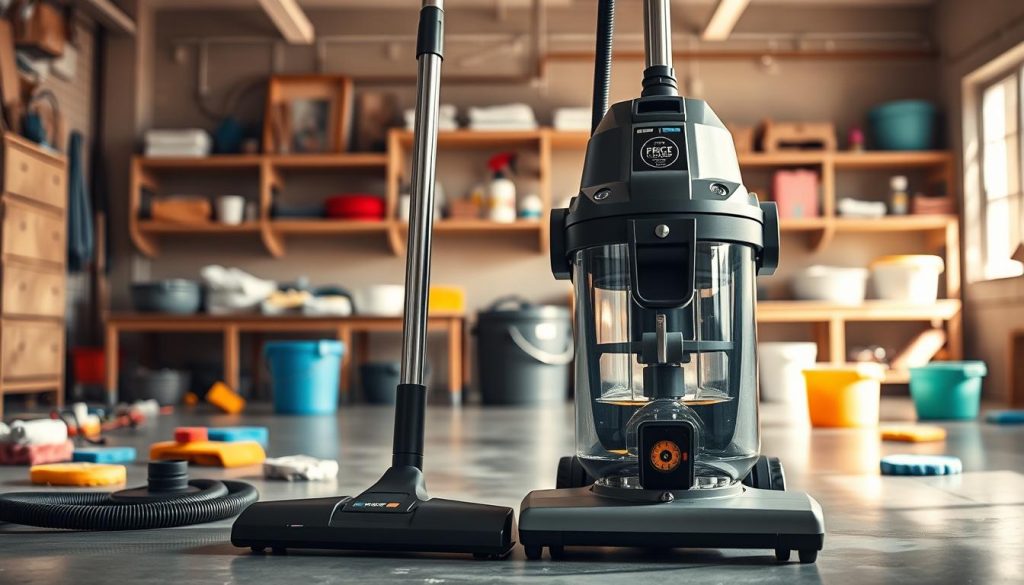
A short maintenance routine protects suction, prevents smells and extends the life of key parts. A few minutes after each use keeps the unit performing like new in Singapore’s humid climate.
Tank emptying and rinse routines to prevent smells and build-up
Empty dirty tanks immediately after use to stop stagnant liquid from causing odours. Rinse with clean water and give each part time to air-dry before reassembly.
Tip: Keep lids open while storing to avoid trapped dampness that speeds bacterial growth.
Filter care and replacement habits for consistent suction
Clogged filters cut suction fast. Tap or rinse washable filters every few weeks and replace non-washable units per manufacturer guidance.
Check filters after heavy dust or renovation jobs; a blocked filter can damage the motor and lower performance.
Brush and nozzle upkeep to reduce tangles and streaks
Remove hair and debris from brush rollers after each run. Inspect nozzles for clogs that cause streaking on hard floors.
Where possible, run a quick self-rinse cycle or manually wipe the brush path to keep residue from redepositing on surfaces.
Safe storage habits
- Store tanks open to dry and avoid sealing damp components.
- Keep spare filters and a small tool kit close by for rapid part swaps.
- Schedule a monthly full check of seals, hoses and brush bars.
“A well-kept wet dry unit performs closer to day one and reduces the chance of odours that make owners stop using it.”
| Task | Frequency | Why it matters |
|---|---|---|
| Empty dirty tanks | After every use | Prevents odour, reduces bacterial growth |
| Rinse filters | Every 2–4 weeks (washable) | Maintains suction and motor health |
| Clean brush roll | After every session with hair | Stops tangles and restores pick-up |
| Full system check | Monthly | Finds wear early and keeps performance consistent |
Conclusion
strong, The best wet dry vacuum is the one that fits your messes, floors and willingness to maintain it. Choose format first — drum for heavy work, cordless stick for quick passes — then pick the model whose features match your routine.
For buyers we recommend three Electrolux routes: budget versatility, premium cordless convenience and a hygiene-first product for families. Each suits distinct users without overpaying for unused extras.
Buying shortcut: prioritise tank design, clean water capacity, edge reach, drying behaviour and whether a self-cleaning system keeps the unit pleasant to use.
Judge value by full landed price, promo bundles and instalment plans in Singapore. If you use a robot vacuum for daily dust, pair it with a wet-dry unit for spills. Choose format, then model, then optimise for price.

