

We introduce sealed suction in plain terms so readers in Singapore can read spec sheets with confidence.
Sealed suction, shown as inches of water, tells how strongly the motor can pull against a closed opening. Airflow, measured in CFM, shows how much air the machine moves and often predicts cleaning ability more reliably.
We set clear expectations: no single figure perfectly predicts real-world results. Suction pressure, airflow, filter resistance and tool design must work together for good performance.
In humid Singapore, fine dust and grit affect filters and reduce both suction and airflow. Our guide focuses on practical selection and routine care so owners can match power and tools to floors and rugs.
Next, we compare sealed suction with airflow and explain how to use both terms to pick and maintain the right unit for everyday cleaning.
What is water lift on a vacuum cleaner and why it matters for suction
Sealed pressure in inches of fluid shows how much pull the motor can hold when the airflow path is blocked.
Water lift measures sealed suction as the height, in inches, of a one-inch column that the motor can raise. This reading gives a direct sense of the unit’s pressure capability under closed conditions.
How sealed pressure helps break debris free
High water lift lets the motor grip stubborn dirt and grit at the floor, breaking it free before the moving air stream carries particles into the bin.
Why higher readings cope better with resistance
Long hoses, tight bends, filled bags and HEPA elements add resistance. A stronger sealed figure maintains suction performance when the system restricts flow.
- Sealed inches show the motor’s pressure ability under ideal test conditions.
- Good water lift helps pick heavy soils and cope with partial filter loading.
- Suction felt at the hose may not match cleaning if airflow is reduced at the tool.
We use this metric as one useful comparison point, not the sole performance gauge. For a deeper read on how sealed pressure ties to airflow, see our suction and airflow primer.
How to understand water lift measurements in practice
Manufacturers use a simple vertical-tube trial to create the published rating for sealed suction. We attach the hose to the top of a tall tube, start the motor and record how many inches a column of liquid is held. This measurement shows sealed pressure rather than airflow.
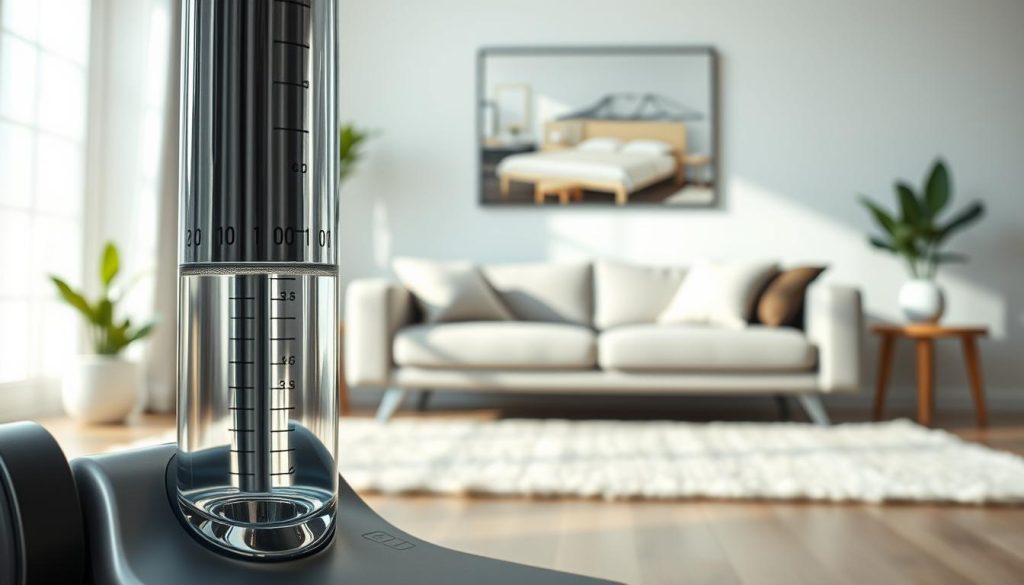
Benchmarks help interpret numbers. Around 85 inches is a common average. Higher-performing mainstream units often sit near 90–95 inches. Entry-level products may read 60–80 inches, while specialist extractors can reach extreme figures such as 249 inches for deep extraction.
Specs can vary by test method, hose length and tool design, so compare like-for-like across the same class of units.
- Step-by-step: hose at tube top, seal pathway, run motor and note inches held.
- Expect declines: as bags fill and filters load, resistance rises and effective performance falls.
- Ownership tip: manage bag capacity and clean filters to keep the rating closer to the new-out-of-box result.
How to compare water lift vs CFM for real-world vacuum suction
When choosing gear, we must weigh sealed pressure against moving volume to see which spec best matches daily cleaning needs.
CFM explained: cubic feet per minute as volume air moved
CFM measures the volume of air a machine moves per minute. In plain terms, it tells us how much air flows through the hose and head to carry dust into the bin.
Why airflow often predicts cleaning ability across surfaces
Airflow combines motor output with resistance from filters, hoses and tools. That makes it a strong indicator of actual cleaning performance on floors and rugs.
Separating pressure from flow with a suction-cup example
“A suction cup can hold firmly with little air movement; that pressure alone does not move debris into the bag.”
Using both numbers for a clearer view
Pressure helps lift heavy grit; airflow removes it and covers more area faster. We advise comparing both specs, then checking likely losses from long hoses, tight bends and loaded filters.
Helpful reference ranges
- Typical household: about 50–100 CFM.
- Premium designs: often start near 103 CFM and can reach ~120 CFM.
How to estimate the right suction power for your home in Singapore
Choosing the right suction power depends on the mix of floors, common soils and our routine upkeep. We start by mapping rooms: smooth tile and hardwood favour steady airflow and an efficient floor head. Carpets and rugs need both flow and enough suction power to lift embedded grit.
Matching specs to surface type
For tile and sealed timber, pick models that keep consistent airflow through the tool. That gives fast dust and debris pick-up without over‑powering delicate floors.
For carpet and rugs, aim for a balance of pressure and airflow. Enough suction power breaks loose trapped dust and dirt so the stream can carry it away.
When higher pressure matters most
Entryways in Singapore often bring sand and grit indoors. Higher sealed pressure helps grab heavy particles before the air stream removes them.
Canister versus upright considerations
Canister models use longer hose and wand runs, so published CFM figures measured without attachments can overstate performance at the head. We therefore favour higher expected CFM levels for canisters to maintain end‑of‑tool results.
Uprights can perform well with lower published airflow because their path is shorter and tool losses are smaller.
Account for humid conditions and maintenance
Humidity speeds filter loading when dust and damp debris combine. We avoid vacuuming moist waste and keep filters dry and clean so airflow does not collapse as filters clog.
“Consider floor mix, tool quality, filtration and how quickly performance drops as the bag fills.”
- Fit check: list your surfaces and busiest zones.
- Compare tool quality and expected hose losses for canisters.
- Choose models with headroom in CFM and sufficient suction power for entryway grit.
How to maximise water lift and airflow on your vacuum cleaner
We keep machines working at top performance by focusing on simple checks and steady care. Small fixes often restore both sealed suction and moving volume so cleaning stays efficient around the home.
Reduce resistance: clear clogs, check hose seals, and keep pathways unobstructed
Clear visible blockages from the hose, wand and head first. A short inspection can reveal trapped dust or debris that cuts airflow and reduces suction power.
Inspect joints and seals. Poor seals let air leak and raise resistance, so tighten or replace any worn gaskets.
Maintain filtration and capacity: replace bags and clean or change filters before airflow drops
Maintaining filters is the fastest route to restored performance. As bags fill and pores clog, airflow falls even while the motor sounds normal.
In humid Singapore, let filters dry fully and avoid picking up damp waste that can block pores.
Use variable suction control for delicate surfaces without sacrificing overall cleaning results
Variable suction lets us reduce tool sticking on curtains and light rugs while keeping power ready for heavy-soil zones. Use lower levels for fragile items and higher settings for entryways with grit.
Choose the right cleaning head: agitation for carpets while protecting airflow at the floor tool
Carpet heads with controlled agitation dislodge dust without sealing the opening. Pick heads that balance brush action and airflow so the tool can carry debris into the bag.
“When pickup drops, check the simplest causes first—full bag, loaded filter, blockage, poor seal—before assuming the machine has lost power.”
| Issue | Likely cause | Quick fix |
|---|---|---|
| Low pickup | Full bag or clogged filter | Replace bag; clean or swap filter |
| Weak suction at head | Blocked hose or loose seal | Clear hose; reseal joints |
| Motor shuts or stalls | Thermal protection or obstruction | Let motor cool; remove blockage |
- Routine: check bag and filter monthly in heavy use zones.
- Tip: keep spare filters and a spare bag to reduce downtime.
Conclusion
Treat pressure and airflow as partners: one frees deep grit while the other moves debris into the bin. Read sealed pressure (inches) alongside CFM figures to get a full picture of performance.
Keep in mind the handy benchmarks: around 85 inches is common, 90–95 for stronger models and roughly 50–100 CFM for typical use, with premium machines higher. Design, tools and test methods change results, so compare like‑for‑like.
In humid Singapore we must guard filters and avoid damp mess to protect airflow. For practical next steps, shortlist by airflow and sealed pressure, pick the right head for your floor and maintain filters so real‑world suction stays close to its rating. For a detailed comparison, see our detailed comparison.

