

We introduce our shortlist of a vacuum cleaner with water filter system suited to Singapore homes. Our focus is on models that clean floors well and leave the air feeling fresher.
In everyday use, these water-based designs trap dust and debris in a tank rather than relying only on bags. That helps reduce the typical “post-cleaning” dust smell.
We recommend Kärcher’s DS 6 as our main pick and present the DS 5.800 as a strong alternative. Both offer bagless, water-trap performance and improved exhaust quality.
Who benefits most? Families in compact flats, pet owners and allergy-conscious households will notice the clearest gains in air freshness.
We define “top picks” by practical filtration, sensible energy use, easy storage and useful accessories. Later, we will share a buyer checklist to match the right system to your layout and routines.
Why a vacuum cleaner with water filter system is worth it in Singapore homes
In Singapore homes, a water-based capture approach can make a clear difference to indoor air after cleaning. We often keep windows shut for air‑conditioning, so the right method helps rooms feel fresher rather than stale.
How the capture stage traps particles
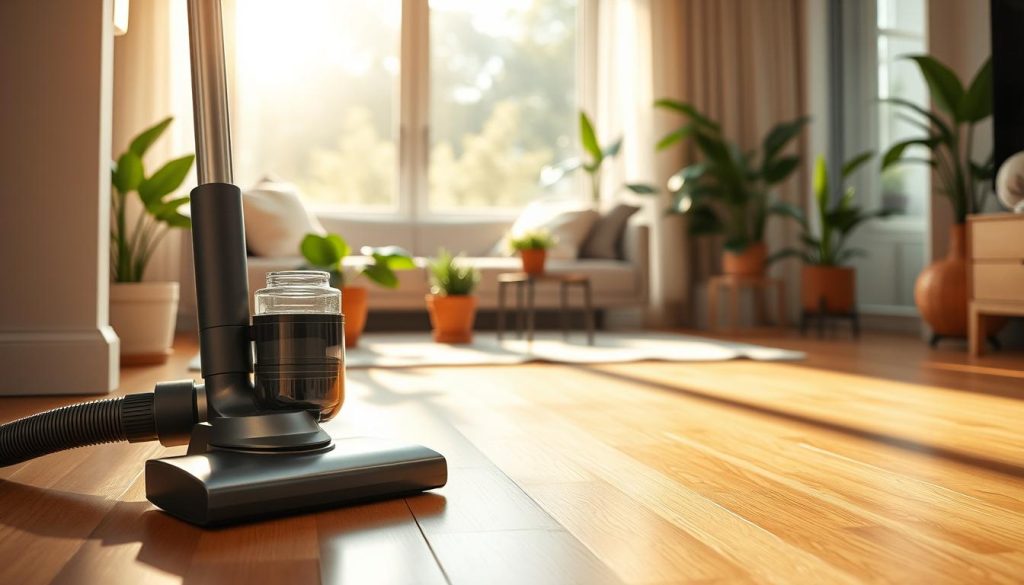
The appliance draws in debris and forces it through swirling liquid. Particles become bound and stay in the basin instead of being blown back into the room.
Multi-stage polishing explained
First stage: the liquid bath captures larger and many fine particles. Second stage: a washable intermediate screen catches finer matter. Final stage: a HEPA cartridge polishes exhaust air, removing microscopic particles.
Why allergy sufferers benefit
For allergy sufferers, this layout reduces airborne irritants that often re-circulate. Models such as the DS 6 cite multi-stage removal up to 99.95% and the DS 5.800 reports HEPA-grade exhaustion near 99.99% for tiny particles.
Bagless hygiene and real-world care
Emptying is neater: debris stays suspended in liquid, cutting the dramatic dust cloud seen in some dry designs. Still, regular rinsing and proper care keep performance steady and preserve a pleasant indoor environment.
Our top picks and review highlights for water filter vacuum cleaners
For everyday use in Singapore flats, a model that balances suction, reach and user-friendly storage matters most. Below we summarise the Kärcher DS 6 and offer a freshness-focused alternative.
Kärcher DS 6 key specs that matter day to day
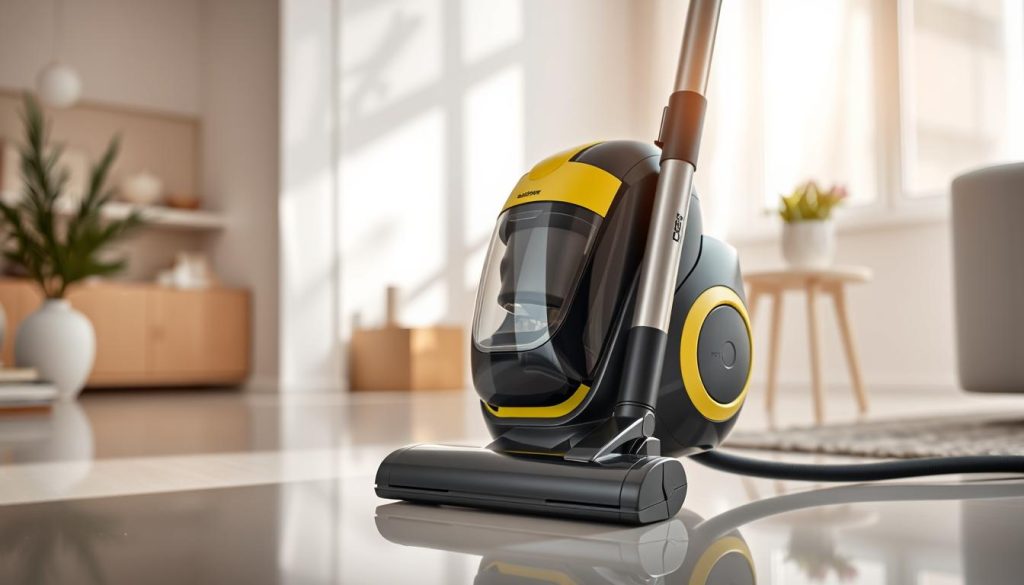
Practical reach: a 10.2 m operating radius and a 2.1 m suction hose save time on large rooms.
Compact capacity: 2 L basin and a 7.5 kg body make emptying and storing straightforward.
Filtration performance for cleaner air
The DS 6 combines a water capture stage, a washable intermediate screen and a HEPA 13 cartridge. This trio is stated to remove up to 99.95% of dust from exhaust air, which helps produce a noticeably fresher indoor atmosphere.
Energy, ease and comfort
Rated at 650 W input yet marketed as matching a 1,400 W-class pickup, the DS 6 aims to limit energy consumption while keeping strong power. Automatic cable rewindfast pairs with convenient power cord storage at a push, so pack‑away is quick.
The chrome telescopic suction tube, switchable floor nozzle and practical parking position make short interruptions and varied floor types easier to manage.
Storage, scope and an alternative
Accessory storage on the device houses crevice and upholstery tools; FoamStop and motor protection parts are included. Local pricing varies, and multi‑buy discounts sometimes apply.
Alternative: the Kärcher DS 5.800 focuses on freshness via a rotating water bath, HEPA 12 polishing and easy handling features such as caster wheels and two parking positions.
For care tips and filter maintenance see our guide: how to clean a vacuum filter.
What to look for before you buy a filter vacuum cleaner with water filtration
A practical pre-purchase checklist helps match a water-based unit to Singapore layouts and routines. We focus on capacity, reach and how the device fits your storage and cleaning rhythm.
Capacity, reach and manoeuvrability
Capacity matters: a 2 L water filter basin is a good reference for routine sessions in flats. It balances run time and refill frequency so you rarely stop mid‑clean.
Reach counts: a 10.2 m operating radius reduces socket swapping in long living/dining areas. Good manoeuvrability and caster wheels make moving around furniture quicker.
Maintenance checklist
- Fill and rinse: top up to the recommended level and empty after each use to avoid odours.
- Intermediate care: wash the washable screen and keep seals clean so airflow remains steady.
- HEPA upkeep: HEPA stages are not fit‑and‑forget; inspect and replace as advised to protect performance and the device’s motor.
Home‑fit and accessories
Match accessories to tasks: a switchable floor nozzle for tiles and rugs, an upholstery accessory for sofas and mattresses, and a crevice tool for skirting lines and tracks.
Practical tip: consider where you will store the unit and how often you will clean the basin. These small choices help ensure the system suits your home and cleaning routine.
Conclusion
For households that value both clean floors and fresher air, a well‑chosen model delivers on both suction and exhaust quality. We favour the Kärcher DS 6 for its multi‑stage approach, HEPA 13 polishing and stated up to 99.95% dust removal from exhaust air. Its easy fill/clean water basin, automatic cable rewind and neat accessory storage make routine use simpler.
If freshness is your prime concern, consider the DS 5.800 for its bagless water bath and HEPA 12 polishing. Ultimately, judge by suction performance, ease of emptying, realistic storage and handy cord and parking features so the device stays part of your weekly routine. For more on the advantages of water‑based capture see water‑based capture benefits.

