
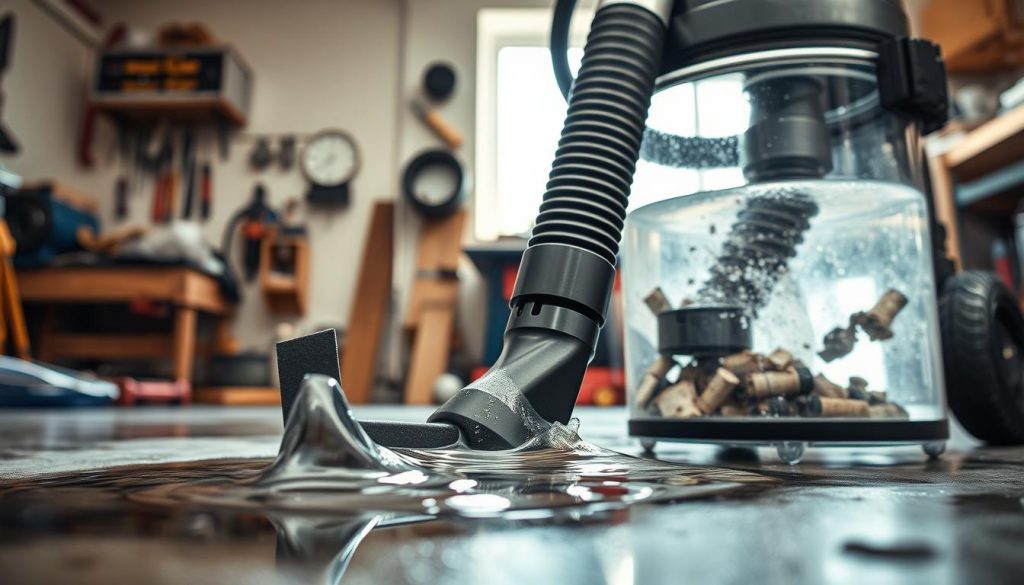
We set clear expectations. In most cases, a regular upright, stick or robotic hoover should not be used on liquid spills. Using the wrong machine risks electric shock, permanent internal damage and voided warranties.
By “vacuuming water” we mean small spills versus standing liquid. That difference matters for safety and for the life of your machine.
In Singapore homes, quick clean-ups often suit a mop or microfibre cloth. For proper liquid pick-up, we recommend a wet/dry model with sealed components and specialised filters.
What we cover next: why standard hoovers and many robot models are not built for liquids, the hazards to expect, and when a wet/dry option is the right choice. Our guide stays practical and present-focused, with clear do/don’ts for spilled drinks, leaks and wet entryways.
Can you use a vacuum cleaner for water on spills and standing water?
For minor wet patches, simple wiping gives faster, safer results than powered extraction. We separate light surface dampness from true standing water because each needs different handling.
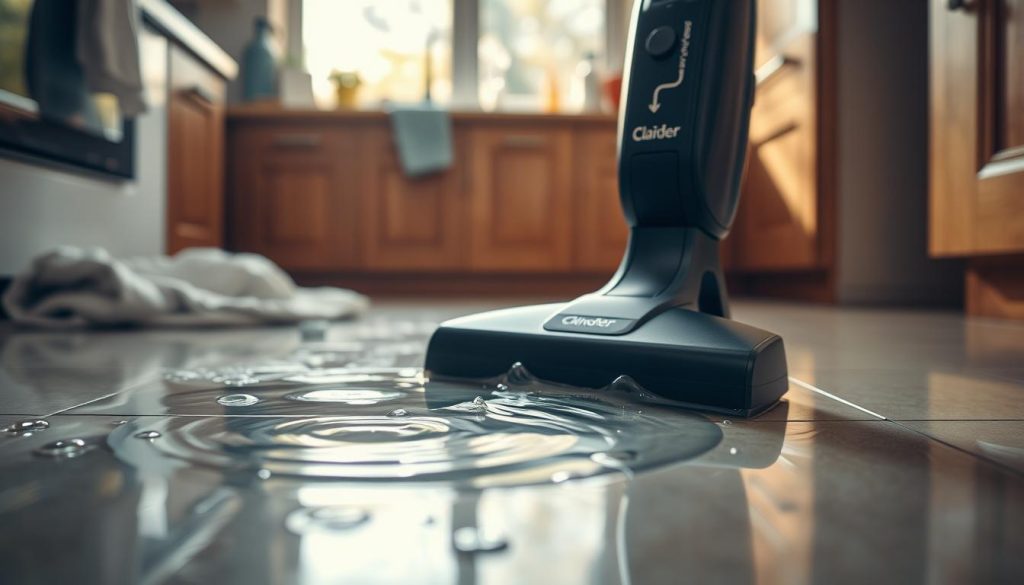
Why regular dry vacuums aren’t built for liquids
Dry models rely on airflow and particulate filtration, not liquid handling. Their housings and seals are not watertight. That design focus keeps suction high for dry debris but leaves machines vulnerable to moisture.
What happens inside the motor, filters and hose when moisture gets in
When moisture reaches the motor area, shorting and corrosion follow. Wet filters such as paper or HEPA can collapse or clog, reducing suction and straining the motor.
The hose and internal pathways trap wet dust and hair, forming sticky sludge. That sludge is hard to remove and creates odours in humid Singapore conditions.
When a quick mop is safer than vacuuming liquids on hard floors
On tile, vinyl, laminate or sealed wood, we recommend a mop or microfibre wipe first. This avoids damage, reduces hygiene risk, and prevents forced drying of internal parts.
| Scenario | Recommended action | Risk to dry vacuums |
|---|---|---|
| Damp patch (small) | Wipe with microfibre | Low—avoid powered pass |
| Spills (cup-sized) | Mop then dry | Moderate—filters may clog |
| Standing water (cm deep) | Use wet/dry model or pump | High—motor and wiring damage |
For further tips on wet/dry models and unusual uses, see our guide on wet and dry vacuum uses.
Safety and damage risks when using a dry vacuum on water
Mixing mains electricity and spills is one of the fastest ways to end up with costly faults or injury. We explain the main hazards and what to do if liquid has already entered equipment.
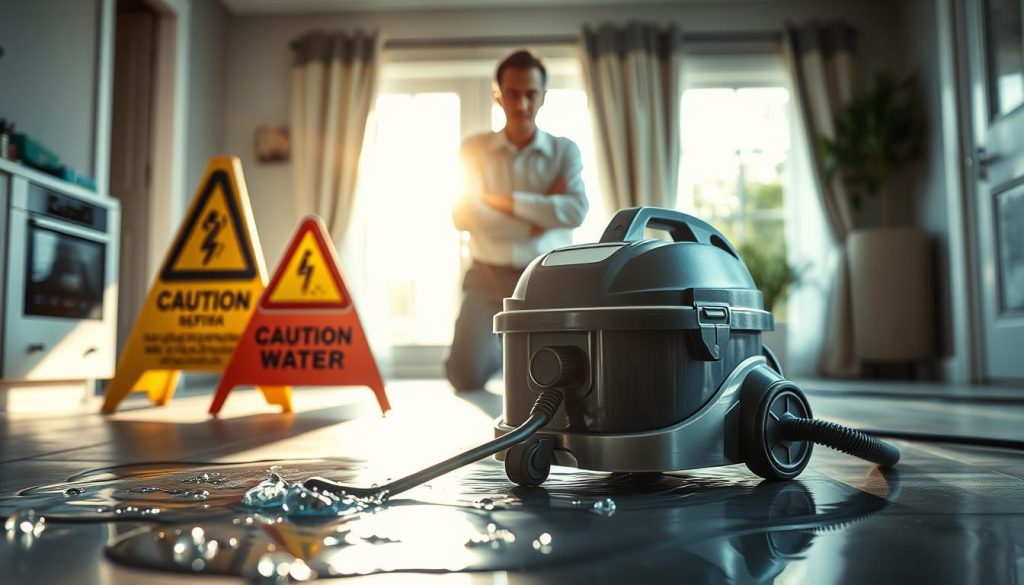
Electric shock and short circuits
When power meets wet internals, short circuits, sparks or electric shock can follow. If water reaches wiring or the motor, stop operation immediately and unplug at the socket.
Permanent corrosion and performance loss
Ingress causes corrosion of metal parts and damage to circuit boards. Filters and seals degrade, which leads to lasting damage and reduced suction.
Warranty, hygiene and slip hazards
Most manuals list liquids as misuse and void warranties. Trapped moisture in the tank or filter breeds mould and persistent odours.
Wet debris can form sludge that blocks airflow and leaves residue on the floor, creating slip risks in kitchens and entryways.
“Power off, unplug, do not reuse until fully inspected and dried; seek professional servicing if water reached the motor.”
Prevention is cheaper than repair: prefer a mop or a wet/dry model. For more on safe operation, read our essential wet/dry safety tips.
Using wet dry and wet dry vacuums to handle liquids properly
Specialist wet/dry machines let us extract standing liquid safely in garages, kitchens and balconies.
How the design protects internals
Wet dry models use insulated motors, sealed tanks and foam or washable filters that resist collapse. Those features guide liquids into the tank and away from electrical parts.
Which liquids are suitable and which to avoid
Safe picks include clean water, rain runoff, juice or coffee spills and mild outdoor puddles. These are fine when the unit is rated for wet use.
Avoid flammable petrol, solvents, bleach or unknown chemicals. Corrosive or volatile liquids damage seals, electronics and create safety hazards.
Capacity, indicators and handling bulk
Most tanks have limited volume and float shut-offs. Expect audible pitch changes as the tank fills and make sure to stop before overfilling.
Wet/dry units become heavier when full and may feel bulky on stairs or in small flats. Choose models with wheels, balanced handles and clear tank indicators if frequent liquid work is expected.
| Feature | Benefit | Note |
|---|---|---|
| Insulated motor | Prevents shorting | Essential for wet operation |
| Sealed tank | Contains liquids safely | Requires periodic emptying |
| Wet-use filter | Maintains suction | Washable or foam types preferred |
| Float shut-off | Prevents overfill | Stops suction automatically |
How we vacuum water safely with a wet dry vacuum
Before any powered pick-up, we prepare the machine and the area to reduce risk and protect the motor and filters.
Prepare the machine
Turn the machine off and remove dry bags. Some models may need a foam or washable filter fitted for wet dry work. Make sure seals are in place and that electrical connections remain dry.
Choose the right nozzle
For broad spills on hard floors we select the floor head. For corners, containers and tight spots we switch to the hose nozzle. The correct tool reduces clogging and speeds recovery.
Technique for messes and spills
We place nozzle at the edge and move slowly towards the centre. This prevents spreading and helps the hose carry liquid into the tank. For mixed debris, keep controlled, short passes to protect suction.
Monitor the tank and shut-off
Listen for pitch changes and watch the tank level. Float shut-off will stop suction when full; when that happens, turn vacuum off and unplug before emptying the tank.
Disposal and clean-down
Empty into a suitable drain and avoid dumping contaminated liquid in soil. Rinse the tank and hose with clean water, remove residue, and air-dry fully to prevent odour and mould.
If filter care is needed after use, follow our step-by-step guide to keep performance high — see how to clean a vacuum filter.
Conclusion
Our final verdict: avoid powering standard dry machines over any spill that leaves pooling on the floor. , Regular dry vacs and many upright models risk electric shock, corrosion and warranty voids when moisture reaches internals. This saves long‑term damage and keeps safety first.
For most small home spills, grab a mop or microfibre wipe and dry the area. Reserve purpose-built wet dry gear for standing water, repeated messes or jobs needing suction‑assisted removal. Learn more about wet dry vacuums at wet dry vacuums.
Before any liquid job, check manuals, fit the right nozzle, set filters for wet work and watch tank level. Quick checklist: assess spill size; choose mop vs wet dry; keep electrics clear; dispose wastewater responsibly; clean and air‑dry equipment after use.

