
Welcome. We wrote this guide to help Singapore households choose the right appliance for cleaner floors and fresher room air.
We explain what a vacuum cleaner water filter system does, who benefits most, and what outcomes to expect. Kärcher’s water swirl approach, which binds dust in a bath, shows how water filtration can reduce dust clouds when emptying.
What we cover: how it works, what to look for, comparisons with other vacuums, a real-world product example, and upkeep tips. We also set out the key trade-offs between suction, filtration performance and daily practicality for flats, condos and landed homes.
We define terms like filtration system, multi-stage and HEPA so everyone compares on the same basis. Our aim is practical: to help you shortlist options, weigh total cost of ownership and feel confident about buying.
Why water filter vacuums are gaining popularity in Singapore homes
Many households in Singapore now favour appliances that trap dust more effectively and leave the indoor air noticeably fresher.
Cleaner exhaust air matters for everyday life. For families with asthma or sensitive noses, reduced re‑circulation of particles makes a real difference to comfort at home.
Cleaner exhaust air and allergy-friendly performance with HEPA filtration
HEPA stages paired with a wet capture core trap tiny particles that otherwise return to the room. A proper hepa filter can catch allergens such as dust mites, pet dander and pollen, cutting typical triggers for allergy sufferers.
No filter bags, less “dust cloud” when emptying, and a fresher indoor environment
People value that debris is bound in the reservoir rather than flying free on disposal. That reduces the familiar puff of dust that irritates eyes and throats.
“By combining wet capture with HEPA stages, many families see fewer airborne irritants and a fresher feeling in their home.”
- Hygiene and cost: bagless operation feels more hygienic and can lower running costs over time.
- Practical limits: regular emptying and correct HEPA installation are still essential.
- Who benefits most: families, allergy-prone households and anyone wanting less mess at home.
| Benefit | Why it matters | Who gains most |
|---|---|---|
| Cleaner exhaust | Fewer re‑circulated particles improve indoor air | Allergy sufferers, families |
| Less dust cloud | Reduced irritation when emptying debris | People with sensitivities |
| No bags | Lower ongoing cost and easier disposal | Cost‑conscious households |
How a vacuum cleaner water filter system works
We walk through how spinning liquid traps particles and turns dusty intake into a contained slurry.
Water swirl capture that binds debris
High-speed rotation inside the tank creates a swirl that pulls in dirt and dust by suction. Particles hit the liquid and stay bound in the bath instead of staying dry in the bin.
Multi-stage protection: core, intermediate and HEPA
The first stage is a visible water core that captures large debris. A washable intermediate layer then traps finer particles in humid air.
Final protection comes from a HEPA layer that targets microscopic allergens and particles down to around 0.3 µm, improving exhaust air quality.
What “clean air” claims actually mean
Manufacturers often quote percentages like 99.99% based on lab tests for specific particle sizes. Real-world performance depends on seals, maintenance and timely replacement of filters.
Well‑maintained multi‑stage designs can reduce airborne irritants and make post‑cleaning air feel fresher.
What to look for when choosing the right water filtration vacuum
A practical checklist helps us turn technical specs into decisions that suit daily life in Singapore.
Suction and sensible power guidance
Look beyond wattage. Suction matters, but design, nozzle fit and airflow affect real cleaning. Use the size rule of thumb: small flats 500–700 W, medium homes 700–1,000 W, large properties 1,000 W+ to set expectations.
Tank capacity and ease of use
Choose a tank size that matches how often you clean. A larger tank suits full-home sessions; a small tank is fine for quick spot cleans.
Check how simple filling, emptying and rinsing are. Less fuss means more regular maintenance and better long‑term performance.
Floor compatibility
Match nozzles and brush heads to your floors. Tiles and laminate need brisk suction and wide heads. Hardwood benefits from gentle contact. Rugs and carpets do best with adjustable heads and higher suction settings.
Pets, mixed debris and wet messes
For hair and mixed debris prioritise anti‑tangle tools and a clear suction path. If you must handle wet spills, choose a model designed to handle wet use rather than improvising.
Practicality for condos and flats
Consider operating radius, cord length and compact storage. A longer power cord reduces outlet swaps; clever parking or vertical storage saves space in HDB and condo units.
Noise, warranty and ownership cost
Expect typical noise between about 60–80 dB; quieter models help with young children. Check warranty terms and spare part availability in Singapore.
“Compare total cost of ownership — purchase price, replacements and service — not just headline specs.”
| Need | What to check | Quick tip |
|---|---|---|
| Whole-home cleaning | Higher power, larger tank, longer cord | Use size guidance above |
| Pets & hair | Anti‑tangle head, good suction path, HEPA support | Choose models with pet tools |
| Condo storage | Compact size, vertical parking, accessory docking | Measure your cupboard first |
Comparing vacuum types that may include water filtration
Choosing between canister, stick, robot and wet‑and‑dry models depends on your floors, storage and how you like to clean. Below we map strengths and trade‑offs so you can match a category to Singapore homes.
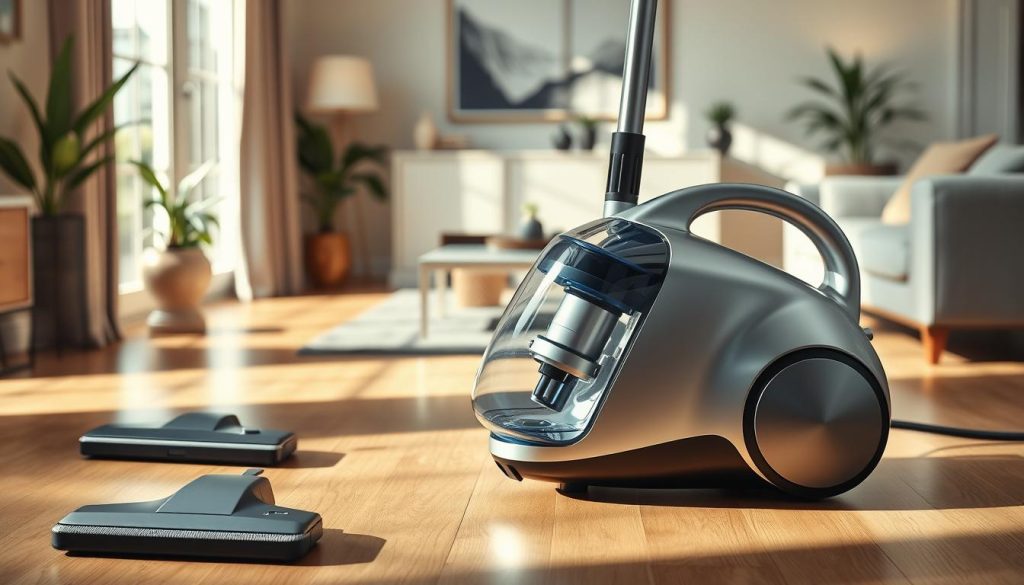
Canister options for mixed floors
Canister vacuum units deliver strong suction and long run‑times. They suit mixed floors and weekly deep cleans because hoses and tool variety reach corners and stairs.
Drawbacks are bulk and extra storage needs, plus cord management. Look for good operating radius and onboard storage to reduce hassles.
Handstick choices for quick daily upkeep
Handstick vacuum cleaner models are light, quick and ideal for flats. They simplify spot cleaning but trade capacity and run time for portability.
Robot options for hands‑free maintenance
Robot vacuum devices keep hard floors tidy with scheduled runs and compact storage. They are quieter, but struggle on thick rugs and need regular maintenance.
Wet and dry units for spills and heavy jobs
Wet and dry vacuum cleaners can handle wet messes and renovation dust. They offer high power but are heavier and often louder. Only choose a model that can truly handle wet use if you expect frequent spills.
Match your choice to floors, storage limits and whether you prioritise hands‑free upkeep or maximum suction.
For deeper reading on design differences see how water‑based designs work and whether water filtration models are worth it.
Real-world example: Kärcher DS6 water filter vacuum cleaner features and specs
A concrete product helps us turn technical numbers into realistic expectations for Singapore homes.
Filtration performance
HEPA 13 works with a wet capture chamber and the retailer claim of up to 99.95% dust removal.
This means microscopic particles are targeted, but real performance depends on correct upkeep and timely part changes.
Key specifications for planning your clean
Rated input power is 650 W. That suits routine apartment sessions without excessive energy draw.
The unit uses a 2 L water reservoir and offers a 10.2 m operating radius to reduce outlet swaps.
Convenience and daily usability
Automatic cable rewind, on‑body accessory storage and a practical parking position make pauses and short jobs faster.
Included tools and retail context
- 2.1 m suction hose and chrome telescopic tube for reach
- Switchable dry floor nozzle, crevice and upholstery nozzles
- Motor protection filters and a FoamStop defoamer
“Check warranty registration and current specs before purchase; retailer listings can change.”
| Spec | Value | Why it matters |
|---|---|---|
| HEPA 13 + wet capture | 99.95% claim | Better exhaust air if maintained |
| Rated power | 650 W | Good for flats and mixed floors |
| Tank & reach | 2 L / 10.2 m | Fewer refills and outlet changes |
For allergy‑focused households and mixed‑floor condos this model profile is a solid fit. Compare warranty terms and current offers before purchase to be sure it meets your needs.
Owning a water filter vacuum: maintenance, handling and storage
Good ownership keeps performance high and avoids smells, leaks and loss of suction over time.
After-clean routine: emptying the chamber hygienically
Empty the chamber promptly after each major run. Dispose of the used liquid outdoors or into a drain, then rinse the tank with clean tap water and a soft cloth.
Why this matters: debris bound in liquid disperses far less dust than a dry bin, so hygienic handling reduces exposure to dirt and dust when compared with dry emptying.
In humid Singapore, dry the tank before reassembly to cut odour risk. Leave parts separated to air for at least an hour.
Filter care basics: wash, replace and HEPA upkeep
Check washable components after every few uses and rinse them gently. Replace non-washable filters as the manufacturer recommends.
HEPA maintenance helps retain capture of fine particles and allergens and keeps exhaust air cleaner. Track replacement intervals and keep spare parts on hand.
Storage tips for small homes and accessory organisation
Use vertical or horizontal parking positions as required by your model to save space. Kärcher notes two parking positions for convenient storage.
Ensure all parts are dry before stowing. Store tools together in a box or on-board dock so the unit is ready for quick cleaning jobs.
“Prompt rinsing, correct HEPA care and dry storage are the simple checks that prevent most ownership problems.”
| Task | How often | Quick tip |
|---|---|---|
| Empty tank | After major use | Dispose outdoors, rinse and air-dry |
| Rinse washable parts | Every 3–5 uses | Use mild soap if needed, air-dry fully |
| Replace non-washable filters | Follow manufacturer interval | Keep spare filters and record dates |
| Check seals and docking | Monthly | Replace worn seals to avoid leaks and odour |
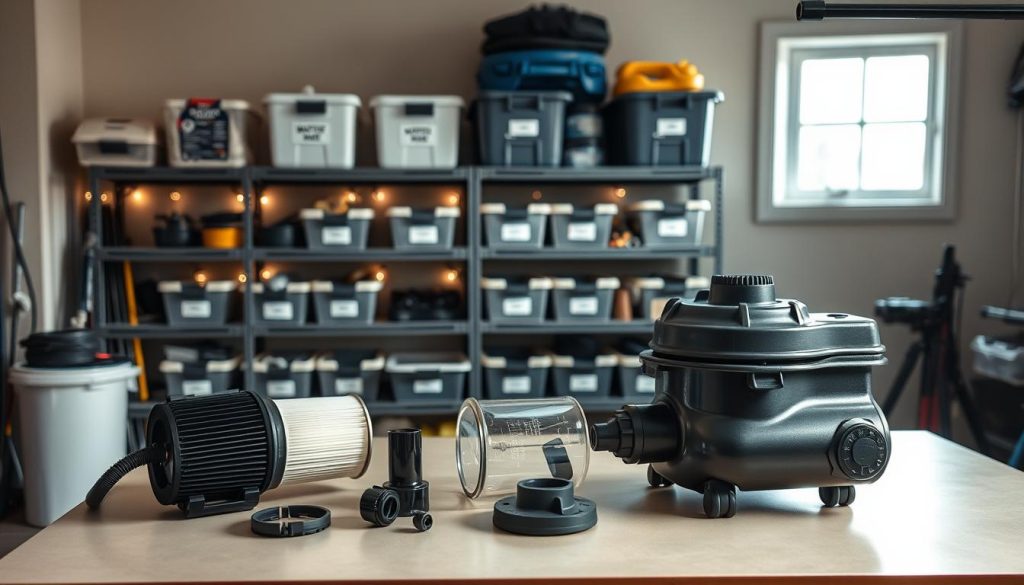
Final notes: track warranty, replacement intervals and purchase documents for servicing in Singapore. Regular upkeep keeps performance and features reliable for years.
Conclusion
, In closing, let’s turn what you’ve learned into simple buying steps for Singapore homes.
We organise decisions around three pillars: cleaning performance (suction and tools), air and filtration outcomes (water capture plus HEPA), and everyday practicality (storage, reach, noise and maintenance).
Ask yourself: which floors dominate your home, what size is your space, do you have pets or allergy‑prone people, and how much time will you spend on upkeep?
Remember: water swirl designs bind dust in a bath and usually cut the mess when emptying. Compare models by operating radius, cord length, verified HEPA stage, warranty and total cost of ownership.
Shortlist two to three options, match them to your floors and storage, then confirm local support before you finalise a purchase.

