
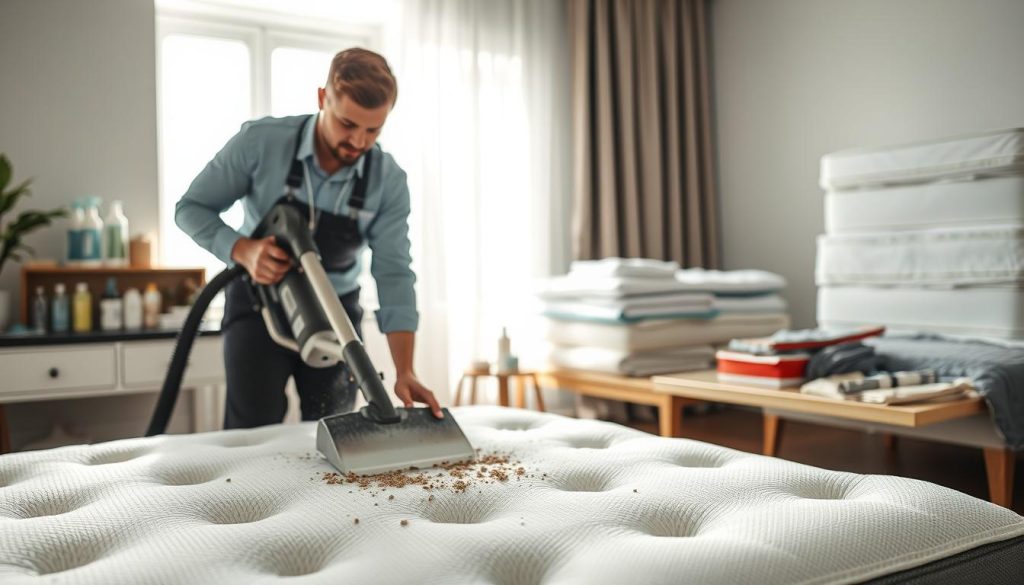
We offer a robust online selection in Singapore for buyers who need performance, durability and fast fulfilment. Our page positions each machine clearly so you can compare wet dry vacuum capability, dust handling, suction performance, filter systems, container volume and safety options.
Our range is chosen for workshops, construction sites, facilities teams and contract cleaners where downtime costs money. We explain which models suit dry debris, fine dust, liquid spills or mixed contamination so you pick the right machine for your workplace.
Buying from us is convenient: quick ordering, clear selection guidance and local support in Singapore for consumables and maintenance planning. For technical details and model choices see our detailed product pages at Kärcher wet and dry series.
Ahead you will find: a breakdown by range, dust classes, filter cleaning technology and typical industry applications to help finalise your purchase with confidence.
Industrial cleaning in Singapore: why a wet & dry vacuum matters
On busy Singapore sites, fast, reliable cleaning keeps teams safe and projects on schedule. We focus on tools that reduce downtime and make routine tasks quicker.
Keeping worksites and workshops clean for safer, more efficient work
Clean floors cut accidents. Fewer slips, less equipment damage and smoother task changes all boost efficiency.
We explain the realities: tight turnarounds, crowded bays and constant movement. A well-chosen unit helps teams maintain clear walkways and fast changeovers.
Handling dry debris and liquid spills without changing machines
One professional extractor can do two jobs. Using dry vacuum mode controls dust at source. Switching to wet pickup clears spillages immediately.
- Sawdust, grit and plaster residue cleared quickly.
- Quick spill response stops hazards and downtime.
- Less equipment swapping means fewer interruptions.
| Mode | Best use | Benefit |
|---|---|---|
| Dry | Fine dust, sawdust, grit | Improves air quality and tool life |
| Wet | Liquid spills, damp debris | Stops slip hazards fast |
| Combined | Mixed contamination | Reduces downtime and equipment swaps |
“Professional extractors are designed to be easy to handle, convenient to operate and powerful for workplaces.”
We set clear expectations: match machine capability to daily tasks. Choosing by price alone often costs more in lost time.
Our industrial wet and dry vacuum cleaner range for commercial use
We group our commercial range into clear categories so you can match a machine to daily tasks fast.
All-round models for everyday site cleaning
Ap-class all-rounders handle mixed messes during a typical shift. They use semi-automatic filter cleaning to keep suction steady while teams move between dust, debris and liquids.
These are versatile products for routine cleaning, where adaptability and quick changeover matter most.
Standard-class machines for coarse dirt and large liquid volumes
Standard-class units suit heavy-duty environments where grit, larger waste and high water volumes are common. They favour simple, robust design and large containers for fewer stops.
Safety options for respirable and hazardous dust
Safety models meet higher filter classes (M and H) for sites with respirable dust or hazardous material. These products include enhanced sealing, certified filters and accessories to protect operators and comply with safety rules.
- Shortlist by category: all-round, standard-class, safety-focused.
- Consider filter class, cleaning tech and tool kits, not only tank size or power.
- Our range is built for trade use rather than light domestic tasks.
“Choose by application and filter class first; capacity and accessories follow.”
Built for tough jobs: performance you can rely on
When uptime matters, we choose equipment that sustains strong performance over long shifts.
By performance we mean sustained suction, stable airflow and a build that survives daily handling. These traits keep routine cleaning fast and predictable on busy Singapore sites.
Consistently high suction for demanding applications
Consistent suction reduces passes and speeds pickup across bays and corridors. Strong suction power means less rework and faster turnaround.
Continuous operation designed for fast-paced workplaces
Units that run for extended periods cut stoppages for cool-downs. This saves time and keeps teams on schedule during peak shifts.
Durable housings, rollers and cables for daily use
Kärcher-tested housings, robust rollers and heavy-duty power cables survive frequent handling and rough floors.
- What to look for: steady suction under load, sealed airflow paths, and reinforced castors.
- Why it matters: fewer repairs, lower lifecycle costs and better site efficiency.
- Outcome: faster cleaning, less downtime and predictable work cycles.
| Attribute | Benefit | Buyer note |
|---|---|---|
| Consistent suction | Faster pickup, fewer passes | Check sustained airflow curves |
| Continuous run capability | Less interruption for cool-downs | Verify duty cycle specs |
| Robust chassis & castors | Resists impacts, easier transport | Look for reinforced materials |
| Heavy-duty power lead | Lasts frequent handling | Prefer rubber-sheathed cables |
“High-performance units can operate continuously for extended periods.”
Performance is more than motor output. Filtration and filter cleaning affect real-world suction and we cover that next.
Wet, dry, dust and debris: what our machines are designed to pick up
We identify the common contamination you face so you can choose the right machine for each task.
Coarse residues: offcuts, grit and larger materials on floors demand robust handling and larger containers. These messes need tools that resist blockages and let teams clear areas quickly.
Medium‑fine dust: workshops and indoor zones generate fine dust that harms air quality and tools. For this use, strong filtration and good dust control matter more than simple capacity.
Liquid spills and damp contamination
Liquid pickup removes slip hazards fast. Spills, washdowns or leaks can make floors unsafe and damage surfaces. Machines that handle fluid volumes restore safe walking areas and protect floors from moisture.
Why matching machine to mess matters
- Coarse waste needs durable containers and wide‑mouth nozzles for large debris.
- Fine dust requires high‑grade filters to protect air quality and operator safety.
- Mixed contamination is handled by a single platform, reducing equipment swaps and simplifying training.
We map which environments create each waste type — construction bays for coarse material, workshops for fine dust, and service areas for liquids — so buyers in Singapore can match use and applications quickly.
Safety note: where dust may be respirable or hazardous, choose higher filter classes and follow site safety rules.
Suction power, airflow and real-world cleaning efficiency
How quickly a unit lifts dust and debris has a direct effect on labour time and site uptime. We explain what suction power means in everyday terms and why airflow and tool setup matter more than headline numbers.
What suction means for pickup speed and downtime
Suction is the force that starts debris movement. Airflow keeps material moving through the hose to the container.
High suction power speeds pickup of coarse grit and heavy particles. For fine dust, sustained airflow and clean filters keep performance steady over long shifts.
Matching suction to load, materials and applications
Choose by the mess: heavier grit needs strong power and wide nozzles; fine plaster dust requires high-grade filtration to avoid clogs.
- Light dusting: lower suction, fine filters for air quality.
- On-tool extraction: sustained suction and airflow for continuous pickup.
- Liquids and viscous spills: stronger power plus appropriate hoses and seals.
| Factor | Real-world effect | Buyer tip |
|---|---|---|
| Suction power | Faster pickup of heavy debris | Check suction at tool end, not only motor kW |
| Airflow | Moves fine dust steadily | Inspect hose diameter and nozzle design |
| Filter condition | Maintains suction over time | Prefer cartridge or self-cleaning options |
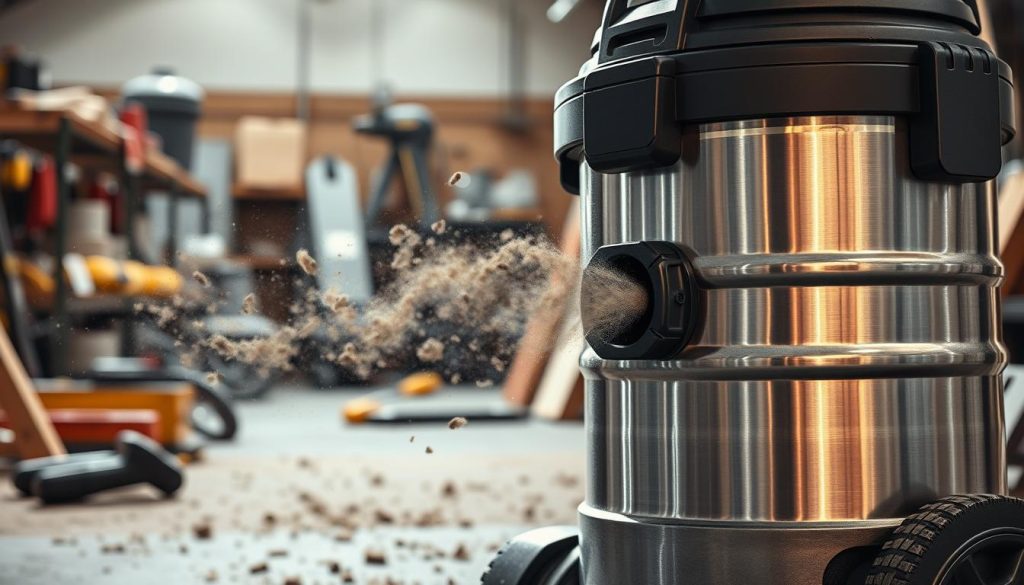
“Real efficiency comes from matching suction, airflow and filters to the task, not from motor size alone.”
Filter systems and dust control for cleaner air
Clean air starts inside the machine. The filter decides what stays in the container and what exits as exhaust. For workplaces in Singapore, good filtration protects staff, tools and indoor air quality.
Why the filter is the heart of any unit
Filtration affects performance as much as motor size. A clogged or low‑grade element reduces suction and spreads fine dust back into the room. We pick filters that retain particulates while keeping airflow steady for reliable cleaning use.
Cartridge and flat pleated formats for heavy use
Cartridge filters trap dust in deep pleats and are easy to inspect. Flat pleated types give large surface area in a compact form and suit long shifts where maintenance windows are short.
Options for frequent switching between liquid and dry pickup
PES-style filters work well for alternation between wet and dry cleaning. They resist moisture, dry quickly and restore suction fast after wet pickup.
- Buyer checks: required dust class, bagless suitability and consumable planning.
- Safety: choose H-class options where hazardous dust is present; certified accessories must be used.
“A vacuum cleaner is only as good as its filter.”
Next: filter cleaning technology determines how long that suction stays high in dust-heavy work.
Filter cleaning technology for uninterrupted work
Keeping filters clean during long shifts stops performance dips and saves minutes every hour. Our machines use smart filter routines so teams spend less time on maintenance and more time on site work.
Automatic filter cleaning to maintain consistently high suction power
Tact (Triggered Air Cleaning Technology) uses sensors to reverse airflow and blast the filter when clogging begins. This resets the element without stopping the unit so suction power remains steady during fine‑dust-heavy tasks.
Semi-automatic cleaning when you want control over intervals
Semi-automatic AP systems let operators trigger cleaning at chosen moments. This suits jobs where crews prefer to time interruptions between shifts or tasks.
Benefits and bagless use to maximise container volume
- Time savings: fewer stops for manual cleaning and faster job completion.
- Lower dust exposure: less handling of filters and debris during maintenance.
- Cost and volume efficiency: where safe, bagless operation lets teams use full container volume and empty less often.
| Feature | Outcome | Buyer note |
|---|---|---|
| Automatic (Tact) | Stable suction power over long runs | Best for fine dust and continuous work |
| Semi‑automatic (AP) | User control of cleaning intervals | Good for scheduled breaks and site routines |
| Bagless operation | Greater container volume, fewer empties | Confirm site rules for dust disposal |
“Filter cleaning technology separates professional products from basic models by keeping suction high and reducing downtime.”
Dust classes explained for professional vacuum cleaners
Choosing the right dust class starts with a simple risk check of materials on site.
Class L suits moderate-risk dust such as chalk, plaster and soft wood. Permeation limits sit at ≤ 1.0% which makes this class common for general trade work.
Class M for tougher site debris
Class M covers construction work dust from concrete, brick, hardwood, panels, paint and ceramics. Permeation is stricter (
Class H for hazardous particulates
Class H is for hazardous or carcinogenic dusts including asbestos, lead, nickel and mould. Permeation limits are very low (
ATEX and explosive-dust zones
ATEX Zone 22 applies where combustible dusts such as flour or paper may occur. In these cases, specialised equipment and zoning checks are required before use.
- Why this matters: choosing by class protects staff and ensures compliance.
- Buyer tip: match site risk assessment to the correct class and to vacuum cleaners with the right seals and filters.
Clear dust-class selection is safety, compliance and correct use in real work conditions.
How wet vacuum cleaning works in industrial machines
Effective liquid pickup is about controlled airflow, safe containment and reliable shut‑off systems.
Bypass blower suction creates the vacuum inside the tank. This airflow pulls liquid through the hose and into the container so teams can clear spills quickly.
Overfill protection prevents damage and keeps operators safe. A mechanical float rises with the liquid and blocks the suction path when the tank nears full.
Automatic cut-off and float systems
Some models use conductive contacts to trigger an automatic power cut when liquid reaches a set level. This stops the motor and avoids overflow.
- Fast removal reduces slip risk and floor damage, improving overall safety.
- Consider container volume and emptying workflow when wet pickup is frequent.
- Check accessory compatibility and drain options for efficient use.
| Component | Function | Buyer note |
|---|---|---|
| Bypass blower | Generates suction that transports liquid | Ensures consistent power for fast pickup |
| Mechanical float | Physically blocks airflow at high level | Simple, reliable protection |
| Electronic cut-off | Stops motor when liquid touches probes | Useful for unattended operation |
“Wet pickup performance and dry performance use different internal handling; choose by task for best results.”
How dry vacuum cleaning works for fine dust and heavy particles
How dust behaves inside a machine determines filter life, suction loss and site efficiency.
Separation and filtration through cartridge or flat elements
We move dust into the container using a bypass blower that keeps motor heat apart from the airstream. The air then passes through cartridge or flat pleated filters to trap fine particles while keeping airflow steady.
Cyclone-like settling for heavier debris
The hose port and inlet shape create a rotating flow that forces grit to the bin floor. This cyclone effect keeps coarse matter away from the filter and reduces blockages during normal use.
Why clogged filters reduce suction — and how cleaning modes prevent it
As dust loads the element, suction falls and pickup slows, increasing passes and labour time. Semi‑automatic or automatic cleaning briefly reverses airflow from the clean side to shake off buildup and restore suction.
Outcome for on-site work: stable airflow means fewer pauses, faster cleaning and more predictable completion times.
| Stage | Function | Benefit |
|---|---|---|
| Inlet geometry | Creates settling motion | Protects filter from grit |
| Cartridge / pleated filter | Captures fine dust | Maintains air quality |
| Automatic cleaning | Reverses airflow briefly | Restores suction fast |
“Good separation and smart filter cleaning keep machines working efficiently in busy Singapore sites.”
Applications across Singapore industries
Different sectors need tailored cleaning solutions; matching a product to the task speeds work and reduces risk.
Building and construction: controlling fine dust on site
On construction sites we focus on dust control to protect breathing spaces and keep areas usable. High‑grade filters and regular extraction at source cut airborne particles and speed handover.
Automotive workshops: mixed mess and routine hygiene
AP-class all‑rounders suit service bays where oil, grit and fine dust mix. These cleaners let teams clear bays fast, so work returns to production with minimal delay.
Marine, chemical, agriculture and industrial facilities
Winston Engineering positions wet dry vacuum cleaners for diverse sectors where waste types vary. Robust products cope with sludges, powders and residue while meeting site safety rules.
Hotels, restaurants and building cleaning
For hospitality we recommend machines with strong wet performance and large containers. Quick spill response improves guest safety, lowers downtime and keeps routines predictable.
Choose by application, filter class and container size to get consistent results and better safety.
Workplace health and safety: reducing exposure to fine dust
Controlling dust at the point of generation is the single most effective step to protect worker breathing and long-term health.
Why fine dust harms breathing
Fine particulates reach the deep lung and can cause chronic illness over years. Silica and asbestos are especially dangerous; both can lead to serious disease, including cancer.
Best practices to limit exposure
We recommend capturing dust as it appears. Connect a vacuum to power-tool ports where possible to extract particles before they spread.
Practical steps we follow
- Vacuum at source using tool ports and on-tool extraction to stop spread.
- Choose correct filters and dust classes so airflow does not simply re-release particles.
- Use low-dust methods such as dampening or binding dust with water during cutting or grinding.
Simple behaviour changes that improve health
Avoid stirring dust, clean progressively rather than waiting, and keep equipment maintained so suction stays strong. These small habits raise both health and job safety.
“Vacuuming dust as soon as it forms and using suitable filters prevents airborne exposure and protects long-term health.”
Key features that improve usability on site
Practical design choices make setup, movement and pack-down faster on busy job sites. We focus on small but meaningful features that save time and reduce hazards during routine work.
Tool connections, hose storage and accessories management
Tool connections and organised storage
On-tool ports and tool sleeves let teams attach tools directly for immediate extraction at source. This reduces airborne dust and speeds tasks.
Built-in hose and cable racks keep leads tidy and lower trip risks. Case racks for nozzles and brushes stop parts being lost between shifts.
Stable castors and robust containers
Sturdy castors and reinforced containers move easily across rough floors and lifts. Bumpers and solid chassis protect the unit and reduce repair time.
For long-term use, these details extend service life and cut downtime for replacements.
Quick-change floor nozzles for versatile tasks
Wide floor nozzles with quick-change inserts let crews switch between wet dry and dry modes fast. That versatility avoids improvised fixes and keeps suction and power consistent for better cleaning outcomes.
“Ergonomic storage and quick-change parts turn a machine into a reliable site partner.”
Choosing the right machine for your workplace
Start by matching the predominant waste type at your site to a machine built for that job. A clear match saves time, reduces wear and keeps running costs low.
Based on dirt type: coarse, fine, viscous liquids or mixed contamination
Coarse debris needs wide inlets, large mouth nozzles and a sturdy bin to avoid blockages.
Fine dust requires high‑grade filters and stable suction to stop performance dropping mid‑shift.
Viscous liquids call for reliable shut‑off systems and easy drain options to speed emptying.
Mixed contamination favours versatile toolkits and quick‑change parts so teams switch modes fast.
Based on required dust class and filter specification
Match the dust class to site risk. Higher classes need certified filters and controlled disposal to protect health and meet regulations.
We advise checking filter seals, replacement costs and whether bag or bagless operation suits your disposal routine.
Based on container volume, operating time and workflow efficiency
Container volume ties directly to how often crews stop to empty. Bigger tanks reduce interruptions but may add weight.
Operating time and cleaning cycles affect scheduling. Choose units with automatic filter cleaning for long shifts to maintain suction and efficiency.
- We provide a decision framework to avoid under‑ or over‑specifying machines.
- Match equipment to materials—concrete and brick need different handling than wood dust—to prevent premature wear.
- Our range positions cleaners designed for commercial use so you buy fit‑for‑purpose, not generic kit.
Choose by dirt, dust class and container volume first; power and accessories follow to deliver reliable use and lower lifetime cost.
Buy online in Singapore: ordering, delivery and support
A confident online purchase starts with accurate site details so we can match performance, volume and filtration to your work.
What we need to recommend the best-fit vacuum cleaner
Tell us about your daily use
We ask a few simple questions: typical dirt type, required dust class for safety, desired container volume and whether suction power must stay stable for tool-connected work.
This helps us match the right products from our range and avoid over‑ or under‑specifying machines for your tasks.
Delivery and readiness expectations
Arrive ready to use
We confirm delivery time, fit the correct nozzles and include consumables so the unit is productive from day one. Our packing lists note accessories and any site‑specific extras you need.
After‑sales support and maintenance planning
Consumables, service and advice
We supply filters, bags where required and spare parts to keep machines running. Our team advises on scheduled maintenance to protect suction power and prolong service life.
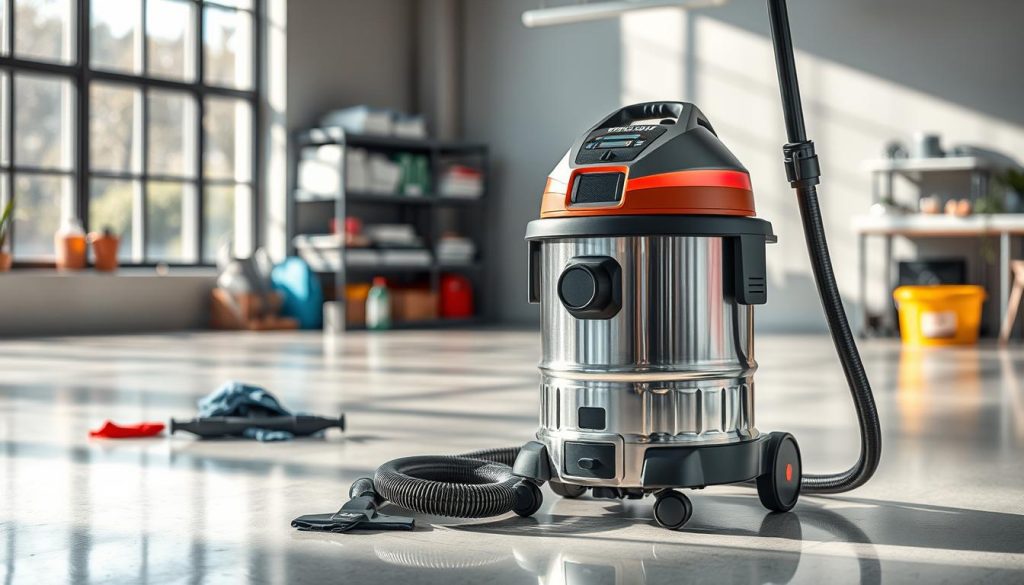
“Our Singapore team helps select work‑grade vacuum cleaners and supports setup, compliance and ongoing use.”
Talk to our Singapore team
Fast guidance and compliance help
Contact us for selection support on safety, best‑value configuration and installation. We aim to minimise downtime and ensure your cleaners deliver consistent, safe cleaning with minimal fuss.
Conclusion
For Singapore sites that face mixed mess and frequent spill response, a purpose-built wet dry solution delivers faster cleanup, fewer passes and predictable uptime. We favour machines that keep suction and power steady across long shifts.
Choose by dust class first, then by filter type and filter‑cleaning technology, plus the container volume that matches your pace of work. Proper selection protects staff, keeps performance high and reduces running costs.
Across applications from workshops to hospitality, purpose-made cleaners outperform improvised kit. For filter care and simple maintenance steps see our filter care guide.
Shop our wet dry vacuum range online or contact us for a recommendation tailored to your site, contamination profile and operating routine. Our cleaners designed for reliability help teams maintain standards, protect people and keep operations moving efficiently.

