

We present a clear, stepwise approach aimed at hygiene and moisture control in Singapore’s humid climate.
Before any action, we inspect for stains, odours, pests and surface damage. This helps us pick the right steps and avoid wasted effort.
Our sequence is simple: strip the bed, vacuum, deodorise, spot treat, sanitise, then dry fully. We keep wetting to a minimum so smells and mould do not return.
We will flag items that are unsafe to keep and offer clear replacement signs. Aftercare advice such as a protector, fitted sheets, rotation and monthly checks helps preserve results.
Why disinfecting a used mattress matters in Singapore’s climate
High humidity in Singapore increases the risk that unseen contaminants will thrive inside a mattress. Warm, lingering moisture makes odour and microbial growth more likely than in drier climates.
Dust mites and other mites feed where dust, dead skin cells and skin cells gather. Seams, stitch lines and the sleeping surface are common hotspots for allergens and trapped particles.
Build-up here often links to sneezing, asthma flare-ups and skin irritation. If previous owners skipped deep care, those allergens can accumulate over months or years.
Body fluids and damp patches can nourish bacteria and even some viruses. Certain pathogens persist on surfaces for days, and leftover moisture will encourage mould mildew that is hard to remove.
When replacement is necessary
We consider replacement if there is a steady musty smell, widespread staining, structural dips, rips, visible infestation or internal moisture. If issues are mainly surface-level and the frame is sound, we clean and sanitise; otherwise we seek professional assessment or choose replacement.
What we gather before mattress cleaning and sanitising
Our prep focuses on gathering the right tools and safe solutions. We aim for a compact kit that supports thorough cleaning while limiting moisture and damage.
Basic tools for a thorough cleaning
- Vacuum with an HEPA filter and upholstery nozzle — essential for vacuuming fine dust and allergens.
- Microfibre cloths, spray bottles and clean white cloths for blotting.
- Gloves, good ventilation and a clear workspace so the bed can dry fully.
Natural options we can use safely at home
We favour baking soda and white vinegar for light odour control. We lightly mist solutions rather than soak foam.
Chemical solutions for tougher stains and odours
For persistent marks we use a hydrogen peroxide solution (3% diluted) or enzyme cleaners. We patch test every cleaner on a hidden area first.
Protection and aftercare essentials
Mattress protector and spare sheets are non-negotiable. They reduce stains, dust build-up and make ongoing care easier.
| Item | Purpose | Timing |
|---|---|---|
| Vacuum with HEPA filter | Remove dust and allergens | Before and after deodorising |
| Baking soda (soda) | Odour and moisture absorption | Sprinkle for at least 30 minutes |
| Hydrogen peroxide solution / enzyme cleaners | Treat stains and organic odours | Patch test; spot treat then blot |
| Mattress protector | Long-term protection | Use after full drying |
Preparing the bed and inspecting the entire mattress
We begin by preparing the bed so every check is clear and efficient. This lets us inspect the whole sleeping area without distractions and reduces the chance of recontamination.
Strip the bed completely: remove sheets, pillowcases and any protector. We place these items straight into a hot wash where fabric care allows.
We wash sheets on a hot cycle (around 54°C / 130°F) to reduce dust mites and bacteria. Always check garment labels and the protector’s care instructions so nothing shrinks or loses performance.
Before any treatment, we read the mattress care tag. Some covers restrict certain products or methods and ignoring that can void warranty or cause damage.
In good light, we examine the entire mattress for stains, odours, discolouration and wear patterns. We note the high-contact surface where sweat and spills commonly occur.
- Document warranty issues with clear photos of rips, sagging or edge collapse.
- Inspect seams and crevices—pay attention to piping, tufts and stitch lines for bed bugs and other bugs.
- Look for bed bug signs: tiny rust‑coloured spots, shed skins or live insects; if found, professional treatment is likely needed.
How to clean and disinfect a used mattress
We follow a low-moisture routine that targets odour, dust and stains while protecting foam layers. First, we deodorise by sprinkling baking soda evenly across the sleep surface — roughly 1 lb for a queen — and let it sit minutes, at least 30 minutes, or overnight for stronger odours.
Vacuuming in overlapping rows
Next, we use a vacuum with a HEPA filter. We move slowly in overlapping rows, paying extra attention to seams. Slow vacuuming lifts dust, allergens and baking residue without pressing powder deeper into the layers.
Safe spot cleaning
For stains, we use spot cleaning only. We apply a small amount of solution to a cloth and blot. We avoid soaking the mattress surface because excess liquid soaks into foam and increases drying time and mould risk.
Repeat, dry and check
After stain work, we reapply baking soda for several hours or overnight to pull out moisture. Then we vacuum again until the surface feels residue-free. Finally, we air the bed with open windows and fans until fully dry before remaking it.
Disinfecting methods: natural approaches versus chemical-based sanitising
We compare gentle, natural options with targeted chemical methods so owners choose the safest route for each fabric and stain. Selection depends on material, recent use and the contamination level.
Steam for heat-based sanitisation
Using a steam cleaner gives heat that reduces dust mites, some bacteria and even bed bugs. We keep passes light to limit moisture and follow the care tag precisely.
Vinegar, vodka and hydrogen peroxide
A 1:1 white vinegar solution is useful for odour control and small mould mildew patches when lightly misted and dried fully.
The vodka sanitisation technique (1:1 vodka and water) brightens fabrics and aids surface bacteria reduction, but it is not a fix for heavy soiling.
Hydrogen peroxide solution (3% diluted 1:1) targets stains and bacteria. We patch test first and avoid soaking to prevent discolouration.
Enzymes and commercial sprays
Enzyme cleaners break down organic fluids and stubborn odours; allow 15–30 minutes dwell time for best results.
Commercial sanitising sprays are effective when used sparingly. We spray from a distance, ensure good ventilation, and never over-saturate the surface.
“Choose the mildest effective method first, then escalate only if needed, always prioritising drying and material compatibility.”
| Method | Best for | Key caution |
|---|---|---|
| Steam / steam cleaner | Allergens, heat-sensitive pests | Light passes only; watch moisture |
| White vinegar solution | Odours, small mould mildew patches | 1:1 mix; dry thoroughly |
| Vodka sanitisation technique | Light freshening, surface bacteria | Not for heavy stains; 1:1 mix |
| Hydrogen peroxide solution | Stains, bacteria | Patch test; avoid over-wetting |
| Enzyme cleaners / commercial sanitising sprays | Organic fluids, persistent odours | Follow instructions; ventilate room |
How we treat common used mattress stains without damaging the surface
We treat each mark according to its origin, using small doses of solution and careful blotting.

Sweat stains and yellowing
For sweat stains and yellowing we blot first, then apply a diluted hydrogen peroxide solution sparingly. We test a hidden area before use.
After lifting, we finish with baking soda deodorising and vacuuming to remove residue and any lingering odour.
Blood
Cold water is essential for blood; heat sets the protein. We dab with cold water, then use peroxide (3% diluted 1:1) carefully.
If marks persist, enzyme cleaner support helps break down proteins without harsh scrubbing.
Urine
We blot urine immediately, mist a white vinegar solution to neutralise odour, then apply enzyme cleaners. Once dry, we use baking soda to deodorise.
Food, drink, grease
Remove solids, absorb grease with dry soda or paper, then spot treat sticky spills with minimal moisture. No scrubbing; blot only.
Drying and moisture control
Drying time varies in Singapore. We use fans and ventilation and avoid remaking the bed until fully dry to prevent mould.
| Stain type | Primary step | Follow-up |
|---|---|---|
| Sweat / yellowing | Blot; peroxide patch test | Baking soda deodorising; vacuum |
| Blood | Cold water dab | Peroxide then enzyme cleaners if needed |
| Urine | Blot; vinegar mist | Enzyme cleaners; baking soda |
| Food / grease | Remove solids; absorb grease | Spot treat with minimal moisture |
Dust mites and bed bugs: removing allergens and stopping an infestation
We separate routine allergen care from infestation response so effort matches risk. Small deposits of dust, dead skin and sweat feed dust mites, which boost common allergens. By contrast, live bed bugs need urgent, targeted treatment.
Inspection signs around seams, edges and the bed frame
Check seams, tufts, piping and the bed frame area for rust‑coloured stains, shed skins, tiny dark spots and live bugs. These signs point to active insects rather than mere dust or mites.
Heat and steam for bed bug and egg control
Steam applied by a skilled operator kills adults and eggs when heat is even and surface moisture is minimal. We use a steam cleaner in light passes only. Over‑wetting soaks fillings and delays drying.
Encasements and mattress protector choices
After treatment we fit full encasements. A good encasement traps remaining bugs and cuts harbourage in seams. Choose a snug, breathable mattress protector with a strong zipper and washability.
When to call professional services
We call in professional mattress cleaner services in Singapore for confirmed infestations, persistent bite reports, or widespread staining and odour. Delay raises the risk of spread across the room and higher costs.
“Act fast on confirmed bed bug signs; containment saves time and expense.”
Special care for different mattress types, including memory foam
Material choice alters our cleaning approach; foam, springs and latex each react differently to moisture, heat and chemical solutions. We adjust methods so the comfort layers remain intact and drying time is manageable in Singapore’s humid climate.
Memory foam: do’s and don’ts in humid conditions
Do blot spills immediately and use minimal liquid when spot treating. Memory foam is moisture‑sensitive and traps dampness, so we avoid soaking and favour dry powders for odour removal.
Don’t use steam unless the manufacturer explicitly allows it. Excess steam forces heat and moisture into foam and lengthens drying time, which raises odour and mould risk.
Innerspring mattresses and airflow
For innerspring mattresses we clean surfaces similarly but prioritise under‑bed ventilation. Good airflow across slats or a raised frame reduces long‑term damp build‑up and helps any residual moisture evaporate faster.
Latex mattresses: avoid harsh solutions
Latex is resilient but dislikes strong chemicals and heavy wetting. We stick to gentle, pH‑neutral products, patch test first, and never saturate the cover. Correct care preserves elasticity and slows premature breakdown.
Always read the care tag, patch test any solution, and choose the mildest effective method. For more on ongoing protection, consult our mattress care guide.
Keeping your mattress fresh after disinfecting
We rely on daily barriers and simple routines to keep the benefits of treatment long-lasting in Singapore’s humid climate. Freshness is mainly a question of dryness, airflow and prompt response when spills or stains occur.
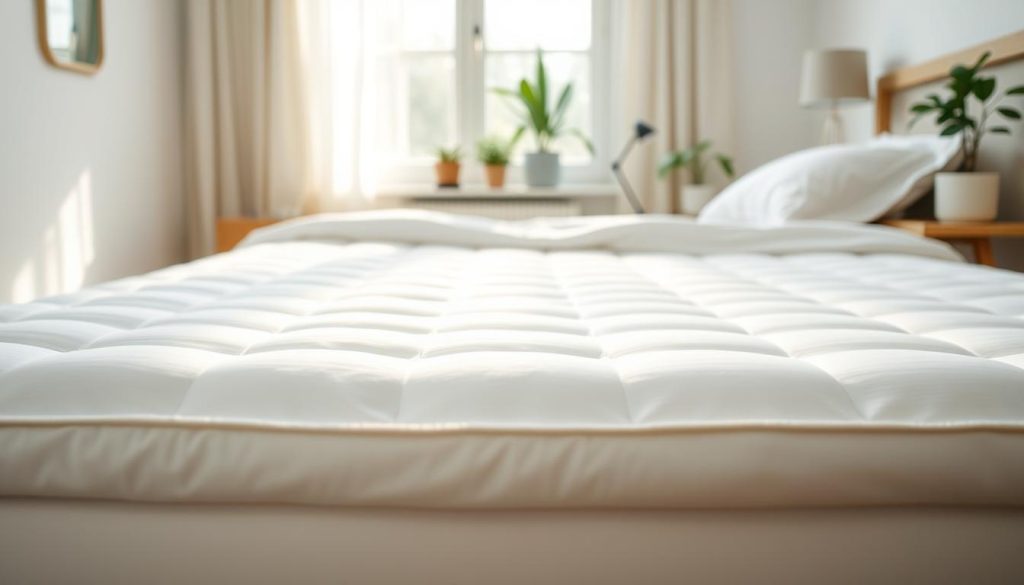
Choosing a waterproof, breathable, hypoallergenic mattress protector
We favour a waterproof, breathable, hypoallergenic mattress protector that blocks spills and sweat while allowing airflow. This type of mattress protector reduces dust build-up and keeps the surface drier for longer.
Using fitted sheets and a realistic wash routine
Sheets should be washed weekly; this keeps a clean mattress for night after night. The mattress protector can be washed monthly or sooner after accidents.
Always dry bedding fully before remaking the bed to avoid trapped moisture and returning odours.
Rotating the mattress for even wear on the sleep surface
Rotating the mattress about twice a year evens wear and reduces the chance of dips. This simple step helps maintain support and extends usable life, saving replacement time and cost.
Quick monthly checks for stains, odours, dust build-up and moisture
Each month we scan seams and the outer surface for new stains, returning odours or trapped dust. If the protector shows moisture, remove and dry thoroughly before reuse.
| Action | Frequency | Why it helps | Notes |
|---|---|---|---|
| Wash sheets | Weekly | Removes sweat and dust | Use hot cycle where safe |
| Wash mattress protector | Monthly or after spills | Maintains barrier function | Choose breathable waterproof fabric |
| Rotate mattress | Twice yearly | Prevents dips on the sleep surface | Mark head/foot for easy turn |
| Quick inspection | Monthly | Detects stains, odours, moisture early | Act fast on any damp spots |
Small habits—airing the bed briefly each morning, avoiding food in bed and tackling spills immediately—keep a mattress fresh and reduce the need for heavy work. In short, consistent care preserves comfort, cuts costs and keeps the mattress smelling fresh.
Conclusion
We close the process with a short verification routine that confirms success. First, follow the order we recommend: inspect, deodorise, vacuum, spot treat stains, apply an appropriate disinfecting solution, then allow full drying before you use mattress again.
Moisture control is central in Singapore. Allow ample drying time and use fans or ventilation so mould and odour do not return. Perform a quick visual check and a sniff test; repeat targeted cleaning if any area still smells or shows marks.
Match methods to material and avoid over‑wetting to protect internal layers and comfort. For further practical steps on stubborn organic marks consult our deep cleaning guide.
If stains or pests persist despite careful work, escalate to professional help or consider replacement rather than risking sleep health. Ongoing protection — a good protector plus routine washing — keeps the bed hygienic and extends usable time.

