

Mattresses gather odours, stains, dead skin, bacteria, dust mites, bed bugs and pollen over time. We treat this as more than a cosmetic tidy; it is a hygiene step and a simple way to improve nightly sleep.
Our aim is clear. A good vacuum then a powerful steam method lifts embedded grime and allergens. We use controlled steam so the surface stays only lightly damp and dries fast to prevent mould in humid Singapore.
In this guide we will cover preparation, correct steaming technique, heat targets and drying checks. We will also show label checks and spot-tests to avoid damage or discolouration. Common worries—odours, sweat marks, dust mite build-up and pests—are addressed step by step.
Two non-negotiables: pre‑vacuuming to remove dry debris and careful, controlled steam application. For further background on safety and temperatures, see this short primer.
Learn more about steam cleaning a
Why we steam clean a mattress in Singapore homes
Mattresses in humid cities quickly collect more than dust — they trap sweat, body skin and oils that feed allergens and cause stubborn smells.
What builds up inside is often unseen: loose dust, skin flakes, day-to-day stains and trapped odors. Surface wiping rarely removes this mix. Vacuuming first lifts dry debris that would otherwise turn into a paste during wet cleaning.
Health and hygiene reasons
Reducing dust mites, bacteria and other allergens helps people with asthma or allergic rhinitis sleep better. Heat and controlled moisture during steam cleaning disrupt these organisms and lift embedded grime.
Why fast drying matters in humid conditions
Singapore’s humidity increases the risk that residual moisture will feed mold and mildew. Rapid drying is thus part of effective cleaning, not an afterthought.
- Common triggers for deep cleaning: illness, pet accidents, smoke exposure or seasonal dust rise.
- Regular vacuuming and bedding washes extend the life of a clean mattress.
- We treat steaming as one step in a wider hygiene routine that targets dust, stains and odours.
Can your mattress be steam cleaned safely?
We always begin by checking a mattress’s care label and construction before any heat is applied. This tells us whether the maker permits heat cleaning and which layers sit under the cover.
Checking labels and materials
We read the label for fibre types, quilting notes and warranty clauses. We identify springs, latex, hybrid builds and foam layers so we know what each mattress will tolerate.
When we avoid heat
Memory foam often fares badly with sustained heat. High temperatures can deform foam cells, reduce support and may void warranty terms. We treat memory foam as a likely “do not steam” case unless the manufacturer explicitly allows it.
Spot-testing before full cleaning
Before any full pass with a steamer or steam cleaner, we perform a quick spot-test on a hidden seam. We do one brief pass, let the area dry, and check for colour shift, texture change or seam distortion.
- Look for glued layers and heat-sensitive adhesives that can separate.
- Prefer plain water in the tank — the sanitising effect comes from heat, not chemicals.
- Make sure there is good airflow and drying time available in the home before starting.
“Make sure first, clean second.”
For extra guidance on treating stains and pre-clean checks, see our short practical guide: removing mattress stains and odours.
Tools and products we recommend before steam cleaning
Good preparation begins with the right tools and a clear drying plan. We gather equipment that removes dry debris, provides effective heat and keeps drying time short in humid Singapore.
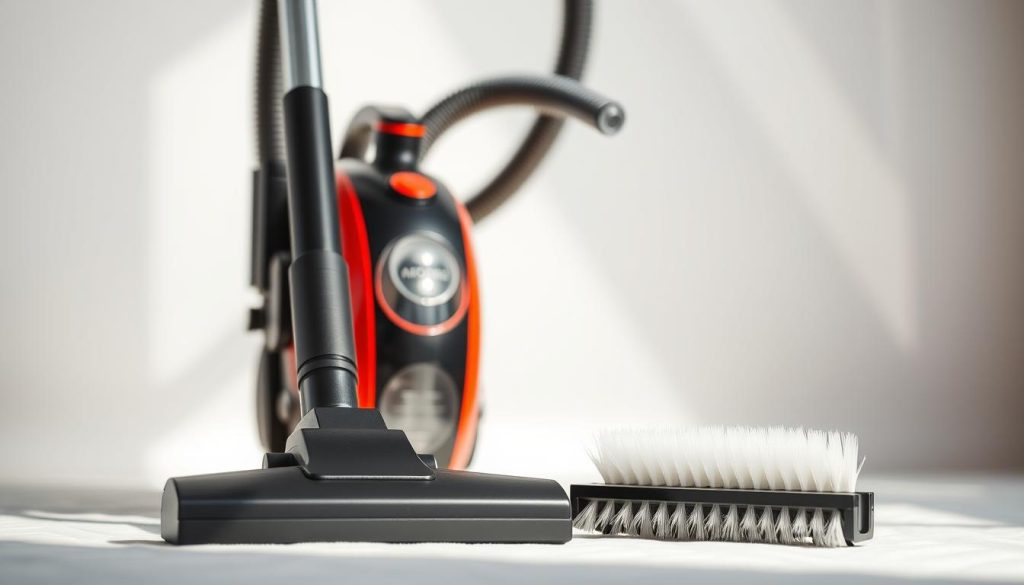
Vacuum and attachments
We start with a vacuum fitted with a hose and brush. This lifts dust, hair and crumbs from seams before any moisture is introduced. A second quick pass after deodorising removes loose powder and dust mites.
Choosing the right machine
For sanitising we favour a powerful steam cleaner or steamer that reaches about 212°F. That temperature is widely cited for killing mites and bacteria. We avoid low‑temperature household carpet steamers because they often lack the heat needed for effective pest control.
Optional helpers and drying plan
Keep mild aids on hand: baking soda for deodorising and white vinegar for light stain support. Have lint‑free towels ready for blotting and fans or air‑conditioning on a timer to speed drying.
- Clean sheets ready for remaking the bed when fully dry.
- A plan for ventilation and water control reduces mildew risk and cuts overall time.
- Consider a wet‑dry vacuum for major spills rather than extra steaming.
How to use a steam cleaner to clean a mattress
We follow a clear, stepwise routine that prioritises hygiene, fast drying and material safety. Each step reduces re‑contamination and gives the mattress the best chance of drying quickly in Singapore’s humid climate.
Strip bedding and pre‑vacuum
Strip the bed completely: sheets, protectors and toppers go straight into the wash. Putting fresh sheets back onto a soiled surface defeats the cleaning effort.
We then vacuum mattress surfaces in a methodical pattern. Extra passes focus on seams, edges and the head and hip zones where contact and oils are highest.
Deodorise and vacuum again
Next, we apply a light layer of baking soda across problem areas and leave it for roughly one hour. For strong urine smells we extend this time.
After absorption, we vacuum again slowly using the hose and brush attachment to lift powder, loosened fibres, dust and dust mites.
Fill, heat and steam
We fill the steamer tank with clean water and heat per the manufacturer’s instructions. Correct fill and warm‑up ensure consistent output.
When steaming, we use slow, even strokes while holding the wand about 6 inches away. We keep the nozzle moving and avoid dwelling on one spot to prevent over‑wetting.
Flip, treat sides and dry plan
For two‑sided mattresses we flip and repeat the pass. For single‑side units we still treat the edges and underside if accessible. We finish by steaming the sides from top to bottom to target hidden dirt and pests.
Make sure there is immediate ventilation and a drying plan in place before remaking the bed.
| Step | Action | Purpose |
|---|---|---|
| 1 | Strip and wash sheets | Prevent re‑contamination of the mattress |
| 2 | Pre‑vacuum (seams, edges) | Remove dust, hair and loose debris |
| 3 | Deodorise with baking soda | Absorb oils and smells |
| 4 | Vacuum again | Remove powder, mites and loosened fibres |
| 5 | Fill steamer with water and heat | Ensure consistent, effective steam output |
| 6 | Steam with slow, even strokes | Sanitise without over‑wetting |
| 7 | Flip and steam sides | Treat both faces and hidden creases |
Targeting dust mites, bacteria and bed bugs with the right heat
High heat is the most practical weapon against microscopic pests and stubborn microbes that hide in bedding.
What high‑temperature steam does: it kills many dust mites and common bacteria on contact. Heat also softens body oils and loosens light stains, making removal by vacuuming easier.
Reducing mite populations lowers household allergens, which matters in humid Singapore where mites thrive. For this reason we aim for roughly 212–250°F output during careful steam passes.
- Bed bugs and eggs are resilient; temperatures at or above 212°F reliably inactivate them without chemical residue.
- We use slow, overlapping strokes and pay special attention to seams and tufts so heat reaches hidden pockets.
- Severe infestations may need integrated pest management beyond steaming alone.
Machine choice and realism: a suitable unit that sustains correct heat makes the difference. Low‑temperature household devices often fail to kill mites or bacteria effectively.
“Controlled steam is the right way — it sanitises without soaking and keeps drying risk low.”
We balance thorough coverage with brief passes so the mattress dries fast and hygiene gains remain high.
Stain and odour control: urine, sweat, pets and smoke
Stains and persistent smells are the common reason we are called into Singapore homes. We prioritise odour control while avoiding over‑wetting the surface.

When to extend deodorising time for stubborn urine smells
For ordinary freshening a short baking soda dwell is fine. For stubborn urine smells we leave baking soda up to 24 hours before vacuuming. This extra time lets salts and acids neutralise without adding liquid.
Light spot treatment before full steaming
We treat visible marks first with minimal liquid and blot gently. This prevents heat from setting a stain deeper.
Use a small amount of water and a mild cleaner on a cloth, dab, then dry with a lint‑free towel. Only then do we perform a full pass such as a careful steam clean mattress.
Neutralising lingering smells without harsh chemicals
Steam and steady airflow remove many odours without strong products. We use white vinegar sparingly for stubborn organic smells and avoid soaking the mattress.
An optional light deodoriser can finish the job, but we favour simple methods so the bed remains pleasant for sensitive sleepers.
| Issue | Initial action | Dwell | Follow up |
|---|---|---|---|
| Urine | Blot, apply baking soda | Up to 24 hours | Vacuum, spot treat, steam pass |
| Sweat | Baking soda, short dwell | 1 hour | Vacuum, steam full surface |
| Pets | Blot, mild cleaner | 1–12 hours | Vacuum, deodoriser if needed |
| Smoke | Baking soda, ventilation | 2–12 hours | Air, steam, optional deodoriser |
Drying the mattress properly to avoid trapped moisture
The final drying stage determines whether steam cleaning delivers lasting results or invites new problems. We set realistic expectations and act so the mattress dry fast and safely.
Expected drying time
Most mattresses dry in about 2–4 hours with good airflow. If too much steam or water reaches the core, drying can stretch to ~8 hours.
Speeding up drying indoors
We create cross‑ventilation where possible and place fans so air moves across the surface. Air‑conditioning or a dehumidifier helps if humidity is high.
Removing excess water quickly
We blot with clean towels using pressing motions rather than rubbing. For larger damp patches we extract moisture with a wet‑dry vacuum.
Confirming the mattress is fully dry
Do not remake the bed yet. Press a fresh dry towel firmly onto the centre, edges and seams. If the towel stays cool or shows damp transfer, let it dry longer.
Practical tip: start early in the day so the bed is ready by night. Make sure trapped moisture is gone — this prevents mould and preserves the cleaning gains.
Common steam-cleaning mistakes we help you avoid
Many common errors come from technique, machine choice and poor prep — not from the method itself. We list the pitfalls we see most often and give quick fixes that keep cleaning effective and drying fast.
Over‑wetting and lingering on one spot
Over‑wetting happens when the wand stays too long over a patch. This forces moisture deep into the layers and extends drying time.
Keep the nozzle moving, lower steam output if the surface looks wet and make short overlapping passes.
Wrong machine choice
Low‑temperature household carpet steamers often fail to sanitize. Choose an appliance that reaches proper heat; a suitable steam cleaner or steamer matters for results.
Skipping the vacuum step
If we skip vacuuming, loose dust and dirt mix with steam and become grime. Always vacuum first — we vacuum mattress seams and edges before any wet pass.
Rushing drying time
Insufficient ventilation invites mould. Plan airflow, use fans or dehumidifiers and allow full drying before remaking the bed.
- Keep tools clean — dirty filters redeposit dust and odour.
- Overlap strokes, hold the wand in motion and check surface dryness frequently.
- Quick self‑check: seams, centre and edges must feel dry; no cool spots on a fresh towel.
Conclusion
Simple, consistent steps make maintaining a mattress straightforward in humid Singapore. We summarise the routine: strip and wash bedding, vacuum, deodorise, vacuum again, perform controlled steam cleaning, then dry fully before remaking the bed.
Expect a noticeably fresher surface with fewer allergens, reduced odours and better sleep. Drying time and moisture control are the decisive factors — fast airflow prevents mould and keeps cleaning effective.
For heavy stains, strong smells or limited time, consider a professional service. Follow the technique rather than improvising; this is the safest way to keep mattress care consistent and reliable.

