

We present a practical guide for busy households in Singapore. This roundup explains what a small footprint machine must deliver: quick daily mess control, easy storage, and reliable performance on hard floors.
Our focus is on suction power, water handling, edge cleaning, battery life, hygiene and noise. We test how each unit fits real routines for families, pet owners and anyone wanting fewer tools.
We evaluate brands that matter locally, including Tineco, Dreame, Narwal, Bissell, Simplus, Shark and Dyson. Expect clear shopping advice: the specs that matter, trade-offs to watch, and which model suits which type of home mess.
Note: the dual-function feature adds convenience but can mean heavier builds and more upkeep. For practical tips on capacity and airflow, see Real Simple test notes. For unusual uses around your flat, read this unusual uses guide.
Why compact wet and dry vacuums make sense for Singapore homes right now
Our cities’ apartments demand efficient cleaning that saves time and storage space. We explain how a single, versatile unit can replace multiple tools and reduce clutter in small flats.
Small flats, tight storage and fast clean-ups
Space is at a premium in many Singapore homes. A two-in-one device means fewer items to tuck away and faster transitions between tasks.
One tool for debris, spills and everyday messes
We value machines that handle both dry debris and liquid spills so we can tackle crumbs, tracked-in dirt and kitchen accidents in one pass. That saves time during hectic weekday routines.
Why families with children or pets often benefit most
Households with kids or pets see the biggest gains. Sticky food, fur tumbleweeds and quick accidents can be treated before they set. Managing water and soiled waste at once reduces follow-up work.
- Less storage means fewer bulky tools in our limited cupboards.
- Quick clean-ups stop crumbs and grit from spreading across hard floors.
- All-in-one systems can cut routine chores, freeing time for other tasks.
- Expect wide variation in price depending on sensors, edge performance and hygiene features.
What a wet dry vacuum is and what it can (and can’t) do
We define a wet dry vacuum as a single machine built to lift loose dust and debris while picking up liquid spills without tool swaps. These units use stronger motors and dedicated water tanks to manage mixed messes in one pass.
Handling liquid spills versus dry dust and debris
In practice, the device separates clean water from dirty water and traps solids in a bin or filter. That means crumbs, pet fur and small puddles are usually handled together.
Limit: many models excel on sealed surfaces but do not replace a full carpet deep clean on thick rugs.
Indoor and outdoor use across common surfaces
These tools suit kitchens, entryways and balconies. They cope with tiled, vinyl and sealed timber floors and can clear grit tracked in from outside.
Why these machines tend to be heavier, louder and bulkier
More suction and water handling require bigger motors and tanks. The trade-off is improved pickup but greater weight, noise and storage needs.
“Stronger power is useful only when suction is consistent on real floors and dirty water is well separated.”
| Use | Best surfaces | Typical trade-off |
|---|---|---|
| Quick spills and crumbs | Tiles, vinyl, sealed wood | Good suction; heavier unit |
| Entry grit and damp balconies | Concrete, outdoor tile | Rinse parts often; noisy motor |
| Light rug refresh | Low-pile rugs only | Not a full carpet deep-clean replacement |
How we evaluated each compact wet and dry vacuum cleaner
We tested each model with everyday Singapore use in mind. Our checks focused on real pickup results, water handling, edge reach and how long a battery lasts under normal home routines. We then scored units so readers can match features to needs.
Suction power and real-world pick-up on hard floors
We judge suction power by whether crumbs, hair and fine dust lift in one pass on tiles and sealed timber. Models that need two passes lose points even if spec sheets show high Pa numbers.
Water tank and dirty water separation
Dual-tank practicality matters. A secure clean water tank keeps fresh water separate while the dirty water section seals and empties easily.
Edge cleaning and corner reach
Edge cleaning gets extra weight in our scoring. Near-wall performance and corner reach stop residue from building up along skirtings in small flats.
Battery life, runtime and charge time
We benchmark runtime in typical modes. Auto mode or normal use is our baseline; high-power modes reduce minutes sharply. Charge times and real-world minutes inform daily and weekly planning.
Cleaning modes, auto mode and smart sensing
We check whether cleaning modes genuinely adjust suction and water flow, rather than only changing LEDs. Smart sensing that reduces fuss scores highly.
Weight, manoeuvrability and lie-flat design
Design matters. A light feel, good traction and the ability to lie flat under low furniture make a big difference in tight Singapore homes.
Filter system and hygiene features
We assess filter type, odour control and ease of emptying. HEPA options and antimicrobial brush designs improve long-term ownership.
| Factor | What we tested | Why it matters |
|---|---|---|
| Suction power | One-pass pickup on hard floors | Shorter cleaning time; less effort |
| Water tank | Clean vs dirty tank separation | Prevents cross-contamination; easier emptying |
| Edge cleaning | Brush reach and near-wall performance | Cleaner skirtings and corners |
| Battery life | Runtime in minutes at normal and high modes | Matches daily routines; avoids mid-clean stops |
| Filters & hygiene | HEPA or standard; washability | Air quality and smell control over time |
For a quick checklist to take to stores or use when ordering, see our recommended guide at checklist for house cleaning. It helps match tank capacity, suction and runtime to your flat size and habits.
At-a-glance: our top compact wet and dry vacuum cleaner picks in Singapore
To save you time, we list our best picks matched to common apartment routines and mess types. Each entry shows who it suits and the main trade-offs to expect.
Quick note: larger flats benefit from longer runtime models; pet homes need turbo pet modes; frequent cooks may favour hot-water options for grease.
“Match tank size and runtime to your floor area before you buy — it saves surprise refills and mid-clean stops.”
- Tineco Floor One Switch S7 Stretch — overall best for balanced performance and edge reach.
- Dreame H15 Pro Heat — best for hot-water stain removal; heavier but highly effective on set-in grease.
- Narwal S20 Pro — most manoeuvrable with triple-edge coverage for tight corners.
- Bissell CrossWave X7 Cordless Pet Pro — top pick for pet hair; expect shorter turbo runtimes.
- Simplus Cordless — best budget option with good suction and small footprint for tiny flats.
- Shark HydroVac WD210SM — best value for hygiene with antimicrobial brush tech.
| Model | Best for | Tank (clean/dirty) | Runtime (typical) | Edge coverage |
|---|---|---|---|---|
| Tineco S7 Stretch | All-round, families | 1000ml / 720ml | 45–60 mins | Dual-side |
| Dreame H15 Pro Heat | Stubborn stains, cooks | 800ml / 650ml | 25–70 mins (mode dep.) | Triple |
| Narwal S20 Pro | Small homes, manoeuvre | 790ml / 720ml | 40–60 mins | Triple |
| Bissell X7 Pet Pro | Pet owners | 820ml / 420ml | 30–45 mins | Single |
| Simplus Cordless | Budget, tiny flats | Small / Small | 25–40 mins | Single |
Note: Dyson’s Submarine options — V12s Origin, V12s Detect Slim, Digital Slim — suit buyers who prefer stick ergonomics with wet capability. Check filtration and runtime if you favour cordless stick models.
Best overall smart all-in-one: Tineco Floor One Switch S7 Stretch
This model stands out for its balance of automation, pickup and practical switching. We found it especially suited to mid-size flats and busy households in Singapore.
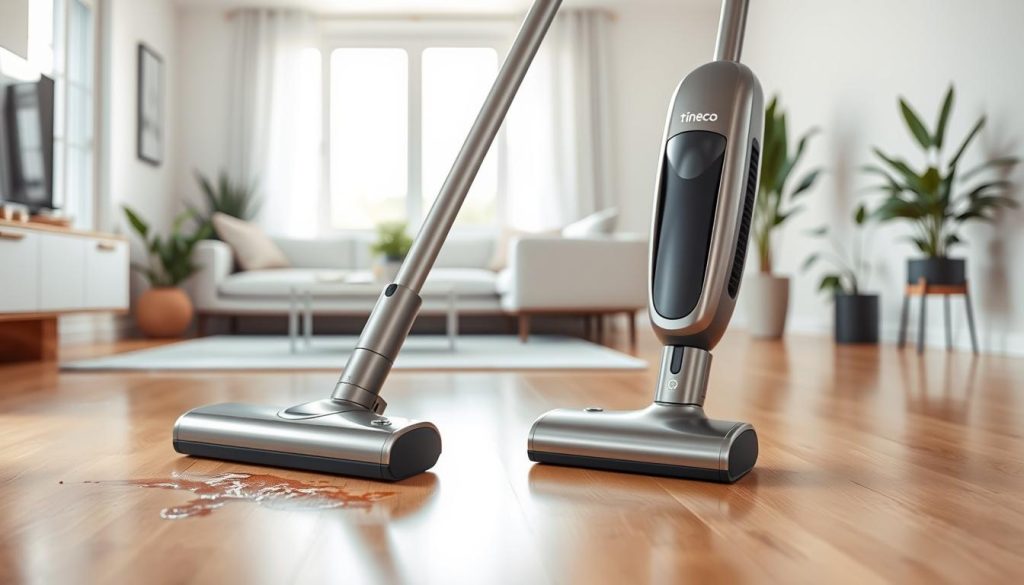
Key specifications at a glance
Clean vs dirty water capacity: 1,000ml clean tank and 720ml dirty tank means fewer interruptions during a single session.
How the sensing technology helps
The iLoop sensor technology adjusts suction and water flow as floors change from crumbs to spills. This reduces guesswork and keeps runtime efficient.
Edge cleaning and brush design
Its dual-side brush roller reaches within 0.5cm of walls. That near-wall edge cleaning is a clear advantage for skirting lines and corners.
Switchable system and practical use cases
You can switch from floor washer to a stick mode for sofas or tight spots. The system gives real versatility without multiple tools.
Runtime, charge time and weight
Runtime is about 50 minutes in washer mode and 70 minutes as a stick. Charge time is 4.5 hours and weight is 4.7kg — manageable for most homes.
“Smart automation, good suction and sensible tank sizes make this our top all-round pick for everyday use.”
| Feature | Specification | Why it matters |
|---|---|---|
| Clean / dirty tanks | 1,000ml / 720ml | Fewer refills across a kitchen and living area |
| Suction power | 22,000 Pa | Strong pickup on sealed floors |
| Sensing technology | iLoop adjusts suction & water | Automatic mode saves battery & water |
| Brush & edge reach | Dual-side roller, 0.5cm | Cleaner skirting and corner lines |
| Runtime / charge | 50 / 70 mins; 4.5 hrs charge | Matches weekly routines for mid-size flats |
Best hot water cleaning for stubborn stains: Dreame H15 Pro Heat
For kitchens with frequent grease and set-in spills, we tested a model built to use high-temperature water for faster stain removal. The dreame h15 pro pairs strong suction with heat to tackle greasy residues in feeding and cooking zones.
Key specifications
Clean vs dirty capacity: 800ml clean / 650ml dirty water. Suction power rated at 22,000 Pa. Charge time is about 4 hours.
What hot water does in practice
Hot water mopping reaches up to 85°C. That heat breaks down oil faster and helps lift set-in stains on tiled and sealed surfaces.
Edge reach, manoeuvrability and trade-offs
The triple edge cleaning and flat-folding design aid near-wall pickup in compact kitchens. Expect up to 70 minutes runtime in normal mode, but just 25 minutes in hot-water mode. Plan by area: the hot mode gives excellent results, yet minutes drop sharply.
| Spec | Value | Why it matters |
|---|---|---|
| Water tank (clean/dirty) | 800ml / 650ml | Fewer refills across a kitchen session |
| Runtime | 70 min / 25 min (hot) | Balance power with coverage |
| Weight & design | ~6kg, flat-fold | Sturdy feel; lies flat under low furniture |
“Great for grease and set-in messes, but choose gentler modes or another model for delicate timber floors.”
Most manoeuvrable feel: Narwal S20 Pro
We tested the Narwal S20 Pro for how easy it is to move around furniture and tight corridors. It turns neatly under tables, slides past chair legs and reduces wrist fatigue during quick daily passes.
Key specifications at a glance
Clean / dirty water tank: 790ml / 720ml. Suction power: 20,000 Pa. Runtime: about 60 minutes. Charge time is 3.5 hours and weight is 4.27kg.
Smart sensing and modes
The AI Dirt Sense technology raises suction automatically when it detects heavier dirt. The unit offers five cleaning modes so we can pick a light pass or a deeper treatment without over-wetting floors.
Edge reach, hot water and design
Triple-sided edge cleaning keeps skirting and corners tidy where grime shows fastest. Hot water support helps with greasy kitchens, though we advise matching heat to floor type.
“Agile handling and adaptive suction make the S20 Pro ideal for small, busy homes that need fast, effective upkeep.”
| Feature | Value | Why it matters |
|---|---|---|
| Water tank | 790ml / 720ml | Room coverage without frequent refills |
| Suction | 20,000 Pa | Strong pickup for crumbs and fine dirt |
| Modes | 5 cleaning modes | Switch between quick and deep passes |
| Design & weight | Flat-folding; 4.27kg | Easy handling and under-furniture reach |
Best for pet hair: Bissell CrossWave X7 Cordless Pet Pro
When hair and tracked-in grit are part of daily life, a purpose-built pet option makes sense. We tested the Bissell CrossWave X7 Cordless Pet Pro for typical Singapore routines: short spot cleans at the door, bowl splash zones and fur along skirtings.
Turbo Pet mode tackles fur, tracked-in dirt and tougher stains. The dedicated setting lifts tangled strands and loosens dried spots so the brush can collect them rather than wrapping. That helps keep performance steady on hard floors.
Tank set-up and what it means in practice
The unit uses an 820ml clean / 420ml dirty tank arrangement. The larger clean tank gives plenty of solution for quick sessions, but the smaller dirty water side fills fast during heavy-shed periods.
Realistic runtime expectations
With suction up to 20,000 Pa the maximum runtime is about 30 minutes. Plan short, frequent cleans rather than long sessions: a few 10–15 minute passes cover entryways and living areas well.
Daily scenarios and upkeep
We recommend checking the brush after each heavy session and emptying the dirty water promptly to avoid odour. Regular brush care and prompt disposal keep the unit working well for homes with lots of pet hair and tracked-in dirt.
“A pet-specific mode and sensible tank sizes make quick, routine cleaning simple for busy households.”
Best budget compact option: Simplus Cordless Wet-Dry Vacuum Cleaner
We rate the Simplus as the smart compact buy for buyers who want serious performance at a modest price. Its 21,000 Pa suction power gives strong pickup without a premium tag.
Strong suction with a smaller, easy-to-store footprint
Design focuses on a light 4.4kg build that fits utility corners in HDB flats and condos. The 6.5cm brush head reaches tighter gaps while the motor keeps steady suction for typical household cleaning.
Flat-folding reach for corners and under furniture
The 180° flat-folding feature helps reach edges and low-clearance furniture. That edge access means fewer missed patches on tiled or sealed timber floors.
Tank sizes and refill frequency in practice
The water tank holds 500ml clean while the dirty water section is 550ml. For routine cleaning this is fine, but heavy cooking sessions will need more frequent refills.
Runtime is up to 50 minutes in normal mode, with a 4.5-hour charge. Plan battery swaps or a charged cycle for larger areas to avoid mid-clean interruptions.
“Good suction, sensible design and a small price make the Simplus a solid entry choice for small homes.”
| Spec | Value | Why it matters |
|---|---|---|
| Suction | 21,000 Pa | Strong pickup on common floors |
| Tank (clean/dirty) | 500ml / 550ml | Easy emptying; suits short sessions |
| Runtime / charge | Up to 50 minutes / 4.5 hrs | Good for repeat short cleans; plan battery life |
Best value for fuss-free hygiene: Shark HydroVac WD210SM
We value hygiene features that make routine cleaning quick and odour-free. The Shark HydroVac WD210SM aims at that need with antimicrobial brush rollers that resist bacterial build-up and smells.
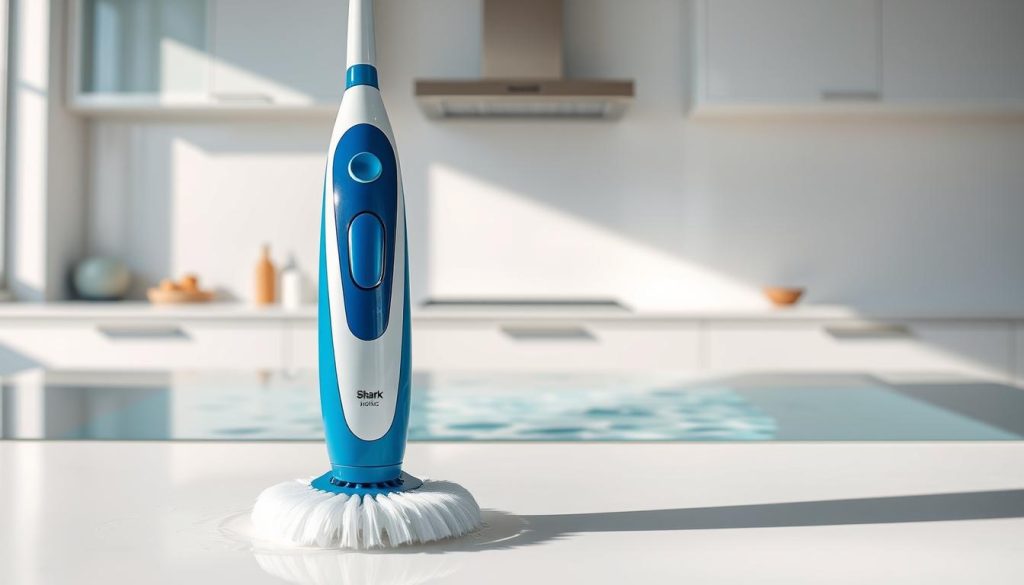
Antimicrobial brush roller approach to odours and build-up
The treated brush reduces residue that causes musty air. That means less frequent deep maintenance and fewer lingering smells after use.
Cleaning modes for mixed surfaces
The system offers versatile modes for tiles, vinyl and sealed timber. We find this suits homes that move between surfaces in one session.
Tank sizes and practical trade-offs
The water tank holds 500ml clean and 360ml dirty water. Smaller tanks fit short sessions in flats but need more refills for large areas.
- Suction: 2,700 Pa — suited to wash-and-refresh jobs, not max debris pickup.
- Runtime: 30 minutes; charge time ~4 hours.
- Why buy: hygiene-first design, sensible price and easy upkeep for regular cleaning.
“Keeping brushes and tanks clean helps the air stay fresher and makes routine cleaning less of a chore.”
Dyson wet and dry options in Singapore: what to know before you buy
Dyson’s submarine-style stick options bring their stick platform into the mixed‑spill space. We see these as premium stick machines fitted with a wet head rather than classic twin‑tank floor washers.
Dyson V12s Origin Submarine
Light at 2.2kg with Root Cyclone technology, the V12s Origin delivers 130 Air Watts and about 60 minutes runtime. Tanks are modest: 300ml clean / 360ml dirty, so it suits short, frequent sessions in flats.
Dyson V12s Detect Slim Submarine
At 3.1kg this model adds a HEPA filter and the Fluffy Optic head for better dust visibility. It rates 140 Air Watts and shares the 60‑minute runtime and 3.5‑hour charge time with the Origin.
Dyson Digital Slim Submarine
This is the most compact option with roughly 40 minutes runtime. It trades some minutes and tank size for lighter handling in small living spaces.
“Dyson’s strength is cordless engineering, filtration and above‑floor ease — not large water capacity.”
Why Dyson costs more
Price reflects extensive R&D, cyclonic suction design, and advanced filter systems that reduce fine dust and airborne particles.
- Air Watts vs Pa: Dyson reports Air Watts to show delivered suction on a head; Pa figures used by floor washers show static pressure — both signal performance but are measured differently.
- Who should buy: choose Dyson if you value lighter handling, HEPA air control and cordless convenience over large tank sizes.
| Model | Air Watts | Weight | Runtime |
|---|---|---|---|
| V12s Origin Submarine | 130 | 2.2kg | 60 minutes |
| V12s Detect Slim Submarine | 140 | 3.1kg | 60 minutes |
| Digital Slim Submarine | — | lighter | ~40 minutes |
What to look out for when choosing a compact wet and dry vacuum cleaner
We recommend focusing on features that become daily benefits: fewer refills, faster pick-up and simpler upkeep. Choose models where specs match how you actually clean at home.
Tank capacity: balancing portability with fewer refills
Water tank size decides how often you stop mid-clean. Larger tank volumes cut interruptions but add weight and cost.
Think about your flat size. Small units suit short, frequent passes; bigger tanks work for weekly sessions. Also check how easy the dirty water side is to empty.
Suction power and real pick-up
Suction power figures hint at performance with crumbs and grit, but real-world pickup matters more. Higher numbers help lift stubborn debris and fine dust.
We prioritise one-pass results over headline specs when comparing models.
Filter system for air quality
Choose HEPA if allergies or pet dander are concerns. A good filter keeps dust and airborne particles out of the room while preserving steady suction.
Noise, battery trade-offs and price
Louder motors often mean stronger pull. Match acceptable noise levels with cleaning windows you use most.
Decide corded vs cordless by reach and battery life. Cordless gives freedom but check the battery minutes against your floor area and the advertised price.
Accessories, brushes and heads
Look for useful accessories: extension wands, corner heads and specialised brushes. The right toolset makes the whole system more versatile.
“Balance tank size, suction and filters against your routine to avoid surprises after purchase.”
Performance on hard floors in Singapore: tiles, vinyl, laminate and sealed wood
Good performance on common surfaces comes down to consistent pickup, quick drying and careful water use. We judge machines by their ability to leave no streaks on tiles, remove oil film in kitchens and protect finished timber.
Daily crumbs and fine dust: maintaining consistent suction
Consistent suction matters more than short bursts of max power. Steady pull keeps small debris and dust from scattering and often removes hair in one pass.
We prefer a mode that sustains suction for routine passes rather than a sporadic high-power mode that drains battery in minutes.
Wet cleaning on greasy kitchen floors and dining spills
For oil and food spills, measured water flow lifts grime without leaving puddles. Hot water gives extra cleaning power for greasy spots, but it reduces runtime and can be harsh on some finishes.
Use a deeper mode for stubborn grease near cooking zones, then follow with a quick dry pass to speed evaporation.
Protecting delicate flooring: when to avoid aggressive settings
Laminate and sealed wood need gentle treatment. Avoid hot water and aggressive modes where the finish is thin or worn.
Tip: choose an auto mode for most rooms and switch to high only for concentrated dirt. That keeps floors safe and reduces long-term wear.
| Surface | Best approach | Why it matters |
|---|---|---|
| Tiles | Moderate water, normal mode | Streak control; quick drying |
| Vinyl | Low water, steady suction | Prevents warping; removes dirt |
| Laminate | Minimal water, gentle mode | Protects finish; avoids swelling |
| Sealed wood | Low water, dry follow-up pass | Preserves sealant; removes oil film |
“Match water flow and mode to each floor type to keep surfaces clean without damage.”
Edge cleaning, lie-flat reach and under-furniture access: what really matters
Near-wall pickup is often what separates a tidy flat from one that still looks unfinished. In many Singapore homes, skirting lines collect visible dirt fast. That makes edge cleaning a practical priority for daily upkeep.
Why near-wall performance is often the difference-maker in small homes
We look for a head and brush that reach close to skirtings so crumbs and debris do not stay visible. Models such as the Tineco with a dual-side brush roller that reaches 0.5cm show how design matters in practice.
Design choices — dual-side rollers versus triple edge coverage — affect how much of that last millimetre of dirt you remove. Triple-edge systems improve pick-up at corners but can add complexity when cleaning the brush.
Flat-folding and 180° lie-flat designs for low-clearance furniture
Flat-folding heads change usability under sofas, beds and TV consoles. Even with limited clearance, a low-profile head lets us pass into tight gaps and avoid missed zones.
- Look for: narrow head geometry and low brush height for better skirting reach.
- Expect: clearance limits still apply — check sofa legs and cabinet gaps before you buy.
- Brush care: simple removable rollers cut down on hair wrap and reduce dirty lines after wet passes.
Technique matters. We recommend slower passes near edges and a final edge pass along skirtings to lift trapped debris. That approach uses the machine’s design and the user’s technique together to keep floors and edges truly clean.
Runtime and recharging: how to match battery life to your cleaning routine
Not all long runtimes matter equally — what matters is how the battery performs in real modes you use. We look beyond headline minutes to show how normal, auto and high-power settings change useful runtime for a typical Singapore flat.
Typical runtimes across modes
Normal mode usually gives the longest runtime: examples include Narwal S20 Pro ~60 minutes and Tineco ~50 minutes in washer mode.
High-power or hot modes drain minutes fast: Dreame H15 Pro Heat drops to ~25 minutes in hot mode while it reaches 70 minutes in normal use.
Charge times and planning
Most models recharge in 3.5–4.5 hours. That means evening top-ups work well for short nightly passes, while weekend deep cleans should start with a full charge.
When a smaller tank and shorter runtime makes sense
For small flats or light daily upkeep, a shorter runtime plus a modest tank reduces weight and cost. We prefer this trade-off when cleaning sessions are 10–20 minutes and frequent.
- Auto mode can extend minutes by reducing power on clean areas.
- Store units near a charger and top up between short passes to ease battery stress.
- For more on battery planning in robot systems see our robot battery life guide.
“Match runtime to your cleaning pattern, not the biggest number on the spec sheet.”
Maintenance and hygiene: keeping the water tank, brush and system fresh
A short maintenance routine after each use protects performance and air quality over time. Regular care stops smells, preserves suction and keeps dust from building up in busy Singapore homes.
Emptying dirty water promptly to prevent smells
Always empty the dirty water after each session. Leaving it sitting breeds odour and residue fast in humid climates.
Rinse the dirty compartment, wipe seals and leave the water tank to air‑dry before storage. This simple step saves time later and reduces smells.
Self-cleaning systems and what they do (and don’t) replace
Self‑cleaning docks rinse rollers and clear internal pathways. They reduce manual scrubbing but do not replace deeper maintenance.
We still advise periodic disassembly, drying and a full rinse of hoses and the tank to avoid build‑up inside the system.
Brush care to reduce hair wrap and residue
Check the brush after heavy pet sessions. Remove trapped hair and stuck debris to keep the roller turning freely.
Antimicrobial rollers, such as Shark’s option, help reduce smells. Regular cleaning prevents sticky residue and keeps cleaning effective.
Filter upkeep for better air quality and sustained suction
Wash or replace the filter as the manual recommends. Clean filters keep air clearer and sustain suction over long use.
“Good maintenance reduces smells, preserves efficiency and makes daily cleaning a quicker, more pleasant task.”
Conclusion
strong, Our final advice focuses on choosing a machine you will actually use every week. Match tank capacity, real suction performance and filtration to your floor types and mess patterns in a Singapore home.
We summarise picks quickly: Tineco Switch S7 Stretch as best all‑round, Dreame H15 Pro Heat for hot‑water stain removal, Narwal S20 Pro for manoeuvrability, Bissell X7 for pet hair, Simplus for budget value, Shark HydroVac for hygiene and Dyson Submarine options for cordless stick convenience.
Focus on the specs that matter most: sustained suction power on hard floors, a practical tank size, reliable edge cleaning and battery life that fits your routine. Higher performance often brings more weight, noise and upkeep, so balance price against useful technology and easy maintenance.
Final tip: pick the model you will use often — regular, quick cleaning keeps floors fresh far more than a seldom‑used premium unit.

