

We tested compact cordless options suited to Singapore flats. Our aim was simple: fast, one-device upkeep for daily spills, dust and sticky footprints on hard floors. We focused on real performance, ease of upkeep and storage for HDB flats and condos.
Our headline picks are clear: the Tineco Floor One S7 Pro as best, the Tineco GO H20 Sense for budget buyers, and the Dyson V15s Detect Submarine for those who want a powerful stick that also mops. We explain who each product suits and why.
Before you buy, consider suction, water handling, tank size, edge reach, run time and noise. Also ask if you need a separate device for rugs. We clarify the naming in this category—terms like vacmop, floor washer and wet-dry models can mean very different tools.
For background reading on combo models, see our round-up source at best mop-vacuum combo. We keep a Singapore lens throughout: humidity, quick drying and common floor types such as tiles and laminate.
Why a wet dry vacuum cleaner and mop is worth it for Singapore homes
Combining suction and mopping into one pass changed how we tackle daily messes. For small flats and busy households, a single device that handles spilt drinks, crumbs and tracked-in dirt cuts routine cleaning to minutes rather than an hour.
One-pass cleaning for wet dry messes on hard floors
One-pass action picks up solids while wiping spills. In kitchens and dining areas this means fewer passes and less total time spent.
Why cordless floor washers suit HDB flats and compact condos
Cordless models remove cable hassle in tight corridors and make turns around furniture easier. Docking is simple, storage needs are smaller, and quick top-ups are practical between meals.
What to expect versus a robot vacuum or a separate vacuum cleaner and mop
Compared with a robot vacuum, these machines respond instantly to accidents; robots help with day-to-day dust but are slower on spills. Using separate tools can save money up front, but it raises effort and storage needs, so mopping often gets delayed.
- Best for everyday hard-floor cleaning and quick spill response.
- Less effective for homes with many rugs—dedicated stick models still win there.
- Choose a floor washer if you value speed, convenience and fewer chores piling up.
Our top picks at a glance for a wet dry vacuum and floor washer
For a fast decision, these are the models we’d shortlist first, with reasons why. Below we show the three lead products and a Singapore-focused shortlist so you can pick in under a minute.
Best overall: Tineco Floor One S7 Pro Smart Cordless Floor Cleaner
Why it leads: dual-edge cleaning for skirting boards, iLoop sensing, up to 40 minutes of battery life and a self-clean dock. It also includes HEPA filtration for dry debris.
Best value: Tineco GO H20 Sense Cordless Floor Washer
Why it’s our pick: core smart features such as iLoop at a lower price. Expect one-side edge cleaning, smaller tank capacity and about 25 minutes of run time.
Best for mixed floors: Dyson V15s Detect Submarine
Why choose it: swaps heads to act as a top-tier dry model for rugs or a wet roller for hard floors. It runs up to 60 minutes but does not clean and suction simultaneously.
Singapore shortlist
Other locally available models worth considering include the Tineco Switch S7 Stretch, Bissell CrossWave X7 Pet Pro, Narwal S20 Pro, Simplus cordless option and Dreame H15 Pro Heat. Each offers notable specs such as high Pa suction claims, large tank capacity or hot‑water mopping.
| Model | Runtime (minutes) | Tank capacity (ml) | Notable feature |
|---|---|---|---|
| Tineco Floor One S7 Pro | Up to 40 | — (dual tanks) | Dual-edge cleaning, self-clean dock, HEPA |
| Tineco GO H20 Sense | Up to 25 | Small tanks | iLoop sensor, budget price |
| Dyson V15s Detect Submarine | Up to 60 | Varies by head | Swappable heads for rugs or hard floors |
| Narwal S20 Pro | Up to 60 | 790 / 720 | Hot water option, triple edge |
- Quick decision tip: prioritise edge cleaning, realistic tank capacity and battery life for your apartment size.
- Why specs matter: high Pa claims mean power on paper; tank volumes and refill frequency determine convenience day to day.
- Shortlist in under a minute: choose the S7 Pro for premium convenience, the GO H20 Sense for value, or the Dyson for mixed-floor households.
Best overall wet dry vacuum cleaner and mop: Tineco Floor One S7 Pro
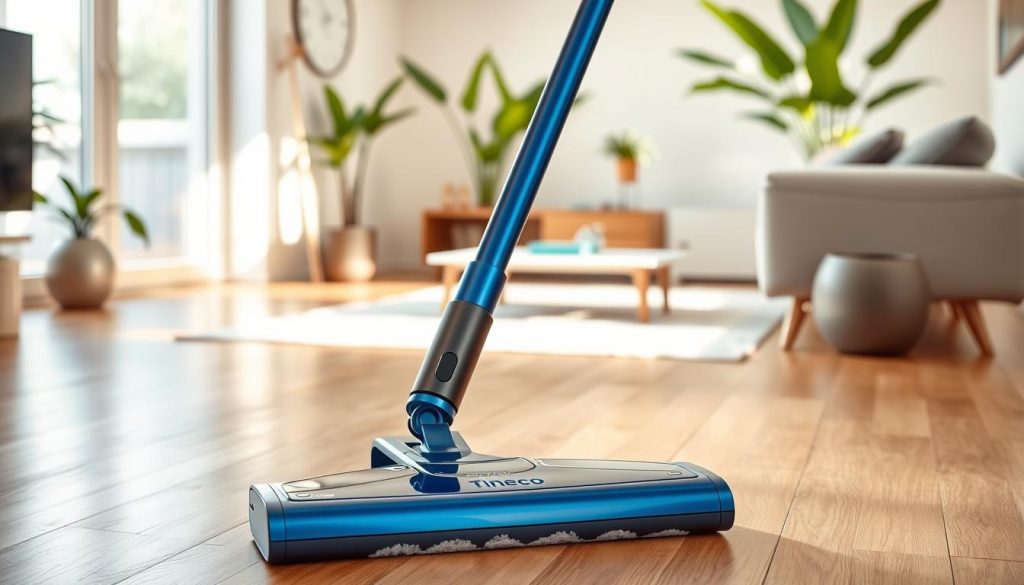
For everyday spills and tracked-in dust, the Tineco Floor One S7 Pro proved the simplest way to restore hard floors fast.
Why it tops our list: its iLoop sensor spots mess size and auto-adjusts suction, roller speed and water flow. That means fewer passes and efficient water use for typical Singapore kitchens and living rooms.
Performance and sensing
The iLoop smart sensor reduces wasted water and keeps suction where it matters. The machine feels quieter than rivals while keeping strong suction for crumbs and sticky spots.
Edge reach and real-world cleaning
Dual-edge cleaning is a real benefit for skirting boards and cabinet edges. The roller extends to both ends so you avoid a dirty rim around the room.
Tanks, dock and maintenance
The unit uses separate clean water tank and dirty water tank systems. You refill the clean tank (28 oz in our comparison) and empty the dirty tank after sessions, which keeps residue out of the water supply.
The self-cleaning dock offers quick or super cycles to flush the roller and internals, though you still need to empty the dirty tank and check the debris trap regularly.
Run time and suitability for Singapore homes
With up to 40 minutes run time on a charge, the S7 Pro handles most flats in one session. Its cordless design and light steering make it handy in tight corridors and short flights of stairs.
Who should buy it
- Ideal for families with kids, frequent spillers, and anyone who prefers fast, one-pass routine maintenance on hard floors.
- Considerations — it is a premium-priced unit and pet hair can collect under the roller in fur-heavy homes, though spare rollers and a spare HEPA filter are included.
| Feature | Spec / Notes | Practical impact |
|---|---|---|
| Run time | Up to 40 minutes | One-charge clean for most HDB flats and condos |
| Clean water tank | 28 oz (approx) | Refill frequency suited to medium sessions |
| Dirty water tank | Separate collection tank | Better hygiene than single-bucket systems |
| Edge cleaning | Dual-edge roller | Improved reach along skirting and cabinets |
| Extras | Self-clean dock, spare roller, spare HEPA | Lower routine maintenance time |
Best budget cordless vacuum-mop: Tineco GO H20 Sense
For compact Singapore flats, the GO H20 Sense delivers the core features we want without flagship price tags. It keeps smart sensing and a self-clean dock so daily maintenance feels complete.
Where it saves money without feeling “cheap”
Key wins: lightweight at 8.82 lbs, quiet operation, iLoop sensing and an LED screen that warns of clogs or a full tank. The unit includes a HEPA filter and a self-clean cycle—features usually reserved for pricier models.
Edge cleaning and smart sensing
Edge cleaning works on one side. Use the correct orientation along skirting boards and you still get a tidy perimeter. The iLoop sensor adjusts suction and water flow so the brush and roller only work harder when needed.
Trade-offs to know
Expect about 25 minutes run time. Tanks are modest (~0.5 L each / 17 oz clean water tank), so refills and empties are more frequent. Hair can tangle on the roller; the debris trap is straightforward to clear but needs attention after pet sessions.
“A compact, sensible option for first-time buyers and smaller homes.”
- Who should buy: first-time vacmop owners, small flats, or anyone seeking one-pass cleaning on a budget.
- Main compromises: shorter run time and smaller tank capacity versus flagship models.
Best all‑in‑one alternative: Dyson V15s Detect Submarine (vacuum plus wet mopping head)
If you need a single device that truly handles rugs as well as hard floors, the Dyson V15s Detect Submarine deserves a close look.
What it is: this is a powerful stick that swaps motorheads so you can run a strong dry pass or fit a wet roller head for tiles and sealed wood. It offers up to 60 minutes of battery life for typical Singapore sessions.
Why it isn’t a true vacmop — and when that helps
The Submarine does not suction and wipe in the same instant. You perform a dry pass, then change to the roller head for water-based wiping.
This two-step method is useful if you have rugs or carpet runners. True combo machines often struggle to lift pet hair and deep debris from pile; the Dyson keeps suction power for carpets where it matters.
Switching motorheads: what daily use feels like
Start with a quick dry pass to remove crumbs and hair. Swap to the wet roller head for hard floors once debris is gone.
The head change is straightforward; the workflow is slightly longer than a single-pass product but gives better results on mixed floors.
Best fit: pet hair, rugs and mixed flooring
We recommend the Submarine for homes with pets or many rugs. It vacuums hair far better than true floor washers while still offering a gentle roller for tiles.
Maintenance expectations: filters, drip tray and water handling
There is no self-clean cycle. You must wash the roller and empty the drip tray after sessions to prevent marks and odours.
Regular filter cleaning and periodic replacement keep suction consistent. Plan short rinses after wet use and let parts dry before storage.
| Item | Spec / Note | Practical impact |
|---|---|---|
| Run time | Up to 60 minutes | One-charge coverage for most flats |
| Head types | Dry motorhead; Submarine wet roller | Strong carpet suction plus gentle floor wiping |
| Water handling | Wet roller with drip tray | Storage without mess; rinse after use |
| Maintenance | Filter cleaning, roller rinse, no self‑clean | Higher hands-on upkeep but better rug results |
How we choose: what to look for in a wet and dry vacuum cleaner
We focused on features that reduce refill trips, speed up upkeep and finish floors drier. Our checklist targets real-world friction points in Singapore flats: humid storage, narrow corridors and quick tidy-ups between meals.
Suction power for debris, hair and dry messes
Suction power must be enough to lift crumbs, grit and trapped hair from hard surfaces. We test how well models clear debris without multiple passes.
Tank capacity: clean water tank vs dirty water volume
Tank capacity governs how often you stop to refill or empty. A larger clean water tank and generous dirty water collection keep sessions uninterrupted.
Smaller tanks mean more trips to the sink; larger tanks add weight and can reduce manoeuvrability.
Edge cleaning performance
Edge cleaning matters in kitchens and near skirting boards. We prioritise rollers and heads that reach corners without extra hand work.
Battery life, run time and charge time
Battery life and run time determine whether you finish a whole living area in one go. We check practical minutes per charge, not just lab claims, so you know if one session covers your flat.
Filter system and HEPA filtration for finer particles
A solid filter system keeps fine dust contained. We rate models with HEPA filtration for finer particles higher for households with allergies.
Noise level, weight and manoeuvrability
We measure noise level and weight to ensure a device is pleasant to push and store. Heavier machines often offer more power but must still be easy to steer in tight spaces.
Accessories that matter
Useful accessories include a good brush, practical tools for crevices, and a sturdy docking/charging station that stores parts upright. Spares for rollers and filters reduce downtime.
| Factor | What we check | Practical takeaway |
|---|---|---|
| Suction | Peak power and sustained flow | Clears debris and hair from sealed floors |
| Tank capacity | Clean water tank vs dirty water volume | Fewer refills; watch added weight |
| Battery | Run time in real minutes | One-charge sessions for most flats |
| Filter system | HEPA filtration for finer particles | Better indoor air quality, less dust re-release |
| Accessories | Brush heads, tools, docking/charging station | Improves reach, maintenance and storage |
“Choose the specs that reduce friction: fewer refills, better edge reach and faster drying times.”
How we test wet dry vacuum cleaners and floor washers
We test these machines the way Singapore households use them: fast, repeated sessions across real rooms with real messes.
Floor types and messes: kitchen spills, bathroom tiles, and everyday dirt
We assemble each unit per the manual, fully charge it, then run tests on kitchen tiles, sealed wood and bathroom tiles. Typical scenarios include oil splatters, sauces, tracked grit from corridors and wet footprints.
First-pass cleaning is a key metric. We note how well the unit lifts crumbs, hair and sticky residue in one go. Edge cleaning and manoeuvrability under cabinets are checked too.
Ease of use: filling tanks, selecting modes, and handling clogs
We time how long it takes to fill the clean water tank and to swap modes. Clear controls and useful alerts reduce fuss during a session.
We also simulate clogs and misaligned tanks to see if interruptions are frequent. Quick, intuitive fixes score higher.
Dryness after mopping: how quickly floors are ready again
Dryness after a pass is treated as pass/fail. Floors that dry in a few minutes minimise slip risk and let occupants resume use more quickly. We record the surface dampness at set minutes after cleaning.
Cleaning and maintenance: self-clean cycles, roller care, and dirty water disposal
Many models offer a self-cleaning cycle on the dock, but we still empty the dirty water tank after heavy use. We check how messy the tank is to handle and how easily the roller and brush rinse and dry.
“A self-cleaning mode helps, but emptying the dirty water tank remains part of honest upkeep.”
Suction consistency and debris handling
Finally, we watch suction as the dirty tank fills. A good unit keeps picking up debris without performance drops. Hair build-up on the roller is noted, since it affects long sessions and maintenance time.
- Practical testing: repeat runs in real rooms, not bench tests.
- Priority messes: kitchen oils, bathroom footprints, and tracked grit.
- Maintenance check: roller rinse, tank emptying, and filter access.
Best for pet hair and everyday family messes: models that cope with fur and debris
Homes with pets demand tools that handle fur, scattered kibble and muddy paws without fuss. We tested how well models resist clogging, how easy they are to rinse, and whether their tanks hold up during repeat sessions in busy Singapore flats.
Bissell CrossWave X7 Cordless Pet Pro for fur‑heavy households
The Bissell CrossWave X7 Cordless Pet Pro is designed for pet use. It has a Turbo Pet mode, strong suction power (claimed up to 20,000 Pa) and runs about 30 minutes per charge.
Its 820 ml clean water tank and 420 ml dirty water tank mean fewer stops during heavy sessions. The ability to work on hard floors and rugs makes it more flexible than many combo devices.
Tineco considerations: roller hair build‑up and debris trap realities
Tineco models often include self‑clean cycles, which help. In practice, some pet hair can still sit under the roller after a cycle. The debris trap can be fiddly and unpleasant to empty for owners who deal with long hair or heavy shedding.
When a dedicated cordless unit still earns a place at home
For sofas, runners and dense fur removal, a strong cordless stick often outperforms combo units. We recommend a two‑tool setup when rugs and upholstery need deep care.
Practical tip: do a quick pre‑vac for large fur clumps, empty the dirty water immediately in humid weather, and keep a small brush handy to clear the roller between uses.
| Model | Notable spec | Practical benefit |
|---|---|---|
| Bissell CrossWave X7 Cordless Pet Pro | 20,000 Pa; 30 min; 820/420 ml tanks | Strong pickup, fewer refills, works on rugs |
| Tineco series | Self‑clean dock; removable roller | Good convenience, expect extra roller maintenance |
| Dedicated cordless stick | High suction; specialised tools | Best for deep hair removal on upholstery and pile |
Singapore-specific buying tips: where specs meet real life
Buying for compact, humid homes changes which specs matter most. We focus on what keeps floors safe, storage simple and sessions quick in typical flats.
Hard floors first: vinyl, tile, and sealed wood care considerations
Match brush aggression and water flow to the surface. Vinyl and tile tolerate a firmer roller and more flow to lift grime.
Sealed wood needs gentler water delivery and softer brushes. Too much heat or force can dull finishes over time.
Hot-water mopping features and when they’re useful
Hot-water options excel on greasy kitchen spills and stubborn marks. Models with heat around 80–85°C break down oils faster.
Avoid heat on older sealed timber; test a small patch first. Heavier heated units can also be harder to lift for daily use.
Storage and docking in humid climates: drying rollers and preventing odours
Empty the dirty water tank promptly. Run a self-clean cycle and let rollers air-dry on the dock to reduce odours and mildew.
Antimicrobial rollers or ventilated docking/charging stations help in humid flats by speeding drying and cutting smell build-up.
Choosing corded vs cordless for your layout and cleaning habits
Cordless models win in tight corridors and quick touch-ups. They improve manoeuvrability and often store on compact docks.
Corded units suit larger homes or long sessions where continuous power and higher sustained power are priorities.
“Prioritise drying speed, sensible tank size and an easy-to-clean dock for typical Singapore living.”
| Concern | What to check | Practical tip |
|---|---|---|
| Floor type | Brush type, water flow, heat option | Use soft brush for sealed wood; heated mode for kitchen grease |
| Storage | Dock ventilation, roller drying, antimicrobial parts | Choose ventilated dock; run self-clean after use |
| Tank size | Clean water vs dirty water volume | Balance fewer refills with manageable weight |
| Power & run time | Suction consistency, weight | For flats, mid-run time with good suction beats heavy long-run units |
Other wet dry vacuum models we’ve considered
We tested a wider field so readers can compare plausible alternatives without starting from scratch.
Dyson Wash G1 is a true vacmop that is easy to use and simple to service. Its dual-edge cleaning and slide-out dry debris tray make maintenance painless. Runtime is around 35 minutes, it cleans with water (solutions are allowed) and it comes with a minimalist dock. Bear in mind its suction on rugs is limited compared with dedicated dry vacuum devices.
Tineco Floor One S5 Combo and the Tineco iFloor 3 are sensible choices if you favour quiet, efficient operation. The S5 Combo uses iLoop but has only one-end edge cleaning and about 20 minutes of runtime. The iFloor 3 runs roughly 25 minutes, includes HEPA and a self-clean dock, but it lacks edge cleaning entirely, which can leave a perimeter strip uncleaned.
Shark HydroVac options feel practical: generally lightweight and easy to push. Check tank capacity and real-world drying results; some models tend to leave floors wetter after a pass despite antimicrobial roller claims.
Notable specs to compare
We also weighed the Dreame H15 Pro Heat, Narwal S20 Pro and Simplus for buyers who prioritise runtime, weight and suction power.
| Model | Key spec | Practical note |
|---|---|---|
| Dreame H15 Pro Heat | 22,000 Pa; 85°C; 70/25 minutes; 6 kg | High claimed suction power and heated mode for stubborn marks |
| Narwal S20 Pro | 20,000 Pa; hot water; 60 minutes; 4.27 kg | Triple-edge design and long runtime for larger flats |
| Simplus | 21,000 Pa; 50 minutes; 4.4 kg | Balanced runtime and capacity for everyday use |
Higher suction numbers do not always equal better edge cleaning, and heavier products can be tiring in compact Singapore homes despite long runtimes.
For a concise comparison and further reading on combo products, see our wider round-up at best wet-dry vacuum guide.
Conclusion
Wrapping up, pick the model that reduces your chores, not the one with the longest spec sheet.
For top performance and edge cleaning reach, the Tineco Floor One S7 Pro stands out with dual-edge action, iLoop sensing, up to 40 minutes run time and a self-clean dock. The GO H20 Sense is our best value pick: lighter, more affordable and good for smaller flats with about 25 minutes run time.
The Dyson V15s Detect Submarine works if you need true carpet suction plus a wet head; it gives long battery life but requires head switching and no self‑clean cycle.
Final checklist: check tank sizes, edge cleaning, run time, dock ventilation and spare part costs. For Singapore homes, focus on fast drying and easy dirty-water emptying to avoid odours. Choose the product that matches your layout and cleaning habits now.

