

We introduce why the wet and dry vacuum cleaner for hardwood floors is becoming the go-to in Singapore flats with sealed timber-style surfaces.
These units feel lighter than upright machines while still offering strong suction plus a mop roller brush to lift stuck messes. That one-pass capability saves time when crumbs, drink spills and tracked grit are common after meals.
In our roundup we judge pickup, mopping results, tank system, self-cleaning and storage. We test value across budgets and list which models suit mostly hard floor flats versus mixed homes with rugs.
We also clarify the key difference between a vacuum mop and a traditional stick: the former handles water with roller scrubbing to shift sticky residue, not just dust. Our aim is simple — help you choose a cleaner that fits your space, routine and Singapore climate.
Why a wet-dry vacuum mop makes sense for hardwood floors in Singapore homes
One device that lifts crumbs and scrubs stuck spills in a single route makes daily upkeep easier. In small flats and condos, that single-pass approach saves us precious time and stops us redoing the same area twice.
One-pass vacuuming and mopping for dust, crumbs, and sticky spills
We remove dust, dirt and debris in one movement. That means rice grains, coffee grounds and light sticky marks are treated without a second trip with a mop and bucket. The roller plus suction offer active agitation, which helps when spills start to dry.
Why robot vacuums are convenient but not always ideal
Robots excel at hands-free upkeep on smooth surfaces and can run while we are out. They are useful for daily dust control.
However, many local layouts include steps, thresholds and multi-level units. Robots cannot carry themselves upstairs and may struggle with uneven transitions. For those homes, manual units and upright systems still give better coverage.
- Practical appeal: one route equals less double handling.
- Everyday messes: fast pickup of crumbs and sticky spots prevents tracking.
- Buyer’s note: humidity affects roller and tank care; proper drying stops odours.
| Benefit | Manual wet-dry unit | Robot mop |
|---|---|---|
| One-pass cleaning | Yes — suction plus roller | Limited — light mopping only |
| Best for multi-level homes | Suitable — portable | Not suitable — cannot move between levels |
| Handles stuck-on spills | Strong — active scrubbing | Weak — gentle wiping |
| Maintenance in humid climates | Requires drying of tank/roller | Lower risk but limited cleaning power |
To read more about alternative methods and a different upkeep approach, see our guide on how to clean the floor without a.
How wet and dry vacuums work with clean water and dirty water tanks
A two-tank layout is simple but crucial. Clean water feeds the roller and brush so the head wets and agitates grime. Suction then lifts the resulting slurry into the dirty water tank, keeping used water away from the supply.
From roller to suction: the cleaning path
We see four clear stages: wetting, scrubbing, suction and separation. The roller lifts stuck-on residue while scrapers and suction channels stop the head from pushing slurry around.
Strong suction matters. It pulls liquid and fine debris into the collection tank, leaving the surface drier and safer to walk on.
Why routine care prevents odours and bacterial growth
Emptying the dirty water tank after each run is vital in Singapore’s humid climate. If we leave water sitting, warm air speeds mildew and bacteria.
- Daily habit: dump and rinse the dirty tank.
- Rinse supply tank: refill with clean water before the next use.
- Self-cleaning limits: many units rinse the roller and pipes but do not fully dry internal parts.
Best practice: empty, rinse and allow airflow or active drying. Follow manufacturer notes to keep the clean dirty water cycle hygienic over time.
What we look for in a wet and dry vacuum cleaner for hardwood floors
We judge each model by how it protects sealed timber-style surfaces while removing common mess. Our priorities are practical: controlled water output, strong suction that shifts debris, and a roller that leaves no streaks.
Suction and real-world pickup
Suction figures (Pa) matter, but only when paired with real pickup of rice, cereal and coffee grounds. We test on mixed dirt types to see how power and head design work together.
Edge reach and flat-lie design
Edge support stops the persistent dust line at skirting. Flat-lie designs reach under low sofas and beds so we miss less dirt without moving heavy furniture.
Self-cleaning, drying and tanks
Self-clean with heated drying reduces mould risk in humid Singapore. Tank sizes tell the daily story: small clean water or dirty water tanks mean more refills and empties.
Smart modes and mixed floors
Auto modes that detect mess will adjust power and water flow to avoid over-wetting rugs or warping boards. We favour models that switch between floor and carpet safely.
| Criterion | What we test | Why it matters |
|---|---|---|
| Suction (Pa) | Pickup on rice, coffee, cereal | Shows true debris removal, not just spec sheets |
| Edge & reach | Baseboards and under-sofa access | Prevents missed dirt and reduces manual touch-ups |
| Tank & drying | Clean water / dirty water capacity, heated dry | Day-to-day refills, odour control, mould prevention |
| Smart modes | Auto detect, adjustable water output | Protects rugs and wooden boards from over-wetting |
How we tested these floor cleaners on hard floor, rugs, and everyday messes
We ran structured trials across the common surfaces found in Singapore homes: sealed timber-style planks, vinyl kitchen strips, bathroom tile and low-pile rugs. Each test aimed to mirror daily life so results are practical and localised.
Real-world messes and drying
We scattered rice, cereal and coffee grounds, then poured small wet spills to check pickup and drying time. We noted whether the head needed one pass or two and measured leftover debris and visible dampness.
Manoeuvrability and edge reach
We weaved around chair legs, tested corners, and slid under low sofas. Edge cleaning along skirting was scored separately, as dust lines often persist after a quick run.
User-friendly design and upkeep
Displays, voice prompts and tank alerts were rated on clarity and helpfulness. We also considered daily maintenance: emptying tanks, rinsing rollers and how fiddly that work felt.
“Good design saves time; if upkeep is hard, people stop using the tool.”
| Test area | What we measured | Why it matters |
|---|---|---|
| Surface types | Pickup on tile, vinyl, wood-plank, low-pile rugs | Shows real-home performance across common floors |
| Everyday messes | Cereal, rice, coffee, wet spills | Checks suction, absorption and residue |
| Manoeuvrability | Corners, skirting, under furniture | Determines true coverage and ease of use |
| Usability | Displays, voice prompts, tank alerts, maintenance | Affects daily adoption and long-term hygiene |
Hardwood-floor priorities most buyers miss
Many buyers focus on power specs and miss how little water can still ruin a sealed timber finish. Our priority is to protect appearance while keeping cleaning practical in Singapore homes.
Water control to prevent streaks and over-wetting
More water does not equal better results. Excess water often leaves streaks and a dull film on a hard floor. That effect shows up most on darker boards under spot lighting.
Good water control means even wetting at the roller, strong extraction and a finish that looks uniform when it dries. In air-conditioned flats with reduced airflow, slow drying makes over-wetting worse.
Brush roll design to reduce swirl marks and protect finishes
Brush and roller design cues matter. Softer brush fibres, steady contact pressure and effective scrapers stop dirty water being dragged across the surface.
Swirl marks are usually visible on darker surfaces. The way a roller turns and meets the surface affects the final look as much as suction does.
- Practical tip: reduce water flow in delicate areas and use mop modes sparingly.
- Design cue: choose models with adjustable extraction and a gentle brush path.
- Buying note: if appearance matters, prioritise controlled mopping performance over headline specs such as runtime.
“Controlled wetting and the right brush are the quick way to keep sealed timber looking its best.”
Quick comparison of the best models we’d shortlist for Singapore
We shortlist models that balance everyday convenience with realistic runtime expectations in Singapore flats. Below we translate specs into what they mean in minutes of real use, handling and storage needs.
Runtime and charge time: what “minutes” really means
Runtime varies: Shark offers ~23 minutes, Narwal up to 60 minutes and ILIFE around 100 minutes. Minutes quoted are often in eco modes; heavy use or Max modes cut that figure.
Charge time affects whether short sessions or long weekend cleans suit your schedule. A longer recharge is fine if you clean in short bursts between errands.
Weight and handling
Self-propelled glide models reduce effort in corridors. Heavier builds feel stable but tire us during longer runs in multi-room homes.
Storage footprint
Docking stations vary: robots need larger docks while stick units often park upright. Check cupboard and socket space in HDB flats before buying.
Solution options
Some brands use proprietary cleaning refills; others allow a standard floor cleaner. Proprietary refills add convenience at a running cost. Using a standard solution lowers long-term spend but check warranty rules first.
“Choose the model that fits your routine — short runtime with fast charge can beat long runtime if it suits daily use.”
Best overall wet-dry: Narwal S30 Pro Wet Dry Vacuum Cleaner
The Narwal S30 Pro stands out by pairing strong extraction with smart sensing that adapts to busy Singapore homes.
AI DirtSense actively detects heavier zones and announces suction adjustments, so we rarely change modes during a run.
Hair management and edge reach
The built-in scissor mechanism trims hair from the roller, reducing tangles and keeping brush performance steady. This matters in households with long hair or pets.
Edge support and a 180° flat‑lie design reach under low sofas and along skirtings — useful in compact flats where dust hides out of sight.
Hygiene, drying and daily use
The self‑clean cycle flushes debris into a disposable net, then heats the roller to 194°F to disinfect and dry. A deodorant module with jasmine, mint and forsythia notes helps mask storage odours.
Tank sizes — 790 ml clean water and 720 ml dirty water — mean fewer refills and empties during a full‑home clean. An alert reminds us to empty dirty water to avoid bacterial growth.
| Spec | Value | Why it matters |
|---|---|---|
| Suction | 20,000 Pa | Strong pickup of dust, rice and light debris |
| Battery life | 60 minutes | Enough minutes for most medium homes on a single charge |
| Tank capacity | 790 ml clean / 720 ml dirty | Less frequent refills and empties during whole‑home cleaning |
| Self‑care | Heated dry, deodorant, disposable net | Keeps internal parts hygienic in humid climates |
“Our pick balances suction, automation and real‑world hygiene — a sensible choice for busy families.”
Best value runner-up: Shark HydroVac MessMaster Cordless Wet-Dry Vacuum
If you want a capable machine that won’t stretch your budget, the Shark HydroVac MessMaster is a sensible runner-up. It covers the core pick-up and mop job while keeping the price approachable for many Singapore apartments.
Why it suits tighter budgets and compact homes
The narrow cordless body pivots easily into dining nooks and along corridors, making it practical in HDB flats and small condos. LED headlights are more than a gimmick; they reveal fine dust on darker floor finishes so we spot trouble areas quickly.
Self-clean dock and a clear maintenance trade-off
The docking station runs a rinse cycle after use and helps prevent mildew smells if used every time. Manufacturers recommend self-cleaning after each session. Noise during that cycle is noticeable (around 80 dB).
One trade-off: the brush roller must be removed and left to air-dry — typically up to 24 hours. That requires a little space and routine discipline from owners.
Where it fits in our homes
Runtime sits near 23 minutes, so this model is best for quick cleans and small-to-medium homes. It handles sealed floor surfaces and occasional low-pile rugs well, making it a solid pick where price and practicality matter.
“Our verdict: a budget-friendly model that delivers the essentials — just plan for the extra brush drying time.”
Smartest vacuum mop: Dreame H15 Pro CarpetFlex Cordless Vacuum Mop
The Dreame H15 Pro blends automatic sensing with practical head swaps so we move between sealed boards and rugs without fuss.
RGB Dirt Detection and auto-adjusted cleaning power
RGB Dirt Detection reads soil levels in real time and boosts suction and power when the head meets heavier dirt. This feedback loop cuts repeat passes and saves us time.
Dry brush vs mop brush installation
The unit senses which head is fitted and switches mode automatically. Choosing the dry brush protects carpet areas from excess water and prevents damp patches on rugs.
Roller odour over time
Self-cleaning plus heated drying lessens build-up. Still, testers note the wet roller can develop a musty smell after months. Plan occasional deep cleaning and full air drying to extend life.
Key specs and daily use
With 23 kPa suction and up to 60 minutes runtime, the H15 Pro offers a smooth, self‑propelling glide, close edge reach and a 180° lay-flat sweep. Charge time is about three hours.
“This model suits owners who value smart automation and mixed-surface protection more than the lightest weight.”
Best splurge for mixed flooring: Dyson V15s Detect Submarine
Some owners want a premium tool that treats carpets like carpets and sealed boards like boards — the Dyson V15s Detect Submarine aims to do exactly that. We rate it as a high‑end platform that separates true dry pickup from a dedicated wash head.
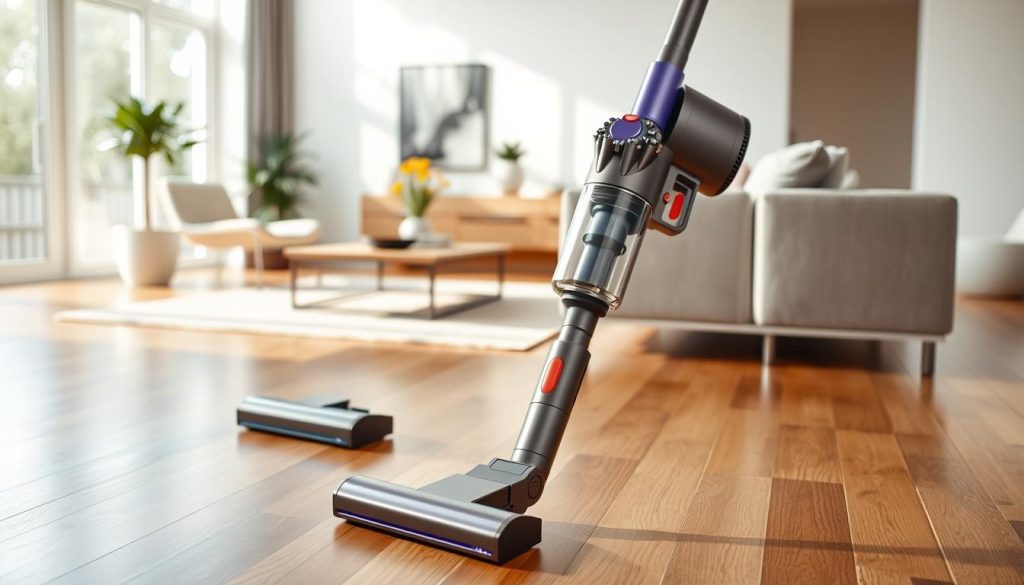
Three heads mapped to real use
Fluffy Optic handles fine dust on sealed surfaces. The Digital Motorbar tackles rugs and carpet while detangling hair. The Submarine roller is the dedicated wet head that washes sealed boards with its own clean and dirty water tanks.
What makes it different
It is a true dry vacuum first, with a separate wet head that you attach when you need it. That means we can vacuum carpets without dragging a damp roller near soft areas.
Practical trade-offs
There is no self‑cleaning of the wet head, so we must rinse and air dry components after use to avoid odours. The system does not require any proprietary solution, which lowers long‑term running costs in Singapore.
Smart feedback and controls
The LCD shows particle detect counts, battery status and maintenance alerts. We switch power modes based on the readout to match suction and water use to the mess level.
“A strong choice for households with both rugs and sealed boards who want the best of both worlds.”
Best robot option for light upkeep: ILIFE V5s Pro 2 Robot Vacuum and Mop Combo
When daily maintenance is the priority, a quiet robot that moves on its own keeps traffic areas tidy while we carry on with other tasks. The ILIFE V5s Pro 2 is an inexpensive machine aimed at frequent, low-effort upkeep in small Singapore homes.
Where robot cleaning shines: quiet, hands-free maintenance on smooth floors
Quiet operation lets it run while we work or rest. Its 100-minute battery life covers most one-bedroom flats in a single run.
Gentle mopping keeps light marks under control and reduces daily dust build-up on sealed planks and tiles.
Limitations to expect: uneven tile, higher-pile carpet transitions, and gentle mopping
It can struggle with uneven tile surfaces and with transitions onto higher-pile carpet or rugs. Expect missed patches at thresholds.
The mop action is maintenance-grade. It is not a substitute for a manual mop when dealing with dried spills or stubborn residue.
Key specs: 100-minute battery life and 300 ml clean water tank
The 300 ml clean water reservoir suits short passes and spot mopping rather than whole-house wet work. Use it often and pair it with a weekly manual pass to tackle edges and sticky spots.
“We position the ILIFE as the best robot option when the aim is regular upkeep rather than deep scrubbing.”
| Feature | Value | Why it matters |
|---|---|---|
| Battery life | ~100 minutes | Enough for most small flats to maintain baseline cleanliness |
| Clean water tank | 300 ml | Good for light mopping passes; not for heavy whole‑home washing |
| Best surface | Smooth sealed planks and low-profile tiles | Delivers consistent contact and quiet, effective pickup |
| Limitations | Uneven tile, high‑pile rugs | May miss edges and struggle with transitions |
Who should buy it: smaller homes with mostly smooth surfaces, owners who value hands‑free convenience and routine upkeep over maximum cleaning power.
Best combo system for hard floors plus carpets: Tineco Floor ONE Switch S7
The Tineco Floor ONE Switch S7 is a true two‑in‑one solution. We switch from a dry head for carpets and rugs to a wash head for hard floor areas while using the same, swappable battery.
Two machines in one with a shared battery
Practical design: the shared battery lets us move between carpet pickup and water-based washing without swapping chargers or ecosystems. This saves time in mixed homes.
Smart sensing, tangle-free brush and LED head
The iLoop system will detect debris levels and auto‑adjust suction to match soil. A zero‑tangle brush keeps hair and pet fur moving off the roll while an LED head helps under low furniture.
FlashDry self-cleaning and sealed heated drying
FlashDry runs heated cleaning through pipes and the brush then seals the unit for a hot dry cycle at about 158°F. This reduces odour and mould risk when storage space has limited air.
- Hygiene: 0.85 L clean tank with a 0.72 L dirty tank keeps clean dirty water separate for better mopping results.
- Who should buy: households with rugs and carpets that still want regular mopping without two separate machines.
- Trade-offs: a combo design increases footprint, weight and cost; plan storage accordingly.
“A smart choice where mixed surfaces demand both strong pickup and careful washing from one platform.”
Best for pets and everyday debris: Bissell CrossWave OmniForce Wet-Dry Vacuum
The Bissell CrossWave OmniForce is our pick when pet hair and daily crumbs are a constant. It combines a tangle-free roller with a *Power* mode that boosts suction by about 75% to lift fur and stubborn crumbs from sealed boards and rugs.
Tangle-free brush roll and a higher-suction power mode
We value the brush design because hair does not wrap and performance stays consistent. The extra suction helps clear debris from feeding zones and entryways with fewer passes.
Two-tank clean / dirty water separation
The two-tank layout keeps clean water away from dirty water. That separation means we mop with fresh solution and extract used water rather than spreading grime back across the surface.
Self-cleaning without self-drying: keeping it fresh
The unit includes a self-clean cycle but no heated dry. After use we empty the dirty water straightaway, rinse both tanks and remove the roller to air. Leaving parts to ventilate prevents stale smells in Singapore’s humid air.
- Flexible use: run as a dry vacuum only, or as a combined vacuum-and-mop when paw prints need attention.
- Runtime: about 30 minutes — enough for quick whole‑home touch-ups in most flats.
- Display: battery time, suction level and tank alerts make maintenance straightforward.
| Feature | Value | Why it matters |
|---|---|---|
| Tangle-free roller | Yes | Reduces hair wrap and keeps brush action steady |
| Power/Turbo mode | ~75% more suction | Better pickup of fur and crumbs in high-traffic areas |
| Tank setup | Two-tank clean / dirty | Mop with clean water; extract dirty water for hygiene |
| Self-care | Self-clean (no self-dry) | Requires rinsing and air drying to avoid odour |
“The OmniForce suits pet homes and busy households that want solid crumb pickup and practical mopping without flagship price tags.”
Choosing the right cleaning modes for your floors and your routine
Sensor-led auto mode is the safest start; boost to Max when a spot needs extra agitation.
Auto mode vs Max mode vs suction-only: when each makes sense
Auto mode adjusts power and water delivery to match soil levels. We use it for daily cleaning to save battery and reduce streaking on sealed planks. It is the easiest way to balance performance with gentle care.
Max / Turbo suits concentrated mess. In dining zones or kitchen spills we switch to this mode to add power and agitation. That cuts repeat passes and lifts sticky residue fast.
Suction-only is ideal for quick crumb pickup or liquid extraction when we do not want extra water on the surface. Use this when moving from a sealed board to a rug or when a spill needs immediate removal.
Transitioning from hard floor to rugs without leaving wet patches
Pause mopping, swap to a dry head or a suction-only setting before crossing onto rugs or carpet. Avoid dragging a moist roller over textiles to stop wet patches and musty smells.
| Situation | Recommended mode | Why it helps |
|---|---|---|
| Daily upkeep on sealed planks | Auto | Balances water and power; saves time |
| Stubborn kitchen spill | Max / Turbo | Extra agitation, faster residue removal |
| Moving onto rugs or carpet | Suction-only / dry head | Prevents damp patches and odour risk |
“Choosing the right mode protects surfaces and shortens cleanup time.”
Running costs and ownership in Singapore
We treat purchase price as only the start; long‑term spending on consumables often shapes whether a device proves economical in daily life.
Cleaning solution refills, filters and brush maintenance
Consumables add up. Proprietary solution packs can simplify dosing but raise running costs over years. Some brands do not require branded liquid, which keeps ongoing spend lower.
Replace filters and the brush at manufacturer intervals to keep suction and pickup stable. Expect occasional roller or brush swaps after heavy use.
Humidity‑proof habits
Empty dirty water after each clean, rinse tanks and run self‑clean cycles when available. Let the head and roller fully air before storage to prevent smells and mould.
Space planning in HDB flats and condos
Measure where a dock or charger will sit and allow clearance for tank removal and drying. Robots often need larger docks; upright cordless units save cupboard width but need a nearby outlet.
| Cost item | Typical interval | Why it matters |
|---|---|---|
| Solution refills | Monthly–quarterly | Affects monthly running costs |
| Filter replacement | 6–12 months | Maintains suction and air quality |
| Brush/roller | 12–24 months | Preserves pickup and surface finish |
Compare ownership options and balance the trade‑offs against performance when you read any product review. For carpet care, see our short guide on carpet cleaning tips.
Conclusion
In summary, we match each use case to the features that matter most in Singapore: strong suction, controlled water output and simple upkeep. Pick the right model by prioritising edge reach, effective roller action and easy tank access.
For routine upkeep a vacuum mop with smart sensing saves time and minutes on daily runs. For deeper cleans choose machines with larger tanks and heated drying to limit odour and mould in humid storage.
If you split duties between rugs and sealed floor areas, favour combo systems or separate heads so vacuums do not cross‑contaminate textiles. Weight, dock space and running costs shape which model suits your schedule.
Practical next steps: check storage space for the dock, compare solution costs and set a simple after‑clean ritual — empty dirty water, rinse parts, then dry. If you want a two‑in‑one ecosystem, consider the Tineco Floor ONE / Floor ONE / Tineco Floor range as a practical starting point.

