

We introduce a clear guide for Singapore homes that face mixed messes from kitchen spills to balcony dust. This guide explains who gains most from a wet dry setup and how Electrolux models meet those needs.
We define a wet dry vacuum in plain terms so readers can tell the difference between picking up loose debris and safely suctioning liquids without harm. Expect practical notes on suction power, multi-surface tools and storage.
We outline why people search for the benefits of wet and dry vacuum cleaner today: fewer tools, quicker cleaning and consistent results for daily messes. We preview drum-style units versus stick floor-washer models so you can match features to your space and routine.
We also flag local value: look for sensible delivery, warranty and instalment options when buying in Singapore, plus current promotions that can cut price substantially.
What a wet dry vacuum cleaner is and how it works
We set out the mechanics behind machines that safely pick up water and loose debris in one pass.
Core operation: Suction-based units use a sealed motor and specialised filters to handle liquids and solids. These vacuums collect dust, debris and light spills without damaging the motor. Some models switch modes for best results.
Floor-washer design: A damp roller or head dispenses clean water from a dedicated tank while a separate dirty water tank recovers grime. This prevents re-depositing soil and keeps floors clearer than a mop alone.
Common formats in Singapore homes
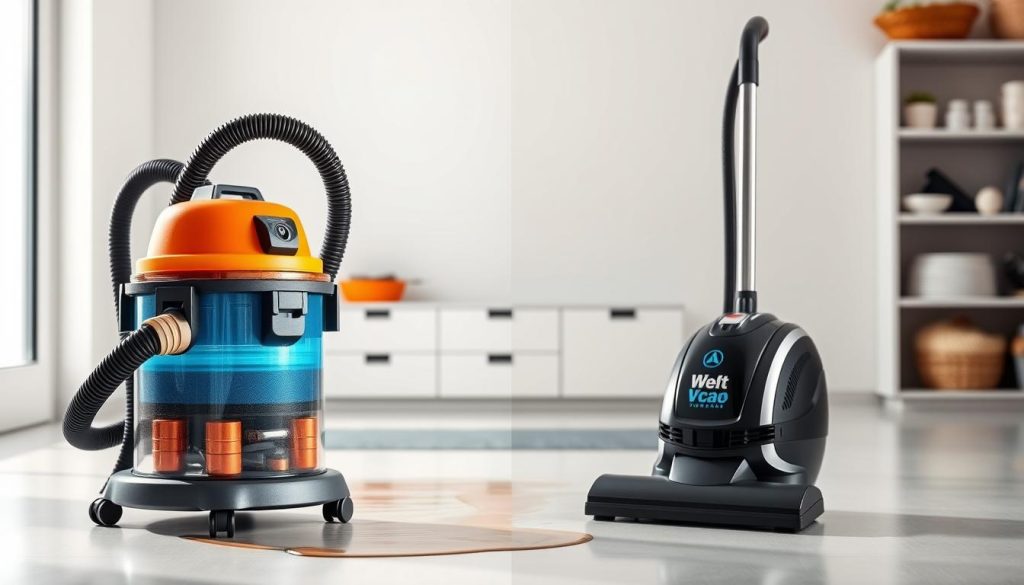
Electrolux and other brands offer two main models: drum units for heavy tasks and cordless stick types for daily upkeep in HDB flats and condos. Choose a primary tool based on the jobs you face—large spills call for a drum; quick floor care suits a stick.
- Drum models: robust, large capacity for big messes and renovation dust.
- Cordless stick: nimble, ideal for tiles and timber in compact homes.
Benefits of wet and dry vacuum cleaner for everyday home cleaning
For compact Singapore flats, a single appliance that suctions then mops simplifies weekly chores.
All-in-one cleaning and storage
We free space by replacing separate vacuuming and mopping tools with one unit. This reduces clutter in small kitchens and utility cupboards.
Stronger suction for dust, hair and debris
High suction targets fine dust, pet hair and heavier debris so rooms need fewer repeat passes. Electrolux models pair powerful airflow with microfilter technology for steady results.
Multi-surface performance and faster drying
Units work across tiles, timber and stone; stick floor-washers favour hard floors over thick carpet. Damp-roller mopping uses less water, so floors dry quicker and stay safe to walk on.
Ease of use and cleaner air
Rollers and ergonomic heads reduce the effort needed to glide furniture and corners. Advanced filtration lowers dust re‑release and helps households sensitive to allergens.
| Feature | What it helps | Typical payoff |
|---|---|---|
| All-in-one design | Storage, time | Less clutter; faster routines |
| High suction | Dust, hair, debris | Improved pick-up; fewer passes |
| Damp-roller mopping | Light spills, floor washing | Faster drying; less water used |
| Microfilter / antibacterial tank | Air quality, hygiene | Lower allergens; easier maintenance |
For more on choosing the right unit, read why choose a wet-dry model for Singapore homes.
Wet dry vacuums vs regular vacuum cleaners
Choosing between a machine built for dry pick‑up and one that copes with spills matters for everyday household care.
We find that a dry vacuum cleaner performs best on routine dust and dirt. It is lighter, easy to manoeuvre and quick for daily passes. Carpets, rugs and upholstery usually respond well to a dedicated dry unit. Pairing a dry model with a robot helps keep floors tidy between deep cleans.
When a wet-capable unit is the safer choice
We recommend wet-capable machines where water, spills or leaks are likely. Kitchens, bathrooms and covered balconies can see sudden puddles. A wet dry vacuum handles liquids safely and prevents motor damage, so you can act fast without waiting for a mop.
Typical Singapore use cases
For compact homes we suggest matching tools to the task. Use a dry vacuum for daily dust and crumbs. Choose a wet dry for kitchen splashes, shower puddles and balcony rain tracked in on rainy days.
Cars also benefit from a wet-capable unit; sand, crumbs and small spills need a machine that copes with both messes and water.
| Task | Best option | Why |
|---|---|---|
| Daily dust and crumbs | Dry vacuum | Lightweight; quick emptying; good for carpets |
| Kitchen splashes & sink leaks | Wet-capable unit | Safe liquid pick‑up; prevents motor damage |
| Balcony rainwater and sand | Wet-capable unit | Handles water and grit in one pass |
| Car interior | Wet-capable unit | Removes sand, crumbs and accidental spills |
Key buying factors to choose the right wet dry vacuum
A smart purchase balances suction performance, how much water it holds and how you plan to use it around the home.
Suction power and performance targets for different messes
We look for steady suction rather than headline peaks. For dust and hair, devices under 5,000 Pa can work well. For thicker debris and renovation dust, aim for 7,000 Pa or more.
Stable airflow keeps pickup consistent across rooms. Check quoted Pa figures where available, but judge real-world reviews for sustained power during a full run.
Water tank capacity and the clean water to dirty water workflow
Tank size is a trade-off. Larger tanks cover more floor area before a refill, while smaller tanks reduce weight and make handling easier.
Separate clean water and dirty water tanks keep rinsing effective. We favour simple drain systems that cut the time spent emptying and drying after use.
Cordless freedom vs corded power for larger clean-ups
Cordless gives mobility for quick touch-ups and stairs. Corded units suit longer sessions where runtime and steady power matter more.
Match battery runtime to your typical cleaning time so you do not interrupt chores mid-job.
Self-cleaning systems and hygiene features
Self-cleaning heads and antibacterial tanks reduce manual rinsing and cut odour risk. Even with these features, we still advise rinsing tanks and checking hoses to prevent blockages.
Filtration and tools that change results
HEPA-style filtration helps homes with allergens. Good filters limit particle re‑circulation and protect indoor air quality.
Choose useful attachments: crevice nozzles for edges, soft brushes for upholstery and narrow tools for tight gaps. These tools save time and improve final cleanliness.
| Factor | What to check | Practical tip |
|---|---|---|
| Suction (Pa) | Quoted Pa and sustained airflow | 5,000 Pa+ for dust/hair; 7,000 Pa+ for heavy debris |
| Tank layout | Clean vs dirty tank; capacity (L) | Larger for big areas; smaller for light lifts and easier handling |
| Power source | Cordless runtime vs corded endurance | Pick cordless for quick jobs; corded for long sessions |
| Hygiene | Self-cleaning, antibacterial tanks, microfilters | Reduces maintenance time; still rinse and dry after use |
| Attachments | Crevice, upholstery, brush heads | Prioritise practical tools over gimmicks |
For real-world tips and unusual uses, see our short guide on extra tasks you can tackle with these machines: 4 unusual uses for your wet and dry.
Choosing between drum wet and dry vacuums and stick wet dry cleaners
We compare two clear paths: large-capacity drum models for heavy jobs and cordless stick models for everyday floor care. This helps you pick a model that fits Singapore living, whether that is a workshop, HDB flat or condo.
Drum models for renovations, garages and heavy-duty debris
Drum units suit renovation dust, workshop grit and large-volume debris. They typically offer greater tank capacity, corded power and a blower function to clear corners or balconies.
Onboard storage and robust attachments make them practical when time is tight and mess is large.
Stick models for daily hard-floor vacuuming, mopping and washing
Stick models focus on quick vacuuming and mop-style washing for hard floors. They are lightweight, often cordless, and ideal for routine kitchen or living-room spills.
Mobility considerations: 360° handling, storage and weight
360° castors make drum units easier to manoeuvre on site. Sticks win for slim storage and grab‑and‑go cleaning, though they may need a charging dock and regular tank emptying.
- Choose a drum if DIY dust and heavy debris are regular tasks.
- Choose a stick if daily floor care and fast clean-ups save you time.
Features to prioritise for quicker, more hygienic floor cleaning
We focus on practical features that speed up cleaning while keeping floors hygienic. Choose parts that cut repeat passes and make emptying simple for Singapore homes with limited storage.
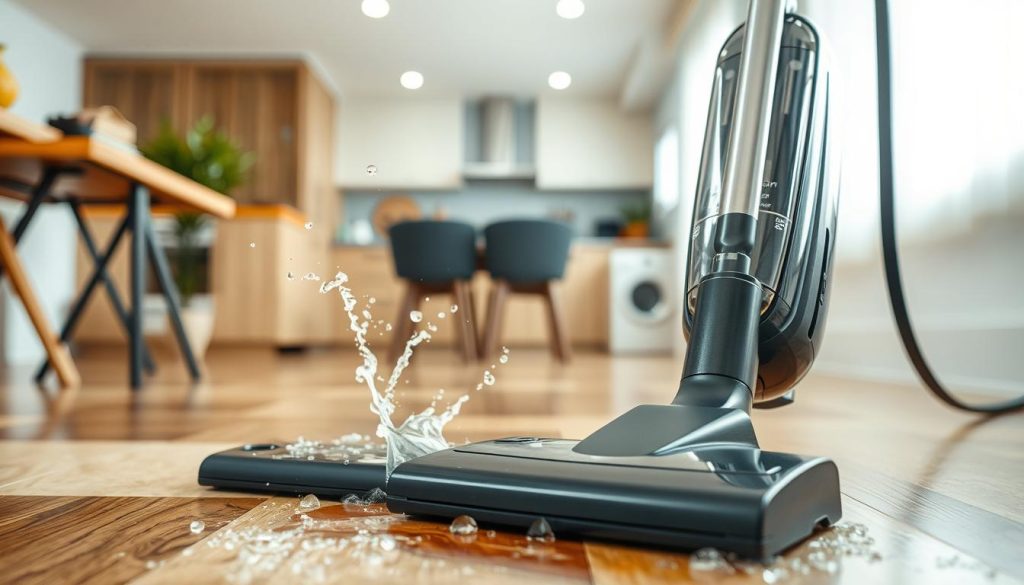
Separate tanks to keep clean water away from dirty water
We recommend separate clean and dirty tanks. This prevents used water returning to the floor and keeps results consistent across a whole-room clean.
Separate tanks reduce cross‑contamination and make rinsing straightforward. For fast jobs, larger clean tanks mean fewer refills while a clear dirty tank helps you judge when to stop.
Nozzles and rollers designed for high debris pick-up on hard floors
Look for a nozzle that maintains edge contact and a roller that traps mixed debris rather than pushing it. Good designs create a steady suction path across skirting and under chairs.
- Edge‑sealed nozzles for crumbs at skirting boards.
- Rubberised rollers to lift grit without scattering it.
- TriAction or multi‑lane heads for higher debris pick‑up on hard floors.
Antibacterial water tanks and microfilter technology for cleaner results
Antibacterial tanks, like those on some UltimateHome 700 units, kill most bacteria and help floors dry quickly. This matters when water is stored between uses.
We also rate microfilter filtration from brands such as Electrolux. Good filtration keeps fine dust and allergens contained and reduces re‑release into the room.
| Feature | What it improves | Practical result |
|---|---|---|
| Separate tanks | Hygiene, consistent cleaning | Fewer repeat passes; no re‑soiling |
| TriAction / sealed nozzle | Debris pick‑up on hard floors | Better crumb and dust removal at edges |
| Antibacterial tank | Stored water hygiene | Lower bacteria; quicker drying |
| Microfilter / filtration | Fine particle control | Cleaner air; less dust re‑circulation |
What makes Electrolux wet and dry vacuum cleaners different
We focus on what sets Electrolux units apart when one machine must tackle crumbs, spills and grit in everyday Singapore homes.
Performance-led design: Electrolux pairs strong suction with purpose-built tools. This means an inverter motor for steady power and heads that keep contact with various surfaces.
Designed for multi-surface cleaning tools and strong suction across wet and dry messes
We rate attachments highly. A TriAction nozzle lifts 99% of visible debris on hard floors while narrow nozzles target upholstery and tight gaps.
Everyday floor care innovations in cordless stick models
For quick jobs, cordless stick designs like the Electrolux 800 3-in-1 cordless offer an inverter motor, detachable hand unit and self-cleaning cycles. Smart dirt detection helps conserve battery and focus power where it matters.
Heavy-duty convenience in drum models, including blower functionality
Drum models serve garages and renovation tasks. They bring large tanks, a blower mode for debris clearance and 360° handling with onboard accessory storage for fast setup and teardown.
- Stick models: cordless mobility, tidy storage, integrated wash and vacuum workflow.
- Drum models: capacity, blow function, rugged attachments for big jobs.
How much a wet and dry vacuum costs in Singapore and how to spot value
Cost varies widely; we explain what features push a model up the price ladder.
In Singapore, Electrolux pricing varies by model and current promos. Entry drum-style machines are the most affordable (Flexio Power Z823). Mid-range hygienic floor-care models sit in the middle of the range (UltimateHome 700 EFW71711). Premium cordless all-in-one systems top the range (Electrolux 800 3-in-1 EFW81713).
What drives price
Key cost drivers include cordless battery systems, motor power, tank design, self‑cleaning features and bundled tools. Higher power and longer run times raise price, as does a dual‑tank layout or antibacterial treatments that reduce maintenance time.
How to spot real value
Match a model to your common tasks rather than chasing specs you will not use. For daily hard-floor upkeep, a mid-range cordless with good runtime pays back in saved time. For large spills and renovation dust, a robust drum unit gives better long‑term value.
- Check what the promo includes: attachments, spares and delivery.
- Confirm warranty length and local service terms.
- Compare the total payable cost if using 0% instalments.
| Price band (S$) | Representative model | What it suits |
|---|---|---|
| Varies | Flexio Power Z823 | Entry drum for occasional large spills and grit |
| Varies | UltimateHome 700 EFW71711 | Balanced hygiene and daily floor care |
| Varies | Electrolux 800 3-in-1 EFW81713 | Premium cordless for fast, frequent cleaning |
Final checklist: total cost after discounts, warranty, what accessories are included, delivery terms, and whether the deal suits your home cleaning routine.
Conclusion
strong, When homes mix routine dust with occasional spills, a single versatile machine often saves time and cupboard space.
We find a wet dry solution simplifies daily cleaning by combining suction and a mop-like wash in one pass. It cuts tool switching and reduces repeat passes on hard floors.
A dry vacuum cleaner still makes sense for carpeted rooms, heavy pet hair or when a robot keeps floors tidy between deep cleans. Match the unit to your main tasks, not every imagined job.
Tip: prioritise steady suction, easy tank handling and useful tools. Check filters if allergies or pet dander matter, then shortlist two or three models and compare emptying, rinsing and storage before buying.

