

We set out to test which multi-use machine truly handles the everyday messes Singapore homes face. Our focus is practical performance over spec-sheet claims, so we judge real spills, scattered debris and routine maintenance needs.
We compare Electrolux models that combine strong suction and multi-surface tools with Kärcher units known for power, efficiency and rich accessories. That contrast helps readers choose a model based on space, dirt type and how often they will need the blower.
In this roundup we explain how we test each machine: dry debris pick-up, liquid handling, ease of mode switching and whether the blower adds real value. Our aim is to help homeowners, renters and drivers find one reliable unit rather than juggling several cleaners.
Expect clear guidance on what these machines can replace, where a single-purpose tool still wins, and a shortlist that highlights Electrolux’s multi-function approach and Kärcher’s accessory-led versatility.
Why we recommend a wet and dry vacuum for Singapore homes, garages and cars
Singapore homes face a mix of kitchen spills, corridor grit and car messes that single-purpose machines struggle to handle. We favour multi-use units because they let us finish a job without swapping tools.
From dry dust to liquid spills
Traditional dry vacuum cleaners cope well with loose dust and small debris. A wet dry vacuum manages both solid dirt and water, so mop puddles or kitchen spills do not stop the task.
Typical local cleaning tasks
We map common cleaning tasks in HDB flats, patios and garages: crumbs in cars, sand on mats, bathroom puddles and corridor grit tracked from outside. A single unit handles carpets, tiles and upholstery.
When the blower function helps
Using the blower function speeds up tidy-ups. It shifts leaves off patios, gathers dust from corners and reduces repeated bending when clearing tight edges.
- Practical edge: one machine for mixed messes saves storage and time.
- Car care: a good car vacuum cleaner kit reaches between seats and lifts pet hair.
| Use case | Standard dry vacuum | Multi-use unit |
|---|---|---|
| Kitchen spill | Stops; risk with water | Safe pickup of liquids and crumbs |
| Car interior | Good for crumbs and dust | Handles sand, hair and small wet spots |
| Patio/garage | Limited on grit | Clears dirt, coarse debris and puddles |
For models and accessories we often refer readers to the Kärcher multi-purpose range for further comparison.
Wet and dry vacuum cleaner with blower function: what to look for before you buy
Before buying, we focus on the features that directly affect day-to-day performance in small Singapore homes.
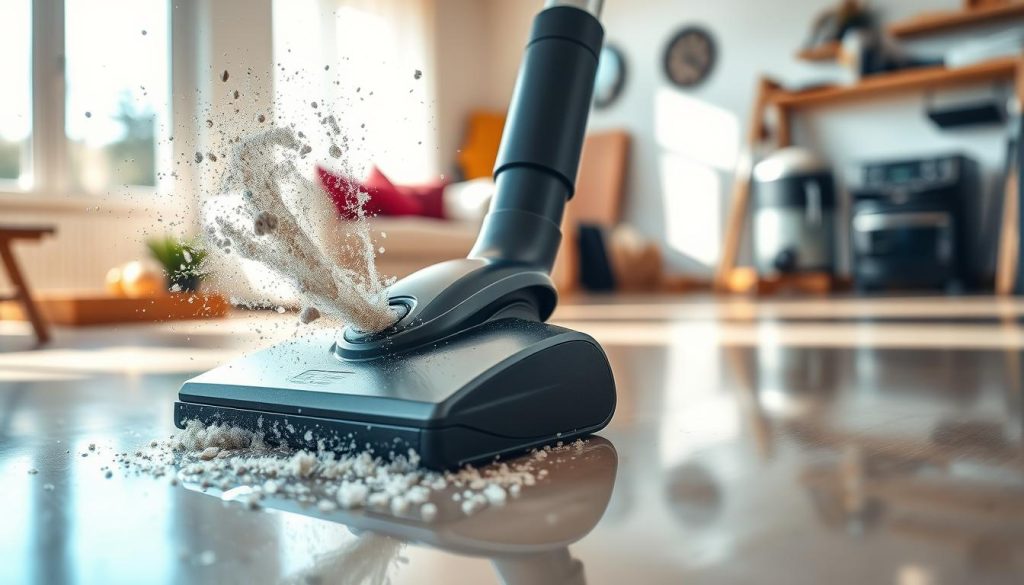
Suction power and motor wattage
We explain motor power in plain terms so you know how it lifts gritty dirt, heavier debris and water without leaving residue. Higher suction power helps on coarse floors and when picking up damp patches.
Tank capacity and cord length
Capacity affects how long you can clean before emptying. Larger drums suit garages and patios; smaller drums save space in HDB flats.
Cable length and reach matter. Corded models give steady power, while cordless designs improve daily convenience for quick vacuuming across rooms.
Filters and microfilter technology
Good filters trap fine dust and protect air in compact flats. We value microfilter technology that keeps dust sealed and makes emptying less messy.
Accessories and nozzles
Check the quality of nozzles, crevice tools and multi-surface tool heads. Well-sealed nozzles lift hair and grit; coordinated accessories from brands like Kärcher and Electrolux improve dirt pick-up across surfaces.
Convenience and storage
Compact design, onboard accessory slots and simple emptying increase the chance you will use the machine. Pick a model whose storage and ergonomics match your space.
- Quick checklist: suction power, tank size, filters, quality nozzles, cable or battery reach, storage design.
- Compare models in person or use a trusted online guide before purchase: deep cleaning checklist.
| Feature | What to seek | Why it matters |
|---|---|---|
| Suction power | Strong, stable output | Lifts grit, hair and small wet spots without residue |
| Tank capacity | 4–20 litres to suit space | Fewer stops for emptying during larger jobs |
| Filters | HEPA or microfilter tech | Cleaner air in enclosed rooms |
| Accessories | Nozzles, crevice tool, multi-surface head | Better reach and faster floor-to-upholstery cleaning |
Where these vacuums shine: wet dry cleaning scenarios and blower jobs
Different chores demand different strengths — here we map where these units truly earn their keep.
Workshop and renovation dust
In a small workshop, fine dust from sanding scatters fast. Connecting a suction tool directly to a power tool cuts airborne dust and keeps the space safer.
Kärcher highlights that using a suction tap during sawing or sanding reduces exposure and makes post-work clearing far simpler.
Car duties and reach
For car interior care, we value compact accessories that reach between seats, along rails and into tight footwells.
Good kits keep steady suction so a car vacuum cleaner removes hair, crumbs and damp patches without multiple passes.
Garden, patio and garage tasks
On patios and in garages these machines handle twigs, gravel and leaves. You can vacuum debris into the drum or use the blower to shift piles away from thresholds.
Choose robust nozzles and simple handling for fast work across different surfaces.
Water clean-up and residue-free results
Small puddles, damp dirt and minor leaks are routine. A reliable unit drains water and lifts trapped grit so floors dry without residue.
Tip: avoid spreading water by working from the edges to the centre and emptying the tank before it reaches capacity.
- Workshop: couple a suction tool to cut dust at source.
- Garage: choose strong accessories for coarse debris.
- Car: use narrow crevice heads to reach rails and seams.
- Outdoors: switch between vacuuming and blowing depending on volume.
| Scenario | Best approach | Why it works |
|---|---|---|
| Workshop sanding | Direct suction connection to tool | Reduces airborne dust and speeds clean-up |
| Car interior | Crevice tool + brush accessory | Reaches tight gaps and lifts hair without loss of suction |
| Patio/garage | Wide nozzle or blower mode | Handles twigs, gravel and piles of leaves fast |
| Water spill | Liquid pickup setting and quick empty | Removes puddles and residue for fast drying |
Electrolux wet and dry vacuum cleaners in Singapore: key features and price range
We find Electrolux splits its line into two clear formats so buyers can match a product to everyday routines and storage limits. Each format focuses on different chores while keeping core features like strong suction and reliable filters.

Drum vs cordless stick formats: choosing the right design for our space and routines
Drum models suit heavier work. They handle large debris, liquid pick-up and utility jobs. They also often include a blowing mode for patios and garages.
Cordless stick models are for daily floor care. They combine vacuuming and mopping in a compact frame. These are easier to store in flats and quicker for routine tidying.
What we get when buying via Electrolux Singapore
Buying direct often brings practical benefits: free delivery, 0% instalment plans and seasonal promotions that can cut prices by up to 47%.
That makes higher-spec models more accessible during promo periods and helps us match budget to real needs.
Current price context
Electrolux products vary in price depending on the model and the promotional period.
| Format | Best for | Key strengths |
|---|---|---|
| Drum wet dry vacuum | Garages, workshops, heavy clean-ups | High power, large tank, blower capability, robust filters |
| Cordless stick wet dry | Daily floor care, small flats, quick mop + pick-up | Compact design, easy storage, quick handling, microfilter technology |
| Buying direct | All shoppers in Singapore | Free delivery, 0% instalments, seasonal discounts up to 47% |
Use this overview to shortlist suitable models. Match the format to your routines, then compare suction, power and filters to pick the best fit for regular cleaning tasks.
Our reviewed picks: top wet dry vacuum models with blower or multi-function cleaning
D. We compare a budget workhorse, a premium cordless model and a hygiene-first multi‑tool to match typical local needs.
Electrolux Flexio Power Z823
Key facts: 3-in-1 wet, dry and blower, 1600W motor, onboard accessory storage, 360° manoeuvrability.
Best for: budget-conscious households, garages and DIY messes where corded power and organised accessories matter.
Electrolux 800 EFW81713
Key facts: Cordless 3-in-1 vac & mop, advanced inverter motor, detachable hand unit, TriAction nozzle for 99% debris pick‑up, self‑cleaning and smart dirt detection.
Best for: frequent floor cleaning in flats; this model combines convenience and strong cleaning tech for quick spot work.
Electrolux UltimateHome 700 EFW71711
Key facts: High debris pick‑up at 99%, antibacterial water tanks (99.9% bacteria elimination), self‑cleaning nozzle and quick floor drying.
Best for: households prioritising hygiene after spills and regular wet tasks that need fast drying and low maintenance.
| Model | Standout strength |
|---|---|
| Flexio Power Z823 | Value, power and organised accessories |
| 800 EFW81713 | Cordless convenience, smart cleaning tech |
| UltimateHome 700 | Hygiene features and quick drying |
How we see them: choose the Z823 for heavy jobs and garages, the 800 for daily multi‑surface care and speed, and the UltimateHome if bacterial control and fast drying matter most.
Kärcher WD wet and dry vacuum cleaners: strong suction, robust design and accessory-led versatility
For buyers who prize robust build and reliable pickup, Kärcher’s WD models set a clear benchmark. We find these vacuum cleaners pair high suction power with sensible energy use. That mix cuts cleaning time across tiles, mats and rough concrete.
Performance focus
High suction power and efficient motors mean faster removal of dirt and dust. The result is quick, residue-free work on multiple surfaces.
Convenience features
The design favours compact storage and staged accessory placement so tools live on the unit. Innovative filters reduce hand contact with debris and lengthen product life.
Blower role and broad applications
Selected models include a blower option that helps clear patios or lift leaves out of garage corners. In a hobby workshop, coupling a suction tool to a saw cuts airborne dust and keeps the work area neater.
“A tough, well-equipped unit makes one machine replace several small tools around the home.”
| Strength | Where it helps | Why it matters |
|---|---|---|
| Suction power | Floors and upholstery | Faster dirt removal, fewer passes |
| Accessories & storage | Garage, workshop | Ready-to-use tools, less clutter |
| Blower function | Patio, garage | Move piles quickly when vacuuming is impractical |
Overall, Kärcher WD products suit anyone after one tough, versatile machine for indoor and outdoor tasks. We recommend them when durability, organised accessories and strong suction are top priorities in cleaning decisions.
Conclusion
Pick the machine that fits your daily chores, not the rare worst-case. We recommend choosing a vacuum cleaner by the jobs you do most often and by how often you will use the unit.
A model that handles wet dry situations and routine spill pick-up beats a standard dry vacuum for mixed home tasks and car care. Easy-empty drums, simple filters and a reliable nozzle make maintenance painless.
Quick checklist: required set — wet pick-up, dry debris and a blower option; preferred format — drum or cordless; must-have accessories — crevice tool, brush head and spare filters. Check power claims and promo prices; Electrolux offers wide price bands and perks, while Kärcher gives robust, accessory-led products.
Choose the product that speeds cleaning, reduces fuss and fits your space. That outcome matters more than headline specs when deciding what to buy.

