
We set out to test dual‑mode hoovers for real Singapore flats. Our focus rests on tile, vinyl, laminate floors where spills occur near kitchens and doorways. We judge models by how well they handle solid debris plus liquid mess without adding heavy upkeep.
In this guide we explain what qualifies for our roundup. Devices must suction solids, remove fluids, then remain simple to store in small apartments.
We preview the key decision points we will return to: floor type, time saved versus maintenance, price versus real cleaning gains. We compare dedicated floor washers, 2‑in‑1 stick systems, robot options, and note why some units work only on hard floors.
Our aim is practical help so readers finish knowing which model fits their home and budget, not only which spec looks impressive. For extra tips on unusual uses, see our piece on unusual uses.
Clear criteria for dual‑mode hoovers, focus on Singapore flats, comparison of main product categories, practical buying factors.
Wet and dry vacuums in Singapore right now: what we tested and why it matters</h2>
We tested current dual‑mode units in real Singapore flats to see how they handle everyday spills and tracked-in grit. Our trials focused on tile, vinyl and small rugs near kitchens and doorways so results match local needs.
Why a dry vacuum can struggle
One dry vacuum often fails at liquid spill pickup. It leaves residues that need mopping, which costs extra time. Dual‑mode machines apply solution, scrub, then suction back the dirty water. That three-step system saves effort for quick cleans.
Types we tested
- Dedicated floor washers: excel on hard floors but work poorly on carpets and thick rugs.
- 2-in-1 stick systems: use swappable heads for mixed flooring and daily debris pickup.
- Robot mop models: great for hands-off upkeep yet they won’t tackle dried-on stains or heavy spillages.
“For Singapore homes, quick runtimes and easy tank care make the difference between a useful purchase and an unused gadget.”
We weighed pickup of debris, stain removal, edge reach, upkeep time and run time. We also flagged pet needs—fur and tracked litter change brush design and drying demands.
Our top picks at a glance for hard floors, rugs and budgets</h2>
This quick guide highlights leading choices for hard floors, rugs and limited budgets. Read it to shortlist a model in under a minute, then jump to full reviews for the one that fits your flat.
Best overall for hard floors
Tineco Floor One S7 Pro — excellent mopping and suction, up to 40 minutes runtime and about 65dB in Ultra mode. Ideal for tiled kitchens and vinyl near entrances.
Runner-up for battery life and manoeuvrability
Roborock F25 Ace — up to 60 minutes, lie-flat reach and a dock that hot‑washes and hot‑air dries the roller for lower upkeep.
Best budget option
Shark HydroVac Cordless — ~25 minutes runtime; Freshen mode lets it handle low-pile rugs on light mess at a modest price point.
Best 2‑in‑1 for mixed flooring
Dyson V15s Detect Submarine — cordless design with swappable heads; long battery life for multi‑room sessions.
Best robot for hands-off maintenance
Roborock Qrevo Curv — rotating mop pads and a dock that empties dust and washes pads. Great for daily upkeep in busy flats.
“Battery life, manoeuvrability and real-world power — not spec sheets — decide usefulness in tight Singapore homes.”
For a quick comparator with decision specs — runtime in minutes, cordless status and rug support — see our summary and follow the links to full tests and the best hard-floor options.
Best overall wet-dry vacuum cleaner for hard floors: Tineco Floor One S7 Pro</h2>
We chose the Tineco Floor One S7 Pro for hard floors because it balances strong suction with wet scrubbing and fast recovery. The unit pairs a responsive roller with sensible servicing for small flats and condo kitchens. Note the limitation: it performs on hard floors only, not on deep rugs.
Cleaning performance: suction, brush contact and edge cleaning
The Floor One combines reliable suction with a low‑profile brush that keeps steady contact with tiles and vinyl. That close fit reduces sticky patches and limits manual follow-up near skirting lines.
Edge reach improved with the roller design, so debris at thresholds gets picked up on the first pass.
Smart modes that adapt to dirt and debris
Auto mode senses dirt and adjusts power for efficient runs. Use Ultra for deep cleans and deodorising, Max for stubborn stains, and suction-only for quick spills.
In daily Singapore routines we use Auto after meals, Ultra at weekend resets, and Max for dried-on spills.
Tanks and upkeep: clean water, dirty water and the self-clean cycle
The clean water tank holds 0.85L while the dirty water tank takes 0.72L. Those sizes mean fewer refills during a kitchen clean but expect to empty the dirty tank after most sessions.
The self-clean cycle rinses the brush roller, which cuts maintenance time. It does not remove the need to rinse the dirty tank to prevent smells.
Battery life and noise for HDB flats and condos
Weight is 9.75kg and max runtime reaches 40 minutes after a four-hour charge. For many HDB layouts that covers routine tasks in one session. Larger homes may need a top-up charge between runs.
We measured about 65dB in Ultra mode — noticeable but manageable in condos and daytime use.
“A sensible pick for tiled and vinyl floors when strong recovery and low upkeep matter.”
For a detailed comparison with a heated alternative see our technical matchup at Tineco Floor One vs Dreame H12.
Runner-up with long battery life and under-furniture reach: Roborock F25 Ace</h2>
For homes that need long runtimes and low-profile reach, the Roborock F25 Ace proves its value.
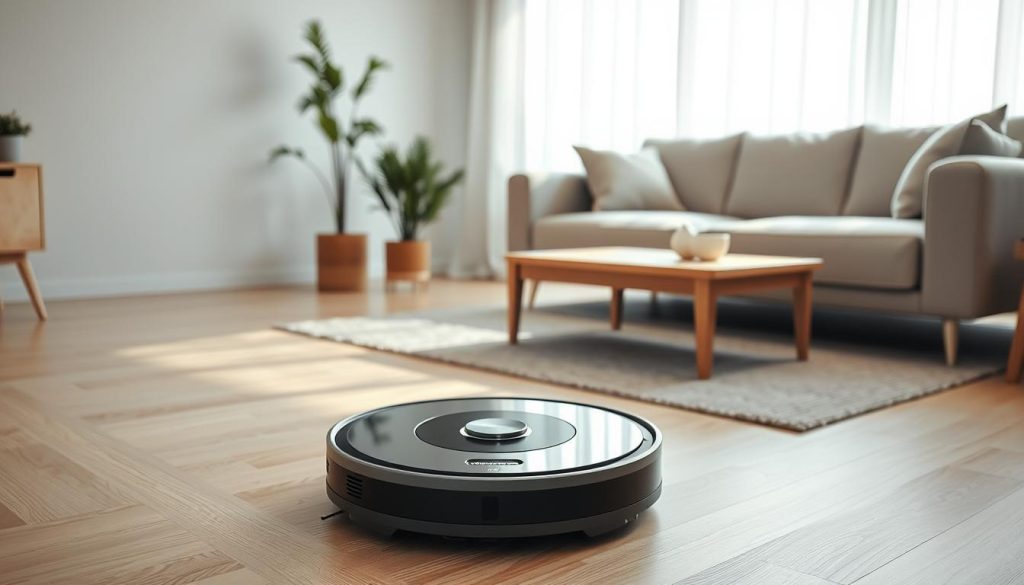
Design highlights include a lie‑flat chassis and power-assisted wheels that ease manoeuvring under beds and sofas. The low weight (6.2kg) helps when we move across narrow corridors.
Practical handling and cleaning feedback
The unit runs up to 60 minutes on a single charge and recharges in about 6h 30. In tests the dirty water showed clear soil lift, which confirms the suction and scrubbing action work together.
Detergent dosing and app controls
An automatic dispenser offers adjustable dosing via the app. We find this handy for regular mopping, though simple weekly sessions may not need app tweaks.
Dock hygiene: hot wash and hot‑air dry
The dock can wash the roller with hot water or room‑temperature water, then dry it with hot air. Hot water helps with grease in kitchens, while hot‑air drying reduces odour in humid climates.
“Long runtime and slim profile make this model ideal for mostly hard-floor homes.”
Best budget wet-dry vacuum: Shark HydroVac Cordless</h2>
We find the Shark HydroVac Cordless a sensible budget choice for small Singapore flats. It keeps price low while offering a compact, cordless design for quick spot cleans.
How the modes work in real homes
The hard floor mode vacuums on the push stroke and washes on the pull stroke. That push-pull action helps lift dust and debris, then pick up the soiled water on return.
The Freshen mode mops lightly in both directions. Use it on hard floors and on low-pile rugs for a gentle refresh without soaking fibres.
Trade-offs at a lower price
The 0.5L water tank means more frequent refills, and the dirty tank needs emptying after each session. Runtime runs to about 25 minutes, with a four-hour charge time.
We note the unit is bulky to store, struggles in tight corners, and the self-clean helps but the roller often needs removal and roughly 24 hours to dry.
“A practical entry point for budget shoppers with mostly hard floors and a few low-pile rugs.”
Best 2-in-1 wet-dry stick vacuum for mixed floors: Dyson V15s Detect Submarine</h2>
For mixed Singapore flats, a 2-in-1 stick often gives the most practical balance between bedroom carpets and tiled living spaces. The Dyson V15s Detect Submarine pairs a strong regular vacuum with a compatible mopping head for targeted upkeep.
Swappable heads for carpets versus hard floors
The vacuum head suits carpets and rugs. We use it for hair, trapped dust and deeper pile cleaning. The mopping head is faster on hard floors for light spills and day-to-day maintenance.
Mopping results on common messes
In tests the mopping head handled muddy footprints, fresh spills and fine dust left after a dry pass. It lifts surface soil well but small water capacity makes it better for spot work than full flats.
Design drawback to note
Practical caution: the dirty water tank is not fully sealed. Removing the Submarine head can spill dirty water if we are careless. Empty the tank before detaching to avoid drips.
| Feature | Vacuum head | Mopping head |
|---|---|---|
| Ideal surface | Carpets, rugs | Hard floors, tiles |
| Best for | Deep dust, hair | Muddy marks, fresh spills |
| Water/tank notes | Not used | Small clean water capacity; dirty water tank needs careful handling |
| Runtime | Up to 60 mins | Shorter per wet dry session |
“A flexible stick that performs as a strong vacuum yet cleans floors when we need quick mopping sessions.”
Best wet-dry robot vacuum for light maintenance cleans: Roborock Qrevo Curv</h2>
For hands-off upkeep in busy Singapore homes, a robot that mops on a schedule saves time each week. The Qrevo Curv targets everyday grime on hard floors while avoiding soft surfaces in mixed-floor flats.
It uses two rotating mop pads. One pad extends to improve edge reach along skirting lines. That kick-out pad helps lift dust where it gathers near doors and corners.
Rotating pads, carpet detection and mop-lift
The rotating action gives steadier contact than static cloths. That means more consistent cleaning of surface soil on tiles and vinyl. The unit detects carpets and lifts the pads over rugs and carpets, or stows them at the base.
Dock automation and practical tank handling
Dock functions reduce chores: automatic dust emptying, water refills and detergent dosing. The dock also washes and dries the pads, so we avoid the usual wet cloth smell after humid days.
Water tanks and dust bins are handled at the base, cutting hands-on maintenance to a weekly check for most households.
Limits and recommended use
Robot mopping performs gentle upkeep. It will not remove dried-on stains or clear fresh spillages that need immediate suction and scrubbing. For those, a manual session with a handheld or a floor washer still helps.
“Great for daily upkeep; pair it with occasional manual sessions for deep stains.”
- Schedule daily or alternate-day runs for best results.
- Use manual wet-dry cleaning for stubborn marks.
- Empty base tanks and check pads weekly in humid climates.
Best for pet hair and everyday messes: Bissell CrossWave X7 Cordless Pet Pro</h2>
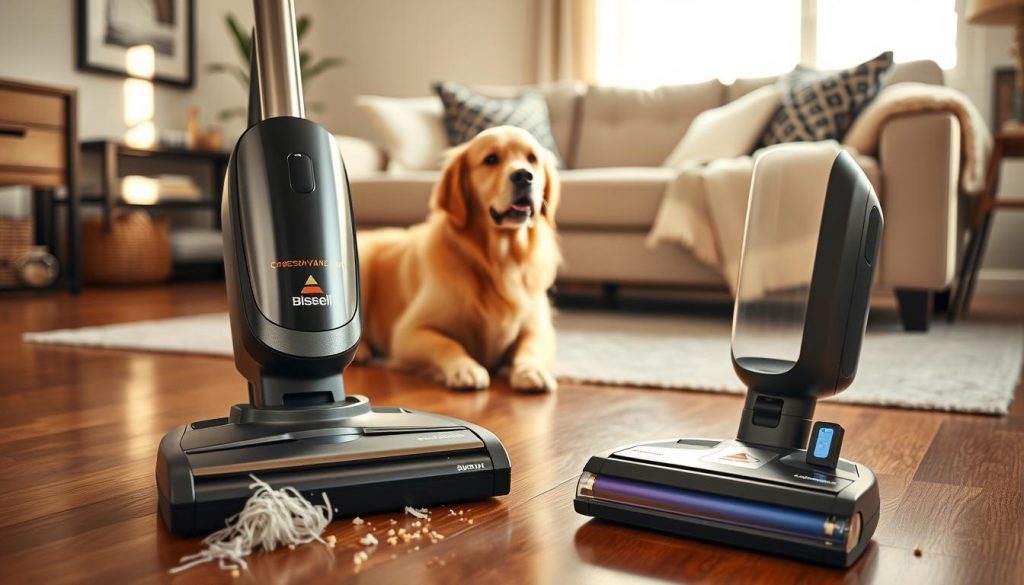
Homes with pets need tools that handle fur, tracked-in mud and quick spills without fuss. The CrossWave X7 Cordless Pet Pro targets those chores with a focused set of features for pet owners.
Turbo Pet mode for stubborn stains
Turbo Pet mode raises brush speed and suction to tackle tracked-in dirt, bowl-area crumbs and muddy paw prints. We use it for concentrated spots; standard mode works well for routine upkeep.
Hard floors versus rugs: realistic expectations
The unit lifts hair and surface soil from tiles and vinyl efficiently. On low-pile rugs it removes debris and fur but dense matting may need a separate dry pass for deep-rooted hair.
| Spec | Metric | Practical note | Use case |
|---|---|---|---|
| Clean water tank | 820 ml | Large enough for multi-room spot cleans | Quick after-walk refresh |
| Dirty water tank | 420 ml | Fills faster with hair; easy emptying required | High-hair households |
| Suction | Up to 20,000 Pa | Consistent pick-up with motorised brush | Food debris, light soil |
| Runtime | Up to 30 minutes | Covers short sessions in HDB flats | Spot cleans after walks |
Pet-friendly features we value: a tangle-resistant brush, steady suction under load and easy rinsing of the dirty side to avoid odour. For Singapore flats this model fits quick, cordless sessions and weekly deeper passes.
Best manoeuvrable lightweight pick for Singapore homes: Narwal S20 Pro</h2>
Narrow corridors and compact layouts make manoeuvrability the top priority for many Singapore homes. The Narwal S20 Pro answers that need with a light 4.27kg frame and a flat-folding design that reaches under sofas and beds with ease.
AI Dirt Sense and multiple cleaning modes for quick daily mopping
AI Dirt Sense senses soil levels and raises intensity when it finds more dirt. That saves water and time, so daily mopping feels faster and less wasteful.
Five selectable modes let us pick a gentle quick pass for weekday touch-ups or a deeper session for weekend cleaning.
Flat-folding design and triple-sided edge cleaning for skirting lines
The flat-folding reach clears under low furniture without heavy lifting. Triple-sided edge cleaning helps sweep along skirting lines in kitchens and hallways where dust gathers.
Spec notes: suction power 20,000 Pa; clean tank 790ml, dirty tank 720ml; runtime up to 60 minutes and a 3.5-hour charge. At 60 minutes a single session will cover most small flats before a refill.
“A light, agile model that makes regular cleaning feel effortless rather than a chore.”
Best hot-water option for grease and stubborn stains: Dreame H15 Pro Heat</h2>
For greasy kitchen floors a hot-water mopping option changes the cleanup game by using heat to break down oils.
Dreame H15 Pro Heat brings near-boiling water to the roller (up to 85°C) while combining 22,000 Pa suction power with smart recovery. The clean tank holds 800ml and the dirty tank 650ml, so we can target food-prep zones without constant refills.
Hot water mopping for kitchens: tackling oil spills and sticky patches
Hot water lifts oil and sticky residues faster than room-temperature rinses, cutting repeat passes on stubborn stains. That helps in humid Singapore kitchens where grease clings to tiles after cooking.
Runtime differences by mode and what that means for whole-home sessions
The unit runs up to 70 minutes in normal mode but drops to about 25 minutes when hot-water mode runs. In practice, we use hot-water for focused kitchen deep cleans and normal mode for whole-flat maintenance.
| Spec | Practical note | Value |
|---|---|---|
| Clean tank | Refill frequency | 800ml |
| Dirty tank | Empty after deep clean | 650ml |
| Runtime | Normal vs hot-water mode (minutes) | 70 / 25 |
At 6kg the unit stays manoeuvrable with flat-folding and auto-traction wheels, though the hot-water feature adds heft. We warn that hot-temperature mopping may be harsh on wooden floors; this model excels as a kitchen-first tool rather than a universal hard floors solution.
“Hot water and strong suction together reduce slippery residue and speed real-world cleaning.”
Best budget alternative brand to consider: Simplus Cordless Wet-Dry Vacuum Cleaner</h2>
For buyers on a tight budget, a credible alternative can deliver near‑premium performance without the hefty price tag. The Simplus Cordless offers striking suction and a long runtime while remaining light to lift for routine Singapore cleaning.
Suction, battery life and value for smaller flats
Suction reaches 21,000 Pa, which gives strong pick‑up on tiled floors and small rugs. The maximum runtime runs to 50 minutes after a 4.5‑hour charge, enough for a 3‑4 room HDB without frequent breaks.
The clean water tank holds 500ml while the dirty tank holds 550ml. Those sizes balance portability with enough water for spot and routine cleaning.
Brush head width and lie‑flat reach for corners and under furniture
The 6.5cm brush head reaches tight gaps and the 180° flat‑folding design helps access under sofas and low cabinets. A wider head speeds up open areas but can make manoeuvring around chair legs slower.
| Spec | Metric | Practical note |
|---|---|---|
| Weight | 4.4 kg | Easy to carry between floors |
| Runtime | Up to 50 minutes | Covers typical short sessions |
| Water tanks | Clean 500ml / Dirty 550ml | Good for quick room cleans |
| Brush head | 6.5 cm | Reaches narrow corners |
“A solid budget pick for small flats: robust suction, healthy minutes of runtime and a compact design.”
Before buying, we advise sanity‑checking after‑sales support, spare parts availability and storage fit. If those align, Simplus offers clear value for Singapore households seeking cost‑aware cleaning solutions.
How to choose which wet and dry vacuum cleaner is best for your floors and lifestyle</h2>
C Begin by deciding which surfaces you clean most often. Match the machine category to that mix before you compare specs.
Flooring first: hard floors vs homes with rugs and carpets
Hard floors benefit from dedicated mopping systems that scrub and recover water well. They usually give better streak-free results.
Homes with rugs or carpets need a 2‑in‑1 or a robot with mop-lift. Dedicated floor washers rarely work on pile, so pick a hybrid when rugs are present.
Tank capacity and refills
Match clean water tank size to room area. Small tanks suit quick spot jobs; larger tanks cut refill time during whole-flat runs.
Suction power, brush and roller design
Good suction plus the right roller lifts dirt, debris and liquids efficiently. A sealed recovery path stops residues and speeds drying.
Battery life, charge time and cordless convenience
For multi-room cleaning, longer battery life and short charge time keep momentum. Cordless models suit stairs and short flats; docks help with ongoing care.
Filter system, odour control, noise and storage
Filter systems with HEPA reduce dust and allergens. Rinse tanks and dry rollers to prevent smells after use.
Noise and footprint matter in HDB homes: check dock size, self-clean noise and where you will store the unit so it fits service yards or cupboards.
“Start with floors, then pick a category; the right tank size and roller design save the most time.”
Understanding the wet-dry cleaning system: from clean water to dirty water tanks</h2>
We break the system down so you know how water travels, how grime lifts and what keeps performance steady over time.
How floor washers feed solution to the roller, scrub, then vacuum up dirty water
Floor washers meter clean water or a light solution onto a roller or brush. The roller scrubs grout lines and tiles, loosening soil and food residue.
As the roller works, a sealed suction pathway draws the soiled water into a separate dirty water tank. That separation stops re-depositing grime, which is why these systems replace a mop for many homes.
Maintenance checklist: rinsing tanks, preventing smells and drying the roller
Simple routines save time. Empty the dirty tank immediately after a session. Rinse both tanks with warm water before storage to avoid lingering odour in humid Singapore conditions.
Wipe seals and check inlet screens for blockages. Let the roller air-dry or use a dock with hot‑air drying where available. Self-clean cycles rinse pathways, but they do not remove the need for periodic manual cleaning.
| Action | Why it matters | When to do it |
|---|---|---|
| Empty dirty tank | Prevents smells and bacterial build-up | After every session |
| Rinse clean water tank | Removes detergent residue that can clog pathways | After refill runs or daily use |
| Dry roller/brush | Stops mildew and odour | Air-dry fully before storage; use dock drying if present |
| Inspect seals and filters | Maintains suction and prevents leaks | Weekly or after heavy soiling |
“Routine care keeps suction strong, extends service life and keeps floors streak-free.”
Conclusion</h2>
Our final advice: choose by surface first, then match a device to your routine. For tiled kitchens or vinyl entryways pick a dedicated floor washer for strong scrub-and-recovery. For mixed rooms, a 2-in-1 stick suits carpets plus mop work without too much compromise.
Top picks reflect real trade-offs. The Tineco wins for hard floors thanks to scrub power and sensible upkeep. The Roborock runner-up suits homes that need longer battery life and low-profile reach under furniture.
Budget options make sense for small flats with light mess. They ask more tank emptying but keep price down while still doing routine cleaning.
Robots handle daily tidying with little fuss, yet they won’t replace a manual wet dry session for fresh spillages or dried-on stains. Check runtime, tank size, maintenance tolerance, storage fit and total price before you buy.

