
We introduce a compact, practical guide for readers in Singapore who want a reliable device for spills, pet messes and workshop debris. Our aim is to set clear expectations for what high suction means and why raw power is only one factor in daily life.
We explain how our roundup is built: top picks, who each model suits, and which trade-offs—weight, noise, tank refills—are worth accepting for faster cleaning. Brands we preview include Tineco, Bissell, Simplus, Narwal, Dreame, Dibea, Shark and Dyson.
Throughout the guide we focus on six buying lenses: suction power, tank sizes, filter system, manoeuvrability, runtime and practical maintenance. This keeps comparisons simple and useful for small flats and HDB homes.
We position the article for commercial intent: helping you choose a high suction wet and dry vacuum cleaner available to buy in Singapore now, with honest pros and cons rather than marketing claims. For unusual uses, see our related tips here.
Why we’re recommending wet dry vacuums for Singapore homes right now
In busy Singapore households, a single multipurpose unit can cut cleaning time and clear spills in moments. We see families choosing a wet dry vacuum for its speed when accidents happen and for routine upkeep.
Fast clean-ups for spills, pet mess and everyday dust
These machines pick up liquid spills and loose dust in one pass. That makes them ideal for kitchen splashes, toy snacks on the floor and muddy paws at the door.
One machine for hard floors, rugs and busy family areas
A single unit reduces the need to swap tools. In a small flat this saves storage space and minutes on every clean.
Not every rug job should be soaked. Spot-treat stubborn dirt on textiles, while the main surface gets a dry pass for dust and crumbs.
- Family-ready: fast turnaround between messes keeps routines smooth.
- Trade-offs: expect more noise and a larger footprint than a basic stick model.
- What we test for: edge cleaning, traction and tank capacity matter most for real use.
What a wet dry vacuum is and what it can (and can’t) do
Machines that take both liquids and solids give us a faster way to tackle mixed messes at home. In plain terms, a wet dry vacuum is a single unit designed to collect debris and liquid into separate paths or tanks within one system.
Wet + dry pickup: debris, dirt and liquid in one system
These units let us sweep up spilled drinks, loose crumbs and sticky bits without swapping tools. The brush head, filter route and tank layout change to handle both forms of mess.
Why they’re often heavier, noisier and bulkier
To cope with mixed loads, manufacturers add stronger motors and extra tanks. That increases weight and sound compared with typical dry vacuum machines.
Where they shine in Singapore homes
They work best in kitchens, entryways and busy corridors where liquid incidents meet tracked-in dirt. For deep carpet extraction or delicate wood floors, a dedicated model still makes sense.
| Feature | Strength | Limit |
|---|---|---|
| Mixed mess pickup | Fast response to spills | Not ideal for deep carpet |
| Filtration system | Keeps wet and dry paths separate | More parts to maintain |
| Motor & design | Good for sticky grime | Heavier, louder use |
Next, we test how these design choices affect real-world performance and measure suction, runtime and handling in our lab trials.
How we tested and compared suction power, cleaning and usability
We set out a repeatable lab routine and in-home checks so readers can see how spec numbers map to everyday cleaning for Singapore flats. Our aim was to balance measured metrics with practical tests that matter when you face spills, pet hair and tracked-in grit.
High metrics: Pa versus Air Watts and what they mean in use
Many makers quote Pa for floor models (about 20,000–22,000 Pa for several cordless units). Some stick formats use Air Watts (Dyson models typically list 130–140 Air Watts). We do not treat these figures as directly interchangeable; instead, we watch how force, airflow and nozzle design work together.
Real-world performance: edges, corners and stubborn stains
We score each head on edge reach, corner clearance and its ability to lift sticky patches. A strong number is useful, but a narrow head or poor seal can mean more passes on skirting boards and textured tiles.
Handling checks: weight, traction wheels and lay-flat designs
We assess weight, handle comfort and turning circle on corridors typical of HDB flats. Traction wheels, assisted drive and flat-fold designs make a big difference when cleaning long runs or fitting under low sofas.
Time to clean: runtime, recharge and tank refills
Runtime varied widely in our tests (roughly 30–70 minutes) while charge times sat around 3.5–4.5 hours for many models. We measure how often the water tanks need emptying during a standard session and whether LCD guidance or auto-adjustment reduced repeat passes.
| Test area | What we measured | Practical takeaway |
|---|---|---|
| Power metrics | Pa / Air Watts, airflow | Use numbers as a guide; head design often matters more |
| Cleaning | Edges, corners, sticky stains | Brush shape and seal affect final result |
| Usability | Weight, wheels, lay-flat | Ergonomics cut time and effort in small homes |
| Time | Runtime, charge, refill frequency | Longer runtime and smart features reduce interruptions |
For a wider comparison of models and detailed test results, see our complete guide at best wet-dry vacuums tested & reviewed.
Our top picks at a glance
Below we give a concise shortlist of products and models so you can shortlist an option in under a minute. Each pick shows the headline specs, who it suits and the main trade-off to consider.
Overall best: Tineco Floor One Switch S7 Stretch
Headline specs: 22,000 Pa; 1,000 ml clean tank; 720 ml dirty tank; iLoop sensor; dual-side brush for near-wall cleaning.
Who it’s for: Households that want reliable all-round performance and smart guidance.
Trade-off: Premium price for advanced sensors and larger tanks.
Best for pet hair: Bissell CrossWave X7 Cordless Pet Pro
Headline specs: Up to 20,000 Pa; Turbo Pet mode; ~30 min runtime; supports cleaning solution.
Who it’s for: Pet owners needing short, effective sessions on mixed floors.
Trade-off: Shorter runtime versus targeted pet performance.
Best budget: Simplus Cordless Wet-Dry Vacuum Cleaner
Headline specs: 21,000 Pa; 500/550 ml tanks; 180° flat-folding; 6.5 cm brush head.
Who it’s for: Value buyers wanting compact storage without losing power.
Trade-off: Smaller tanks mean more frequent refills.
Most manoeuvrable: Narwal S20 Pro
Headline specs: 20,000 Pa; ~60 min runtime; ~3.5 h charge; AI Dirt Sense; triple-edge cleaning.
Who it’s for: Flats where corner reach and easy handling matter most.
Trade-off: Advanced mobility features raise the price point.
“Pick the model that matches how you live — runtime, tank size and edge reach usually decide the experience.”
Next steps: Read the deeper picks for maintenance notes, price comparisons and how each option fits common Singapore layouts.
Best overall: Tineco Floor One Switch S7 Stretch
A machine that reads the floor and changes settings automatically removes guesswork from routine cleaning.
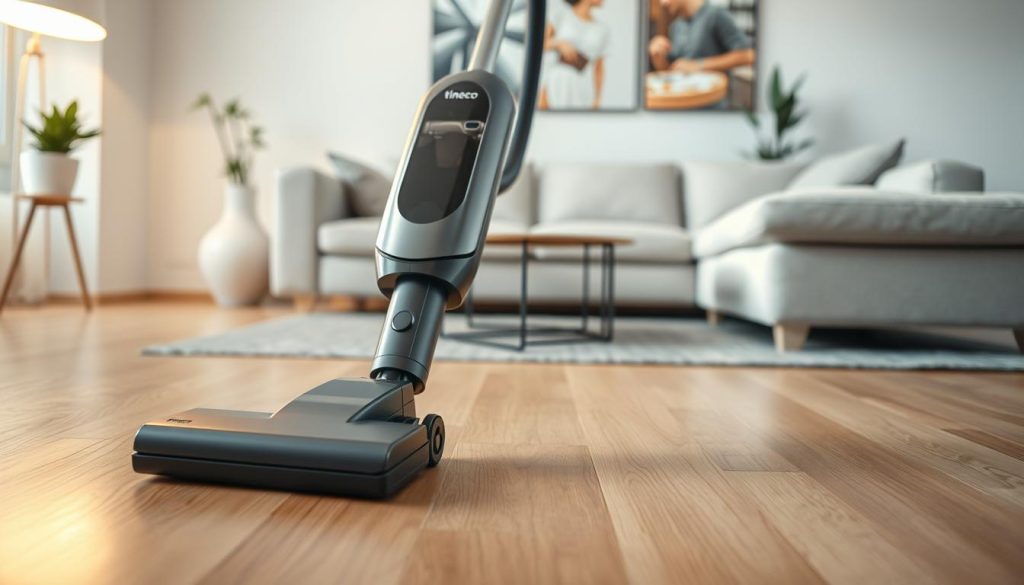
Key specs: 22,000 Pa suction; 1,000 ml clean water tank; 720 ml dirty tank. Runtime is about 50 minutes as a floor washer and up to 70 minutes as a vacuum tool.
Smart iLoop sensor and practical gains
The iLoop technology detects wet and dry messes and adjusts suction power and water flow automatically. That means fewer repeat passes on patchy dirt and more consistent results.
Edge reach and usability
The dual-side brush roller cleans to about 0.5 cm from walls. This matters in flats where skirting boards trap dust.
“LCD guidance turns subjective cleaning into a simple pass-fail task for busy households.”
| Metric | Value | Practical takeaway |
|---|---|---|
| Clean water tank | 1,000 ml | Fewer mid-clean refills |
| Dirty tank | 720 ml | Good capacity for medium sessions |
| Runtime | 50–70 mins | Covers most apartment jobs |
| Weight | 4.7 kg | Stable but noticeable for stairs |
Expect routine emptying, occasional maintenance and a ~4.5-hour charge time. The mix of smart system features, clear LCD prompts and multi-use attachments makes this our top pick for Singapore homes.
Best for pet hair and tracked-in dirt: Bissell CrossWave X7 Cordless Pet Pro
For pet owners, the right cordless unit must handle fur, tracked-in grit and the odd spill without fuss. We found the CrossWave X7 tuned for these tasks, with modes that cut through mats of hair and general dirt on mixed floors.
Key specs at a glance
Performance: up to 20,000 Pa suction power, Turbo Pet mode for tough spots.
Capacity & time: 820 ml clean tank, 420 ml dirty tank; runtime about 30 minutes; charge ~4 hours; weight ≈ 4.8 kg.
How we use Turbo Pet mode
We switch Turbo Pet for muddy paws, clingy fur or tracked-in grit. It lifts more in one pass but drops runtime noticeably, so we save it for hot spots rather than whole-flat cleans.
- Solution support: compatible cleaning solutions boost stain lift on kitchen splashes and rugs. Check finishes before use.
- Refill notes: the dirty tank can fill quickly in multi-pet homes; plan short, focused sessions.
- Who should buy: multi-pet households and frequent spot-cleaners. Skip this option if you need long, whole-home runs per charge.
“A compact, pet-focused design that balances targeted power with practical tanks for real-world use.”
Best budget high suction wet and dry vacuum cleaner: Simplus Cordless Wet-Dry Vacuum Cleaner
Simplus offers a compact package that balances price and practical performance for city flats. We rate it as the best budget route to a genuine high suction wet and dry vacuum cleaner without the premium cost.
Key specs
Power: ~21,000 Pa; clean tank: 500 ml; dirty tank: 550 ml. Runtime is up to 50 minutes with about a 4.5-hour charge. Weight ≈ 4.4 kg.
Practical design and head
The 180° flat-folding design helps reach under beds and low cabinets in compact flats. A 6.5 cm brush head accesses tight corners where dust gathers.
What to expect
The tanks are mid-sized—better than ultra-mini units but smaller than premium rivals. Plan short, routine sessions for whole-home coverage.
- Who it suits: value-focused buyers who want solid power and sensible price.
- Where to buy: common channels such as Lazada and Shopee.
“A pragmatic pick that delivers usable performance for everyday floors without the premium tag.”
Most manoeuvrable: Narwal S20 Pro
For many Singapore homes, easy handling wins over raw capacity when hallways and furniture are tight. The Narwal S20 Pro mixes compact design with smart sensing to reduce effort and speed up routine jobs.
Key specs and what they mean for use
Specs: ~20,000 Pa suction; ~60-minute runtime; ~3.5-hour charge; 790 ml clean tank; 720 ml dirty tank; weight ≈ 4.27 kg. These numbers translate into longer runs without frequent refills and a light, easy-to-push unit for corridors.
AI Dirt Sense and five cleaning modes
Technology in the S20 Pro spots changes in dirt and boosts power only where needed. That smart system reduces wasted effort and saves time compared with fixed-output machines.
The five modes cover light dust days, routine passes, kitchen splashes, sticky spots and heavy soil. We use low modes for daily upkeep and higher modes for post-cooking clean-ups.
Edge cleaning and foldable design
Triple-sided edge cleaning reaches skirting boards and tight corners where dust gathers on the floor. This feature matters in flats with narrow perimeters and many furniture joints.
The flat-folding design helps us store the unit and reach under low furniture. The trade-off is slightly more handling when emptying tanks; the folded unit is less stable on very uneven surfaces.
“Manoeuvrability often wins in small homes — less wrist strain, smoother turns and faster results.”
Decide whether to prioritise manoeuvrability over larger tanks or absolute power based on layout and cleaning frequency. For busy corridors and frequent spot-cleans, the S20 Pro’s features offer clear time savings.
Best for hot water mopping and tough spills: Dreame H15 Pro Heat
We found the Dreame H15 Pro Heat useful where greasy kitchen messes and sticky residues are common.
Key specs: 22,000 Pa suction power; 85°C hot water mopping; 800 ml clean tank and 650 ml dirty tank; weight 6 kg. Runtime is up to 70 minutes in normal mode and about 25 minutes when using hot-water mode. Charge time is roughly 4 hours.
Why hot water matters
Delivering near-boiling water to the brush helps break down oil and food film faster than cold rinses. That reduces scrub time and often cuts repeat passes on tiled surfaces.
Usability and design notes
Auto-traction wheels and a flat-folding design ease pushing and pulling a heavier unit over long runs. Triple edge cleaning helps reach skirting and tight corners on most floors.
Our caution: heat and moisture can be risky for unsealed timber. We recommend using this on tile, sealed stone or fully sealed wooden floors only, and testing a small area first.
“Ideal for homes that prioritise tough-spill performance and accept extra weight and careful floor checks.”
| Metric | Value | Practical takeaway |
|---|---|---|
| Clean tank | 800 ml | Good for medium sessions |
| Runtime (hot) | ~25 mins | Plan short hot-water spots, save normal mode for bigger jobs |
| Weight | 6 kg | Auto-traction helps, but expect heavier handling |
Best low-maintenance options: Dibea H8 and Dibea HC26
Some units aim to cut routine fuss; we looked for models that simplify post-clean maintenance.
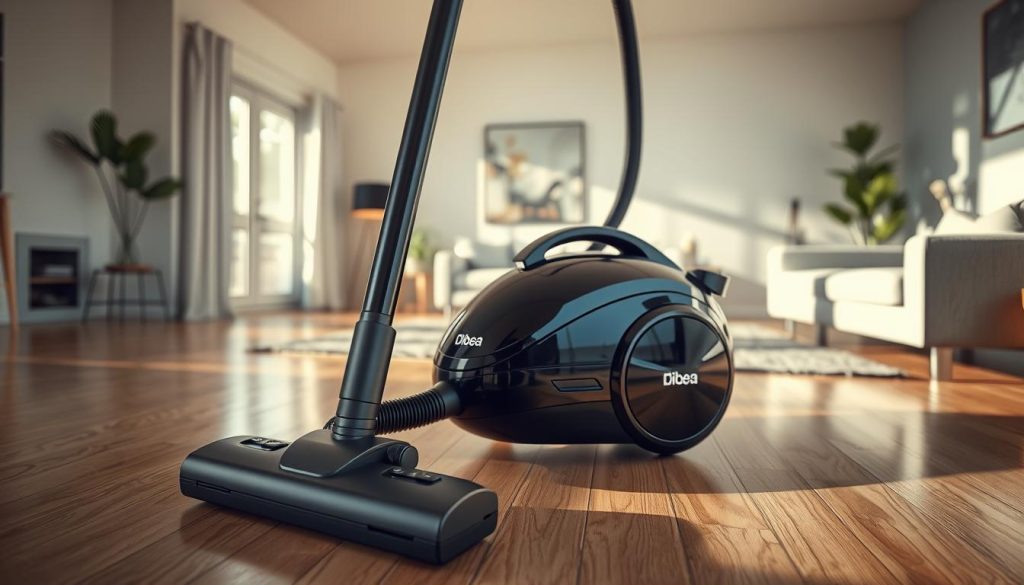
Dibea H8 highlights
Key specs: 13,000 Pa suction; 500 ml clean tank and 600 ml dirty tank; runtime up to 38 minutes in auto mode; charge time up to 4.5 hours.
The H8’s built-in self-cleaning system reduces brush washing and shortens hands-on maintenance. You still need to empty tanks and rinse the filter occasionally, but overall chores take less time.
Dibea HC26 highlights
Key specs: larger 700/700 ml tanks; extended reach handle (568 mm versus 538 mm); similar runtime (~38 minutes auto); comparable charge time.
The HC26 is slightly lighter and more manoeuvrable. Bigger tanks mean fewer refills and longer runs between interruptions for water changes.
Choosing between the two
Both models favour easy upkeep with a semi-automatic cleaning system and straightforward filter access. Quoted numbers for suction vary by maker, so we weigh real-world performance over spec sheets.
Who we’d recommend each to: pick the H8 for balanced, everyday cleaning across floors. Choose the HC26 when you want fewer refills and extra reach for wet tasks.
| Model | Tanks (clean/dirty) | Runtime | Notable benefit |
|---|---|---|---|
| Dibea H8 | 500 / 600 ml | ~30–38 mins | Self-cleaning, versatile modes |
| Dibea HC26 | 700 / 700 ml | ~38 mins | Longer reach, fewer refills |
“Low-maintenance models cut routine chores and keep quick cleans truly quick.”
Best for odour control and antimicrobial protection: Shark HydroVac WD210SM
Odour control becomes a frontline concern in humid homes where tanks and rollers stay damp between uses. The Shark HydroVac WD210SM addresses this with an antimicrobial brush roller designed to limit bacterial build-up and reduce smells.
How the antimicrobial roller helps
Shark’s approach uses treated fibres on the brush to slow microbe growth. That reduces the rate at which odours form between sessions.
It’s not a replacement for rinsing; routine drying is still essential to keep tanks and parts fresh.
Key specs and practical context
Specs: ~2,700 Pa suction; 500 ml clean tank; 360 ml dirty tank; ~30 minutes runtime; ~4 hours charge.
The lower power works well for sealed hard floors and light dust. Compact tanks suit small storage, but expect more frequent emptying on longer jobs.
Maintenance and who should buy
- Rinse brush and tank after use and let parts dry fully to prevent odour.
- Check and wash the filter regularly to maintain airflow and control smell.
- Ideal for smaller homes, light mess levels, pet households that prioritise smell control over raw power.
“A practical, value-focused option that balances odour management with everyday vacuum cleaning.”
Dyson wet and dry vacuum cleaners in Singapore: which Submarine model fits
If you want a lighter, cordless approach with strong cyclone tech, Dyson’s Submarine series deserves a close look.
Dyson V12s Origin Submarine: lightweight build and Root Cyclone technology
What it offers: about 130 Air Watts, roughly 2.2 kg and up to 60 minutes run time. Root Cyclone technology keeps airflow consistent and helps preserve filter life.
Its 300 ml clean-like tank and 360 ml dirty-like reservoir suit quick spot work and short whole-flat sessions.
Dyson V12s Detect Slim Submarine: HEPA filtration and Fluffy Optic head for visibility
This model pushes to 140 Air Watts and adds a HEPA filter for fine particles and allergy control.
The Fluffy Optic head shows dust as you pass, making it easier to see where to focus. That is useful in homes with pets or fine dust.
Dyson Digital Slim Submarine: the lightest, slimmest option with shorter runtime trade-off
The Digital Slim is the lightest in the range and easy to carry between rooms. Expect about 40 minutes of run time, trading length for portability.
Why Dyson costs more: R&D, filtration and cordless design refinements
We see the premium as an investment in research, cyclonic airflow engineering and durable design. Better seals, smarter motors and improved filters extend product life and performance.
“Air Watts are useful for comparison, but head design and seals often decide real cleaning results.”
- How the Submarine line differs: it relies on accessories for liquid pickup rather than full floor tanks, so use cases change.
- How to compare: match Air Watts to Pa claims by testing seal, head and flows, not numbers alone.
What to look out for before you buy
Choosing the right model is about matching features to how you live. We focus on the items that most affect daily use in Singapore flats: refill frequency, certainty over allergens, noise levels and which tools come with the box.
Tank capacity: portability vs fewer refills
Clean water tank and dirty tank sizes change how often you stop mid-clean. Larger tanks cut refills but add weight when carrying between floors.
Smaller tanks suit quick spot jobs and tight storage. Pick a mid-size tank if you want full-flat runs without constant emptying.
Suction power and air metrics
Higher Pa or Air figures help with hair clumps and heavy grit. Still, head design and brushing often make as much difference as raw power.
Filter choices
Standard filters handle coarse dust well. Choose HEPA if allergies are a concern — it traps finer particles and improves indoor air quality.
Noise, corded vs cordless and accessories
Louder motors usually mean more cleaning power but less discretion for early mornings. Cordless models give convenience; corded units give uninterrupted reach.
Useful accessories include crevice tools, extension wands and multi-surface heads. These tools make routine cleaning faster and more precise.
| Feature | Practical impact | Trade-off |
|---|---|---|
| Clean water tank size | Fewer refills per session | More weight to carry |
| Filter type | Better allergy control with HEPA | Higher maintenance cost |
| Accessories | Better reach and specialised cleaning | Extra parts to store |
Understanding the cleaning system: wet pickup, dry pickup and filter cleaning
When liquid and particles share the same path, a reliable system must protect the motor and keep airflow steady. We explain how basic safeguards and smarter maintenance keep performance consistent in the home.
Wet pickup basics: float and automatic cut-off to prevent overfilling
Liquid is drawn into a tank by suction until a float or sensor stops the airflow. A mechanical float blocks the intake when the container nears full. Electronic automatic cut-off will switch the machine off to protect the fan and motor.
Dry pickup basics: how filters clog and why suction can drop over time
When a dry vacuum moves dust through hose and chambers, particles collect on the filter surface. Over time that layer restricts flow and causes a drop in suction. Regular checks, simple taps or a rinse keep airflow and power steady.
Semi-automatic and automatic filter cleaning: keeping suction power consistent
Semi-auto systems ask us to trigger a brief reverse airflow; automatic systems do this on a schedule. That reverse blast shakes loose debris so the filter stays clear and suction remains near the original level without frequent hands-on cleaning.
Professional-grade concepts to know: triggered air cleaning technology and dust control
Triggered air cleaning technology uses sensors or pressure differentials to time filter blasts. This mimics industrial practice and gives consumers consistent performance with less mess.
- Health note: fine dust can pass ordinary filters; choose higher-rated filtration for allergy-prone homes.
- Practical tip: look for a model with auto-clean or easy-to-replace filter cartridges to reduce fuss.
“Good filter systems pair sensible protection with simple maintenance to keep power and airflow predictable.”
How to match a model to your floors, mess types and cleaning routine
A clear plan—what floors you have, how often you clean and who lives with you—makes selection simple. We match common messes to practical choices so the machine fits daily life.
Hard floors vs rugs: brush rollers, water flow and edge reach
On tile, sealed stone or vinyl, choose a model with adjustable water flow and a soft brush roller to avoid streaks. Good water control stops over-wetting and reduces drying time.
For rugs, a targeted head with less water is best. These units can freshen pile, but deep stains need a dedicated carpet extractor or spot treatment.
Busy households: runtime, recharge time and storage footprint
We weigh runtime against recharge time and storage. A longer run reduces interruptions, but larger tanks add bulk and carry time between floors.
Flat-folding designs save storage space and often improve the chance you’ll actually use the unit weekly.
Pets and kids: stain handling, odour management and faster turnaround
Look for solution-ready models and antimicrobial rollers if odour control matters. Fast emptying and quick-dry water paths get your home back to normal sooner.
Smaller tanks mean more refills but lighter handling, which can speed spot-cleans in busy homes.
Simple decision path
- List your main floor types and pick a compatible head and water control.
- Match runtime to session length; favour longer runs for whole-flat cleans.
- If you have pets or kids, choose solution support or antimicrobial features for faster turnaround.
“Choose for layout, mess frequency and how much maintenance you will tolerate.”
Value, price and where to buy in Singapore
We balance what you pay against real-world gains so you get the right product for your home and budget. Price differences often reflect sensors, build quality and bundled tools rather than raw power alone. That makes a clear comparison essential before you click buy.
Comparing price-to-performance across premium and budget products
Premium models tend to add smart sensors, better edge reach and stronger materials. You pay more for longer runtime, fewer refills and refined heads that actually clean corners in one pass.
Budget options save on features but still offer solid core performance for routine jobs. Expect smaller tanks, simpler controls and fewer included tools. For many flats, a mid-range option is the best compromise.
Shopping channels we see most often
Common routes in Singapore are Lazada, Shopee and Amazon listings. Verify the exact model name, included accessories and whether the seller is local or overseas before checkout.
We also compare bundle contents and official storefronts to spot genuine discounts versus simple price bundling.
What to check before checkout
Before you buy, confirm warranty terms, local service support and return policies. Bulky products can be hard to return, so check courier costs and restocking rules.
Ongoing costs matter: ensure spare filters, replacement brush heads and any consumable tools are available locally and reasonably priced. A cheap initial price can become expensive if parts are rare.
“A sensible deal is the final price plus reliable support and easy spare parts—never the headline discount alone.”
For an extra reference on available options and market context in Singapore, see our related shortlist at best wet-and-dry options in Singapore.
Conclusion
In short, choose a model that matches your floors, mess types and daily routine rather than chasing specs alone.
We recommend the Tineco as our top pick for balanced performance; Bissell suits pet homes; Simplus fits budget buyers; Narwal favours manoeuvrability; Dreame targets greasy spills; Dibea reduces maintenance; Shark helps with odour; Dyson is for lightweight cyclone tech. Choose this if explains why each matches typical Singapore layouts.
Remember the trade-offs: stronger power usually means more noise and weight, while larger clean water tank and better filters cut interruptions. Before you buy, check warranty, spare filters and accessory availability in Singapore.
Maintain your unit by emptying tanks, rinsing filters/rollers and storing parts dry to protect performance and extend life.

