

We introduce models built for Singapore sites that need robust, high-volume cleaning. Our aim is to set clear expectations on capacity, suction power and durability for teams that clean daily. We focus on uptime, ease of service and outcomes that lower labour time.
We explain why a wet dry vacuum can replace separate tools, cutting downtime between spill response and floor care.
Our roundup compares floor-washer hybrids, stick-style picks and heavy drum units. We match format to task so procurement and facilities staff can choose equipment that holds up under frequent use.
What follows: a buying checklist, testing notes and quick “best for” picks to help teams shortlist faster. We keep advice practical, concise and tied to cost, hygiene and labour savings.
Who these large wet and dry vacuums are for in Singapore
For many local facilities, one multi-use device replaces several single-purpose tools and speeds up shift handovers. We focus on practical needs in buildings where fast response and repeatable results matter.
Commercial premises and facilities teams
Office lobbies, lift landings, corridors, gyms, clinics and childcare centres need routine cleaning and instant spill response. A single device that handles both liquid and dry tasks reduces tool switching and shortens turnaround between shifts.
Workshops, renovation sites and light industrial spaces
Sites with fine dust, grit or damp slurry demand robust intake paths and clog-resistant filters. We look for features that lower maintenance and keep uptime high for teams on tight schedules.
F&B back-of-house, retail spill response and daily maintenance
In kitchens and service corridors, oily spills and dropped ingredients are common. Fast drying, hygienic tanks and easy-empty designs help maintain food-safety standards and cut labour time.
- When a small cordless floor washer from the home market is enough: compact floorplans with light traffic.
- When to choose an industrial solution: heavy footfall, regular messes or compliance needs across outlets.
Stakeholders: operators value ease of use; managers prioritise uptime, running costs and consistency across locations.
Wet dry vacuum basics for commercial and industrial cleaning
Understanding the practical limits of a dual-function machine helps set realistic cleaning plans. We define the term in hands-on terms: a wet dry unit picks up dry dirt and loose debris, extracts pooled water and handles semi-wet residues that a dry vacuum cannot safely manage.
Where these systems outshine dry-only models
In mixed-mess scenarios, such as tracked-in rainwater with grit, a wet dry system prevents smearing and clogging. It saves time by avoiding pre-mopping and reduces repeat passes compared with a dry vacuum.
Separation, hygiene and odour control
Floor-washer style units split clean versus dirty water into separate tanks. This keeps solutions fresher, lowers odour risk and supports basic infection control in F&B and healthcare settings.
Practical limits to plan for
- These machines often use stronger motors, so they can be heavier and noisier than standard dry vacuum options.
- Slurry-like messes (grout residue, wet construction dust) may need a heavier-duty system or staged removal to avoid clogging.
- Always avoid over-wetting sensitive floors and allow quick drying to reduce slip risk.
For further tips on unusual uses and site practices, see our guide on unusual uses for your wet dry.
Buying checklist for a large wet and dry vacuum cleaner
Start by matching how much water a shift will use to the tank sizes the model offers. This helps teams estimate refill and empty cycles and keeps cleaning runs efficient.
Tank capacity: clean water vs dirty water
Check both tanks. A balanced clean water tank and dirty water capacity reduce interruptions. If dirty water fills faster than the clean water tank, you will still stop more often.
Suction power metrics
Compare Pa figures for many floor washers and Air Watts where brands list them. Use both numbers to judge real-world performance rather than marketing claims.
Filtration and site needs
Standard filters suit general dust. Choose HEPA if fine dust or allergens are a concern in clinics or F&B prep areas.
Corded vs cordless, noise and comfort
Corded models give steady runtime. Cordless offers reach and less trip hazard but check battery life. Also consider noise levels and handle ergonomics for long shifts.
Accessories that matter
- Edge nozzles for skirting boards
- Brush heads for rugs
- Crevice tools for corners and detailing
| Factor | What to check | Why it matters | Recommended spec |
|---|---|---|---|
| Tank capacity | Clean water tank vs dirty water | Fewer refills and empties per shift | Balanced split, higher dirty water volume |
| Suction power | Pa and Air Watts | Real pick-up across surfaces | Compare both metrics, test on site |
| Filtration | Standard vs HEPA | Allergen control and fine dust capture | HEPA for sensitive sites |
| Portability | Corded/cordless, battery life | Coverage, uptime and manoeuvrability | Corded for long shifts; cordless for tight layouts |
How we review and compare models for Singapore buyers
We test machines on real Singapore floors to see how they handle the mix of spills, dust and tracked grit. Our approach combines timed lab tests with corridor trials so results reflect actual site use.
Real-world performance: we stage liquid spills, loose debris and hair to measure pick-up in minutes. We log separate runtimes for normal and high-power modes and note any drop in performance over time.
Edge cleaning and manoeuvrability on hard floors
Edge cleaning is judged along skirting lines and in corners. We check whether brush rollers reach close to walls without extra passes.
Manoeuvrability tests cover tiles, vinyl and sealed stone. We score steering feel, turning radius and head clearance around fixtures.
Runtime, battery life and charge time
We report runtime in minutes and compare claimed battery life with route performance. Charge time is factored into shift planning to see if units support back-to-back use.
Maintenance
We assess self-cleaning systems, brush tangling risk and tank hygiene. Practical checks include how dirty water is emptied, seal access and recommended daily routines.
Resources: for operational checklists see our daily cleaning checklist.
Top picks at a glance for large-capacity wet dry cleaning
To help teams decide quickly, we list four standout models that cover daily routes, pet-heavy zones, tight layouts and budget drives. Each pick highlights who it suits best and the trade-offs to expect on runtime, tank size and price.
Best overall smart floor washer and hybrid
Tineco Floor One Switch S7 Stretch — A true all-rounder for hard floors and mixed surfaces. The floor one class is popular for its consistent results and simple controls when staff rotate shifts.
Best for pet hair and high-traffic mixed surfaces
Bissell CrossWave X7 Cordless Pet Pro — Built to handle pet hair on rugs and hard floors. We recommend this where hair and dander are routine, such as grooming studios and pet-friendly retail.
Best for manoeuvrability in tight plans
Narwal S20 Pro — Compact, nimble and great around fixtures. It suits narrow corridors and small lobbies where reach matters more than tank size.
Best value for strong suction on a budget
Simplus Cordless — Surprising suction at a low price. Best for teams watching total cost of use, not just sticker price.
“We prioritise uptime and ease of service when recommending picks for Singapore sites.”
Tineco Floor One Switch S7 Stretch review
This review concentrates on tank split, sensor smarts and edge reach for routine facility work. We test real-world metrics that matter to teams in Singapore: fill cycles, consistency and handover simplicity.
Tank capacity and cleaning system
The unit has a 1,000ml clean water tank and a 720ml dirty water tank. In our trials that split managed roughly 60–90 sqm per run on moderate soil, depending on traffic and spill size.
iLoop sensor technology and automatic cleaning modes
iLoop technology adjusts suction and water flow automatically. This reduces over-wetting and saves clean water on already-clear areas.
Auto modes help teams keep results consistent across operators and cut rework.
Edge cleaning performance with dual-side brush roller
The dual-side roller reaches about 0.5cm from skirting, cleaning close to walls and around table legs with fewer passes. Edge cleaning here is a clear strength.
Runtime, flexibility and maintenance
Runtime is up to 50 minutes in floor-washer mode and 70 minutes in stick mode. The unit converts to a stick vacuum with attachments for above-floor tasks.
We found emptying the dirty water tank and rinsing pathways straightforward. The brush roller detaches easily for quick maintenance between shifts.
Tineco Floor One S7 Stretch review
Dreame H15 Pro Heat review
For operators chasing faster stain removal, the H15 Pro Heat offers an 85°C hot water mop mode aimed at greasy residues and oil spills common in F&B back-of-house and loading bays.
Hot water mopping at 85°C for stubborn stains and oil spills
Hot water at 85°C speeds emulsification of oils and breaks down baked-on grime. We found fewer repeat passes on tiled service areas when heat mode is used selectively.
Suction power and triple edge cleaning for larger floor areas
The unit delivers 22,000 Pa of suction power and uses triple edge cleaning to reduce manual edging. This combination helps cover wider routes with less detailing work.
Runtime, weight and potential trade-offs on wooden floors
Runtime is up to 70 minutes in normal mode and about 25 minutes in hot water mode. At 6kg the unit is manageable, but repeated shifts can cause fatigue; auto-traction wheels help with perceived effort.
Note the trade-off: heat plus moisture can be harsh on timber and sensitive finishes. We recommend this model for sealed hard floors where speed of stain removal is the priority.
| Spec | Value | Why it matters |
|---|---|---|
| Hot water | 85°C | Faster stain breakdown |
| Tanks | 800ml / 650ml | Shift cycles and empties |
| Runtime | 70 / 25 minutes | Plan heat-mode use |
Narwal S20 Pro review
The Narwal S20 Pro aims to bridge robot mop convenience with heavier‑duty route needs in busy sites. We tested how its AI systems respond to real dirt patterns and whether that translates into fewer passes for our teams.
AI Dirt Sense technology and five cleaning modes
AI Dirt Sense adjusts suction and water flow when dirt levels change. In practice, it reduced operator guesswork and kept results more consistent across different staff.
Five cleaning modes let us pick light maintenance, standard runs, deep cleans, spot treatment and an auto balance mode. We found the modes useful for moving from daily upkeep to post‑peak spill response without extra setup.
Triple-sided edge cleaning and flat-folding reach
Triple-sided edge cleaning handled skirting lines and narrow plinths with fewer passes. That cut detailing time in tight retail aisles where labour costs add up.
The flat‑folding design improves access under fixtures and pantry units. At 4.27kg the unit is easy to lift and slide beneath low shelves during routine rounds.
Hot water support, runtime and fast charge time
Hot water support provides a mid‑point for greasy marks without needing an 85°C specialist. It is not a substitute for heavy heat systems but works well for routine stains.
With tanks at 790ml clean and 720ml dirty, suction rated 20,000 Pa and up to 60 minutes runtime, the S20 Pro suits single‑shift coverage. A 3.5‑hour charge time means planned charging windows will keep one unit operational for staggered shifts.
- Technology: AI Dirt Sense proved reliable for mixed traffic.
- Cleaning modes: five options match daily and spill tasks.
- Battery: runtime up to 60 minutes; charge time 3.5 hours.
- Edge cleaning: triple‑sided head reduces rework.
- Hot water: useful for routine greasy marks.
Bissell CrossWave X7 Cordless Pet Pro review
The CrossWave X7 aims to make pet-related messes quicker to manage on mixed surfaces. We focus on hair pick-up, stain work with Turbo Pet mode and how the tank split affects continuous runs.
Pet hair pick-up on hard floors and rugs
We found the brush lifts embedded pet hair on hard floors with few passes. On thicker rugs it needs extra passes to reach base fibres, but leaves minimal damp residue.
Turbo Pet mode with cleaning solution for stains
The Turbo Pet mode, used with the recommended cleaning solution, improves stain removal noticeably. Most marks showed clear improvement after two passes.
Tank split and what it means for continuous cleaning time
The unit has an 820ml clean water tank and a 420ml dirty tank. That ratio means the dirty tank fills faster in high-hair zones, forcing emptying sooner during longer shifts.
| Spec | Value | Implication |
|---|---|---|
| Suction | 20,000 Pa | Strong pick-up on floors and rugs |
| Tanks | 820ml / 420ml | Good clean water reserve; limited dirty capacity |
| Runtime | 30 minutes | Best for spot work and small zones |
Maintenance: rinse tanks after use to avoid odour. With 30 minutes maximum runtime and a 4-hour charge time, we schedule the X7 for spot-cleaning and spill response rather than whole-shift routes.
Simplus Cordless Wet-Dry Vacuum Cleaner review
We set out to judge whether the Simplus strikes the right balance between suction performance and everyday affordability for Singapore sites.
Strong suction power for the price and practical battery life
Suction is rated at 21,000 Pa. For the listed price, that number is notable and delivers solid pick‑up on tiled and sealed floors.
Runtime is up to 50 minutes with a 4.5‑hour charge time. In our runs the performance stayed consistent for most of the session, though high‑power modes shorten battery life.
Brush head width and flat-folding design for corners
The unit ships with a 6.5cm brush head geared for tight edges. Its 180° flat‑folding feature helps reach under counters and around fixed cabinetry.
We found it cleans near skirting and into narrow gaps with fewer repositionings. That reduces repeat passes in cramped stores and small offices.
Operational trade-offs and who should choose it
Tank split is 500ml clean / 550ml dirty and the weight is 4.4kg. This makes the model suited to single‑outlet teams and small premises where mobility is key.
Budget here means simpler controls and fewer smart sensors, not poor build. You gain usable power and acceptable runtime while giving up premium filtration and advanced automation.
- Good suction‑to‑price ratio for basic commercial rounds.
- Practical battery life for short to medium shifts; plan charging for longer use.
- Brush and flat‑fold design reduce edge rework in tight layouts.
| Spec | Value | Why it matters |
|---|---|---|
| Suction | 21,000 Pa | Strong pick‑up on hard surfaces |
| Tanks | 500ml / 550ml | Suitable for spot work and short routes |
| Runtime | Up to 50 minutes | Supports single‑shift or rota use |
| Brush head | 6.5cm with 180° fold | Improves reach into corners and under low furniture |
Dibea H8 review
We tested the Dibea H8 to see how well its compact design copes with routine route demands in Singapore premises.
Balanced tank capacity and built-in self-cleaning system
Tanks sit at 500ml clean and 600ml dirty, a practical split that reduces pauses without adding weight. This capacity balance helps teams cover medium zones without frequent refills.
Its built-in self-cleaning system rinses pathways after runs. We found it cuts end‑of‑shift chores and lowers odour risk for cleaners on tight schedules.
Cleaning modes and power adjustment across floor types
The H8 offers several cleaning modes and power settings for wooden, marble and ceramic floors. Controls let operators tune flow to avoid over‑wetting while keeping safe contact with sealed surfaces.
Runtime expectations for larger spaces
Runtime is up to 38 minutes in auto and about 30 minutes in high power. In practice this translates to planned 20–30 minute rounds with short top‑ups between zones for medium sites.
At ~3.7kg and 13,000 Pa suction, the H8 suits medium premises that want reliable results and lower maintenance effort. Note the lower suction figures may show limits with heavier debris or thick residues versus higher‑end units.
Dibea HC26 review
The Dibea HC26 focuses on longer runs between service stops by boosting on-board water storage. Its equal 700ml / 700ml tank split aims to keep teams moving across wider floorplans without frequent interruptions.
Larger tank capacity for fewer refills and empties
Balanced tanks (700ml clean water and 700ml dirty water) let operators finish more zones before emptying. This symmetry reduces downtime on spill-heavy days and simplifies shift handovers.
Fewer refills also mean fewer handovers where mistakes occur. That can improve consistency across operators on a route.
Handling improvements: longer handle and manoeuvrability
The longer handle (568mm versus 538mm on the H8) improves reach when cleaning under counters and along skirting. At 3.85kg the unit remains light enough for quick room-to-room moves.
Manoeuvrability is good in narrow aisles and crowded lobbies. Staff report less bending and fewer repositionings during routine rounds.
| Spec | Value | Practical effect | Recommendation |
|---|---|---|---|
| Tank (clean/dirty) | 700ml / 700ml | Longer continuous use; balanced planning | Best for multi-room routes |
| Runtime | Up to 38 minutes (auto) | Single-shift coverage for small to medium zones | Top-up between heavy spill periods |
| Handle / weight | 568mm / 3.85kg | Better reach; easy manoeuvre | Upgrade from H8 if reach matters |
| Suction power | Manufacturer-claimed 146,000 Pa | Compare with real-world pick-up; treat claims cautiously | Test on-site before procurement |
Maintenance note: larger tanks hold more waste, so emptying can feel heavier. We advise careful draining to avoid splash and routine rinsing to prevent residue build-up.
Shark HydroVac WD210SM review
Shark’s HydroVac WD210SM brings antimicrobial tech to the brush head to cut bacterial build-up between shifts.
Antimicrobial brush roller approach to odour control
Antimicrobial brush rollers are coated to slow bacterial growth on bristles. In humid Singapore storerooms this helps lower detectable odour after routine use.
We still recommend emptying and drying the water tank after each shift. Proper tank care remains vital; the roller reduces, but does not eliminate, deep‑clean cycles.
Where its suction power fits in a large-area plan
The unit offers 2,700 Pa of suction power and weighs 3.9kg. That amount of suction performs well for spot cleans, high‑visibility zones and light daily maintenance.
With a 500ml clean / 360ml dirty water tank and up to 30 minutes runtime, the machine suits targeted runs rather than continuous coverage of wide areas.
- Best use: spot response, reception areas and quick top‑ups.
- Limitations: smaller water tank sizes force more stops on bigger routes.
- Who should choose it: teams that value low weight, odour control and simple handling over maximum capacity.
Dyson wet and dry options in Singapore: what we should know before buying
Dyson’s compact models aim to bring high-end engineering into everyday patrol rounds.
Why the higher price often holds up: Dyson invests in R&D, cyclonic suction systems and advanced filtration to keep airflow steady under load. That engineering lifts real pick-up and reduces long‑term service issues.
Key model differences
V12s Origin Submarine — 130 Air Watts, ~2.2kg, up to 60 minutes runtime, 3.5h charge, 300ml clean / 360ml dirty. Great for patrols, stairs and short zones.
V12s Detect Slim Submarine — 140 Air Watts, HEPA filter, Fluffy Optic head, up to 60 minutes, 3.5h charge, ~3.1kg. Visibility and filtration suit clinics and allergy‑sensitive sites.
Digital Slim Submarine — compact with about 40 minutes runtime. Best as a supplementary unit where storage and weight matter.
| Model | Air Watts | Battery / minutes | Notes |
|---|---|---|---|
| V12s Origin Submarine | 130 Air Watts | Battery: 3.5h charge / 60 minutes | Lightweight, patrol cleaning, 300/360ml tanks |
| V12s Detect Slim Submarine | 140 Air Watts | Battery: 3.5h charge / 60 minutes | HEPA filter, Fluffy Optic head, clinical use |
| Digital Slim Submarine | — | Battery: ~40 minutes | Compact, shorter runtime, space‑saving |
Procurement tip: pay the higher price when operator ergonomics, consistent suction and HEPA filtration matter. Choose lower cost options when routes are small and budgets are tight.
Electrolux wet and dry vacuum cleaners for heavier-duty clean-ups
Electrolux offers models that span heavy-duty drum rigs to nimble stick systems for routine rounds. We outline the decision points that matter for Singapore sites and review three flagship options suited to spill response, patrols and hygiene-focused areas.
Drum vs stick formats: choosing the right system for the job
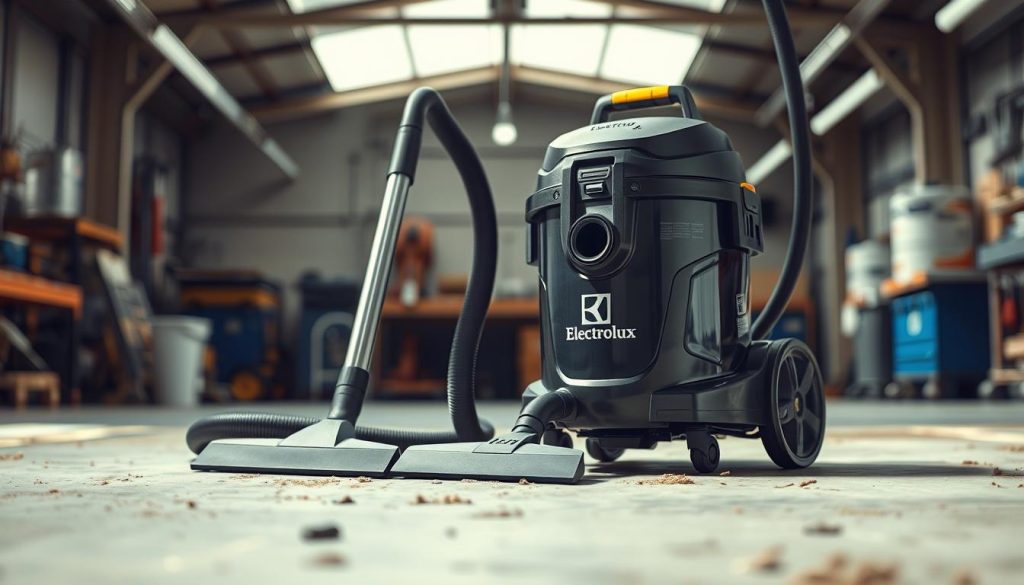
Drum systems suit renovation debris, workshops and outdoor pick-up. They usually deliver higher motor power, bigger water tank capacity and robust attachments for heavy tasks.
Stick systems are lighter for daily floor care. They trade tank size for manoeuvrability and faster handovers in retail and office patrols.
Electrolux Flexio Power Z823: 3-in-1 wet, dry and blower function
The Flexio Power Z823 pairs a 1600W motor with onboard storage and 360° manoeuvrability. Its blower mode helps clear corner debris and outdoor leaves from entryways.
Electrolux 800 3-in-1 Cordless EFW81713: TriAction nozzle and smart dirt detection
The EFW81713 focuses on daily hard-floor care. TriAction nozzle design and smart dirt detection tune water flow and suction for consistent results between operators.
Electrolux UltimateHome 700 EFW71711: antibacterial water tank and quick floor drying
The UltimateHome 700 adds an antibacterial treated water tank and a self-cleaning nozzle to cut odour and speed floor drying. That helps hygiene-critical sites reduce slip risk after mopping passes.
| Model | Format | Key feature |
|---|---|---|
| Flexio Power Z823 | Drum | 1600W, blower, large tank |
| 800 3-in-1 EFW81713 | Stick (cordless) | TriAction nozzle, smart dirt detection |
| UltimateHome 700 EFW71711 | Stick | Antibacterial tank, quick dry |
Electrolux official Singapore stores often add free delivery, 0% instalments and promotions up to 47% off. For routine dust control a robot vacuum helps day-to-day upkeep, but a wet dry unit is still essential for spill response, wet pick-up and spot work.
Conclusion
To finish, we give a practical framework that links specs to real-site needs.
Match the machine to your mess profile: frequent water spills, mixed debris or mostly dry messes require different tank capacity and toolsets. Focus on tank split — clean water tank versus dirty water — to reduce stops and lifting effort during shifts.
See suction as a system. Airflow, head design and the brush/roller dictate real pick-up on hard floors and rugs more than a single marketing number. Choose filtration that fits your hygiene needs.
Technology such as auto sensing and cleaning modes can reduce training time and rework. Finally, shortlist two to three models, confirm local support and warranty in Singapore, check accessory compatibility, and schedule a simple daily maintenance SOP to protect performance.

