

We set out to make commercial selection simple. In Singapore, businesses need units that cope with liquid spills, mixed debris and long shifts. This guide explains the choices we recommend for trade, hospitality and facilities teams.
We focus on what matters to operations managers: suction that lasts, sensible container size, robust filtration and low total cost of ownership. Our checks mirror daily use rather than marketing claims.
Practical comparisons show how domestic machines differ from commercial vacuum cleaners built for continuous work. We outline decision paths for mixed debris units, fine-dust specialists for construction, and safety models for hazardous dust.
Finally, we preview features that speed cleaning: tool take-off for power tool clearing, quick-change floor heads, sturdy castors and fast filter access. These points help teams choose with less downtime and safer sites.
Why a commercial wet dry vacuum matters for Singapore workplaces
In busy Singapore sites, choosing the right commercial machine cuts cleaning time and keeps spaces open for business. Our focus is on tools that speed recovery after spills and simple debris pickup so teams can return areas to service quickly.
Faster clean-ups with minimal downtime
High-traffic venues need rapid response. We recommend a plan that lets staff clear messes without swapping units mid-task. This reduces closures and improves customer flow.
Handling mixed waste: dust, debris, damp dirt, water spills
Mixed messes are common: grit, fine dust, damp residues and liquid pools. A single multipurpose unit simplifies workflow and keeps hygiene standards consistent.
We see real value in construction, workshops, automotive, marine and facilities teams. Professional cleaners benefit from one versatile tool that tackles debris, damp residues and spill response. Better cleaning habits support safer floors, lower slip risk and a healthier indoor environment.
To explore how different businesses can benefit from this versatile range, read on — we break down the specs that drive faster outcomes in the next section.
Wet and dry vacuum cleaner heavy duty: what “heavy-duty” really means
Commercial-grade units earn their name through build quality and continuous performance under daily use.
Built for daily commercial use
We look for rugged housings, tough castors and long-life cables that tolerate frequent moves and rough floors. Robust containers with bumpers and handholds speed handling and reduce damage during transport.
High suction power vs airflow
Suction power numbers can mislead. Peak figures matter less than sustained suction and airflow for real tasks. Choose specs matched to fine dust, coarse debris or liquid pickup to avoid overspending on unused features.
Container capacity and usable volume
Nominal capacity is useful, but net volume decides how often staff stop to empty. Hose-port placement and internal shape can increase usable space and lower interruptions.
Continuous operation expectations
For Singapore workshops we prioritise steady performance and serviceability. Durable design reduces downtime, improves cleaning efficiency and lowers total cost of ownership.
- Durability beats a low purchase price when use is frequent.
- Match suction and airflow to the task for best efficiency.
- Read our commercial selection guide for detailed checks.
Choosing the right type for your work: all-rounder, fine dust, wet-only or safety
A clear match between task and model stops teams from overpaying for unused features. We map four main categories so you can select the right type rather than forcing one unit to do every job poorly.
NT Tact systems for uninterrupted fine-dust work
NT Tact vacuums use a patented pulse-cleaning system to keep suction steady during heavy fine dust loads.
This keeps crews working longer without stopping to clean filters. It is ideal for sanding, grinding and plaster dust on site.
Ap class all-rounders for dry, damp and wet dirt
Ap class models suit mixed tasks where versatility matters. Semi-automatic filter cleaning handles small-to-medium dust levels.
We recommend these for daily use in workshops and facilities where crews switch between solid debris and liquid spill pickup.
Standard class machines for coarse dirt and large liquid volumes
Standard class units excel with coarse debris and sizeable liquid removal. They are common among contract cleaners and hospitality teams.
Safety vacuum cleaners for hazardous dust and specialist requirements
Safety models meet dust class M or H and are essential where respirable hazards exist. Certified filters and extraction protect operators and ensure compliance.
Options include asbestos-rated units and explosion-proof equipment for Zone 22 work.
- Match the class to the task, not the other way round.
- Filters and certifications matter as much as the body for dust risk.
- Specialist products exist for niche needs, for example disposal pumps and purpose-built products for emergency response.
| Category | Best for | Key feature |
|---|---|---|
| NT Tact | Fine dust, continuous tasks | Automatic pulse filter cleaning to sustain suction |
| Ap class | Mixed debris, regular site use | Semi-automatic filter cleaning; versatile operation |
| Standard class | Coarse debris, large liquid volume | Simple robust tanks; high capacity |
| Safety | Hazardous dusts (M/H), asbestos, Zone 22 | Certified filters, sealed systems, explosion-proof options |
Practical tip: choose models that match your routine tasks. Selecting the correct type reduces downtime, extends filter life and keeps teams safer during use.
Key applications in Singapore: which model fits which site
We match job profiles to model classes so procurement reflects real site needs, not guesswork. Below we map typical Singapore sites to the best class for the task, risk and throughput.
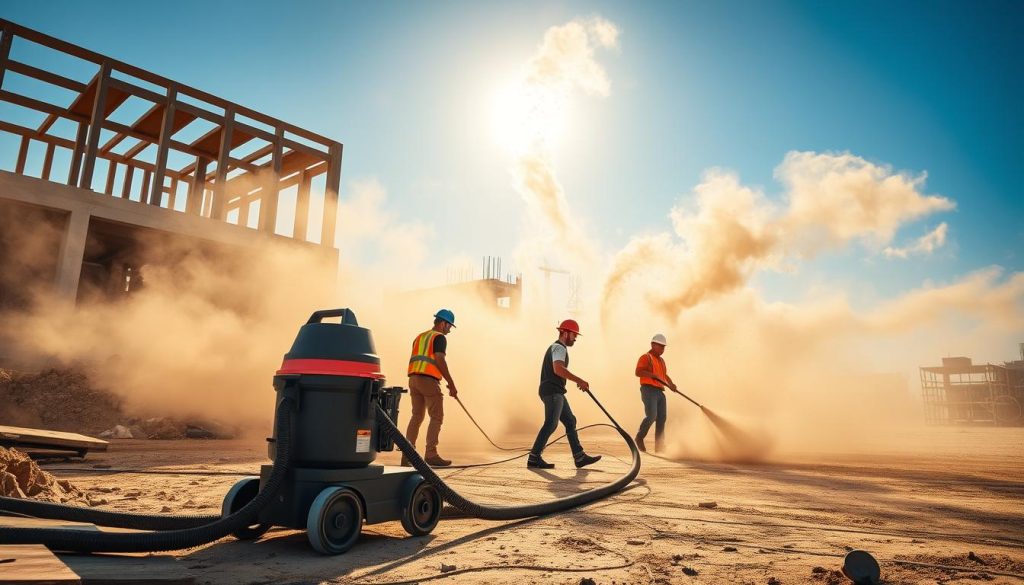
Construction sites
Construction sites generate high volumes of concrete, brick, tile and plaster dust. Respirable crystalline silica is a real hazard on these jobs.
Choose fine‑dust capable models for sanding and grinding. Correct class selection reduces airborne dust and protects crews.
Workshops and fabrication
Sawdust, sanding debris and machine residues demand steady suction and robust accessories.
We favour units with strong airflow and quick tool connections to speed clean‑down between shifts.
Automotive and marine
Many bays face mixed mess: wet dry dirt, oils and rinse water in the same area.
Versatile switching and corrosion‑resistant components keep service bays operational and safe.
Hospitality and facilities
Hotels and public areas need rapid spill response and frequent floor maintenance with minimal disruption.
Standard class models work well for liquid pickup, while Ap class suits mixed daily tasks.
- Practical tip: scope by area size and peak traffic to avoid under‑sizing and repeated stoppages.
- Bear in mind that starting from a home reference often underestimates commercial duty cycles and filtration needs.
Wet vs dry pickup: how wet dry vacuums work in real conditions
Operational reliability depends on the way suction, separation and overfill systems work together.
Wet pickup and overfill protection
We rely on a bypass blower to create suction that carries liquids and solids into the container. The fan is protected so water does not damage the motor during transfer.
Overfill systems stop suction when levels rise. A mechanical float seals the inlet, or electronic contacts trigger a cut-off when conductive liquids touch the sensor.
Dry pickup, filtration and suction loss
For dry tasks air passes through a flat or cartridge filter that traps dust and debris. As media fills, airflow reduces and perceived suction drops.
Regular filter cleaning or automatic systems keep performance steady; otherwise operators report an underpowered feel mid-shift.
Cyclone-style separation
Hose-port geometry creates a cyclone rotation that makes heavier grit settle on the container floor before air reaches the filter.
| Feature | Benefit | Buying tip |
|---|---|---|
| Bypass blower | Safe liquid transport | Choose sealed motors for frequent liquids |
| Float / electronic cut-off | Prevents overfilling | Prefer dual systems for critical sites |
| Cyclone separation | Less filter loading | Look for optimized hose-port design |
Filter cleaning systems: protecting suction power and productivity
Filters are the frontline defence for consistent suction and site productivity. Clogging reduces airflow, lowers suction power and adds labour time across a shift.
Why filters clog and how it affects performance
Fine dust builds on media and narrows airpaths. As resistance rises, cleaning efficiency falls and crews spend longer per task.
Semi-automatic cleaning for medium dust use
Semi-automatic systems let operators trigger bursts of air to loosen debris. For example, Kärcher AP units use a quick button sequence to release pollen and grit without filter removal.
Fully automatic “Tact” systems for continuous fine dust
Tact systems use differential pressure sensors to time short blasts (intervals such as 7/15/60 seconds or off). This keeps suction steady during sanding and grinding, cutting stoppages.
Bagless vs bags: operational trade-offs
Bagless use lets teams fill the full container and lowers consumable costs. Filter bags suit liquid handling, controlled disposal and hygiene-critical sites.
| System | Best for | Key benefit |
|---|---|---|
| Semi‑automatic | Medium dust loads | Operator-triggered cleaning; simple to use |
| Fully automatic (Tact) | Continuous fine dust | Sensor-led blasts for steady suction |
| Bagless | High-volume debris, cost-conscious | Full tank use; lower consumable spend |
| With bags | Liquids, hygiene, regulated disposal | Cleaner emptying; safer waste control |
Operational tip: choose the cleaning system before chasing higher motor ratings. Align maintenance intervals to typical dust volumes to preserve suction and save time. For step-by-step care, see our guide on filter cleaning steps.
Dust classes L, M and H: selecting the right protection level
A clear dust-class choice reduces exposure and simplifies compliance for site teams. This is a procurement and safety decision. It sets filtration, waste handling and PPE needs for each task.
Class L — moderate-risk particles
Class L covers lower-risk material with ≤1.0% permeation, such as chalk and plaster. For day-to-day use this class eases disposal and allows simpler filter maintenance.
Class M — construction baseline
Class M limits permeation to
Class H — hazardous environments
Class H is for the highest risk. It demands
Explosive dust and specialist zones
- Some materials create explosive atmospheres. Zone 22 and ATEX-rated equipment may be required.
- We advise linking class choice to a formal site risk assessment so teams can justify specifications.
- Always match vacuum cleaners and filters to the hazard level to reduce respirable dust exposure.
Filter types and materials: what to match to dust, liquids and durability
Filters define how a machine handles mixed debris, moisture and fine particles on site.
PTFE-coated options
PTFE-coated filters resist moisture and rot while offering high separation — often to 99.9% for M/L certified levels.
They are ideal where humidity and occasional liquids mix with fine dust.
PES for frequent switching
PES media suits teams that shift between liquids and dry work. It keeps structural integrity and sustains suction over long shifts.
Paper for cost-conscious dry use
Paper filters are economical for exclusively dry tasks. If liquids are picked up, the filter must be dried before reuse to avoid damage.
HEPA and H-class for compliance
HEPA / H-class filters reach very high separation (H-class up to 99.995%). We fit these where health or regulation demands the highest protection.
Colour-coding and certification
Manufacturers such as Kärcher use colour codes to speed checks on site. We use these marks to avoid fitting the wrong filter and to protect long-term performance.
- Match media to the dust and liquids you face.
- Prioritise certified HEPA/H for hazardous tasks.
- Choose PTFE or PES where moisture resistance preserves service life.
Must-have features for commercial cleaning efficiency
Small design choices make the largest difference to daily cleaning speed and reliability. We focus on practical features that cut setup time and reduce interruptions on site.
Power-tool take-off
Power-tool take-off captures chips and dust at the source. This reduces airborne dust and slashes the time spent re-cleaning settled particles.
We note Kärcher highlights this as a way to control dust where the work happens, not after it settles.
Hose, cable and accessory storage
Smart storage keeps hoses and power leads secure. This lowers trip hazards, speeds transport between zones and stops lost parts.
Wide floor nozzles and quick-change inserts
Wide nozzles cover more floor per pass. Quick-change inserts let teams swap from spill response to routine dry vacuum work in seconds.
Bayonet fastening, clip systems and mobility
Dirt-resistant bayonet fastening and improved clips cut maintenance time. Large metal castors survive tough construction floors and make movement reliable.
“Choose features that deliver measurable time savings and lower operating cost.”
In short: the right features raise output, protect operators and reduce total cost. We recommend prioritising these elements when buying commercial cleaners.
Capacity, liquids and debris: sizing the container to your workload
Container sizing is as much about what you pick up as how often teams pass the area. We assess real site cycles to set capacity, not just the headline litre figure.
Large liquid volumes versus fine dust
Liquids and water settle and occupy space differently from fine particles. A tank that looks roomy for dust may fill fast with water because there is no air gap.
Standard class machines are built for coarse debris and large liquid volumes. If your tasks include frequent spills, choose a container that accounts for rapid volume change and overfill protection.
Separating solids and liquids for safer emptying
Two-bucket systems separate solids from liquids at the point of collection. This reduces cross-contamination and makes disposal cleaner.
We recommend bucket separation where both grit and water are common. Teams empty lighter solids without lifting heavy water-filled containers.
Emptying and disposal routines for peak hours
Plan emptying by route frequency and spill likelihood. Frequent short empties often beat long waits that cause overfills and slow teams down.
- Match container size to corridor runs and scheduled tasks per shift.
- Use overfill systems to protect the blower during liquid pickup.
- Design disposal points to minimise carrying distance and tipping risk.
| Need | Container guidance | Operational tip |
|---|---|---|
| Fine dust-heavy tasks | Moderate capacity; filters prioritised over tank volume | Smaller empties, frequent filter checks |
| Large liquid spills / water | Larger container with overfill protection | Schedule dedicated spill runs; avoid overfilling |
| Mixed debris and liquids | Two-bucket or cyclone separation | Separate emptying to reduce manual handling |
In practice: size the container to the mix of debris and liquids you face, the number of tasks per route, and how often staff can empty safely. This reduces interruptions, prevents overfills and keeps cleaning throughput high.
Safety and compliance in hazardous environments
Protecting staff from respirable particles starts with the right class of filtration and a clear disposal plan.
Reducing exposure to respirable dusts with the correct dust class
We choose dust class to match risk. For asbestos or similar hazards, H-class filters keep hazardous material sealed inside the unit. This reduces airborne exposure and supports regulatory compliance.
Safe disposal approach: filters, disposal bags and minimising contact with dirt
Safe waste handling cuts direct contact with contaminated dirt. Use sealed disposal bags and replace filter elements within an enclosed routine to limit manual handling.
Automatic filter cleaning reduces hands-on intervention and lowers the chance of stirring dust during maintenance.
Preventing slips and floor damage with fast spill extraction
Rapid liquid extraction is a safety control. Quick removal of spills reduces slip risk and lessens damage to floor finishes in commercial premises.
We also document procedures so cleaners follow consistent steps that support site audits and SOPs.
| Risk | Recommended class | Key control |
|---|---|---|
| Low-risk dust (chalk, plaster) | Class L | Standard filter; sealed bag for disposal |
| Construction dust (silica) | Class M | PES/PTFE filter; timed filter cleaning |
| Hazardous dust (asbestos) | Class H | HEPA/H filter; sealed bags; documented disposal |
“Safety is part of buying criteria, not an afterthought.”
How we evaluate models: a practical buying checklist for Singapore businesses
Selecting the right model starts with mapping tasks, time windows and area coverage. Our checklist turns specifications into operational actions so stakeholders can approve purchases with confidence.

Match the unit to tasks, area size and cleaning time requirements
Map tasks to model features: list routine jobs, peak time slots and the area each shift must cover.
Choose capacity to avoid frequent stops and align run time with cleaning windows typical in Singapore operations.
Prioritise suction power, filter cleaning and durability
Sustained suction matters more than peak figures. Automatic filter cleaning keeps suction steady and saves work time.
Check body build, wheels and fittings so durability lowers total cost of ownership.
Plan accessories and maintenance
Decide which filters, hoses and nozzles suit surfaces and debris. Verify spare part availability and service intervals before buying.
Align specifications with site risks
Match dust class (L/M/H) and filtration to fine dust, liquids or hazardous debris. This secures compliance and protects staff.
- We provide a procurement-ready decision flow so teams pick the right class with clear operational justification.
| Checklist step | Key question | Decision tip |
|---|---|---|
| Tasks & area | What tasks and coverage per shift? | Size capacity to cleaning time windows |
| Suction & filter | Is sustained suction needed? | Prefer automatic filter cleaning; check suction power |
| Durability & service | Can unit survive daily wear? | Inspect build, castors and spare parts |
“Procurement should justify model choice by showing task alignment, service savings and risk controls.”
Conclusion
Our closing advice is simple: match the machine class to the work you do, not to the biggest spec on the sheet. , We recommend choosing a wet dry solution when sites face mixed spills and grit, or a specialist model when continuous fine dust control is the priority.
Filter class and active cleaning systems decide whether suction stays stable during long shifts. Choose container size and disposal routines to fit real shift patterns so teams avoid repeated stops and overfills.
Finally, select commercial units for durability and serviceability. They differ from the domestic dry vacuum cleaners found at home and will repay the investment by keeping uptime high, risks low and compliance straightforward.

