
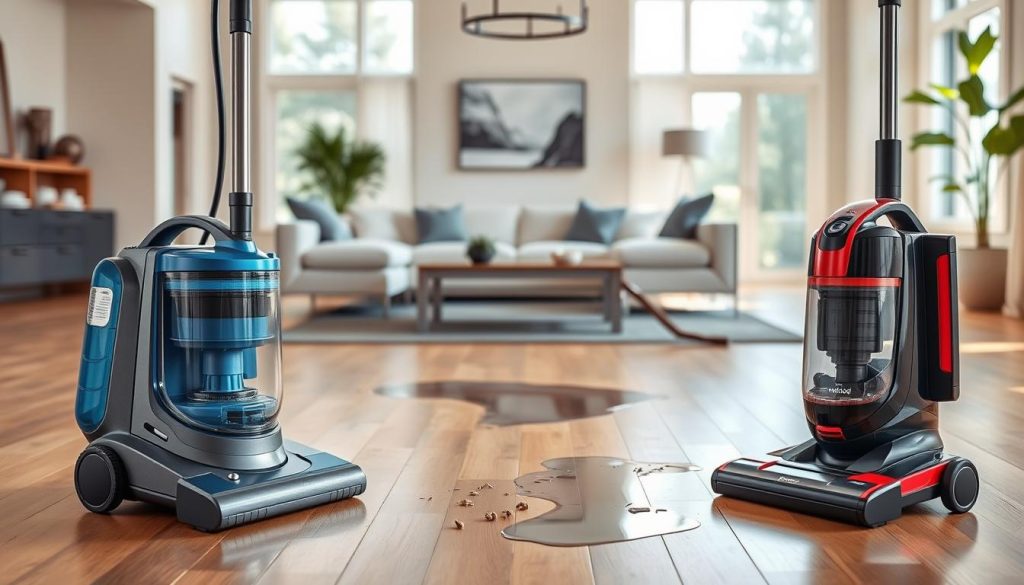
We set out to help buyers in Singapore choose the right machine for their layout and mess profile. Humidity in our island climate raises real issues for odour control and tank hygiene, so realistic expectations matter.
Our focus is on matching machine type to common floor mixes — tiles, vinyl, laminate versus rugs — and to daily tasks like spills, pet hair and dust. We evaluate suction, true mopping performance, tank design, battery life, manoeuvrability and upkeep.
Dedicated floor washers often win for hard-floor mopping, while modular stick systems and robot mop models score for convenience where mixed floors are present. We test reported specs alongside reviewer observations to ground our advice.
This roundup is for buyers with commercial intent who want to shortlist quickly by layout (HDB or condo), storage limits and tolerance for maintenance. Brands covered include Tineco, Roborock, Shark, Dyson and Bissell to give a practical, testing-led view of each option.
What “wet and dry” really means for Singapore homes
For Singapore households, the term ‘wet dry’ must be practical — not just marketing copy. We define it by task: some units feed clean water to a roller and then suction dirty liquid away, while others are mainly a dry vacuum with a swap-on mop head for light wiping.
Three common types we see
- Dedicated wet-dry floor washers: feed clean water to a brush and keep dirty water in a separate tank for stronger scrubbing.
- Modular cordless systems: add a small mop head and hold less water; they suit quick maintenance with a vacuum mop accessory.
- Robot mop models: automate daily upkeep but lack the scrubbing force for dried stains and heavy spills.
Where each shines
Hard floors dominate choices here — tiled kitchens and vinyl living rooms need reliable mopping. Low-pile rugs are the trickiest surface for wet-equipped machines.
| Type | Best for | Tank system | Typical strength |
|---|---|---|---|
| Dedicated washer | Large hard floors | Dual clean/dirty tanks | Strong scrub and suction |
| Modular stick | Mixed rooms | Small single tank | Good for spot cleaning |
| Robot mop | Daily light upkeep | Small reservoir | Convenience over power |
compare wet and dry vacuum cleaner: our testing-focused comparison criteria
We judge machines by how they perform in real Singapore homes. Our tests split tasks so we can clearly score dry pickup against true mopping. We note suction for crumbs and hair, then assess mop action for lifting sticky dirt.
Suction and mopping
Suction is measured for debris pick-up on tiles and low-pile rugs. Mopping tests check water control, agitation and stain lift.
Tank design and capacity
We inspect dual water tanks: how clean water is dispensed and how dirty water is captured. Capacity links to session length for a 3–5 room HDB.
Cleaning modes that matter
Auto dirt detection, Max, Eco and suction-only modes are most useful. We value a deodorising option for humid climates.
Battery, runtime and maintenance
We report battery life in minutes and charge time. Self-clean cycles help, but brush and roller drying remain our tasks to prevent odour.
Manoeuvrability and design
We test head reach, self-propulsion, edge cleaning and flat-lay access under furniture. These design features shape real-world ease of use.
- Price vs automation: we weigh docks and features against upkeep time saved.
Best overall wet-dry vacuum mop for hard floors: Tineco Floor One S7 Pro
We picked the Tineco S7 Pro as our best overall choice for homes with mostly hard floors. It balances strong suction with genuine mopping action and sensible water control.
Why we rate it highly
Auto Mode uses sensors to raise power when surfaces need more work and to avoid over-wetting when they do not. The result suits kitchens, entryways and daily upkeep.
Key specs from testing
Tested capacities: clean tank 0.85L, dirty tank 0.72L. Runtime reaches up to 40 minutes and charge time is about four hours. Noise in Ultra climbs to ~65dB.
Modes and features
Useful modes we relied on were Ultra for deep grime, Max for tough marks and Suction Mode for quick spills. Voice prompts, an LCD and self-propulsion make it straightforward for multiple users.
Trade-offs to plan for
The S7 Pro is focused on hard floors only and requires frequent dirty-tank emptying and rinsing to prevent odour in humid Singapore. Allow drying time for the roller and internal pathways before storage.
Runner-up pick with standout manoeuvrability: Roborock F25 Ace
The Roborock F25 Ace stands out for its easy handling and long sessions when we need to cover larger flats. Its power-assisted wheels reduce push effort over time. The result is a steady, controlled clean that suits Singapore layouts with many low-clearance furniture pieces.
Long runtime advantage
Runtime reaches up to 60 minutes on a single charge, which gives us fewer interruptions for bigger homes. Charge time sits at about 6 hours 30 minutes, so planning battery life and session time matters.
Under-furniture access
The head can lie fully flat. That lets us reach under beds, TV consoles and low sofas without a separate bend-and-pull routine.
Dock and drying features
Roborock’s dock washes the roller with hot or room-temperature water, then uses hot-air drying. This helps prevent odour in humid conditions and lowers the effort we spend on post-clean upkeep.
Who should skip it
If carpet cleaning is a must, we advise against this hard-floor-focused model. You will still want a separate dry unit for rugs, since this design prioritises floor performance over mixed-floor versatility.
Best budget-friendly wet-dry option: Shark HydroVac Cordless
For buyers watching their budget, the Shark HydroVac Cordless offers practical cleaning features without premium frills. It blends three functions into a single unit so we can tackle daily messes quickly.
Three-in-one appeal: vacuums, mops, and self-cleans
Three-in-one here means the device works as a light vacuum, a mop and runs a basic self-clean routine. That reduces manual rinsing but does not remove all upkeep tasks.
Where it fits best: hard floors and low-pile carpets with ‘Freshen’ mode
We found it most useful for hard floors and low-pile rugs. The Freshen mode gives a lighter mop action in both directions so rugs are not oversaturated.
Realistic upkeep: brush roll drying time and frequent dirty water tank emptying
Key numbers: the water tank holds about 0.5L and runtime is roughly 25 minutes with a ~4 hour charge.
Expect to empty the dirty water after each session. The brush roll and roller often need removal and around 24 hours to dry to avoid odour.
“Good for quick post-dinner resets in smaller Singapore homes, but tight spaces and corners are a chore.”
| Feature | Note |
|---|---|
| Runtime | ~25 minutes |
| Tank | 0.5L water tank |
| Upkeep | Brush removal, 24h drying, dirty water empty after use |
Best complete cleaning system for mixed flooring: Dyson V15s Detect Submarine
A modular approach lets us switch to the right head for each room without buying two separate machines.
Why modular heads matter
Modularity gives us the flexibility to use a high‑performance head for carpets and a wet roller for hard floors.
This matters in Singapore flats where bedrooms often have rugs while kitchens and corridors are tiled. One system reduces storage and duplication.
Performance notes
In our tests the dry head is class‑leading for fine dust and hair. The wet roller head handles spills and light mopping well.
Real-world cleaning benefits from the machine’s ability to switch tasks quickly between rooms.
Watch-outs at this price point
The Submarine head holds about 0.3L water, and dirty water removal can be awkward. Removing the head risks drips if we are not careful.
This makes longer wet sessions less convenient for big kitchens or whole‑flat mopping.
Battery and practicalities
The kit is cordless with a max runtime up to 60 minutes and a ~4.5‑hour recharge time. Actual cleaning minutes depend on power level and head choice.
At its premium price point, the V15s Submarine makes sense when we need one unit to handle carpets and hard floors without compromise.
| Spec | Value | What it means | Notes |
|---|---|---|---|
| Water tank | ~0.3L | Short wet sessions | Top up for larger areas |
| Dust bin | 0.77L | Good for carpets | Less frequent emptying |
| Runtime | Up to 60 minutes | Full flat possible on low power | Power mode reduces runtime |
| Key feature | Swappable heads | One system for mixed floors | Premium price point |
Best hands-off option for daily upkeep: Roborock Qrevo Curv robot vacuum and mop
For daily upkeep with minimal fuss, a robot that can mop on a schedule changes how we manage floors.
What it does well: the Qrevo Curv excels at regular light maintenance. We found it keeps high-traffic zones presentable with short, frequent runs.
What robot mopping can and can’t do
Robot mopping is gentle by design. It refreshes surfaces but will not replace a manual wash for sticky spillages or dried stains. For heavy marks, we still plan a deeper, hands-on session.
Dock automation and end-to-end upkeep
Dock features are the Curv’s real advantage. It auto-empties the dock bin, refills clean water, dispenses detergent, then washes and dries the mop module.
The dock holds substantial water tanks — 2.4L clean / 2.4L dirty — and the dust bin is 2.7L. That capacity cuts weekday interventions for most Singapore flats.
Carpet intelligence and task planning
The system lifts the mop over rugs and runs room-by-room plans so we can schedule targeted cleaning. That prevents soaking carpet while keeping tiled corridors fresh.
- Use case: daily auto runs in living rooms, kitchens and entryways.
- Limit: not a substitute for scrubbing stains.
- Practical note: battery life and map planning let us cover a typical HDB on low power; heavy modes reduce runtime.
“For hands-off upkeep, the Curv turns weekly effort into an occasional top-up and manual deep clean.”
Best for rugs and pet mess: Bissell CrossWave OmniFind and HydroSteam Pet
When rugs and pet hair dominate our cleaning list, we turn to tools built for mixed surfaces. For many Singapore homes, that means one machine must handle short-pile carpet and tiled corridors without swapping kits constantly.
OmniFind benefits
Bissell CrossWave OmniFind works as a simultaneous mop and vacuum across hard floors and low‑pile carpet. It uses separate clean and dirty tanks to keep water hygiene intact.
- FurFinder headlights reveal pet hair and debris in dim corners.
- Simultaneous suction and mop action saves passes on busy days.
- ~25 minutes max runtime on cordless models — handy for quick sessions but limited for whole-flat cleans.
HydroSteam Pet: deeper clean with corded power
The HydroSteam Pet adds a steam mode for a more hygienic result. With an 820ml clean tank and ~640ml dirty tank, it delivers continuous power without battery worry.
Corded power gives stronger, sustained performance, but the unit is heavier (~5.67kg) and the cable reduces reach in tight layouts.
Trade-offs to weigh
Both systems still need routine tank emptying, roller and brush cleaning, and full rinsing to avoid odour in humid storage. OmniFind’s runtime and edge reach mean we sometimes finish corners with a handheld tool.
“Great for pet households where carpets and tiles coexist, but expect hands-on upkeep after each use.”
| Model | Key advantage | Note |
|---|---|---|
| OmniFind | Vacuum + mop; FurFinder lights | Separate tanks; ~25 minutes runtime; edges need follow-up |
| HydroSteam Pet | Steam mode; corded continuous power | Clean 820ml / Dirty ~640ml; heavier; longer maintenance |
Alternatives worth considering: Tineco iFloor 5, Roborock Flexi Pro, Dyson WashG1
When price, edge reach or tank layout matter more than smart apps, these choices stand out for Singapore flats. We outline what each offers and the trade-offs to expect.
Tineco iFloor 5
Value-driven cleaning: the iFloor 5 pairs effective vacuum with mop action and a self-clean cycle. It suits buyers who want solid floor cleaning without voice or app features.
Runtime is ~30+ minutes ECO and ~20+ minutes MAX. Charge time is 4–5 hours. It cleans close to walls but cannot lie flat, so corners need a quick follow-up.
Roborock Flexi Pro
Edge and reach: Flexi Pro excels for edge cleaning and near-flat reach under furniture.
Runtime reaches up to 50 minutes with a ~4-hour charge. Water tanks are smaller (0.73L clean / 0.43L dirty) and semi-opaque, so level checks are less convenient.
Dyson WashG1
Specialist sealed-hard-floor tool: the WashG1 uses a different debris system — solids drop into a tray while dirty water goes to a tank.
It has 1L clean and 1L dirty tanks, about 35 minutes runtime, and one-sided edge cleaning. The debris tray needs manual removal; rollers are rated around 25 hours of use.
| Model | Runtime | Tank(s) | Key trade-off |
|---|---|---|---|
| Tineco iFloor 5 | ~30+ / ~20+ minutes | Integrated tanks | Good value; not flat‑lay; corners limited |
| Roborock Flexi Pro | Up to 50 minutes | 0.73L clean / 0.43L dirty | Great edge reach; smaller tanks |
| Dyson WashG1 | ~35 minutes | 1.0L clean / 1.0L dirty | Sealed hard floors; manual debris tray |
Our guidance: pick the model that matches what you value most — runtime, edge reach, tank capacity or debris handling — rather than brand alone.
Wet-dry floor washers vs dry vacuum + mop head: which is better for us?
For many Singapore flats, the real question is whether we prioritise deep mopping performance or flexible one‑tool convenience.
When dedicated washers win
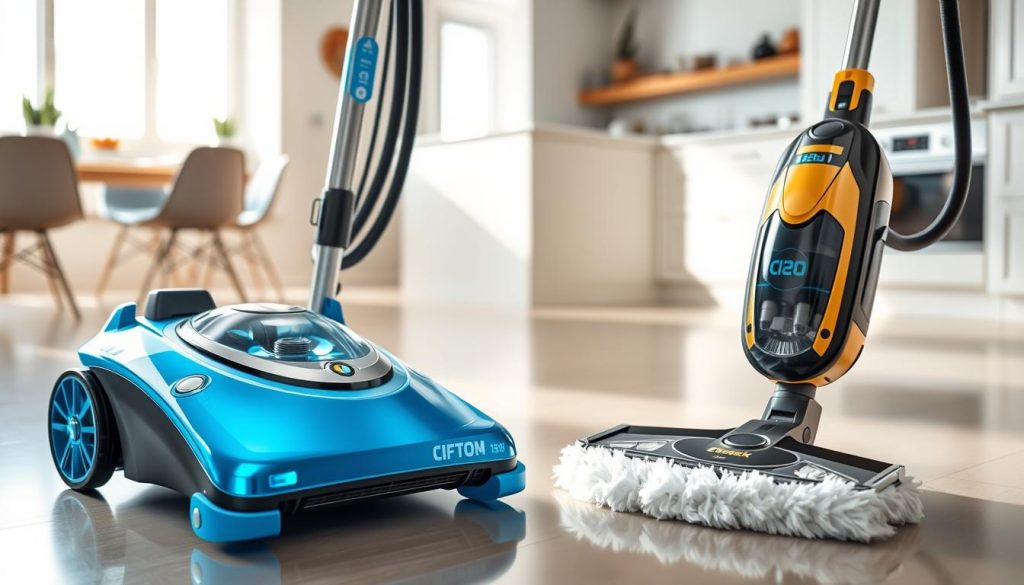
If most of our home is hard floors and spills are frequent, a dedicated washer usually wins. These systems deliver steady water flow, stronger suction into a separate dirty tank, and more aggressive scrubbing.
That combination cuts streaks and reduces repeated passes. Self‑drying docks also help prevent odour in humid storage.
When a modular stick system makes sense
For mixed rooms with rugs and carpet, a dry vacuum with a mop head is more versatile. One cordless unit reduces clutter and lets us switch heads per room.
Trade-offs are smaller water tanks and gentler mop action, so these systems suit maintenance rather than deep stain removal.
Cost and space note: paying more for a two‑tool setup can be worthwhile if it replaces separate devices. Compact homes benefit from fewer units; larger flats gain from dedicated performance.
Water tanks and dirty water: what to check before we buy
How a model stores and discards water shapes our daily cleaning routine. The water tank is one of the most practical specs we check because it tells us how often we stop to refill or empty during a session.
Tank capacity benchmarks: what 0.3L to 1.0L means in real cleaning time
Small tanks around 0.3L — like the Dyson V15s mop head — suit brief maintenance runs and spot jobs. A 0.5L tank, similar to the Shark HydroVac, works for quick daily resets.
Tanks near 0.8–1.0L, as in the Tineco S7 Pro and Dyson WashG1, let us clean longer without interruptions. In practice, larger tanks reduce mid-session stops for most Singapore flats.
Separation of clean and dirty water: why dual systems matter
Dual-tank designs keep clean water separate from dirty water, so we avoid re-depositing grime on floors. This design improves hygiene and delivers more consistent results across a session.
Emptying and rinsing routines to prevent smells in humid climates
After every use we empty the dirty tank, rinse it and leave both tanks open to dry. Wide openings, simple latches and seals that do not trap muck make this faster and less messy.
If maintenance is a hassle, consider models with docks that wash and dry rollers or robot docks that automate water handling to cut hands-on time.
| Example | Clean tank | Dirty tank |
|---|---|---|
| Dyson V15s mop head | ~0.3L | — |
| Shark HydroVac | ~0.5L | ~0.5L |
| Tineco S7 Pro | 0.85L | 0.72L |
| Dyson WashG1 | 1.0L | 1.0L |
“Empty dirty water immediately, rinse and air dry tanks to avoid odour in humid Singapore.”
Cleaning modes and sensors: choosing the right power for dirt, debris, and stains
Sensor-led modes let machines scale motor power and water flow to match real messes. This reduces over-wetting on laminate and prevents streaking on tiles.
Auto detection vs manual settings for stubborn marks
Auto dirt detection works well for daily maintenance. Models such as the Tineco Floor One S7 Pro and Roborock Flexi Pro up power where sensors find grime.
Manual Ultra or Max modes still matter for sticky kitchen spills, oily residue and ground-in stains. Use higher power when agitation and more water are needed.
Suction-only and spill pick-up modes for quick emergencies
Suction-only settings give the fastest response to sudden liquid mishaps around sinks or kids’ play areas. They cut water use and speed drying time.
For immediate spill pickup, choose a mode that isolates suction from mop action. That protects laminate edges and lowers risk of trapped moisture.
Deodorising claims and realistic expectations
Deodorising features often rely on solutions and thorough drying rather than a magic mode. Regular emptying, rinsing and airing remain essential to avoid odour in humid Singapore homes.
“Auto modes reduce fuss, but manual power saves the day for stubborn grime.”
- Practical tip: match modes to frequency — Auto for daily tidies, Max for weekly deep cleans, Suction-only for urgent spills.
- Feature check: prefer machines whose modes align with your real routine to cut upkeep time.
Battery life and runtime planning for Singapore apartments
Battery planning changes how we schedule regular cleans in small Singapore flats. We use real runtimes to plan whether a single session will do or if we must split tasks across the day.
Typical runtimes across top models
Our tested models show clear tiers: Shark HydroVac ~25 minutes (~4h charge), Tineco S7 Pro up to 40 minutes (~4h), Roborock Flexi Pro up to 50 minutes (~4h), Roborock F25 Ace and Dyson V15s up to 60 minutes (~6h30 and ~4.5h respectively).
Charge times and cleaning cadence
Longer charge time means scheduled cleaning. A 4–6.5 hour recharge window pushes us to clean in the evening or keep a spare battery where possible.
Note: Max power cuts runtime noticeably, so reserve high-power passes for targeted spots rather than whole-flat runs.
When a corded option makes more sense
For marathon sessions or heavy steam-capable units, a corded choice removes battery limits. We prefer corded units when uninterrupted power beats cordless convenience.
- Quick homes: 25 minutes covers a 2–3 room tidy.
- Larger flats: 40–60 minutes suits near whole-home cleans.
- Priority: choose longer runtime or dock automation for bigger homes; pick compact cordless models for storage ease in smaller spaces.
“Plan by runtime, not just specs — real-world cleaning minutes vary by mode and task.”
Manoeuvrability and design details that change the experience
How a machine moves through narrow corridors and under furniture affects daily cleaning more than raw specs. Design choices make the difference between a quick tidy and a tiring session.
Self-propulsion and power-assisted wheels
Self-propulsion on the Tineco S7 Pro cuts pushing effort on long hallways. It reduces fatigue and keeps control when we clean several rooms in one go.
Power-assisted wheels, like those on the Roborock F25 Ace, help on tiled and vinyl floors. The assistance steadies speed and improves suction contact without extra force from the user.
Cleaning under furniture: flat-lay designs and head height
Flat-lay heads let us reach under beds and low sofas without moving heavy items. The Roborock F25 Ace lies fully flat; the Flexi Pro gets near-flat, which helps in tight living rooms.
Head height still matters: a low profile wins access but can reduce debris pickup if suction path is compromised. Check how the head seals to the floor for real-world results.
Edge cleaning reality: why corners often still need a quick follow-up
Even strong models leave tight corners, skirting lines and gaps for a short manual pass. Wide heads speed open-area work but can be awkward around dining chairs and narrow spaces.
Practical tip: inspect head width and pivot before buying. Easy-release brush and roller housings cut maintenance time and lower the risk of odour from trapped debris.
| Model | Key manoeuvre feature | Practical effect |
|---|---|---|
| Tineco S7 Pro | Self-propulsion | Less pushing effort on corridors |
| Roborock F25 Ace | Power-assisted wheels / flat head | Better under-furniture reach and steady control |
| Roborock Flexi Pro | Near-flat head / edge focus | Improved skirting line cleaning; corners may need touch-up |
For a broader overview of feature trade-offs and full model tests see our curated list of the best wet-dry vacuums reviewed.
Maintenance, self-cleaning systems, and what we still have to do ourselves
Self-clean cycles reduce hands‑on time, but they don’t remove every task from our checklist. Many systems rinse the brush and route water through key channels, yet moisture and trapped grime still demand our attention to avoid smells in humid Singapore flats.
What auto-clean actually does: most docks wash the roller and flush internal paths. Models such as the Roborock F25 Ace add hot‑air drying, which cuts mildew risk. Others, like the Shark HydroVac, often require brush roll removal and around 24 hours of air drying to prevent odour.
Consumables and detergents: some brands recommend proprietary solutions to boost sanitisation. Water‑only runs work for light cleaning and save cost, but detergent helps with greasy kitchens and pet stains. We balance cost, convenience and the maker’s guidance when choosing a fluid.
Post-clean checklist
After each session we follow a short routine to keep performance high and smells low:
- Empty and rinse the dirty water tank; leave it open to dry.
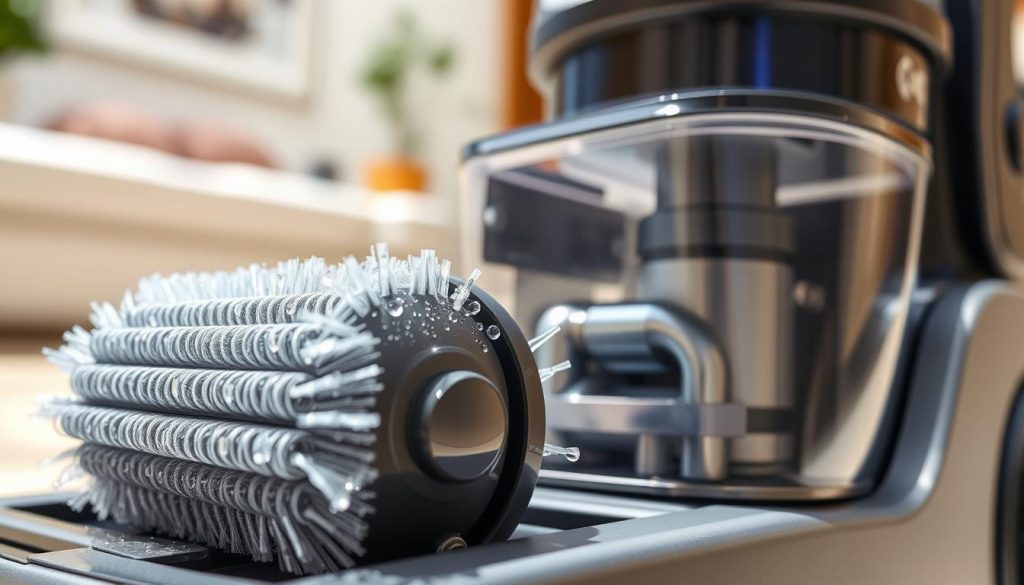
- Inspect and clean the brush and roller; remove hair and trapped debris.
- Empty any debris tray (Dyson WashG1 style) to avoid clogs.
- Store upright in a ventilated spot with tanks open when safe.
| Task | Why it matters | Typical time |
|---|---|---|
| Empty dirty water | Prevents odour and bacterial growth | 1–2 minutes |
| Rinse tanks | Removes residue and detergent build-up | 2–3 minutes |
| Clean brush/roller | Maintains suction and avoids tangles | 3–10 minutes (plus drying) |
| Drying / storage | Prevents mildew in humid climates | Overnight to 24 hours |
“Self-cleaning helps, but regular checks of the tank, brush and roller are still essential for lasting performance.”
Price point and value: how we should decide what’s worth paying for
Our budgeting starts by separating the sticker price from the ongoing ‘time price’ of maintenance. The purchase price buys hardware; the time price is the minutes we spend emptying tanks, rinsing rollers and airing parts in humid Singapore.
Paying more for docks and automation vs paying less and doing manual upkeep
Higher-priced models often include docks that empty, refill, wash and dry. That automation reduces daily fuss and lowers odour risk by speeding drying.
By contrast, budget options usually ask us to empty the dirty tank and remove the roller after each session. They still deliver strong cleaning but trade cash for time.
Matching spend to floor type
For homes with mostly hard floors, a dedicated washer or premium dock can be worth the extra price for better water control and sustained performance.
If our flat mixes carpet and tiles, a modular system or a good cordless multi‑head model gives value by handling both surfaces without two full machines.
For light daily cleaning, a robot with dock automation may be the best value if we prioritise convenience over deep scrubbing.
- Two cost types: purchase price vs time spent on upkeep.
- When to pay more: if you dislike maintenance or clean frequently, automation pays back in saved time.
- When to save: if you accept quick post‑clean routines, budget models give similar day‑to‑day results.
Practical tip: factor in storage, consumables and replacement parts when you set a budget. That keeps the long‑term cost sensible and avoids surprises.
Conclusion
,We close by outlining a simple decision path: pick the system you will actually use most weeks.
Start by choosing the category — a dedicated hard‑floor washer for deep wash performance, a modular model for mixed floors, or a robot for hands‑off upkeep. Match runtime, battery and water tank size to your flat size and cleaning cadence.
Key trade-offs: stronger mopping usually needs more dirty water care; more automation raises the price but saves time. In humid Singapore, tank design and roller drying matter as much as suction for odour control.
Choose Tineco S7 Pro for hard floors, Roborock F25 Ace for manoeuvre and long runs, Shark HydroVac for budget value, Dyson V15s for mixed rooms, Roborock Qrevo Curv for hands‑off daily use, and Bissell for rugs and pets.
Compare runtime, tank sizes and maintenance against your weekly routine, pick the model you will use consistently, and set realistic expectations for corners, stains and edges.

