
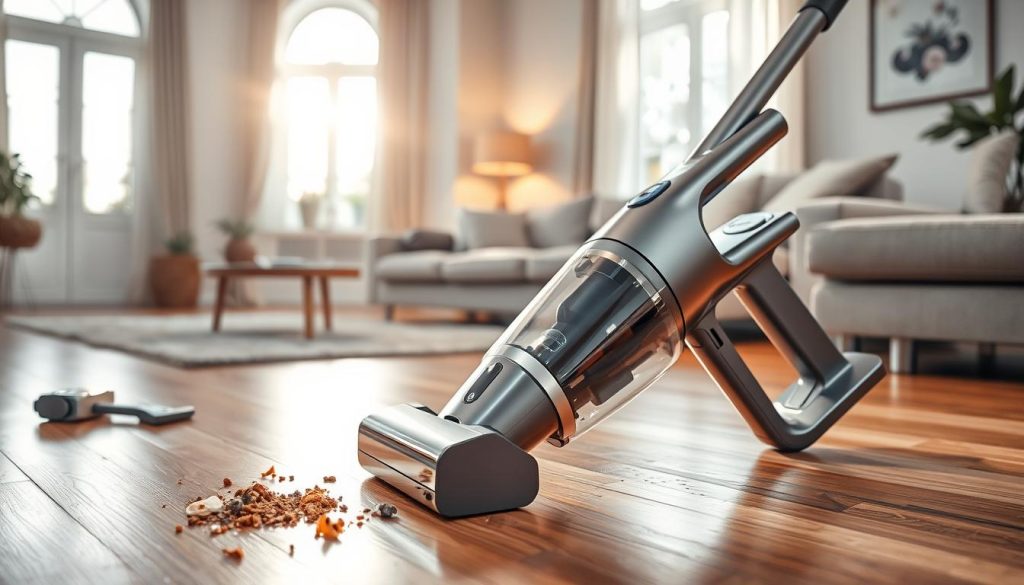
We set the scene for what this category means in Singapore and why many households prefer a single machine that tackles spills and dust quickly.
Our guide helps readers shortlist a wet-capable stick or a true wet/dry unit based on flat size, storage and local humidity. We focus on real trade-offs: weight, noise and bulk versus flexible cleaning performance.
We outline our review approach. We compare suction, tank layout, edge performance, modes, hygiene and maintenance so recommendations are evidence-led, not marketing claims.
We also explain the difference between floor washers with separate tanks and sticks with mopping heads. Then we preview top picks: Tineco, Dreame, Narwal, Bissell, Simplus and select Dyson options.
Daily use matters: water handling, brush cleaning and drying affect convenience as much as raw power. Our comparisons prioritise hard floors common in Singapore — tiles, vinyl and laminate — and typical weekly messes.
Why wet and dry cordless vacuums are worth it for Singapore homes
We see daily triggers that make a combined liquid-and-solid system practical in city living. Sudden drink spills, muddy footprints during heavy rain and high humidity mean floors look tired faster.
Fast, targeted clean-ups matter. A wet dry unit lifts grit, then rinses sticky residues in one pass. That cuts repeated mopping and shortens routine chores.
Everyday spills, humidity and fast-drying hard floors
Controlled water flow plus strong suction helps leave less moisture behind. This matters in flats with limited airflow where quick drying prevents odour and staining.
Why they suit families and pet households
Kids and pets create mixed messes: rice, sauce drips, tracked-in dirt and pet hair. A wet dry vacuum handles liquids and debris without swapping tools.
- Daily scenarios: cereal spills, paw marks, sauce splashes.
- Pet benefit: rollers minimise smearing when mud mixes with hair.
- Practical note: these models save us time, but require tank emptying and brush care.
| Benefit | Why it helps | Best surface |
|---|---|---|
| One-pass clean | Lifts grit then removes sticky spots | Hard floors |
| Controlled water use | Speeds drying and limits residue | Tiles & laminate |
| Pet-friendly rollers | Collects hair without smearing | Vinyl & sealed wood |
| Quick touch-ups | Reduces total cleaning time | Small flats |
What is a wet dry vacuum and how does it differ from a dry vacuum?
We start by defining what a combined liquid-and-solid cleaning unit does. A wet dry vacuum is one machine engineered to pick up dust and debris while also handling small spills without harming the motor.
Liquids plus debris in one system
Many floor-washer styles separate clean water and dirty water in two tanks. This system reduces the chance of re-spreading grime and keeps used water apart from fresh rinse water.
Trade-offs: weight, noise and bulk
To handle liquids safely, these models need stronger motors and improved seals. That extra power and filtration raises weight and often increases operational noise.
- Not a carpet shampooer: most are best on sealed hard floors.
- Dry vacuum role: a dedicated dry vacuum still wins for deep rug cleaning and fine dust work.
- Performance terms: manufacturers quote Pa or Air Watts when describing suction power; compare like with like.
What we test and compare in a cordless vacuum cleaner for home wet and dry
Our tests translate spec sheets into room-by-room outcomes for typical Singapore living spaces. We measure how features perform in real kitchens, living rooms and bedrooms rather than rely on marketing lines.
Suction figures and real hard-floor pickup
We compare Pa against Air Watts, noting that many floor washers list Pa while sticks use Air Watts. What matters is consistent front-edge pick-up and steady suction to lift wet crumbs without streaks.
Tank usability and dirty-water handling
We test water tank capacity and dirty water hold. We note how often we refill the clean tank and empty the dirty tank during a typical flat clean.
Battery life, runtime and minutes that matter
Published minutes vary. We map runtime to practical rooms so battery life translates to a kitchen plus living area or a whole small flat.
Modes, edge cleaning, brush and hygiene
We check cleaning modes such as auto mode, turbo and pet mode, then judge edge cleaning performance at skirting lines and under cabinets.
“A good brush design and reliable anti-tangle system cut maintenance and keep performance steady.”
| Test area | What we measure | Why it matters |
|---|---|---|
| Suction power | Pa / Air Watts, edge pickup | Removes grit and dust on hard floors |
| Tank layout | Clean vs dirty water capacity | Limits refills and prevents re-contamination |
| Runtime | Minutes per mode | Predicts real cleaning sessions |
| Maintenance | Self-clean, brush drying, filters | Reduces odour and hair clogging |
At-a-glance comparison of our top wet dry vacuum picks in Singapore
To help you pick fast, we summarise the top models and their strongest features in a single glance. This snapshot links performance to typical flats, pet households and kitchen needs.
Best overall smart floor washer: Tineco Floor One Switch S7 Stretch
Why it stands out: smart sensing, dual-side roller and versatile use as a washer plus stick. Tanks: 1,000ml clean / 720ml dirty. Ideal for users who value automation and hygiene.
Best hot-water option: Dreame H15 Pro Heat
Why it stands out: 85°C hot-water channel to tackle grease, 22,000 Pa and up to 70 minutes runtime. Best in kitchens with sticky spills.
Best manoeuvrability: Narwal S20 Pro
Why it stands out: 20,000 Pa, AI Dirt Sense and triple-edge cleaning for tight spaces. Good handling and flexible modes.
Best for pets: Bissell CrossWave X7 Cordless Pet Pro
Why it stands out: Turbo Pet mode for fur and mixed surfaces, 30 minutes runtime and strong soil pickup.
Best value: Simplus Cordless Wet-Dry
Why it stands out: 21,000 Pa, 180° flat-folding reach and a 50-minute runtime. Suits small flats on a budget.
| Model | Key spec | Best use | Runtime |
|---|---|---|---|
| Tineco S7 Stretch | 1,000ml/720ml tanks, smart sensing | All-round automation, hygiene | 50–70 minutes |
| Dreame H15 Pro Heat | 22,000 Pa, 85°C hot-water | Greasy kitchens, stubborn stains | Up to 70 minutes |
| Narwal S20 Pro | 20,000 Pa, AI Dirt Sense | Edges, tight flats | 60 minutes |
| Bissell CrossWave X7 | Turbo Pet mode, mixed surfaces | Pet hair & tracked-in dirt | 30 minutes |
| Simplus | 21,000 Pa, 180° fold | Value-focused small flats | 50 minutes |
“Match your floors and tolerance for maintenance to the model’s strengths — speed, hygiene or multi-surface ability.”
Best overall: Tineco Floor One Switch S7 Stretch for wet/dry messes
We pick the Tineco Floor One Switch S7 Stretch because it balances automation with strong performance. The unit removes sticky spills and daily dust without much fuss.
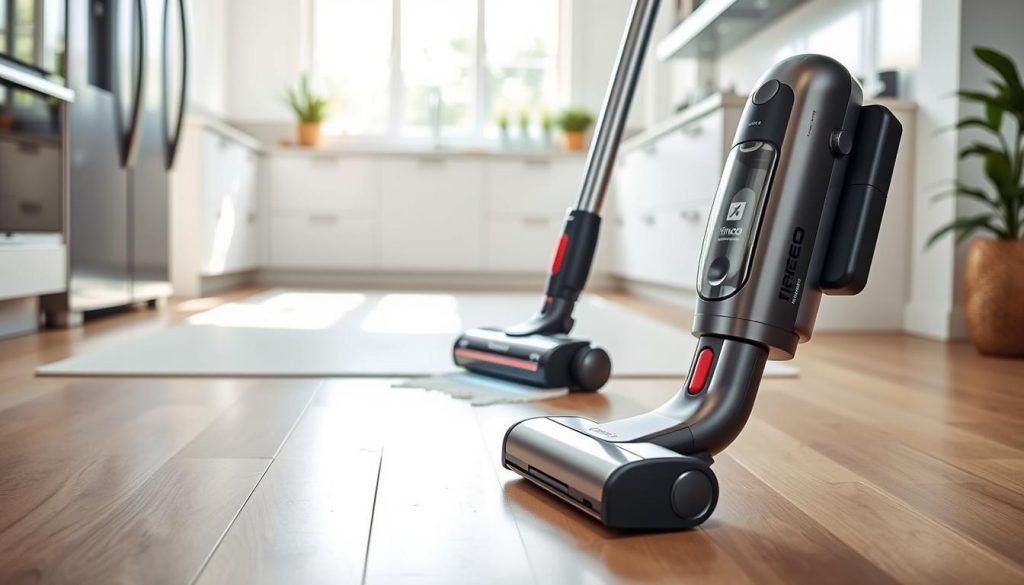
Smart iLoop sensing
The iLoop technology senses soil and adjusts suction and water flow automatically. That saves water and speeds drying on tiled floors.
Near-wall edge cleaning
A dual-side brush roller reaches about 0.5cm from skirtings. This improves edge cleaning and reduces the need for manual touch-ups.
Switchable floor washer and stick
The switchable design converts into a stick mode for rugs or corners. Use washer mode for large hard-floor runs and switch when you meet dry debris.
| Spec | What it means |
|---|---|
| Clean / dirty water | 1,000ml / 720ml — fewer refills and empties |
| Suction power | 22,000 Pa — strong pickup on hard floors |
| Runtime | 50–70 minutes depending on mode |
“Smart sensing cuts guesswork. It lets us focus on quick, hygienic cleaning without over-wetting floors.”
Ownership note: empty the dirty-water path after use, rinse the roller and leave chambers open to dry. Small daily habits keep odour and build-up at bay.
Best hot-water mopping: Dreame H15 Pro Heat when grease and stains are common
When kitchen grease and baked-on spills are regular, we prefer a model that uses heat to break down residues. The Dreame H15 Pro Heat channels hot water at 85°C directly to the roller, speeding stain removal and leaving a cleaner surface on tiles.
85°C flow to the brush for stubborn messes
Hot water at the brush softens oil and reduces repeat passes. In normal use the h15 pro can run up to 70 minutes; hot-water mode cuts that runtime to roughly 25 minutes.
Triple edge cleaning and lie-flat reach
The triple-edge system and flat-folding design reach skirtings and narrow gaps well. This improves edge cleaning in tight Singapore kitchens and under low cabinets.
Key specs and what to watch
Key figures: 22,000 Pa suction power, an 800ml clean water tank and a 650ml dirty tank. Weight is about 6kg and charge time near four hours.
What to watch: the heavy build and aggressive rollers may be harsh on delicate wooden floors. We advise lower power settings or skipping hot water on timber to protect finish.
“A specialist if kitchen grease and odour are your main problem — but allow for a bulkier, more powerful design.”
Most manoeuvrable: Narwal S20 Pro for edge cleaning and easy handling
In small Singapore flats, agility and edge reach often beat outright suction numbers in daily use. We pick the Narwal S20 Pro because it is lightweight, easy to steer and designed to clean close to skirtings with minimal fuss.
Triple-sided edge cleaning and flat-folding reach
Triple-sided edge cleaning means the unit cleans along skirting lines and around table legs where single-roller designs leave a margin. The flat-folding design helps us slide under sofas and low consoles—measure your clearance before buying to be sure.
AI Dirt Sense and five cleaning modes
AI Dirt Sense technology adjusts intensity as dirt levels change. That saves time compared with manual switching.
Five cleaning modes map to daily light cleans, heavier kitchen passes and quick spot work. Use the auto mode for most runs and switch only when a tougher stain needs attention.
| Spec | What it means in practice |
|---|---|
| 20,000 Pa suction power | Strong pickup without excessive weight |
| Clean / dirty water | 790ml / 720ml — likely enough for a small flat |
| Runtime / charge | Up to 60 minutes; ~3.5‑hour charge |
“Lightweight design and smart sensing make daily cleaning faster and less fiddly.”
What to watch: extra modes add choice but also complexity. Our simple routine: auto mode, quick empty of the dirty water tank, and leave the brush to dry after use.
Best for pet hair: Bissell CrossWave X7 Cordless Pet Pro
Pet households raise specific demands: hair, tracked-in dirt and sudden spills need a machine that lifts fur without tangling. The Bissell CrossWave X7 targets those needs with a dedicated Turbo Pet mode and an anti-wrap brush head.
Turbo Pet mode, when to use it
Turbo Pet mode boosts suction and brush action during shedding season or after rainy walks. It clears clumps of hair and embedded grit quickly, but it shortens runtime and increases noise.
Where it sits in mixed-surface homes
We find it works well on hard floors and low-pile rugs. It handles tracked-in debris better than a dry-only tool, though it is not a substitute for a deep carpet cleaner on thick pile.
Key specs and practical notes
Specs: up to 20,000 Pa suction power, 820ml clean tank and 420ml dirty tank, about 30 minutes runtime and ~4 hours charge time.
| Feature | Practical effect | What to expect |
|---|---|---|
| Turbo Pet mode | Stronger cleaning for fur and stains | More noise; shorter minutes per session |
| Clean / dirty tank | 820ml / 420ml | Less refills, more frequent dirty emptying |
| Suction power | Up to 20,000 Pa | Good pickup on mixed floors |
“A pet-focused mode and anti-wrap brush lower daily upkeep for busy pawrents.”
Who should buy: we recommend this model to pet owners who want a recognised pet mode, quick hair pick-up and flexible use across common Singapore flats without swapping tools constantly.
Best budget wet/dry: Simplus Cordless Wet-Dry Vacuum Cleaner for small flats
Small flats need tools that balance compact storage with enough power to remove everyday messes. We position the Simplus as a value pick that keeps cleaning practical without a premium price tag.
Strong suction on a lower price point for everyday debris
At 21,000 Pa, the unit offers notable suction power for its price. In practice this clears crumbs, pet hair and light kitchen debris in one pass.
What this means: solid pickup on sealed floors and fewer repeat passes in typical Singapore kitchens.
180° flat-folding design for under-furniture reach
The 180° fold and a 6.5cm brush head let us reach under low cabinets and sofas common in HDB layouts. This design reduces awkward lifts and speeds spot cleaning in tight spaces.
Key specs and realistic coverage
Clean tank: 500ml; dirty tank: 550ml. Runtime: up to 50 minutes. Weight: about 4.4kg. Charge time: ~4.5 hours.
Expect shorter sessions on bigger flats due to the smaller water tank, but enjoy lighter handling and simple tank emptying for quick, regular cleaning.
| Spec | Value | Practical effect |
|---|---|---|
| Suction power | 21,000 Pa | Good pickup of crumbs, hair and routine dirt |
| Clean / dirty tank | 500ml / 550ml | Frequent refills on large areas; adequate for small flats |
| Runtime | Up to 50 minutes | Enough for a kitchen and living area in one session |
| Design | 180° flat-folding, 6.5cm brush | Easier reach under furniture and tight corners |
“A value model that delivers the essentials: solid cleaning, compact storage and easy tank handling.”
Set expectations: at this price you trade premium sensors, quieter operation and advanced self-clean features. For small Singapore flats, though, the Simplus offers strong cleaning performance and sensible tank management that fits daily routines.
Dyson wet and dry options in Singapore: what you’re paying for
Dyson’s Submarine line brings stick-style wet dry cleaning to buyers who prize light handling and refined filtration.
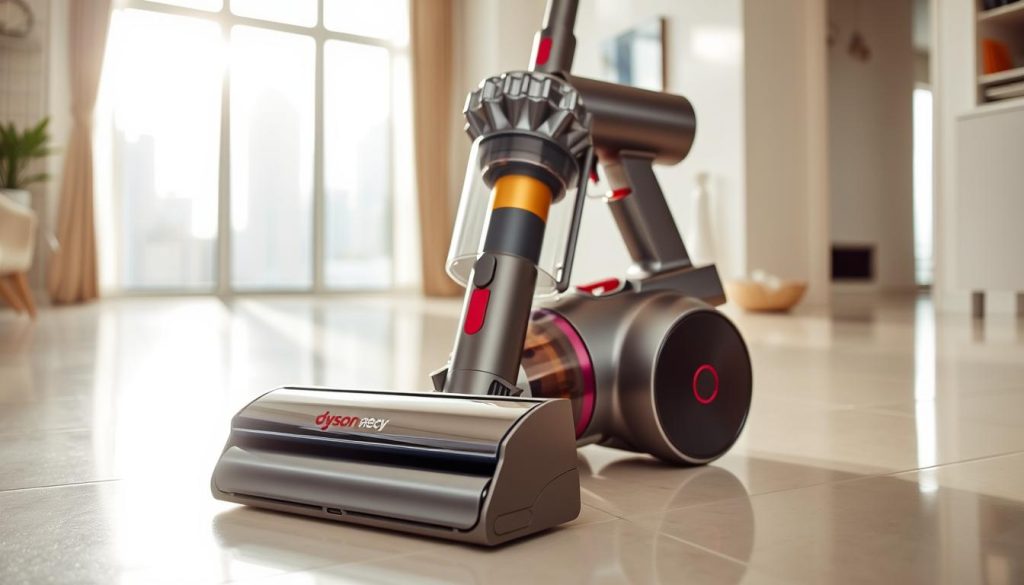
V12s Origin Submarine — lightweight, high Air Watts
The V12s Origin Submarine delivers 130 Air Watts and strong suction in a ~2.2kg wand. Its clean / dirty tanks are 300ml / 360ml, so a single run covers quick kitchens but not large flats.
Battery runtime reaches up to 60 minutes with a ~3.5h charge. Expect fast, modular cleaning rather than big-volume water handling.
V12s Detect Slim Submarine — HEPA and Fluffy Optic head
The Detect Slim adds HEPA filtration and a Fluffy Optic head that helps reveal fine dust on hard floors. At ~3.1kg and similar runtime, it focuses on air quality and visible results.
Digital Slim Submarine — slimmer trade-offs
The Digital Slim trades bulk for storage. It is easier to tuck away but offers around 40 minutes runtime, which may affect whole-flat plans.
“Dyson pairs advanced cyclone technology with premium build and filtration — that research and ergonomics explain a higher price point.”
In short, Dyson suits buyers who want a leading dry system with a wet-capable head as an add-on. If your priority is heavy mopping, a dedicated floor washer will usually give more water capacity and edge cleaning at a lower price.
| Model | Air Watts | Clean/Dirty (ml) | Runtime (minutes) |
|---|---|---|---|
| V12s Origin Submarine | 130 | 300 / 360 | Up to 60 |
| V12s Detect Slim Submarine | 140 | 300 / 360 | Up to 60 |
| Digital Slim Submarine | — | — | ~40 |
More strong contenders to consider for different homes and budgets
Some households need niche features rather than an all‑rounder; here are strong contenders that cover those gaps.
Dibea H8: pragmatic tank and self‑cleaning
Who it suits: buyers who want less daily fuss.
The H8 offers a 500ml clean / 600ml dirty water setup with 13,000 Pa listed suction and about 38 minutes in auto mode. Its built‑in self‑cleaning system reduces brush maintenance and helps keep odour at bay.
Trade‑offs: moderate power and weight (~3.7kg), but lower price and easier upkeep.
Dibea HC26: larger dual tanks for longer runs
Who it suits: flats needing extended wet coverage.
The HC26 steps up tank capacity to 700ml / 700ml and a longer handle reach. Manufacturers quote high Pa figures; treat extraordinarily large numbers as stated specs and compare real pickup in hard floors instead.
Shark HydroVac WD210SM: hygiene‑focused brush tech
Who it suits: those worried about odour control and bacterial build‑up.
Shark’s model uses antimicrobial brush rollers to limit smells from dirty water and damp debris. Specs show a smaller dirty tank and lower suction, but the antimicrobial design is a clear hygiene advantage.
Philips AquaTrio: a versatile 3‑in‑1 system
Who it suits: buyers who want vacuum, wash and a handheld in one package.
The AquaTrio doubles as a vacuums and wash system with auto‑clean features. It is ideal if you value above‑floor touch‑ups without extra tools, though expect a higher price and modest ongoing maintenance.
Tineco Floor One S9 Artist Steam: hot‑heat option for sticky stains
Who it suits: kitchens with frequent grease or sticky spills.
The S9 Artist adds steam via a high‑temperature boiler that delivers near‑100°C to the head. Hot water and steam boost stain removal on sealed surfaces, but they shorten runtime and require care on sensitive floors.
“Alternative picks help you match tank size, odour control and steam options to real household routines.”
How to choose based on your floor type and daily messes
Start with your flooring type; the right machine follows from how tiles, laminate or sealed wood react to moisture.
Hard floors first: tiles, vinyl, laminate, sealed wood considerations
Tiles hold grout grime and need strong agitation to lift trapped dirt. Vinyl can show streaks, so controlled water flow matters.
Laminate dislikes excess water; choose low‑flow settings and quick drying. Sealed wood tolerates less heat and aggressive rollers, so pick gentle modes.
Sticky spills and kitchen oil: when hot water or steam makes sense
Hot water and steam break down grease quickly and cut repeat passes on kitchen messes.
Use heat when oil haze or baked sauces are common. Avoid steam on delicate timber unless the system specifies it is safe.
Hair and crumbs: brush design, anti‑tangle and suction needs
Hair and crumbs often coexist. A soft anti‑tangle brush and balanced suction prevent clumping and scattering of dust.
Match suction power to the mess: higher suction for gritty debris on textured tiles; moderate suction with gentle brush action for pet hair on sealed floors.
“Pick the primary floor type + your most common mess + your tolerance for maintenance.”
Tank size, water flow, and cleaning time: what “capacity” really means
Tank capacity changes the pace of a cleaning session. We look beyond millilitres to show how size affects weight, interruptions and drying. The right balance keeps floors hygienic while limiting fuss during everyday use.
Clean water tank vs dirty water tank
Separation matters: a clean water tank supplies fresh rinse fluid while a dirty water tank holds used liquid and captured dirt. This system prevents re‑spread of grime and keeps the rinse action effective.
Practical note: models with a large clean tank but small dirty tank can require frequent emptying, which interrupts minutes of work and adds handling.
Choosing capacity for flats versus larger homes
In typical HDB flats we favour moderate capacity that keeps weight manageable and storage easy. Larger landed houses benefit from bigger tanks to reduce trips to the sink and save time overall.
Refill and empty frequency in real use
Oily kitchens and heavy debris fill dirty water rapidly; light living‑room passes use less water but still collect fine dirt and hair. Expect more frequent stops in greasy areas and longer runs in light rooms.
| Model | Clean / Dirty (ml) | Real‑world rhythm |
|---|---|---|
| Tineco S7 Stretch | 1,000 / 720 | Large run; few refills in small flats |
| Narwal S20 Pro | 790 / 720 | Balanced tanks; steady performance |
| Dreame H15 Pro Heat | 800 / 650 | Hot mode shortens minutes; earlier emptying |
| Simplus | 500 / 550 | Good for quick touch‑ups in small flats |
“Capacity is a use‑case decision: choose a tank set‑up that matches your floors, kitchen habits and tolerance for emptying.”
For a practical checklist and further selection tips we link our guide on choosing a suitable system: how to choose a wet‑dry machine. Follow simple emptying and rinsing steps after each run to avoid odour build‑up and prolong component life.
Battery life, runtime, and charging: planning a full-home clean
Understanding how long a battery will last in everyday runs is the first step to planning a full‑flat clean.
Different modes change usable minutes dramatically. Normal mode stretches runtime so a single run can cover a kitchen plus living area. High‑power or turbo cuts minutes fast. Hot water mode is the most demanding and should be treated as a stain‑treatment tool rather than a default.
Normal mode vs high‑power vs hot water: minutes that matter
We recommend mapping your flat size to typical minutes in normal mode, then reserving higher power for spots. Auto mode helps here; it reduces demand when floors are clean and extends useful runtime.
Charge time reality check and storage setup
Charge times commonly sit around 3.5–4.5 hours. That affects whether you can complete a single continuous session.
| Model | Typical runtime (normal / high / hot water) | Charge time |
|---|---|---|
| Dreame H15 Pro Heat | 70 min / ~30 min / ~25 min | ~4 hrs |
| Tineco S7 Stretch | 70 min (vacuum) / 50 min (washer) / n/a | 3.5–4 hrs |
| Bissell CrossWave X7 | ~30 min / ~15–20 min / n/a | ~4 hrs |
“Plan by minutes per mode, not by the headline figure on a spec sheet.”
Practical tip: place the base near a sink with good airflow, empty and air the brush path after use to avoid odour. Choose a longer‑running system when you need fewer interruptions; pick a lighter design when ergonomics and handling matter more than extra minutes.
Conclusion
In the end, the best pick balances how you live, what spills you face and how often you’ll use the machine.
We recommend five clear choices: the smart all‑rounder Tineco Floor One, the grease‑buster Dreame H15 Pro, the agile Narwal S20 Pro, the pet‑focused Bissell CrossWave X7 and the budget Simplus. Match a model to your main messes — spills, dust or pet hair — and to how much dirty‑water handling you tolerate.
Remember the buying truth in Singapore: hard floors demand good edge cleaning, controlled water and fast drying more than headline suction power. Focus on usable minutes, tank practicality and how well the brush and head reach edges. The best wet dry vacuum is the one you use every week; convenience keeps floors consistently clean.

