
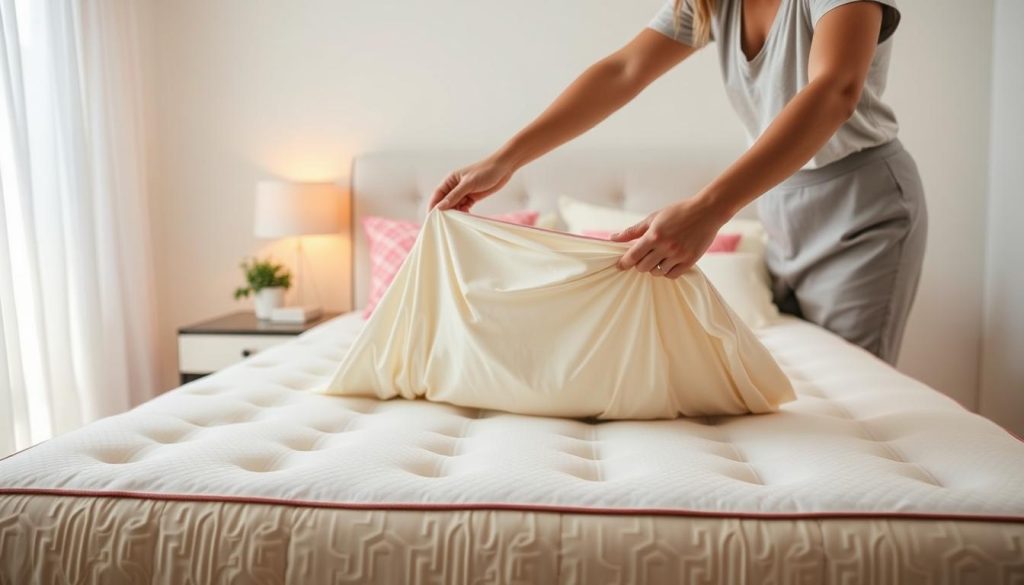
We outline a Singapore-ready method that targets surface dirt, trapped dust and odours while avoiding over-wetting and material damage. This introduction explains why thorough mattress cleaning matters for health and for better nightly sleep in humid climates.
What we aim to remove includes dust mites, dead skin cells, allergens and microscopic fungi. Our approach begins with dry removal, moves to targeted stain work and ends with deodorising and careful drying to prevent mildew.
We state clear expectations: one quick pass with a vacuum will not reset the surface. We show practical steps to follow, note how long the job takes in real homes, and who benefits most — families, pet owners and those with sensitive breathing. Our guide uses simple, widely available supplies and respects different mattress constructions and fabric care.
Why mattress cleaning matters in Singapore’s humid environment
In Singapore’s humid climate, moisture and microscopic life find easy footholds inside bedding layers. This creates conditions where dust, dead skin and sweat can combine with allergens and tiny fungi to harm comfort and air quality.
What commonly builds up in time is straightforward to list:
- Surface dust and debris that settles each night.
- Dead skin and body oils worked into fabric fibres.
- Allergens and mite fragments pushed into seams as the bed compresses.
How trapped allergens affect sleep and breathing
When particles are forced deeper with each use, routine wiping or a quick vacuum often cannot remove them. That entrapment can trigger stuffy noses, itchiness and disturbed sleep, especially for those with allergies or asthma.
We focus on health not just appearance. Our method begins with dry removal to lift dust before any moisture-based stain work. This reduces the risk of mould in our warm, humid environment and supports clearer breathing at night.
For further reading, see our full guide on effective methods and schedules: mattress care in Singapore.
When to deep clean mattress versus doing quick upkeep
Knowing when to move beyond routine upkeep helps preserve comfort and air quality. Light upkeep — a brief vacuum and immediate spot work — keeps things tidy. But some signs point to a more thorough approach.
Signs you need more than a light pass
Look for lingering odour, visible stains or a greyed surface. Night-time sneezing, itchy skin or a heavy, humid feel are also red flags. These symptoms suggest trapped allergens and body oils that simple vacuuming cannot remove.
How often we recommend service
For Singapore conditions we advise regular mattress cleaning at least once or twice a year. If you have pets, young children, eat in bed or sweat heavily, shorten that interval. High humidity and frequent use reduce the safe time between treatments.
Simple decision guide
If a stain is fresh and local, we spot treat. If multiple stains, widespread odour, or allergy symptoms persist, we recommend a deep clean mattress service. Always check the manufacturer’s care notes and assess the product’s condition before using liquids.
What we prepare before we start cleaning
Preparation reduces mistakes and speeds the job. We set the room, check the product care label and gather all supplies before we touch the surface.
Essential supplies
Our must-have items include a vacuum with an upholstery tool, baking soda, an enzyme cleaner or mild dish soap, clean white cloths, and cold water.
- Vacuum: low suction is advised on the first time to protect fibres.
- White cloths: prevent dye transfer and make stains easier to see.
- Cold water: safer for many stains and lowers the risk of setting marks.
Protecting the bed area and planning drying
We open windows and switch on fans or air‑con where possible. Keep the surrounding area clear so the surface can dry without obstruction.
Plan drying time before you start. In Singapore, the usual mistake is remaking the bed too soon and trapping moisture.
“Start small: use minimal product and a light touch the first time to avoid damage.”
Final care tip: always read the manufacturer’s label and avoid harsh chemicals that can harm foams or adhesives.
Strip the bed and wash bedding properly
First, we clear the bed of all covers and protectors so laundering can break the cycle of grime and allergens. This step stops dust and oils from returning to the sleep surface while we work.
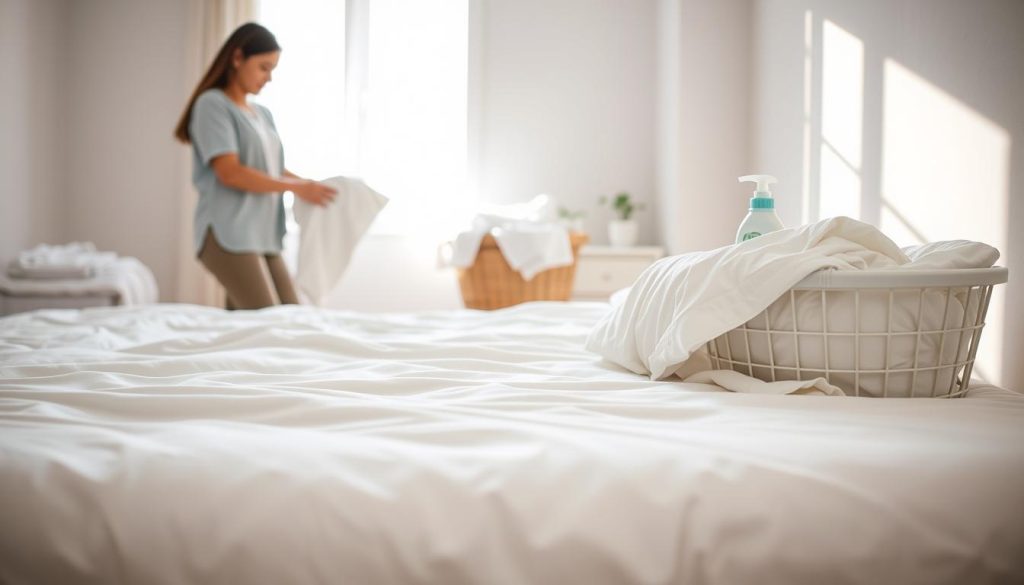
We strip sheets, pillowcases, bolster covers and the mattress protector in full. Cleaning the surface without laundering these items simply reintroduces irritants.
Washing method
Use the warmest wash the fabric label allows and a thorough cycle. Hot water can reduce dust mite levels when the textile tolerates heat, but we always follow the care tag.
- Dry fully before reuse — damp bedding traps moisture and encourages odours.
- Handle protectors gently and inspect seams for wear; a damaged protector no longer shields the product from spills.
- Run laundry early so linens are ready; avoid leaving the sleep surface uncovered overnight.
Practical tip: delicate fabrics may need cooler water or specialist care. Respecting labels preserves fibres and ensures better sleep by cutting down nightly irritants.
Vacuum mattress thoroughly to lift surface dirt
We begin by removing loose grit with a careful vacuum pass across the whole sleep surface. This step forms the foundation of our cleaning work because it removes dry dust and grit that would otherwise smear when we treat stains.
Where we focus: seams, edges and crevices that trap dust
Target the areas that hold the most grime. Move the upholstery tool along seams, piping, edges and any crevices. These spots trap dust and allergens and often get missed in routine upkeep.
How to use low suction safely, especially the first time
We use low suction on the first pass to protect delicate fabrics and stitched seams. Work methodically: top-to-bottom passes, then detailed seam work, then a final overall sweep.
- Set the vacuum to low and attach the upholstery tool.
- Run full-length passes across the surface, then concentrate on seams and edges.
- If the product allows, vacuum both sides; check the manufacturer’s guidance for one-sided designs.
Do not introduce moisture until the surface is fully free of loose particles. Removing dust and dirt first reduces the chance of driving debris deeper when we treat stains, and it helps us achieve a cleaner mattress at the end.
Spot-treat stains without soaking the mattress
We treat every mark with restraint: small amounts of product, patient blotting and strict moisture control. This approach reduces the risk of mould in our humid Singapore homes and protects internal layers from damage.
Blood, sweat and spill marks: our blotting-first approach
Press and lift with a clean white cloth rather than rubbing. Repeat until the visible stain lessens.
Rubbing spreads the mark and roughens the surface. Blotting moves liquid away without damaging fibres.
Enzyme cleaner versus mild dish soap foam
Use an enzyme solution for biological stains such as blood or sweat. Enzymes break down proteins and improve removal.
For coloured drinks or light dirt, we prefer a mild dish soap foam. Create foam on the cloth first, then blot.
Test first and control the amount of moisture
We always test any product in an inconspicuous area. Fabrics and dyes react differently, so this avoids surprises.
Apply product to the cloth, not directly to the surface. Follow with a second cloth dampened with cold water to lift residue.
“Less is more: limiting water is the fastest way to protect fillings and glue from failure.”
Realistic expectations and care cautions
Older or heat-set marks may lighten rather than vanish. For entrenched stains, professional extraction can do more.
- Avoid stiff brushes and aggressive scrubbing.
- Work gradually and let products act; patience preserves comfort and structure.
Deodorise and freshen the surface with baking soda
After blotting and drying, we treat the whole top with baking soda to neutralise smells and draw out dampness. This step follows dry removal and targeted stain work so each stage supports the next.
How long we leave baking soda to work
Leave the powder for at least 15 minutes. For stronger odours or in humid rooms, extend the time to several hours or overnight when practical.
Longer dwell time increases absorption of moisture and odours. We avoid heavy fragrance; the goal is a neutral, fresh surface ready to use.
Vacuuming again for a complete finish
Apply baking soda evenly in a thin layer. Use your hand or a sieve to avoid clumps and don’t push powder into seams where dust can hide.
Once the dwell time is up, vacuum thoroughly with an upholstery tool. Missed powder can feel gritty and attract dust, so work methodically across the entire surface.
| Step | Minimum minutes | Result |
|---|---|---|
| Sprinkle evenly | — | Even coverage without clumps |
| Let sit | 15–120 minutes | Absorbs odour and residual moisture |
| Vacuum | — | Removes powder and trapped dust for a fresher surface |
- Sequence: dry removal → stain control → baking soda → vacuum → final dry.
- Tip: if odour persists, repeat the powder dwell or consider professional service.
Drying the mattress fast and safely in our climate
Fast drying matters: even small amounts of trapped water will cause mildew and persistent odour in Singapore’s warm, humid environment.
We use simple ventilation tactics to cut drying time and reduce risk. Point a fan across the surface rather than straight down to push air along fibres. Run air‑conditioning to lower humidity and open windows to create cross‑breeze where possible.

Practical airflow and positioning
Elevate the base slightly if the product design allows. Propping the sleep surface by a few centimetres improves airflow to the underside, especially on platform beds.
Check the room layout. Place fans to create a flow from one side to the other rather than blasting one spot. This shortens time and evens drying across the area.
When to remake the bed
We never remake the bed until the surface is completely dry to the touch and smells neutral. Putting covers back too soon traps moisture and invites mould.
- Plan time realistically—avoid late‑day work that leaves the surface slightly damp overnight.
- If odour or dampness persists, extend ventilation or repeat drying steps.
Proper drying preserves comfort and supports better sleep. For extra guidance on managing spills and stains before drying, see our practical drying tips.
Deep cleaning a mattress at home: what DIY can and can’t do
We use practical home methods to keep sleeping surfaces fresh between professional visits. These steps help with visible grime and short-term odour, but they have limits when soils sit deep inside layers.
Where home methods work well for basic upkeep
Routine vacuuming lifts loose dust and surface dirt. Quick response to spills and using baking soda to neutralise odour are effective ways to maintain comfort.
Spot treatment with minimal moisture protects internal foams and adhesives. Regular care reduces buildup and extends the useful life of mattresses.
Where DIY falls short: deeply embedded dust mites, bacteria and entrenched grime
Household vacuums and sprays address what is accessible on the surface. They rarely remove dust and biological matter that has burrowed into cores or dense seams.
Professional-grade steam and extraction reach deeper layers and remove trapped dirt, dust mites and bacteria more effectively. If allergy symptoms persist or odour returns after home work, consider this route.
“DIY is sensible, but over‑wetting and under‑drying are common mistakes — plan for ventilation and restraint.”
| Issue | DIY result | Professional result |
|---|---|---|
| Surface dust and spills | Good with vacuum and blotting | Thorough with extraction |
| Entrenched biological matter | Limited reduction | Significant removal with steam/extraction |
| Persistent odour | May recur | Often resolved |
Our view: use home care regularly to reduce triggers, but choose professional service when long-term odour, multiple stains or allergy issues remain. The aim is better sleep and less build-up over time.
Professional deep cleaning methods we may consider for a true reset
When home methods no longer restore comfort, we look to professional options for a robust reset.
When to choose pro work: after long use, persistent allergies, stubborn stains or when households need a stronger hygiene reset than DIY can deliver.
High-heat steam for intensive sanitisation
Steam treatment uses very hot vapour to reduce microbes and allergens. Some providers cite temperatures up to 170°C to target hygiene concerns.
Note: high heat can suit some products but may harm foam or glued layers. Always check suitability for your product type and size.
Deep extraction for stain removal and allergen reduction
Extraction rinses and lifts contaminants from inner layers. It supports effective stain removal and reduces dust mites more than surface care.
UV-C disinfection as a dry option
UV-C offers chemical-free sanitisation and usually requires no drying time. Many services market this as suitable for most mattresses and sizes, but materials differ.
Expectation: professional work often cuts buildup significantly, yet results depend on stain age, prior care and product condition.
- Match method to product type (memory foam, latex, hybrid, pocket-sprung).
- Confirm service compatibility with your mattress size and warranty.
What to expect from a professional multi-step service
A professional multi-step service begins with a careful inspection to map stains and high‑use zones. This helps us decide the safest method and where to apply focused attention.
Pre-inspection and targeted attention on stained areas
Technicians note fabric type, visible stains and worn seams. We mark hot spots so each stage treats the right area without unnecessary wetting.
Sanitising for virus and bacteria elimination
Sanitising follows dry vacuuming. We use approved fabric disinfectants to reduce microbes on contact surfaces and lower odour linked to sweat.
Shampooing and gentle scrubbing for odour and body oil removal
Shampooing breaks down body oils and trapped dirt. We scrub gently to avoid damage and to lift residues that simple spot work cannot remove.
Hot steam with hot water injection for deep rinsing
Some providers add hot steam and water injection for thorough rinsing. This stage loosens embedded grime while controlled heat and water speed the rinse process.
Deep extraction to remove dirt, dust mites and excess moisture
High‑power extraction pulls out loosened dirt, dust and residual water. This reduces drying time and helps restore surface comfort.
“A clear pre-inspection and staged approach is what separates routine upkeep from true professional mattress cleaning.”
Typical service time is often around 1–2 hours on site, depending on size and stains, plus additional drying time. The outcome is less allergen load, reduced odour and improved comfort for sleepers in Singapore homes.
Keeping your mattress clean for longer after a deep clean
Small, regular steps prolong the life and comfort of your sleeping surface. We focus on prevention first, since that saves time and reduces the chance of recurring odour or stains.
Using a protector to stop stains from sinking in
Use a quality waterproof protector. It prevents spills and body oils from reaching inner layers. Replace or wash the protector when it looks soiled.
Monthly vacuuming and immediate spot care
We vacuum monthly to remove dust and surface grit. For spills, blot quickly and treat immediately to avoid set stains. Quick action limits how often you need deeper service.
Placement and ventilation to reduce moisture build-up
Allow airflow under the bed and avoid pushing the frame tight against walls. Run a fan or air‑conditioning when possible to lower indoor humidity in our humid environment.
“If odour returns quickly, check room humidity or consider professional intervention.”
| Routine | Frequency | Benefit |
|---|---|---|
| Vacuum top and seams | Monthly | Removes dust, reduces allergens |
| Wash bedding and protector | Biweekly–Monthly | Stops reintroduction of grime |
| Spot treat spills | Immediate | Prevents set stains and odour |
| Ventilate room | Daily where possible | Reduces moisture and mould risk |
Our view: ongoing care cuts how often you need heavy work and keeps your sleep surface fresher for longer.
Conclusion
To wrap up, we recommend a clear order of steps to protect nightly rest. Strip and wash bedding, vacuum thoroughly, spot‑treat stains with minimal water, sprinkle baking soda for at least 15 minutes, then dry fully before you remake the bed.
Moisture control is the single most important rule in Singapore’s humid environment. Keep the surface completely dry to avoid odour and mildew and to preserve foam and glued layers.
Regular, small acts of care reduce dust, dirt and skin oils over time and help ensure a good night sleep. If odours persist or widespread stains remain, consider a professional deep clean mattress service.
If you have any questions about your product type, drying time or items to use, contact us — we will advise the safest way for your area and condition.

