

We provide an on-site solution tailored for Singapore’s hot, humid climate. Mattress protectors help, but they do not keep beds entirely free of organisms or allergens. In warm conditions, pests and bacteria can penetrate layers and affect guest health and comfort.
Our approach to mattress cleaning focuses on clear, measurable outcomes. We aim for hygienic results, odour control and improved guest rest beyond routine turnover. That means deeper work inside fillings and fabrics, not just surface tidying.
Cleanliness shapes how guests judge a room. Good hygiene lifts reviews, boosts repeat bookings and supports brand trust. We design predictable schedules, consistent results across multiple beds and simple reports for management so decisions are straightforward.
Read on to find hygiene risks, warning signs, what we remove, methods, process, frequency, safety and expected outcomes for operators in Singapore.
Hotel mattress hygiene in Singapore’s hot, humid environment
Singapore’s humidity creates a persistent risk for bed hygiene that routine turnover cannot fix. Warm, moist air and poor ventilation inside layered bedding produce a micro‑environment where dust mites, bacteria and mould thrive. This is a maintenance issue for rooms, not a one‑off problem.
Why protectors are not enough
Protectors reduce surface soiling but cannot seal seams, edges or inner layers. Dust, skin flakes and food particles still reach internal fillings. Over time, those deposits feed mites and microbes despite a cover being in place.
What builds up inside poorly ventilated mattresses
Poor airflow traps moisture. Dust mites feed on organic debris and multiply rapidly—females may lay around 300 eggs in a lifetime. Without intervention, counts can reach millions and produce large volumes of excrement linked to allergy symptoms.
“A warm, damp interior encourages microbial survival and dust mite activity long before stains appear.”
| Risk | Cause | Guest impact |
|---|---|---|
| High mite populations | Poor ventilation, organic debris | Allergy symptoms, itchiness |
| Microbial growth | Moisture retention | Stale odour, perceived dampness |
| Hidden soiling | Seams and layers not reached by covers | Complaints that are hard to trace |
We frame routine mattress cleaning as part of broader room hygiene, complementing housekeeping and reducing complaints. For guidance on regular schedules and professional options, see our recommended approach at mattress cleaning.
Signs your mattresses need professional mattress cleaning
When occupants report restless nights, odours or skin irritation, internal soiling is often the cause. We recommend looking for simple, repeatable clues that indicate a deeper intervention is required.
- Disrupted sleep or complaints about restless nights despite fresh linen being applied.
- A lingering odour that appears when sheets are changed.
- Visible stains that resurface through bedding.
Health-related indicators
- Sneezing, nasal congestion or mild coughing that worsens overnight.
- Itchy skin, rashes or flare-ups that point to allergen exposure.
- Worsening asthma or allergic rhinitis linked to particles trapped inside the bed.
“A lingering odour or repeated respiratory complaints often signal allergen build-up, not surface dirt.”
| Sign | Likely cause | Action priority |
|---|---|---|
| Restless sleep | Allergen or odour in layers | High — schedule professional mattress cleaning |
| Visible stains / odours | Moisture, perspiration or spills seeping through | Immediate — spot treat and deep clean |
| Sneezing / itchy skin | Dust mites or mite faeces | High — prioritise rooms with repeat complaints |
How we prioritise
We focus first on repeated complaints, long‑stay occupancy and family rooms. This reduces room moves and improves guest satisfaction while managing health risk across the property.
What our hotel mattress cleaning service removes
We remove the invisible build-up that undermines guest comfort and room hygiene.
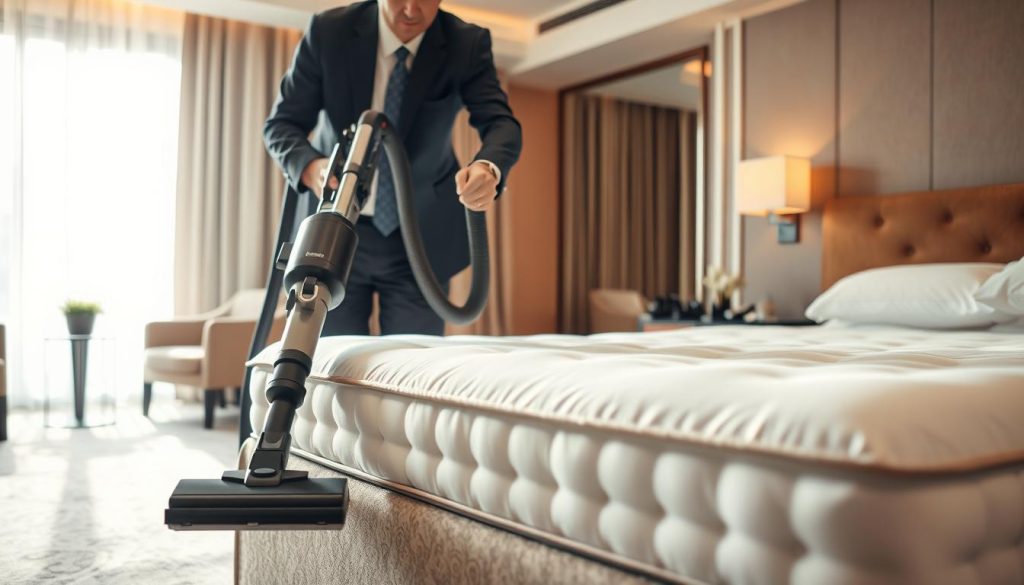
- Dust mites and mite faeces: These are major allergen triggers linked to asthma and allergies in humid climates. Removing mites reduces overnight symptoms and guest complaints.
- Bacteria, viruses, mould and spores: Microbial growth creates odour and potential health risk. Effective bacterial removal improves perceived cleanliness and hygiene reassurance.
- Dead skin cells, body oils and perspiration: Organic matter builds up invisibly and feeds mites. Extraction of these materials stops the cycle of re‑infestation.
- Food residue, tracked-in dirt and embedded dust: These operational issues survive linen changes and normal vacuuming. Deep removal restores appearance and reduces stains.
Surface vs deep
Visible marks are only part of the problem. Surface freshness can hide deeper contamination. Our removal approach reaches inner layers to reduce allergens and odour, supporting consistent room standards and fewer guest complaints.
Our professional mattress cleaning methods for hotels
We offer targeted sanitisation methods to match mattress type, turnaround and guest sensitivity.
UV-C disinfection for 100% dry sanitisation and allergen control
UV-C provides chemical-free sanitisation with no drying time required. It is safe for use around babies and pets and claims 99% effectiveness against germs and allergens.
Mattress steam cleaning for high-heat germ and allergen reduction
Steam uses hot vapour to break down oils and reduce microbial load. It is effective for heavy soil but depends on fabric heat tolerance and adequate drying.
Deep cleaning and extraction to lift moisture, dirt, stains and odours
Extraction combines targeted agents with powerful suction to remove embedded dirt, lighten stains and reduce odours. It is the go-to for beds with long‑term soiling.
Dry cleaning as a chemical-free option
Dry methods use low‑moisture powders or encapsulation to remove particles while keeping turnaround fast. This suits quick room release and moisture‑sensitive fillings.
BioShield treatment for longer-lasting hygiene support
BioShield adds a protective layer that helps suppress microbial regrowth between scheduled work. Combining methods creates a repeatable standard for Singapore’s humid, high‑turnover environment.
| Method | Best use | Room impact |
|---|---|---|
| UV-C | Rapid sanitisation, allergy control | No drying time, fast release |
| Steam | High-heat germ reduction | Strong sanitising; requires drying |
| Deep extraction | Embedded dirt, stains, odours | Thorough removal; longer turnaround |
| Dry cleaning | Moisture-sensitive materials | Quick, chemical-free |
| BioShield | Longer-lasting protection | Extends period between services |
Our on-site cleaning process, designed for hotel operations
We run a predictable on‑site process that fits into busy room turnarounds. Our aim is minimal disruption, clear handover back to housekeeping and consistent results within the scheduled time.
Complimentary inspection and pest indicators
We begin with a complimentary inspection that looks for visible signs of bed bug activity and other issues. This helps managers decide whether pest control escalation is needed.
Method selection led by our consultant
Our consultant selects the appropriate method — dry, steam or deep extraction — based on fabric type, staining severity and guest health concerns. The chosen approach keeps turnaround time predictable.
Targeted stain treatment
We treat common stains (sweat, spills, urine, blood) with fabric‑specific agents. Treatments are selected to protect covers and fillings while addressing the mark directly.
Deep sanitisation and deodorising
We clean through layers, not just the surface. Deep sanitisation removes embedded contaminants and a neutralising deodoriser reduces lingering odours rather than masking them.
Post-clean recommendations
- Protector use and improved ventilation between stays.
- Rapid reporting and response for new stains or incidents.
- Simple staff steps to preserve results until the next scheduled visit.
How often hotels should schedule mattress cleaning in Singapore
Regular scheduling keeps rooms guest-ready and cuts the risk of hidden allergens in Singapore’s climate.

We recommend a balanced framework that fits operational time and guest needs. For general maintenance, plan work every 3–6 months to counter humidity and high turnover. This cadence helps control odours and slow allergen build‑up without frequent room downtime.
General maintenance
Every 3–6 months is our baseline for routine upkeep in Singapore. This frequency suits most rooms and keeps health risks manageable.
Higher‑frequency triggers
Increase frequency when there are visible stains, recurring odour complaints or guests with allergies. For allergy-sensitive occupants, we advise intervals of once every 1–2 months until symptoms subside.
After specific events
Schedule professional intervention immediately after illness recovery, bedwetting incidents or any event that introduces moisture and bio‑residue. Prompt action prevents long‑term damage and guest escalations.
- Tier by room type: family and long‑stay rooms deserve more frequent attention.
- Operational benefit: planned cycles reduce last‑minute moves and negative reviews.
- Note: protectors and routine housekeeping support results but do not replace periodic deep work by trained teams.
| Need | Recommended time | Priority |
|---|---|---|
| General maintenance | Every 3–6 months | Medium |
| Allergy-sensitive guests | Every 1–2 months | High |
| After incidents (illness, wetting) | Immediate | Critical |
Safe, eco-friendly cleaning solutions for guests and staff
We combine non‑toxic agents and targeted techniques to preserve fabric integrity and indoor air quality. Our approach uses certified, biodegradable solutions that protect children and staff while still tackling bacteria and dust.
Fabric-specific products matter. Different mattress constructions need controlled moisture and tailored chemistry. We select low‑residue options to avoid lingering odour and to speed room turnaround.
Child-safe choices are central for family rooms and properties that welcome children. Where possible we pair low‑moisture extraction with UV‑C or dry methods to reduce chemical exposure.
Safety supports operational confidence. Housekeeping can remake beds quickly without worrying about harsh residues, and managers can report measurable improvements in air quality and guest comfort.
| Option | Best for | Benefit |
|---|---|---|
| UV‑C | Low‑residue needs | Chemical‑free, rapid return to home use |
| Low‑residue extraction | Heavily soiled fabrics | Removes grime with minimal moisture |
| Encapsulation / dry | Sensitivity to moisture | Fast, child‑safe and sustainable |
Next: how these safe methods still deliver measurable freshness, comfort and reduced allergen triggers after professional mattress cleaning.
What you can expect after our mattress cleaning services
After a professional visit you will notice immediate, tangible improvements in room odour and guest comfort.
Fresher rooms, fewer allergy triggers and improved sleep comfort
Rooms smell fresher and guests report fewer night‑time irritations. Deep cleaning reduces dust, dust mites and trapped allergens that cause snoring, sneezing and restless sleep.
Extended mattress lifespan by reducing grime-driven wear and tear
Removing embedded dirt and oils slows material breakdown. That preservation helps protect capital and keeps beds looking newer between replacements.
Efficient turnaround times to minimise disruption
Our on‑site team plans the process for quick results. Typical time per item is about 1–2 hours, depending on size and method chosen.
“Fewer room moves and fewer compensation claims are clear, measurable outcomes for properties that maintain a regular schedule.”
| Outcome | Benefit | Typical result |
|---|---|---|
| Allergen reduction | Fewer guest complaints | Lower reports of allergies and irritation |
| Odour neutralisation | Better guest perception | Noticeably fresher rooms after work |
| Asset protection | Extended lifespan | Slower wear from grime and dust |
| Fast turnaround | Operational fit | 1–2 hours per item, team‑led process |
Our recommendation: pair scheduled deep interventions with simple between‑clean upkeep to keep standards steady across all mattresses and rooms in Singapore.
Conclusion
Maintaining deep hygiene for beds is a core operational priority in Singapore’s humid climate. Humidity and high turnover let hidden soiling build up despite protectors. Regular mattress cleaning keeps rooms fresh and reduces guest complaints.
We deliver on‑site, method‑matched work that fits housekeeping schedules. Our approach aims for quick turnaround, measurable results and longer asset life.
For next steps, request a quote and we will propose a site assessment, room counts, preferred windows and phased plans. Same‑day or next‑available scheduling is possible where feasible.
We can inspect for tell‑tale signs of bed‑bug activity and improve hygiene, but confirmed infestations need pest control in parallel. Learn more about why a professional clean helps: why a professional clean helps.

