

Welcome. In this article we explain what counts as a “wet mattress” in real homes — spilt drinks, accidents, pet mishaps and leaks — and why it is a time‑sensitive hygiene issue rather than mere appearance. Acting fast reduces drying time, limits odour and allergy risks, and helps stop mould and structural harm, especially in foam mattresses that soak up liquid quickly.
We set out what success looks like: remove liquid, prevent odour and allergen build‑up, reduce mould risk and restore comfortable sleep without over‑soaking the surface again. We also clarify what is safe to handle at home and when to seek professionals if the core stays soaked or smells persist after repeat cleaning.
At a glance — our high‑level method is simple: strip, blot, treat, deodorise, dry. Below we cover why speed matters, what to gather, step‑by‑step instructions, targeted urine and stain fixes, and prevention tips aimed at Singapore’s humid climate.
Why acting fast matters when your mattress gets wet in Singapore
A fast response turns a minor spill into a simple fix rather than an ongoing problem. In Singapore’s humid climate, trapped moisture evaporates slowly. That gives odours and microbes time to take hold and makes effective drying much harder.

How trapped moisture affects health and comfort. Dampness feeds dust mites and microbial activity. This can worsen allergy symptoms and harm sleep quality if we delay prompt action.
Why surface drying is not enough
Liquid on the surface can migrate into foam and padding overnight. Even a small wet area may lead to a stubborn smell or deep dampness.
Why some constructions hold liquid and odour
Foam mattresses absorb quickly and retain odour longer than hybrid or layered designs. Quilted layers may hide moisture pockets that need longer ventilation and repeat deodorising.
- Act fast in humid weather to reduce mould risk.
- Assess the affected area and feel for cool, damp spots to gauge severity.
- Our goal: control moisture, clean and deodorise, then dry through to the core.
For tips on speeding drying times, see our guide to drying a mattress fast.
Wet mattress cleaning essentials we gather before we start
Preparation saves time: collect the right supplies before we touch the affected area. This lets us act quickly and limits further moisture penetration.
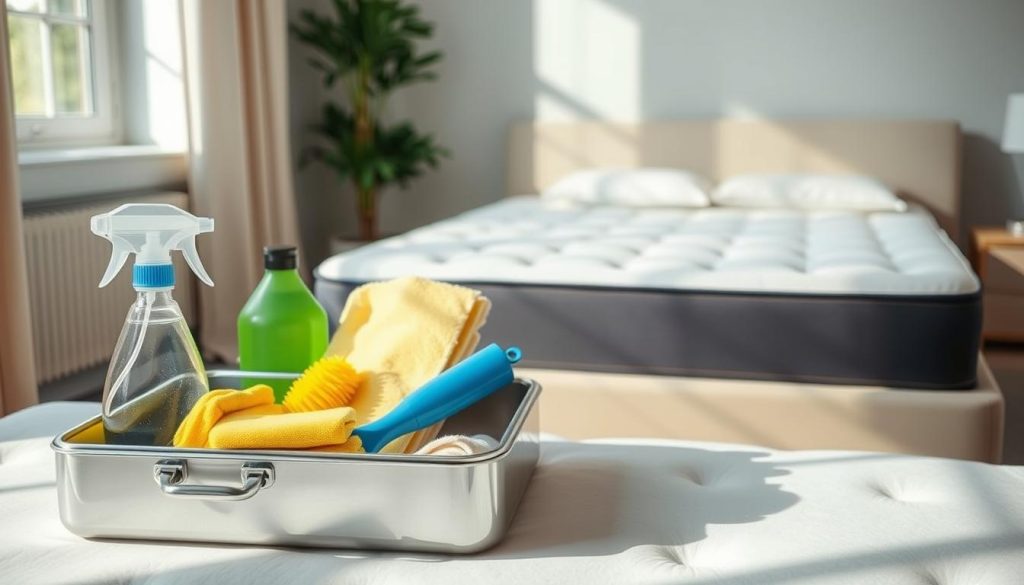
Absorbent towels, cold water and a vacuum for moisture control
We bring plenty of absorbent towels for blotting. Cold water is best when we need to rinse spots without setting stains.
A dry vacuum or regular vacuum finishes by removing powder residues and stray fibres.
Distilled white vinegar and detergent for a simple solution
Our go-to mix is a 1:1 ratio of distilled white vinegar and water with 1–2 tablespoons of laundry detergent in a spray bottle.
This simple solution targets odour and residue while avoiding harsh chemicals that can damage foam or coverings.
Baking soda for moisture draw-out and deodorising
Baking soda pulls moisture and neutralises smells. We apply a thick, even coat rather than a light dusting for best effect.
Wet-dry vacuum and airflow helpers for faster drying times
For heavy soaking, a wet-dry vacuum extracts liquid from deeper layers. Fans, a dehumidifier or an air-conditioned room speed drying and reduce mould risk.
| Item | Purpose | Tip |
|---|---|---|
| Absorbent towels | Blot excess water | Use thick, clean rags; replace when saturated |
| White vinegar + detergent | Odour and residue removal | Mix 1:1 with water; test on a small area first |
| Baking soda | Draw moisture, deodorise | Apply a thick layer; leave for several hours |
| Wet-dry vacuum & fans | Deep extraction and airflow | Use for soaked incidents; ventilate the room |
Step-by-step wet mattress cleaning method for spills and accidents
A clear, repeatable routine keeps stains small and drying times short. We follow a firm order so each step works for the next. This method helps control odour and reduce moisture in Singapore’s humid rooms.
Strip and launder fast
We remove sheets, protectors and covers immediately and launder them. Fast washing stops a stain from setting and prevents odour returning to the bed.
Blot — don’t rub
Using absorbent towels, we press with the flat of the hand, lift and move to a clean spot. Rubbing spreads the stain and forces liquid deeper into the layer.
Apply vinegar-and-detergent solution
We mix 1:1 distilled white vinegar and water with a small splash of detergent in a spray bottle. Lightly mist the area, let it sit for about 15 minutes, then blot again until mostly dry.
Baking soda dwell and vacuum
Coat the damp area with a thick layer of baking soda. Leave for 4–6 hours for light spills or overnight for stronger odour. When dry, vacuum all residue thoroughly and re-check for stains and smell.
Elevate, ventilate and the soaked-areas branch
We prop the mattress upright and place fans or an air‑con unit nearby to speed evaporation to the core. For heavily saturated areas, use a wet-dry vacuum first to extract liquid, then return to baking soda and strong airflow.
| Action | Why | Timing | Tip |
|---|---|---|---|
| Strip bedding | Prevents stain setting | Immediate | Launder on warm cycle |
| Blot with towels | Removes excess water | Minutes | Press, don’t rub; use clean areas |
| Vinegar + detergent spray | Breaks down residue | 15 minutes dwell | Test on a hidden spot first |
| Baking soda & vacuum | Draws moisture; neutralises odour | 4–8+ hours | Vacuum thoroughly; repeat if needed |
Caution: avoid leaving the surface flat on the floor while drying; trapped moisture prolongs damage. If stains persist after two cycles, we consider professional help to protect the mattress from long‑term harm.
Targeted fixes for urine, pet accidents and stubborn stains
A focused approach separates ordinary spills from incidents that leave odour‑causing residue. Urine needs neutralisation, not just surface spot removal. We treat pet and child incidents with slightly different priorities to protect sleep and fabric.
When to choose an enzyme cleaner
For pet urine, enzymes are our first choice. They break down odour compounds that homemade mixes cannot fully remove. Using an enzyme cleaner reduces the chance a pet will mark the same area again.
Older urine stains and careful peroxide use
For set‑in urine we repeat the vinegar and detergent spray cycle: spray 1:1 vinegar‑water with 1–2 tbsp detergent, wait ~15 minutes, blot, then apply a thick layer of baking soda for at least 8 hours and vacuum.
If stains persist, a controlled mix of hydrogen peroxide, baking soda and a few drops of detergent can help. We spot‑test first and avoid over‑wetting to protect foam and latex.
What to avoid and prevention tips
Avoid bleach and harsh agents. They degrade fabric, damage fillings and leave residues unsuitable for a bed surface.
| Issue | Preferred action | Why |
|---|---|---|
| Fresh urine | Blot → vinegar+detergent spray → baking soda → vacuum | Neutralises odour and draws moisture |
| Pet repeat marking | Enzyme cleaner → air dry → consider barrier/protector | Breaks down odour molecules; reduces repeat behaviour |
| Set‑in stain | Repeat vinegar cycles; peroxide mix as last resort | Multiple treatments and drying prevent trapped moisture |
We treat bedwetting with empathy. It is common in young children, so focus on quick cleanup and practical steps: use a protector, encourage routine toilet breaks and limit pet access if accidents recur.
For more detailed guidance on removing urine smell and stains, see removing urine smell and stains and our practical stain removal tips.
Conclusion
A simple sequence — act fast, treat, deodorise and dry — is the quickest way to limit harm.
We remove excess moisture immediately, blot gently and apply a tested solution such as a white vinegar mix for odour control. Then we use baking soda to draw out smells and air the core thoroughly.
Use a wet‑dry vacuum for heavy water exposure; extraction cuts drying time and lowers odour risk. Keep fans or air‑conditioning running and do not remake the bed until fully dry.
For long‑term defence, invest in a quality waterproof mattress protector that balances breathability and barrier function. For more on what to use and how, see our guide on what to use to clean a.

