

We set clear expectations. In this short guide we present a practical, step-by-step routine for homes in Singapore, where humidity can slow drying and cause musty smells.
We treat the mattress as a major household investment. Regular care protects comfort and hygiene without specialist equipment, and it helps extend lifespan.
Our simple flow is: strip the bed, vacuum seams and crevices, spot-treat stains with minimal moisture, deodorise with baking soda for at least 15 minutes, then vacuum and air out. We stress minimal wetting, since excess moisture can slow drying and encourage mould.
We will also cover common stains — everyday marks, sweat, blood and urine — and recommend low-water methods and suitable cleaners. Small habits like airflow, a good protector and twice-yearly upkeep often bring better sleep and a fresher night.
Why cleaning your mattress matters for healthier sleep in Singapore</h2>
Night after night, our beds collect more than comfort — they gather dust, sweat and microscopic guests. In a warm, humid climate like Singapore this build-up grows faster and can make bedrooms feel stuffy.
- Dust and dust mites that feed on dead skin and increase allergens.
- Body oils and sweat that attract bacteria and make fabrics smell.
- Pet dander and other debris that raise allergy and irritation risk.
Why this matters for night sleep
Allergens and bacteria can trigger congestion, itchiness and restless nights. Even with a protector, debris builds up and affects comfort.
Preventative care and lifespan
Regular mattress cleaning helps materials perform as intended and keeps the surface fresher. A baseline of about twice a year and rotating head-to-foot, when allowed, reduces uneven wear.
For households with children, pets or allergy sufferers, a deeper clean routine is especially valuable. We view maintenance as care for the bed, not just a cosmetic task, so it lasts longer and feels better every night.
Get set up before you start: tools, products and airflow</h2>
A small kit and a dry plan make the process far easier in humid Singapore. Gather supplies, pick a dry day if you can, and set a realistic time window for airing and drying.
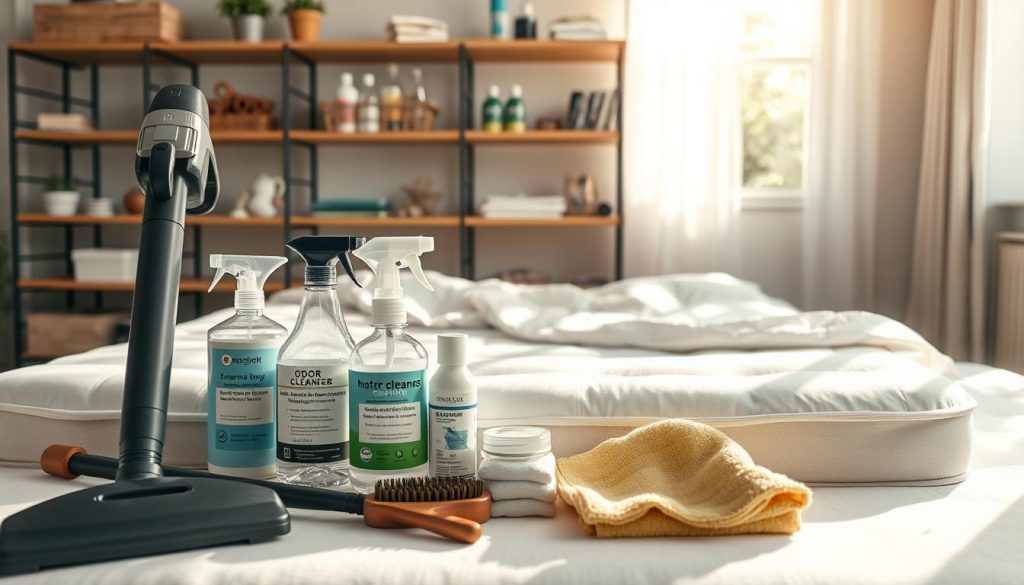
Mattress cleaning supplies we recommend having on hand
We keep this core list ready: a vacuum cleaner with an upholstery attachment, baking soda, clean white cloths, an enzyme cleaner or mild detergent, and cold water.
Choosing a suitable cleaner: enzyme, mild detergent and vinegar
Enzyme products work best on organic stains and odours. Mild detergent foam suits everyday marks. Diluted white vinegar is useful for deodorising, but avoid bleach and harsh chemicals.
| Product | Best for | Caution |
|---|---|---|
| Enzyme cleaner | Organic stains, odour | Test first on hidden area |
| Mild detergent | Everyday marks | Use as foam, minimal water |
| White vinegar (diluted) | Deodorising support | Strong smell; ventilate |
Create a well-ventilated space and plan drying time
Open windows, run a fan and keep doors open before you start. In Singapore we allow several hours for drying and will not remake the bed until the surface feels fully dry.
“Good ventilation is the simplest way to prevent mildew and speed safe drying.”
Test first: always try any solution on a hidden patch of fabric before using it widely. For a full routine, follow our step-by-step guide at our step-by-step guide.
Strip the bed and clean your bedding properly</h2>
Begin with a clear bed: remove sheets, pillowcases and any covers that hide dust and damp.
We strip everything off so the sleeping surface is easier to inspect and treat.
Washing sheets, pillowcases and protectors to reduce dust mites
Follow each item’s care label. Hot washes reduce dust mites where fabric allows, but delicate fibres need cooler cycles.
Wash bedding, pillowcases and protectors separately from other laundry. Dry fully in sun or a heated dryer when possible.
- Strip fully so trapped dust and moisture are removed.
- Wash by label and favour hotter settings for cotton if safe.
- Time the wash so fresh sheets wait until the surface is completely dry.
| Item | Recommended wash | Notes |
|---|---|---|
| Sheets | Warm or hot (if label allows) | Reduces mites; faster drying helps prevent mildew |
| Protectors / encasements | Warm wash; tumble dry low | Protects mattress from spills and wear; easy to launder |
| Pillowcases | Warm wash | Wash more often if night sweating or allergies occur |
Mattress protector or encasement acts as ongoing keep mattress insurance. It handles most spills and everyday wear and is cheaper than early replacements.
For a fuller stain routine, see our step-by-step guide at bed-stain guide.
how to clean mattress with a thorough vacuum routine</h2>
A careful pass with the right attachment lifts years of dust from seams and tufting. Vacuuming is the foundation of our deep clean routine because it removes dry dust and debris first. This prevents us from rubbing grime deeper into the fabric when we treat stains.

Upholstery attachment technique
Use an upholstery attachment and set the vacuum to low suction if needed. Make slow, overlapping passes across the entire surface so we lift particles without stressing delicate coverings.
Where we focus
Concentrate on seams, edges, tufting, labels and crevices — these trap the most dust, mites and allergens. Take extra passes along piping and hand-stitching where fibres gather.
When the right attachment is unavailable
If you lack a suitable attachment, a soft brush gently agitates the fabric so the vacuum can pick up dust. Alternatively, use a barely damp microfibre cloth with a minimal amount of moisture and pat the surface, then vacuum the loosened residue.
“Consistent vacuum work keeps mattresses hygienic and makes later stain removal easier.”
- Rotate, don’t always flip: Only vacuum both sides if the design allows safe handling; most modern mattresses are not meant to be flipped.
- Routine: Regular vacuuming helps keep mattress hygiene high and supports longevity.
Spot-clean mattress stains without soaking the fabric</h2>
Targeted spot work keeps stains shallow and stops unpleasant smells from setting in. We use minimal liquid and quick action so the surface dries in hours rather than staying damp.
General method: blot, don’t scrub
Blot first. We spray a small amount of enzyme cleaner onto a clean cloth, not directly onto the stain. Then we blot from the outside in to avoid spread.
Dealing with sweat and body oils
For sweat marks we use a mild detergent foam or enzyme cleaner. Apply the product to a cloth, dab gently and repeat until the mark fades. Keep water to a minimum so the filling does not stay wet for hours.
Removing blood with cold-water-friendly options
Blood is protein-based, so cold water is best. We blot with cold water on a separate cloth and avoid heat. If needed, repeat with a small amount of enzyme cleaner and pat until the stain lifts.
Treating urine and odour
Blot urine quickly. For odour control we use an enzyme product or diluted white vinegar on a cloth and blot gently. Finish by letting the area dry, then deodorise with baking soda once dry to the touch.
Tough stains and testing first
For persistent marks some guides suggest hydrogen peroxide mixed with baking soda and a drop of washing-up liquid. We test any solution on an inconspicuous patch first. Never over-wet; the correct amount lifts stains and reduces bacteria without creating slow-drying risk.
“We treat stains with measured steps — small amounts, careful blotting and fast drying — to protect both sleep and the surface.”
| Stain type | Best short solution | Caution |
|---|---|---|
| Sweat / oils | Mild detergent foam or enzyme on cloth, blot | Avoid soaking; repeat rather than flood |
| Blood | Cold water first, enzyme if needed | Do not use heat; test bleach alternatives |
| Urine | Blot, enzyme cleaner or diluted vinegar, then baking soda | Dry fully; ventilate well |
This targeted cleaning is not a full soak. Once spots are dry, our next step is a brief baking soda deodorise and a final vacuum for a fresher night.
Deodorise and deep clean mattress for a fresher night’s sleep</h2>
A brief baking soda treatment can restore a tired surface and improve night comfort. We use a low-risk, low-moisture step that targets odours and light damp spots without heavy wetting.
Using baking soda to absorb moisture and neutralise odours
Baking soda draws out trapped moisture and buffers acidic smells from sweat and everyday use. It works without solvents, so the surface stays dry and safer for fast airing.
How long to leave the powder on before vacuuming
Apply an even layer across the surface, focusing on high-use zones. Let it sit for at least 15 minutes; ideally leave it 30–60 minutes or a couple of hours when time allows.
Airing out the surface to speed drying and freshness
Open windows, run a fan and keep bedding off until everything feels dry. A good airing reduces lingering odours and shortens the time before the bed is remade.
Optional deep cleaning and sunlight exposure
Only use steam cleaning if the manufacturer permits. Sunlight can help, but always follow with thorough drying to prevent mildew.
Preventing mould and mildew with moisture-smart habits
- Never over-wet the surface when treating spots.
- Keep ventilation during and after treatment.
- Use a protector or encasement as ongoing defence.
“A simple deodorise step often makes the whole room feel fresher and invites better sleep.”
Removing the powder: vacuum slowly and make multiple passes so fine soda lifts from seams and stitching rather than staying trapped.
Conclusion</h2>
A short routine can protect comfort, limit odours and extend a bed’s usable life. We summarise the best sequence: strip bedding, vacuum, treat stains with minimal moisture, deodorise with baking soda, then air the surface fully before remaking the bed.
In humid Singapore, controlling moisture is central. Excess wetting can invite mildew and persistent odours, so we favour measured spot work and good ventilation for fast drying.
For schedule, aim for a full mattress clean roughly twice a year and treat stains as soon as they appear. Use a protector or mattress protector and encasement to reduce spills and staining and make upkeep quicker.
Check manufacturer care before using steam or strong solutions. Follow this simple way and the result is clear: a fresher bed, better sleep and a mattress that lasts longer.

