
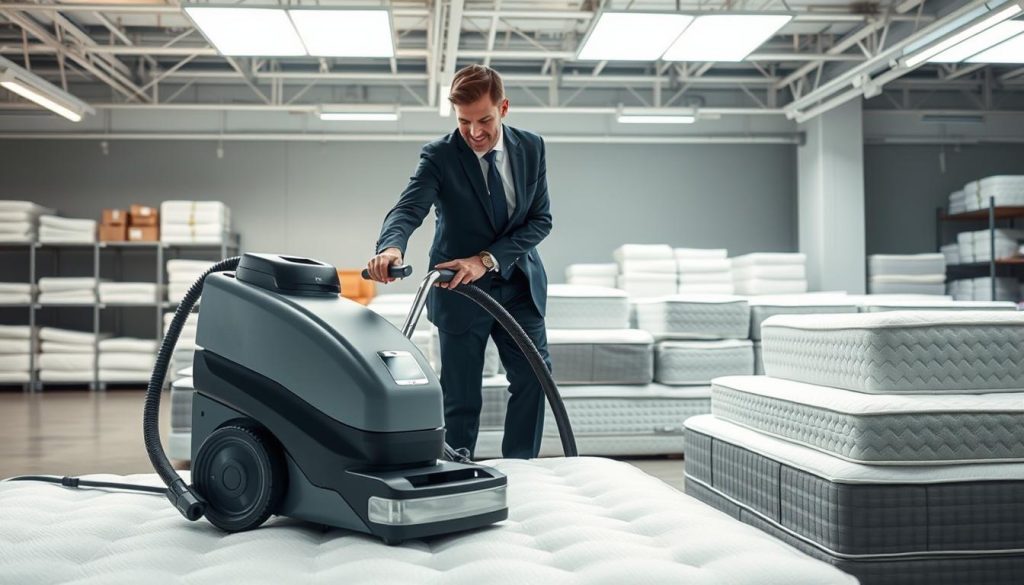
We provide targeted services that support healthier workplaces, guest accommodation standards and staff welfare across Singapore.
Protectors help, but they do not stop bed bugs, dust mites or other organisms from entering a mattress, especially in hot, humid conditions.
Our approach blends inspection, dust removal, sanitisation options and moisture-controlled techniques. We design each service to reduce downtime and control drying times for multi-site operators and high-occupancy rooms.
We focus on hidden contaminants, odours and stains—not just visible marks. This helps decision-makers justify spend with measurable hygiene outcomes and consistent quality across sites.
Next, we explain why Singapore’s climate speeds build-up, what can hide in beds, recommended schedules, methods we use and the results you should expect.
Commercial mattress cleaning for healthier workplaces in Singapore
Persistent moisture and limited ventilation turn many beds into reservoirs for dust, mould and odour‑causing bacteria. In Singapore’s tropical climate, sweat and poor airflow speed this process. Estimates suggest about 200 ml of perspiration per person each eight‑hour sleep; over a year a queen or king can absorb more than 140 litres.
Why heat and humidity accelerate build-up
Warm, humid air plus trapped body oils create an ideal environment for microbes and dust mites. Low ventilation means moisture lingers in the core, not just on the surface.
Who benefits most
We see the greatest need in hotels, serviced apartments, dormitories, clinics and staff housing. High turnover and shared rooms multiply moisture and organic debris, so risks rise faster than expected.
When a “clean-looking” bed still isn’t hygienic
Superficial housekeeping often focuses on linens, leaving allergens and bacteria deep in fibres. Visual cleanliness is not the same as hygienic safety. We recommend booking a cleaning service when occupancy is high, odour appears, stains remain or occupants report irritation.
Our services are scheduled to fit operations, control drying time and deliver predictable results for workplace health and a fresher indoor environment.
What’s hiding in mattresses and why it matters for health
What looks like a tidy bed can conceal a complex mix of allergens, microbes and organic waste. We break this down so facility teams understand why hygiene complaints persist after linen changes.
Dust mites, mite faeces and allergens that trigger asthma and allergies
Dust mites feed on dead skin and skin cells, and a single female can lay hundreds of eggs. An uncleaned mattress may host millions of mites, and their faeces are a key allergen linked to asthma, watery eyes, coughing and eczema.
Bacteria, viruses, fungi and mould spores in low-ventilation bedding
Warm, humid rooms with poor airflow promote bacterial and fungal growth. These germs and spores increase infection risk, especially in shared or long-stay accommodation.
Dead skin cells, body oils and perspiration as a food source for mites
Skin cells, body oils and sweat build up over time. This nutrient “food chain” sustains mites and microbial growth, embedding allergens deep in fibres where regular vacuuming cannot remove them.
Stains, odours and food residue that degrade the sleeping environment
Body-fluid marks, food crumbs and stains create odours and attract microbes. Surface cleanliness alone is not enough; targeted interventions reduce allergen load and restore a healthier sleeping environment.
- Key facts: rapid mite reproduction, high mite counts, and deeply embedded contaminants evade routine upkeep.
How often commercial sites should schedule mattress cleaning services
A planned service cycle keeps rooms hygienic and avoids reactive, last‑minute interventions. We advise teams to set maintenance by months so managers can budget and plan room availability.
Recommended cycle for general maintenance in Singapore
Baseline: every 6 months. In hot, humid conditions we suggest a 3–6 month window.
Higher-frequency for stained beds and high turnover
When to increase frequency: quarterly for stained items or high‑turnover rooms. Post-incident work, new move-ins or pre-peak season checks also warrant immediate booking.
Extra protection for allergy-prone occupants, children and the elderly
For allergies, pets or heavy perspiration we recommend every 2–3 months. Clinics, family housing and long‑stay units should target a 1–2 month cadence if occupants report reactions.
- Practical triggers: visible marks, persistent odour, quarterly audits or tenant changeover.
- Operational note: typical drying time lets rooms return to service within hours to a day—plan rounds to avoid downtime.
| Situation | Recommended months | Reason |
|---|---|---|
| General maintenance | 6 months (3–6) | Climate-driven build-up and routine prevention |
| Stained or odour‑reported beds | 3 months | Address visible soiling and guest complaints promptly |
| Allergy-prone occupants / families / clinics | 1–2 months | Reduce allergens and health risk for vulnerable users |
For tailored schedules and operational planning, contact us or explore our professional bed cleaning services.
Our professional mattress cleaning methods and when we use each
We select methods that balance turnaround time, hygiene depth and material care to suit each property’s needs. Below we explain each option, what it targets and when we recommend it so teams can match method to usage and service constraints.
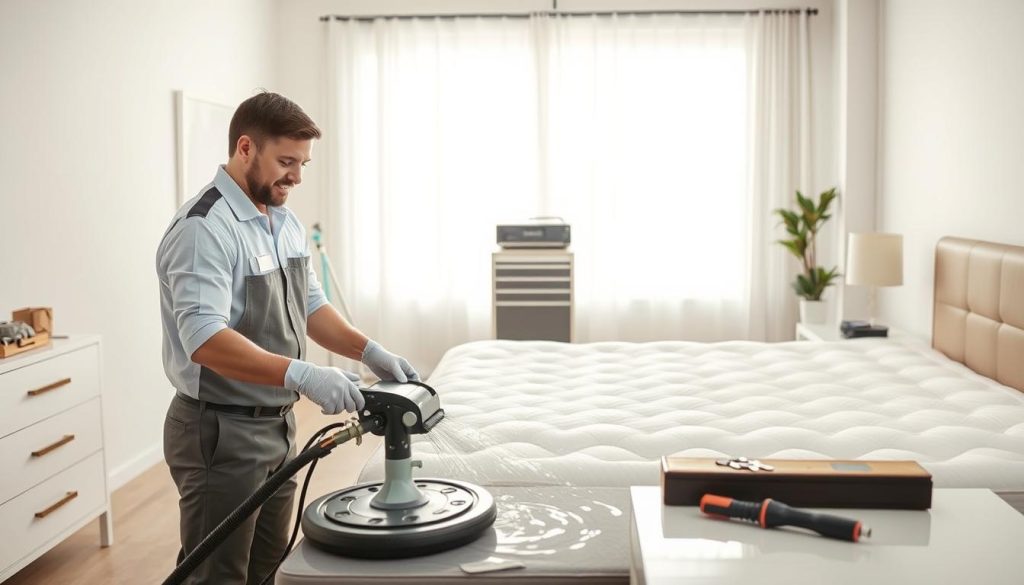
Dry treatment for routine, low‑moisture upkeep
Purpose: remove loose dust, skin debris and light soils without wetting the fibres.
We use dry systems where quick room turnaround is critical. This chemical-free option helps deliver a clean mattress with minimal downtime.
High‑heat steam for sanitisation
Purpose: reduce germs and allergens using targeted high-temperature steam.
Steam is ideal when heat-sensitive sanitation is required. It penetrates fibres to tackle bacteria and allergens while avoiding harsh chemicals.
Deep cleaning with wet extraction for embedded dirt and stains
Purpose: lift oils, stubborn stains and deeply embedded dirt using agitated solutions and powerful extraction.
This method suits heavily soiled or stained items. We control moisture and dry time to lower mould risk while restoring fabric appearance.
BioShield treatment for ongoing protection
Purpose: add a hygiene-support layer after service for high-traffic beds and shared accommodation.
Applied post-service, BioShield complements other methods by helping control odour and reducing microbial re-colonisation between cleans.
- How we choose: our consultants consider fabric type, occupancy patterns and required return-to-service time to standardise results across sites.
- What “clean mattress” means: reduced allergens, better odour control and visible improvement where stains are treatable.
Our deep-clean process: from inspection to sanitised finish
Our process starts with a site check to spot stains, odours and early signs of pests before any treatment.
Pre-clean inspection for stains, odours and tell-tale bed bug signs
We inspect the surface and borders for marks, spots and tiny traces that suggest infestation. This helps us plan time, access and any targeted action.
High-powered vacuuming to remove loose dust and skin cells first
We use industrial vacuums to lift dust, skin cells and loose debris. Removing dry material first prevents it being pushed deeper during wet stages.
Fabric-safe solution and agitation to break down sweat residue and bacteria
Next, we apply a tested, fabric-safe solution and agitate gently to loosen oils and bacteria embedded in fibres.
Wet vacuum extraction to lift contaminants while controlling moisture
Extraction removes residue while we monitor moisture levels. This step reduces drying time and the risk of mould in a humid environment.
High-temperature steam treatment to sanitise and neutralise odours
We finish with targeted steam to sanitise and neutralise odours. Steam enhances hygiene without leaving harsh residues.
Post-clean recommendations to maintain a cleaner sleeping environment
After service we advise ventilation, keeping humidity near 40–50%, rotating the bed periodically and scheduling routine treatments to preserve a clean mattress and healthier sleeping environment.
Results you can expect from a professional cleaning service
A professional service delivers measurable reductions in allergens and visible odours, not just a fresher surface. We focus on outcomes managers and residents notice: fewer hygiene complaints, clearer air and steadier room standards across a portfolio.
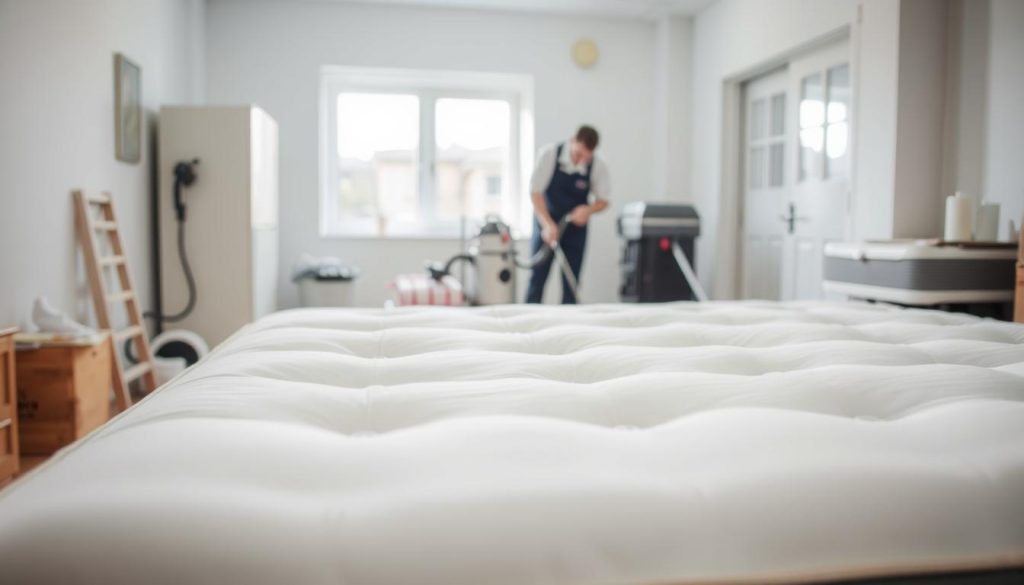
Reduced allergy triggers and fewer irritations linked to mites and dust
Targeted work removes deeply embedded dust, dust mites and mite waste that regular upkeep misses. This lowers common triggers for asthma and skin irritation among staff, guests and families.
Fresher items with improved odour control and stain reduction
Our methods reduce musty smells and lift treatable stains. Older marks may fade rather than vanish completely, so we set realistic expectations and document visible improvements for reporting.
Better sleep quality and a healthier indoor environment
Cleaner surfaces and reduced allergens support improved sleep and occupant comfort. Better rest contributes to wellbeing and productivity in staff housing and hospitality settings.
Longer lifespan through consistent deep cleaning
Regular deep cleaning slows fabric breakdown from oils, dust and moisture. That extends usable life, improves long‑term quality and helps justify maintenance budgets.
For service details and scheduling, see our mattress cleaning service page.
Conclusion
Planned upkeep prevents small issues from becoming guest complaints and helps rooms return to service faster.
In Singapore’s heat and high occupancy, hidden build‑up needs scheduled attention. Choose the right option — dry, steam or deep — then stick to a repeat cycle and manage ventilation between visits.
We design services for consistent standards, predictable downtime and simple reporting. Ask us for a site assessment and tailored recommendations based on fabric, stains and occupancy.
We can also bundle sofa cleaning and other upholstery work to save access time and reduce disruption. For details, see our deep cleaning service.
Expect clearer hygiene reports, fresher rooms and a more comfortable stay for families and children.

