

We introduce our system as the foundation of consistent, effective floor care for modern Singapore homes. Controlled delivery and collection help reduce streaks and speed spill pickup.
Our aim is practical: buyers should judge this product by real outcomes, not claims. We explain how clean storage and dirty recovery work together for predictable coverage.
We set clear use cases — wet-dry tasks, dry passes and quick freshen-ups — so readers match modes to floor types. Edge-to-edge precision and strong suction improve results on mixed hard floors.
We also reassure customers about normal factory checks. Minor residual liquid from pre-shipment testing may appear in tubing or nozzle and does not affect performance.
Built for Wet-Dry Cleaning in Singapore Homes
Our design aims to handle daily spills and tracked grit across Singapore hard floors with dependable, dual-mode cleaning. We focus on practical outcomes so buyers know what to expect for day-to-day use.
Designed to handle everyday spills, stains and debris on hard floors
We address common messes such as soy sauce, ketchup, milk, red wine and crayon marks. These examples show the range of challenges the system is made to manage.
“Manufacturer testing notes that some liquid stains may not be fully removed in a single operation and results vary by floor material and environment.”
Supports wet dry and dry vacuum use cases for flexible cleaning modes
Switching between wet dry and dry vacuum routines saves time. One device covers powders, hair, dust and liquid spills so households need fewer tools.
- Controlled water flow reduces re-wetting and smearing on sensitive floors.
- We recommend a second pass for stubborn stains or porous surfaces.
- Map modes to tasks: quick daily pass, heavier post-cooking clean, spot-clean after spills.
Vacuum cleaner water tank design that improves balance and handling
We engineered the unit so its reservoir layout changes how the product feels in hand and on the floor. Small shifts in placement improve manoeuvrability around dining chairs, corridor corners and tight HDB layouts.
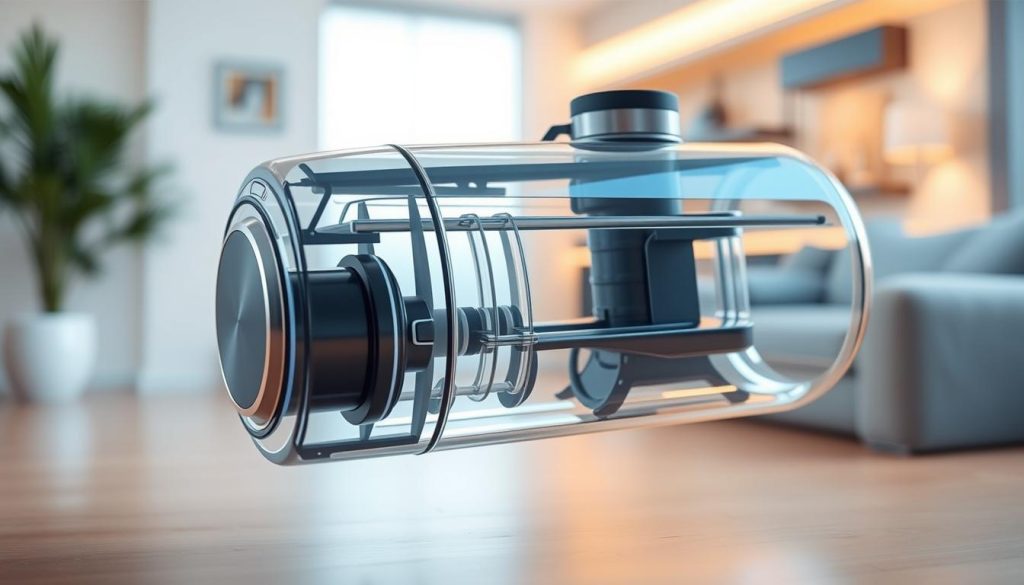
Lower-positioned clean water tank for easier handling and increased floor pressure
Lower placement of the clean water tank shifts mass toward the base. That gives the device more stability and raises floor pressure by about 20N, so rollers engage more consistently.
Upper, front dirty water tank to reduce pull effect and extend work time
The upper, front dirty water tank reduces the pull sensation when pushing. It also allows a larger dirty water capacity so we can work longer between emptying stops.
Separation of clean water and dirty water to maintain hygienic operation
Keeping clean and dirty compartments separate prevents cross-contamination and keeps rinse liquid fresher for longer. Emptying and refilling is faster and less messy, which supports regular maintenance and better overall operation.
“Lowering the clean reservoir improves balance and increases effective floor pressure, while an upper dirty compartment reduces drag and extends run time.”
Clean water tank and dirty water tank capacity options
We explain how capacity choices affect coverage, interruptions and routine planning. Matching reservoir size to your home helps reduce pauses and keeps sessions efficient.
Clean capacity reference points
Typical clean water tank volumes range from 740 ml to 870 ml. A 780 ml class unit sits near the middle and often matches a one- to two-room session in Singapore flats.
Dirty recovery reference points
Recovery sizes commonly appear in two classes: about 720 ml and about 550 ml. A larger recovery bin delays the interruption when dirty recovery fills.
How capacity affects time, refills and coverage
- Fewer refills: Larger capacity can cut overall minutes per session and reduce trips to the sink.
- Balance matters: Bigger volumes add weight; lighter handling may suit frequent, short passes.
- Floor types: Textured tiles or sticky spills use more clean water and fill the dirty side faster.
- Docking and station placement: Store the device near the sink or station to speed top-ups and emptying.
Manufacturer tests list a 740 ml option (+100 ml dispenser for ACE) or 870 ml, with an expected ~780±10 ml clean class and ~550±10 ml dirty class under test conditions. Real homes will vary by mess and usage.
Power, suction and roller performance for deep cleaning
We explain how peak suction and rapid roller action translate into fewer passes and better edge results.
Up to 20,000 Pa suction provides practical advantage for mixed messes. This level of suction helps recover dust, hair and liquid spills quickly. It supports fast dirty recovery while the roller agitates stuck grime for effective deep cleaning.
High-speed roller and tested RPM
The roller runs in a 450 RPM class and can reach about 500 RPM under test conditions. Faster rotation increases contact frequency per second and improves wipe performance on tiled and laminate floor surfaces.
Edge precision and smart dirt sensing
Edge-to-edge precision reaches down to 1 mm, so cabinet toes and skirting boards receive reliable coverage. Infrared dirt detection measures light changes in recovered liquid and auto-adjusts power. That means the device boosts suction and motion when dirt levels rise.
Brush and scraper system to reduce hair build-up
We use a double scraper design: a constant-pressure floating scraper to cut water marks and a 141-tooth anti-entangling comb that reduces hair tangles. The denser comb and brush arrangement improves long-run performance and reduces maintenance stops.
- Practical outcome: fewer passes for routine jobs.
- Performance note: certain figures are measured under test conditions and may vary by floor type and the nature of messes.
- Result: cleaner edges, quicker sessions and more consistent final finish.
Hygiene-focused maintenance with hot-water self-cleaning and rapid drying
Hygiene is central to long-term performance in humid Singapore homes, so we built maintenance around a high‑temperature, automated routine. Our approach reduces odour risk and keeps the device ready for frequent use.
90°C roller washing for bacterial reduction
Deep self‑clean runs a 90°C roller wash that targets microbes during the cycle. Roborock‑class testing reports near 99.9% bacterial reduction, which turns upkeep into a repeatable, low‑effort step.
90°C sealed quiet drying in about 5 minutes
Sealed drying holds heat in a quiet chamber and brings the roller to safe dryness in roughly five minutes. Fast drying helps prevent mould and lingering smells in Singapore’s humid environment.
Two‑direction roller self‑cleaning rotation
Bidirectional rotation dislodges debris from different angles. This improves consistency, reduces build‑up, and helps preserve pickup performance over months of use.
- After each session: empty the dirty compartment promptly, start the self‑clean cycle, and wait for the dry phase to finish.
- Station matters: a reliable dock encourages regular cycles and keeps the system performing well.
- Long‑term value: cleaner rollers mean fewer replacements and steadier operation.
“Regular high‑temperature washing and sealed drying significantly cut microbial growth and odour risks in humid climates.”
For step‑by‑step maintenance guidance we link to our cleaning walkthrough: how to clean your carpet cleaner. Following these steps keeps the device hygienic and ready for the next job.
Battery, runtime and user controls that support efficient cleaning sessions
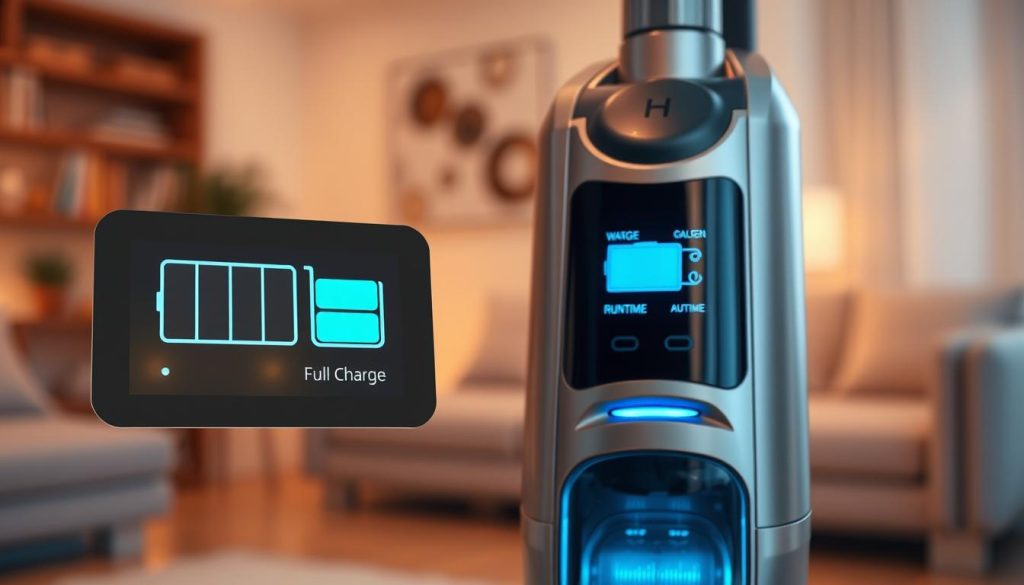
We design power and controls so sessions are predictable and interruptions are rare.
Runtime references: in Auto Mode the device can run up to 40 mins and about 30 minutes in Standard Mode under test conditions. These figures help plan whole-flat upkeep or targeted spot work.
Battery capacity and charging
The 4000 mAh battery gives a useful balance of runtime and weight. A typical charge completes in roughly 4 hours, so overnight docking readies the device for morning tasks.
User controls and indicators
An LED display shows battery level, selected mode and alerts at a glance. Voice prompts and smart signals warn for full or missing recovery bins to avoid damage and wasted effort.
App control and mode tuning
Where supported, app control lets us set suction, water volume and drying mode. That tailoring reduces wasted energy and shortens total cleaning time for delicate floors or heavy spills.
- Practical tip: use Auto Mode for routine passes and Standard for concentrated messes.
- Docking habit: keep the station near a power point to speed top-ups between sessions.
- Test note: runtime varies with floor friction, mode changes and how often high-power suction is used.
| Mode | Typical runtime (mins) | Battery | Best use |
|---|---|---|---|
| Auto | Up to 40 | 4000 mAh | Whole-flat upkeep |
| Standard | ~30 (test) | 4000 mAh | Targeted sessions |
| High | 15–20 | 4000 mAh | Stubborn marks and heavy suction |
What we supply, quality checks and material considerations
A clear packing list and honest checks help buyers know what arrives and how the unit behaves on first use.
What’s in the box
We include a dock (charging base), roller, power cord, filter, handle, maintenance brush and a user manual.
Every product ships ready to set up so you can place the station near a sink or power point.
Pre-shipment output testing
Each unit undergoes a water output test before leaving the factory. Slight residue in the tank, tubing or nozzle can appear.
This is normal and does not affect device performance. A quick rinse before first use removes any trace residue.
Material and build for daily durability
We choose robust seals, reliable latches and a waterproof silicone battery cover to withstand frequent wet‑dry cycles.
Good material choices reduce leaks, keep airflow steady and help maintain consistent suction over time.
- Use the maintenance brush for rollers and crevices.
- Clean the filter periodically to preserve flow and longevity.
- Store the product on its station after use to keep it charged and ready.
| Included item | Purpose | Care note |
|---|---|---|
| Dock / station | Charging and storage | Wipe weekly; place near power |
| Roller | Primary contact cleaning | Brush off debris after each use |
| Filter | Air and recovery protection | Rinse monthly; replace yearly |
| Maintenance brush & handle | Upkeep tools | Store dry; use after each session |
Conclusion
Smart reservoir layout and capacity choices cut downtime and make routine upkeep simpler for busy Singapore households. We design separation between clean and dirty sections to improve balance and reduce cross‑contamination, so refill and empty cycles are predictable.
Flexible wet dry and dry vacuum modes mean one product handles daily dust and sudden spills without swapping tools. That versatility saves time and fits varied cleaning needs in a small flat.
When comparing models, focus on suction, roller speed, edge reach and sensor adjustments. These factors drive consistent performance across different floor types and messes.
Capacity affects coverage and refill frequency. Choose a size that matches your home size and cleaning rhythm to cut interruptions and lower maintenance time.
Finally, hot‑water self‑cleaning and rapid drying reduce odour and upkeep. Select the configuration that meets your needs and prioritise features that save time while improving cleaning results.

