
We introduce what a wet-dry machine is and why many Singapore households see it as an easy upgrade from a mop and bucket. These devices blend suction and a rinse action to lift spills and trapped grit from hard surfaces.
In daily life, they save time after meals and tame muddy footprints at the door. We reward practicality: quick resets, steady cleaning and fewer follow-up chores for busy flats and landed homes.
Our roundup is simple to use. We list quick picks first, then detailed reviews, and finish with a buyer’s guide that matches models to your needs. Expect categories for overall value, a runner-up, budget options, 2-in-1 units and robot mop-sweepers.
Watch-outs are upfront: tank size matters, routine maintenance is needed after each job, and corners can be tricky for some vacuums. We focus on what you get for the money and who each choice suits.
Why a vacuum water cleaner makes sense for Singapore homes
Singapore flats and condos often favour hard floors, so machines that wash and suction at once make everyday upkeep simpler. We find this approach cuts overall cleaning time for quick messes like kitchen splashes and tracked-in grit.
Hard floors, humidity and everyday spills
Most wet dry units perform best on sealed hard floors. They handle debris and light dust well and remove fresh spills faster than a mop and bucket.
High humidity here raises hygiene stakes: if dirty water sits in a tank it can smell and breed bacteria, so emptying and rinsing is essential.
Wet-dry vs dry vacuum: what they replace (and what they don’t)
In plain terms the system is simple: a clean water tank feeds a roller, suction lifts the mess into a dirty water tank, and you empty it after use.
That said, a wet-dry unit does not fully replace a dry vacuum for carpets, staircases or upholstery. For mixed floors we recommend a 2-in-1 approach or a model that complements a handheld dry unit.
- Quick value: cuts chores for sealed floors and small spills.
- Limitations: less effective on deep-pile carpet and tight corners.
- Hygiene tip: rinse the dirty water tank after each session.
| Home type | Primary flooring | Recommended use |
|---|---|---|
| Small flat | Hard floors | Daily quick cleans, spills |
| Mixed surfaces | Hard + rugs | Use wet-dry for sealed areas; keep dry unit for rugs |
| Landed house | Extensive hard floors | Larger tank and runtime advised |
Our shortlist: best vacuum water cleaner picks at a glance
For fast comparisons, these headline picks show trade-offs in runtime, manoeuvrability and dock features.
| Our pick | Best for | Key reason to buy | One drawback |
|---|---|---|---|
| Tineco Floor One S7 Pro | Hard floors | Top mopping and suction performance | Higher price |
| Roborock F25 Ace | Long cordless runtime | 60‑minute endurance and flat‑lie head | Less suited for deep rugs |
| Shark HydroVac Cordless | Everyday value | Affordable, simple maintenance | Bulkier storage |
| Dyson V15s Detect Submarine | Mixed floors | Modular 2‑in‑1 heads for carpets and hard floors | Small mopping tank |
| Roborock Qrevo Curv | Hands‑off cleaning | Fully automated dock for empty, refill and dry | Light scrubbing only |
- Who each pick suits: we pair models to buyer intent — performance, endurance, value, mixed floors or automation.
- Key buying cues: cordless minutes, handling weight, dock automation and carpet support usually decide purchases quickly.
- Who should skip: dedicated hard‑floor units are not ideal for carpet‑heavy flats; robots are less effective on sticky spillages.
We cover full specs, modes and maintenance in the product sections that follow. Our aim is to show what extra price buys: docks, automatic detergent, longer runtime and easier manoeuvrability.
Best overall: Tineco Floor One S7 Pro for hard floors
A true mop-and-suction system must balance moisture control with strong pickup on hard surfaces. We rate the Tineco Floor One S7 Pro for its consistent cleaning, deodorising option and self‑propelled head that eases longer sessions.
Why we rate it
Performance: strong suction meets measured dampening so seals stay safe and spills lift cleanly. The deodorising Ultra option helps with pet odours and kitchen smells, which is useful in compact Singapore flats.
Key specs
| Spec | Value |
|---|---|
| Clean tank | 0.85L |
| Dirty tank | 0.72L |
| Weight (dock) | 9.75kg |
| Max runtime | 40 minutes |
| Charge time | 4 hours |
Cleaning modes explained
Auto: sensors shift power and moisture for daily maintenance.
Ultra: higher power plus deodorising for pet areas or after cooking.
Max: intense scrubbing for dried or stubborn patches.
Suction Mode: suction-only when you need to pick up spills fast without extra dampness.
What to know before you buy
The S7 Pro is self‑propelled, which reduces effort across larger flats and makes regular use realistic. Voice prompts and an LCD help with mode selection and status checks.
Be straightforward about upkeep: the dirty water tank fills quickly and needs emptying and rinsing after most uses. The system is high‑maintenance compared with simple mops, so routine care remains essential.
Buying note: ideal for mostly hard floors. If you need carpet cleaning, consider a 2‑in‑1 option instead or pair this with a dry unit. See the official model page for full details: Tineco Floor One S7 Pro.
Runner up: Roborock F25 Ace for user-friendly wet dry cleaning
For households that favour reach and ease, the F25 Ace combines a slim profile with thoughtful automation for routine upkeep.
Standout reach and design
Lie-flat head: the model can sit fully flat, which lets the head slide under low sofas and beds. Measure clearance before purchase; roughly 8–10cm is a sensible guide for typical sofas.
Battery life and realistic runtime
The listed 60 minutes of runtime translates to longer sessions in low or auto modes and less time in high‑power spots. For medium flats this reduces interruptions. Charge time is 6h30, so plan dock parking between uses.
Dock features and drying
The dock washes the roller with either hot or room‑temperature water. Hot washes cut kitchen grease; cooler washes suit daily upkeep. Hot‑air drying then helps limit odour and mildew in humid Singapore homes.
Detergent control and usability
Automatic dispensing saves fiddly measuring. Fine‑tuning lets families with kids or pets lower the dose. The F25 Ace keeps two tanks (clean 0.74L, dirty 0.72L) and trims overall effort when you use app controls and the informative display.
“We see the F25 Ace as an easy‑to‑live‑with option: excellent reach, long battery life and a dock that does most of the dirty work for you.”
| Spec | Value | Why it matters |
|---|---|---|
| Clean tank | 0.74L | Decent for routine passes without frequent refills |
| Dirty tank | 0.72L | Holds typical pickup for a medium flat |
| Weight | 6.2kg | Light enough for easy handling and storage |
| Max runtime | 60 minutes | Long cordless use for larger rooms or fewer breaks |
| Charge time | 6h30 | Dock overnight between sessions |
Best budget: Shark HydroVac Cordless for everyday debris and light carpets
Value shoppers will like a compact, cordless model that handles common debris without a high price tag. The Shark HydroVac Cordless is a three‑in‑one unit that vacuums, washes and self‑cleans for quick touch‑ups.
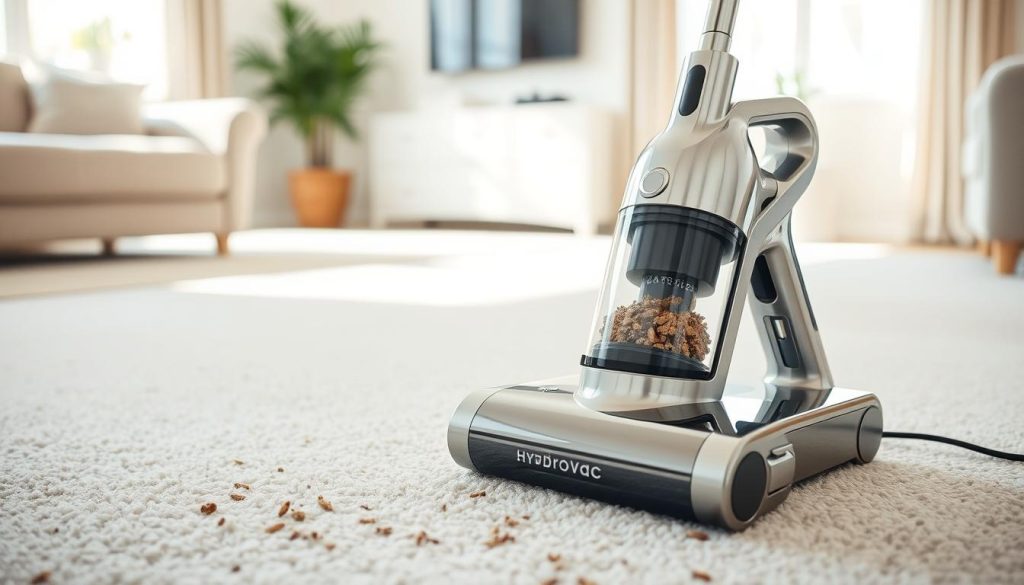
Three-in-one function: vacuum, wash and self-clean
How it works: one pass vacuums loose dust and debris while the wash cycle lifts light stains. A self‑clean step flushes the brush and tanks so the unit is ready for the next use.
Modes to use: Hard Floor vs Freshen mode for rugs
Hard Floor mode vacuums on the push stroke and washes on the pull stroke. Freshen mode mops both directions and suits sealed floors and low‑pile rugs without soaking fibres.
Trade-offs: storage bulk and tight corners
Expect a 0.5L water tank, 3.95kg weight and about 25 minutes max runtime — fine for compact layouts but short for larger homes. Storage is relatively bulky and corner pickup is weaker, so edge work may need a follow‑up.
| Spec | Value | Why it matters |
|---|---|---|
| Water tank | 0.5L | Good for short passes in small flats |
| Weight | 3.95kg | Light to carry between rooms |
| Max runtime | 25 minutes | Suitable for quick weekly resets |
| Charge time | 4 hours | Ready for next day with overnight charging |
| Maintenance | Dirty water emptied each use; brush roll dries 24h | Routine care keeps odour and mildew away |
Best 2-in-1: Dyson V15s Detect Submarine for mixed floors
We recommend the Dyson V15s Detect Submarine where homes really mix rugs and sealed floors. Its modular design pairs a strong dry vacuum with a dedicated mop head so you can tackle carpets and hard areas without two full machines.
Why it suits mixed homes
Swappable heads mean we run the high‑suction stick on carpets, then swap to the mopping head for tile or laminate. This room‑by‑room workflow keeps the job efficient and reduces double handling.
Mop head limitations
The mop head carries a small water tank (about 0.3L), so it suits light maintenance rather than heavy scrubbing. Expect more frequent refills for kitchens or dining zones.
Also note the dirty water collector is not fully sealed. Careful removal helps avoid spillage; we outline handling tips in the full review.
Runtime and battery strategy
Claimed runtime is up to 60 minutes. In practice, we recommend lower power modes for general dust and debris and reserve boost suction for problem spots.
Charge time sits around 4.5 hours. If your routine needs longer use, the swappable battery option keeps interruptions low and supports longer sessions.
| Feature | Value | Why it matters |
|---|---|---|
| Clean water tank | 0.3L | Good for touch‑ups; refill often for larger mops |
| Dirty water | Unsealed | Handle removal carefully to avoid leaks |
| Max runtime | Up to 60 minutes | Use eco modes for sustained cleaning |
Price is premium, but the model can be cost‑effective if it replaces both a high‑quality stick and a basic floor washer for mixed Singapore homes.
Best robot: Roborock Qrevo Curv for hands-free vacuum and mop
We favour the Qrevo Curv as an option for households that want routine upkeep with minimal fuss. Its strength is consistency: frequent passes keep dust and debris at bay, and light mopping keeps tiles looking fresh without daily effort.
What robot mopping can (and can’t) do
Robot mopping works best for light maintenance. The Qrevo Curv handles regular dust, crumbs and mild spills but won’t replace a hands‑on scrub for dried stains or heavy soiling.
Edge and corner coverage
The dual rotating mop pads include a side‑kick pad that extends toward skirting boards. This reduces the dirty strip that often appears near edges, though tight corners still need occasional manual attention.
Dock automation
Its dock automates many chores: emptying the 2.7L bin, refilling a 2.4L clean tank, collecting a 2.4L dirty tank, dispensing detergent, and washing and drying the pads. That saves us weekly handling time.
Floor intelligence
The system senses carpet and lifts or drops pads accordingly. It avoids wetting rugs and switches to suction‑only runs when needed, which protects mixed floors and reduces follow‑up work.
“A higher upfront cost, but strong value if you prize time saved and lower day‑to‑day effort.”
Also worth considering if you want more choice
For shoppers who need a different mix of features — from steam modes to stronger edge access — the models below provide useful alternatives. Each suits a specific priority: rugs, sealed hard floors, steam hygiene or low‑profile reach under furniture.
Bissell CrossWave OmniFind
Why consider it: works on hard floors and rugs, and the FurFinder headlights make hair and dust easier to spot in dim corners.
Specs: separate clean and dirty tanks, roughly 25 minutes max runtime, compact tanks that mean more stops.
Good for: homes with rugs and pet hair. Avoid if you need razor‑sharp corner pickup.
Tineco iFloor 5
Why consider it: a value model for sealed hard floors with self‑cleaning and sensible modes for daily upkeep.
Specs: about 20+ minutes in max and 30+ minutes in eco, charges in 4–5 hours; cleans close to walls but can’t lie flat.
Good for: cost‑conscious buyers wanting solid performance on floors. Avoid if under‑sofa access or tight corners are critical.
Bissell CrossWave HydroSteam Pet
Why consider it: corded steam option for hygiene‑led cleaning with dry, wet and steam modes and larger tanks for longer runs.
Specs: 820ml clean and ~640ml dirty capacity, headlights and self‑clean cycles. It is heavy and louder, and cable length limits range.
Good for: buyers who prioritise sanitising action and continuous power. Avoid if you need cordless freedom or a lightweight tool.
Roborock Flexi Pro
Why consider it: excellent edge cleaning and a head that lies flat for under‑furniture reach, which suits low‑clearance sofas and beds.
Specs: up to 50 minutes runtime, 4‑hour charge, small semi‑opaque built‑in tanks that require more frequent emptying.
Good for: homes where edges and under‑furniture access matter. Avoid if you want large tank capacity or minimal stops.
| Model | Standout feature | Ideal for |
|---|---|---|
| Bissell OmniFind | Rug handling + headlights | Pet hair on rugs |
| Tineco iFloor 5 | Value + self‑clean | Sealed hard floors |
| CrossWave HydroSteam Pet | Steam sanitation + large tanks | Hygiene‑focused homes |
| Roborock Flexi Pro | Flat‑lie head + edge cleaning | Under‑furniture access |
Final note: match model category to your flooring mix and routines. Picking the right design and features saves time and avoids paying for functions you won’t use.
How we recommend choosing a wet dry vacuum in Singapore
Choose by where you spend most of your time at home: the right tool depends on floors, routine and how often you want to stop to refill.
Start with flooring: hard floors only vs mixed surfaces
If you have mostly sealed hard floors, a dedicated wet dry design usually gives the best mop performance and faster daily cleaning.
For mixed surfaces, prioritise a strong dry vacuum plus a swappable mop head so you can switch modes room by room.
Home size and layout: runtime, tank volume and manoeuvrability
Match runtime and tank size to floor area. Longer minutes and a larger water tank mean fewer stops on big flats or landed homes.
In tight HDB corridors choose light, well‑articulated heads and self‑propulsion to reduce effort and speed the job.
Pets and hair: brush design and anti‑tangle considerations
Look for anti‑tangle brush rollers and easy‑remove heads if you have pets. These cut grooming time and keep suction effective.
We still recommend a quick dry vacuum pass before wet runs on heavy pet hair to avoid clogging tanks.
Under‑furniture access: flat‑lie heads and clearance
Measure sofa and bed clearance. Flat‑lie head designs improve reach under low furniture and reduce follow‑up work.
Keep a handheld or crevice tool for very tight corners and scuffed skirting boards.
“Floor type first, then layout, then lifestyle — that flow saves the most time and gets you the features you actually use.”
| Household type | Recommended category | Key feature to prioritise |
|---|---|---|
| Small flat, mostly hard floors | Dedicated wet dry | Large clean & dirty tank, lie‑flat head |
| Mixed floors (rugs + sealed) | 2‑in‑1 modular system | Strong dry suction + swappable mop head |
| Pet households | Anti‑tangle brush models | Brush roller design, easy brush removal |
| Busy families, routine upkeep | Robot with automated dock | Auto refill/empty, pad wash and dry |
Final tip: follow our decision flow — flooring, layout, lifestyle, storage — and you’ll pick a model that fits your Singapore home and saves cleaning time.
Key features that matter most (and which are just nice-to-have)
Clear feature priorities stop buyers paying for flashy extras that add little to daily upkeep.
Suction and sensor systems
Performance features begin with measured suction and smart sensors. A good system uses sensors to spot dirt and raise power only where needed.
Auto power adjustment keeps the floor drier and streak‑free while cutting run time. Examples include sensor‑driven Auto Mode on the Tineco Floor One S7 Pro.
Cleaning modes
Common modes — auto, max, eco and suction‑only — handle different jobs. Auto is best for routine passes; max for stubborn spots; eco saves battery on light tasks.
Suction‑only mode is vital for quick spill pickup where you want minimal dampness on the floor.
Displays, voice prompts and app controls
These comfort features reduce mistakes: wrong mode, tank not seated, or low power warnings. They help most in multi‑mode models like the Roborock F25 Ace.
We find apps are useful for status checks but not essential for steady cleaning results.
Self-propulsion and assisted wheels
Power‑assisted wheels cut fatigue on larger areas. Self‑propulsion makes daily use faster and more likely to happen.
For apartment flats, assisted wheels are nice; for bigger homes they become a must.
“We separate performance features from comfort features so you buy only what you will use.”
| Feature | Why it matters | Example model | Priority |
|---|---|---|---|
| Suction + sensors | Adjusts power to dirt levels; keeps floors dry | Tineco Floor One S7 Pro | Must-have |
| Cleaning modes | Tailors power and moisture for spills or dust | Roborock F25 Ace | Must-have |
| App & display | Reduces errors and shows status remotely | Roborock F25 Ace | Nice-to-have |
| Self-propulsion | Reduces push effort and speeds cleaning | Tineco, Roborock | High priority for large flats |
- Must-have: measured suction, sensor auto power, auto/eco/max/suction modes, reliable tanks.
- Nice-to-have: voice prompts, full app control, advanced displays.
Water tank and dirty water capacity: what the numbers mean in real cleaning time
Capacity figures on a spec sheet shape real cleaning sessions. Small differences in litres change how often we stop, lift and rinse, and that affects whether a run feels seamless or interrupted.
Clean tank vs dirty tank: why the dirty side fills fast
A clean tank holds the fresh solution; the dirty water collector traps used fluid, suspended dirt and debris. That mix often fills more quickly than you expect after a spill.
Examples help. The Tineco uses 0.85L clean and 0.72L dirty; the Roborock F25 is 0.74L/0.72L. Small spills or wet dust can make the dirty tank reach capacity in one pass.
Small tanks or large tanks: trade-offs in design and handling
Larger tanks, such as the Roborock Qrevo Curv dock’s 2.4L units, reduce stops but add weight and bulk. That affects balance and manoeuvring in narrow Singapore flats.
Estimate refills by area: light maintenance for a 50–70m² flat often fits a 0.7–0.85L clean tank, but heavy messes or sticky dirt need smaller pauses. Also check tap access — long tanks may not fit under sinks, so using a jug is common.
- Small flats / mixed floors: a smaller tank is fine for spot use and quick maintenance.
- Full hard-floor cleaning: choose larger tanks to reduce interruptions but expect added weight.
Cordless battery life and runtime: avoiding mid-clean interruptions
Runtime claims look neat on spec sheets; real-life cleaning often tells a different story. We explain how minutes and modes change usable time, and how to plan charging so you finish a pass without halting halfway.
What to expect from 25, 40, 50 and 60-minute runtimes
Short runs (around 25 minutes) suit quick touch-ups. A Shark HydroVac Cordless fits this tier — ideal for a kitchen or small flat.
Mid-range runtimes (about 40 minutes) let you cover a medium living area. The Tineco Floor One S7 Pro lists roughly 40 minutes and balances power and damp control.
Longer runs (50–60 minutes) are for bigger flats. The Roborock Flexi Pro offers about 50 minutes, while the Roborock F25 Ace and Dyson V15s Submarine can reach 60 minutes in low power modes.
Charging time planning: docks, storage and top-up habits
Charge time matters. A 4–6.5 hour recharge window influences whether you can clean daily. Longer charge periods need either overnight top-ups or a two-battery strategy for seamless use.
Practical habits:
- Top-up charge after each session so battery life stays healthy.
- Empty and rinse the dirty tank before charging to prevent odour build-up.
- Keep water and detergent ready so you start faster and use less minutes on prep.
| Runtime tier | Typical coverage | Charging note |
|---|---|---|
| 25 minutes | Single room or quick spill | Fast top-up; daily charge advised |
| 40 minutes | Medium flat pass | 4h charge common; schedule nightly |
| 50–60 minutes | Large flat or full pass | Longer charge; swappable battery useful |
“Prioritise longer runtime for larger homes; for small flats, faster charging and lighter maintenance often win.”
Overall, investing in more battery life for a cordless model can save money and time compared with buying a second machine. Plan charging, use appropriate power modes, and adopt simple habits to avoid mid-clean interruptions.
Maintenance and cleaning the system: what we’ll need to do after every job
After every run we find a short, consistent routine saves fuss and keeps smells away. Regular care is the true ownership cost: it is not money but the small amount of time that prevents odour and wear.
Emptying and rinsing the dirty water tank to prevent odours
Always empty the dirty water after each job. Rinse the dirty water collector and the seals so residue does not sit in the tank and smell in humid Singapore conditions.
Brush roller care: self-clean cycles vs manual washing and drying
Many docks run a self-clean that flushes the brush and roller with hot or room‑temperature water. This removes most debris.
But, some models don’t fully dry the roller. Remove and hand‑wash if needed, then leave it to dry for a day to avoid mould.
Dock maintenance: drying functions, detergent refills and tray clean-outs
Check dock features regularly: top up detergent, clear the tray and inspect pump lines. Heated dry functions help, but trays still need periodic cleaning to stop build-up.
- Empty dirty water and rinse tank.
- Run the self‑clean cycle (if fitted).
- Remove and inspect the roller and brush; wash if needed.
- Air‑dry parts fully before storage; avoid sealed cupboards.
Store spares for rollers and filters if the model supports them. Maintenance becomes quick once habitual, and choosing a model with the right dock features saves us time in daily use. For hands‑on cleaning guidance see how to clean a canister filter.
Performance by scenario: spills, sticky mess, dust and corners
A. Real homes test machines in ways spec sheets cannot: spills, dust, sticky patches and tight corners each demand different responses.
Wet spills and suction-only modes: quickest ways to dry the floor
Many wet dry units include a suction-only mode designed to pick up liquid fast. Use this mode first for fresh spills to reduce leftover puddles and slip risk.
Tip: a slow, single pass with suction engaged removes most liquid. Follow with a light wipe only if residue remains.
Fine dust vs chunky debris: when a dry vacuum pass still helps
Fine dust scatters when wet and can leave streaks. We often run a quick dry vacuum pass first to remove dust and loose dirt, then use the wet head.
Chunky debris should be cleared by hand or in dry mode to avoid blocking the dirty tank and to keep suction power high.
Edges and corners: where most wet-dry heads still struggle
Heads typically miss tight corners and skirting lines. Edge brushes and a narrow crevice tool help where the main head cannot reach.
Mitigation strategies: slow overlapping strokes, occasional edge detailing with a crevice tool, and avoiding over‑wetting that spreads sticky dirt.
“If corners matter most, prioritise models with proven edge reach or keep a small handheld for detail work.”
Buying note: choose a model with good head design or plan to pair it with a small dry unit if corners and heavy debris are frequent in your Singapore home.
Price and value: what we’re paying for at each tier
Price brackets signal not just cost, but how much hands-on time a model will demand each week. We look past sticker figures to the real trade-offs in performance, tank size and daily upkeep.
Budget buys: what you usually give up
Lower price points often mean shorter runtime and smaller water tank capacity. Expect about 20–30 minutes of cordless minutes and more frequent stops.
Corner reach and manoeuvrability can be weaker, so small flats may accept the compromise but larger homes might find it limiting.
Mid-range sweet spots
In the mid band we see better docks that wash and dry brush rollers, improved design for flat‑lie heads and assisted wheels, and more useful cleaning modes.
This tier balances battery life and tank size so a single pass feels realistic for medium flats in Singapore.
Premium picks: pay for time saved
Top-tier models add automation that empties, refills and dries — features that cut maintenance time and make regular use plausible.
Paying more often buys convenience rather than outright cleaning power; the value is in reduced hands‑on chores.
| Tier | Typical trade-offs | Who it suits |
|---|---|---|
| Budget | Shorter runtime, smaller tank, weaker corner reach | Small flats, occasional use |
| Mid-range | Better docks, longer battery life, improved manoeuvrability | Medium homes, regular upkeep |
| Premium | Full automation, large tanks, minimal daily maintenance | Busy households, time‑poor families |
“Choose the upgrade that saves you the most time — better dock or bigger tank — rather than buying features you won’t use.”
Conclusion
Our roundup aims to make buying a wet dry option for Singapore flats straightforward. For mostly hard floors we favour the Tineco-style pick: strong suction paired with measured mopping and practical modes that save us time on routine cleaning.
The runner-up suits those who need longer battery life, a flat‑lie head and a dock that handles refills and drying. For small homes the budget recommendation gives decent performance for light debris and quick jobs, though corners and upkeep need attention.
Choose a 2‑in‑1 with a solid dry vacuum function for mixed floors. If you value time saved, a robot that automates emptying, refill and pad wash is a good option — but it won’t replace hands‑on scrubbing for sticky spills.
Quick checklist: match to your flooring, check clean and dirty water tank capacity, prioritise runtime and be honest about maintenance tolerance. Pick the model that fits your home and routine so you actually use it, not just admire its price or features.

