

We set clear expectations: by a handheld vacuum cleaner with water we mean compact, often cordless wet–dry floor washers and all‑in‑one machines sold in Singapore that pick up dry mess and spills. These products handle solids and liquids but tend to be heavier, bulkier and louder than standard vacuum options because of larger motors and tanks.
Choosing between premium, pet‑focused and budget options can be confusing. We explain which everyday trade‑offs matter for families, pet owners and anyone dealing with humid, sticky mess on hard floors. Our aim is to cut through marketing claims so you can shortlist practical models fast.
We focus on day‑to‑day usability: tank size, runtime, weight, maintenance, filters and noise. We will compare suction, brush reach and how easy each vacuum cleaner is to store in smaller flats. Brands we test include Tineco, Philips, Dreame, Bissell, Shark, Simplus and Dibea so you can pick the right model for your floors and cleaning needs.
Why a wet dry vacuum makes sense for homes in Singapore
In Singapore homes, a single wet–dry device often halves the time we spend on floors. It combines sweeping, mopping and suction so we can handle routine mess faster on hard floors.
One tool for dust, hair, dirt and everyday spills: we clear dust, hair and tracked‑in dirt in a single pass. Small spills need no separate mop. That saves time for busy families and those who cook often.
What we gain (and trade off)
Speed and convenience are the main gains. A wet dry unit cuts repeated chores but tends to be heavier and bulkier. It also runs louder than many compact models.
- Where a dry vacuum still matters: quick pick‑ups or avoiding moisture on rugs and soft furnishings.
- Practical expectations: expect stronger suction and increased noise in HDB flats and condos.
- Who benefits most: pet owners, families with toddlers and frequent cooks.
“We judge value by performance and by how painless it is to empty and sanitise the dirty tank.”
| Household | Best fit | Trade-offs |
|---|---|---|
| Family | Fast floor cleaning on hard floors | Heavier unit, larger storage |
| Pet owner | Effective at hair and spills | Frequent emptying, filter care |
| Small flat | All‑in‑one saves time | May be bulky to store |
What to look for in a handheld vacuum cleaner with water
Good buying decisions start by matching tank size and power to the way we clean each day. We focus on features that affect routine ease: capacity, performance, filtration and how the unit handles corners.
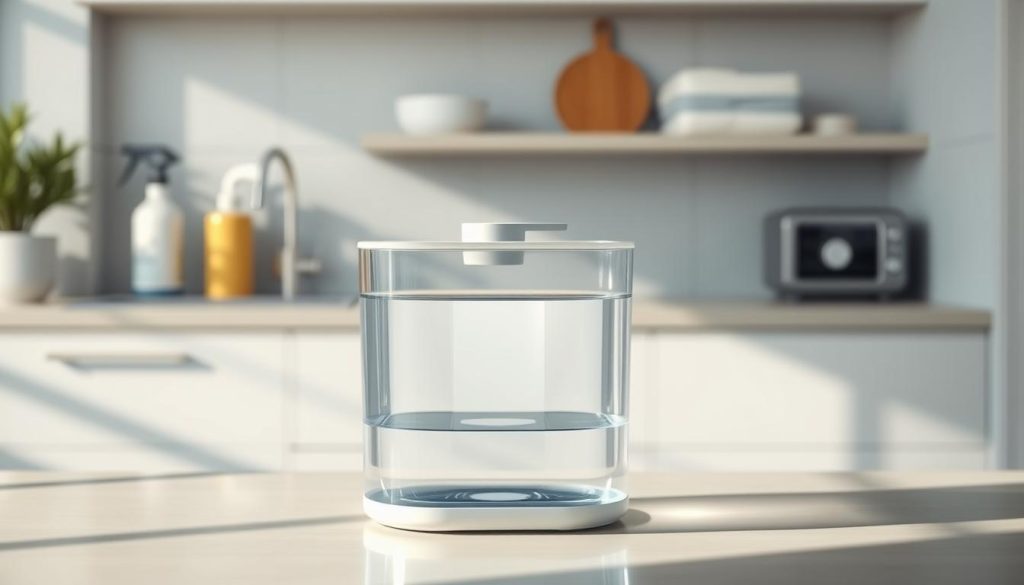
Water tank layout and capacity
Two-tank designs matter: a clean water tank keeps fresh solution separate from dirty water so grime is not re-spread. Match tank capacity to flat size — larger tanks cut refills but add weight; smaller tanks suit quick daily runs and tight storage.
Performance, filtration and run planning
Assess suction power by how well the unit lifts rice, sand and hair without leaving a wet trail. Choose a robust filter system for dust; upgrade to a hepa filter if allergies are a concern.
Battery, brushes and comfort
Plan sessions around cordless runtime and charge time. Exchangeable battery packs help for larger homes; fixed batteries simplify ownership. Check roller brushes, edge reach and whether the head is nimble around skirting and chair legs.
- Maintenance: prefer self-clean cycles, quick brush rinsing and a clear replacement schedule (example: six-month brush and filter changes).
- Safe use: follow manufacturer advice on low-foaming solutions (Philips XV1792/01) and floor suitability.
For a deeper buying guide, see our short primer on choosing a wet–dry model — how to choose wet-dry units.
Top handheld wet-dry models compared: quick view of specs
When decisions hinge on minutes, tank size and weight, a clear specs table beats marketing blur.
| Model | Clean / Dirty tank (ml) | Runtime (minutes) | Weight (kg) |
|---|---|---|---|
| Tineco S7 Stretch | 1,000 / 720 | 50 (washer) / 70 (vacuum) | 4.7 |
| Dreame H15 Pro Heat | 800 / 650 | 70 normal / 25 hot | 6.0 |
| Simplus | 500 / 550 | 50 | 4.4 |
| Bissell CrossWave X7 Pet Pro | 820 / 420 | 30 | 4.8 |
| Shark HydroVac WD210SM | 500 / 360 | 30 | 3.9 |
Tank volumes, runtime and weight: what matters most day‑to‑day
Bigger tanks reduce refill time but raise the unit’s effective weight once filled. Tineco’s 1,000ml clean tank suits larger flats; Simplus and Shark fit small homes better.
Which models suit hard floors vs rugs and carpets
Wet dry heads and dual rollers shine on hard floors where mopping and suction combine. For rugs, switch to dry mode or use stick conversion — models that change modes or detach tend to handle mixed surfaces best.
Best overall and premium picks for wet and dry cleaning
Smart automation and robust cleaning power are the two features that separate top-tier wet dry vacuum models from standard floor tools. Below we compare three premium options that pair strong suction, intelligent control and practical ownership features.
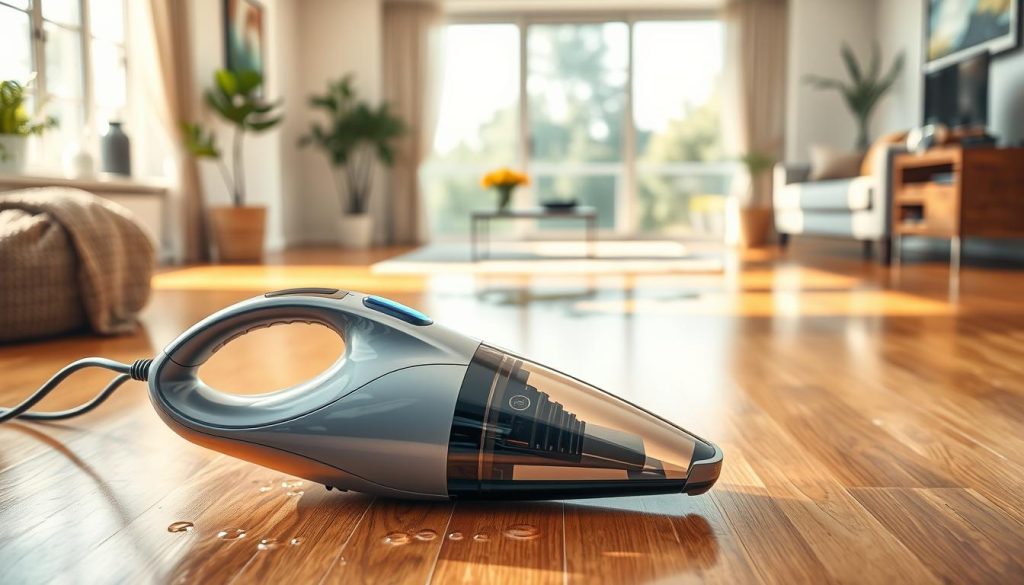
Tineco Floor One Switch S7 Stretch
Why we pick it: the floor one iLoop technology adjusts suction and water flow automatically. The dual-side roller cleans about 0.5cm from walls, which helps in tight Singapore kitchens.
Specs: 22,000 Pa, 1,000ml/720ml tanks, 50min washer / 70min vacuum runtime, 4.7kg.
Philips AquaTrio Cordless
Why we pick it: AquaSpin nozzle vacuums and wet-cleans in one pass. Dual Power Brushes work front and back to tackle stains and trapped dirt. The After-Clean station simplifies maintenance.
Note: series choices affect runtime and battery swap options; use Philips XV1792/01 low-foaming solution.
Dreame H15 Pro Heat
Why we pick it: hot water mopping up to 85°C lifts oily grime and stubborn stains. Combined with 22,000 Pa suction, it suits heavy‑use kitchens though it is heavier at 6kg and needs floor compatibility checks.
| Model | Key tech | Tanks (ml) | Runtime (min) |
|---|---|---|---|
| Tineco S7 Stretch | iLoop sensor, dual-side roller | 1,000 / 720 | 50 (washer) / 70 (vacuum) |
| Philips AquaTrio | AquaSpin nozzle, dual Power Brushes | varies by series | 25–45 (series dependent) |
| Dreame H15 Pro Heat | 85°C hot mopping, strong suction | 800 / 650 | 70 normal / 25 hot |
“We favour machines that replace multiple tools by combining smart controls and solid power.”
Best for pet hair, everyday mess and mixed surfaces
For homes with fur, fast spot cleaning and mixed floors, certain models simply make life easier.
Bissell CrossWave X7 Cordless Pet Pro
Why we like it: Turbo Pet mode lifts fur and tackles stubborn stains without multiple tools. The 820ml/420ml tanks and 20,000 Pa suction suit quick daily passes in living areas.
Thirty minutes runtime means targeted cleaning around litter trays, feeding spots and entryways. We reach for Turbo Pet for heavy fur or set a standard mode for routine cleaning.
Shark HydroVac WD210SM
Why we like it: antimicrobial brush rollers help cut odours and bacterial build‑up in Singapore’s humid conditions. Its lighter 3.9kg frame feels easier for fast spot jobs across hard floors and rugs.
- Practical note: wet dry use is great on sealed hard floors; avoid over‑wetting soft carpets.
- Handling: Shark is easier to manoeuvre; Bissell offers stronger fur pickup and stain power.
- Maintenance: expect regular brush rinsing and emptying; odour features help but do not replace routine rinses.
| Model | Tanks (ml) | Suction (Pa) | Runtime (min) |
|---|---|---|---|
| Bissell CrossWave X7 Pet Pro | 820 / 420 | 20,000 | 30 |
| Shark HydroVac WD210SM | 500 / 360 | 2,700 | 30 |
“Bissell suits pet‑centric stains and fur; Shark is the value pick for hygiene and everyday mixed‑surface care.”
Best value and space-saving choices for smaller flats
Value for smaller homes means choosing models that balance suction, runtime and easy storage. We look for units that clean well on hard floors, charge predictably and tuck away in limited closets.
Simplus Cordless option: strong power and long runtime
Why it stands out: Simplus pairs 21,000 Pa of suction with a 50-minute runtime. That power helps lift sand and daily debris without multiple passes.
The dual 500ml/550ml tank layout keeps the unit compact. A 6.5cm brush head and a 180° flat-folding design make storage simple and help reach low gaps under furniture.
Dibea H8 and Dibea HC26: lower maintenance and bigger tanks
Dibea H8: a lighter 3.7kg body, 500ml/600ml tanks and a built-in self-clean system cut the chores we face after frequent short clears. Runtime is about 38 minutes in auto mode.
Dibea HC26: the step-up option has 700ml/700ml tanks and a longer handle for reach. The manufacturer-stated 146,000 Pa figure is unusual; we treat it as claimed power and judge results by pickup and streaking on floors.
| Model | Tank (ml) | Suction (Pa) | Runtime (minutes) |
|---|---|---|---|
| Simplus Cordless | 500 / 550 | 21,000 | 50 |
| Dibea H8 | 500 / 600 | 13,000 | 38 (auto) |
| Dibea HC26 | 700 / 700 | 146,000 (manufacturer) | 38 (auto) |
Practical note: most models charge in roughly 4.5 hours, so we recommend charging overnight to keep the battery ready for quick sessions.
Our pick for small flats: choose Simplus if you want the best price-to-performance ratio and a compact design. Choose Dibea H8 for lighter handling and lower upkeep. Pick Dibea HC26 if you want bigger tanks and extended reach to avoid frequent refills.
Real-world usability: modes, runtime and maintenance we would prioritise
Real cleaning performance comes down to how modes, runtime and upkeep match our daily rhythm at home.
Adaptive cleaning modes for common mess
Auto‑sensing mode cuts decision fatigue by adjusting suction and water flow for spills after meals or light dust. We use a higher manual mode for gritty entryways or stubborn stains.
Runtime in minutes and real coverage
Expect 20–30 minutes for routine daily passes in small flats. For deeper cleaning, 45–70 minutes covers larger HDBs and condos.
Philips models quote up to ~180–185 m² per charge depending on series; translate that to rooms rather than metres when you plan time.
Maintenance made simple
Empty the dirty water after each session and rinse tanks to prevent odour in humid Singapore. Prefer machines with self‑clean cycles and an After‑Clean & Storage station to reduce hands‑on time.
Replace filters and power brushes every six months as Philips recommends to keep performance steady.
Safe solution use and when to switch to dry mode
Use low‑foaming solutions (Philips XV1792/01 diluted) to protect seals and rollers. On rugs and carpets, switch to dry vacuum mode or vacuum‑only set‑up to avoid overwetting and matting.
| Scenario | Typical minutes | Recommended action |
|---|---|---|
| Quick daily pass (small flat) | 20–30 | Auto mode, empty dirty water after use |
| Deep clean (large flat) | 45–70 | High power mode, consider spare battery or staged sessions |
| Rugs and carpets | Varies | Use dry vacuum mode / vacuum-only set-up |
“We favour machines that save time by sensing the mess, offer clear runtime guidance and make maintenance straightforward.”
For hand‑cleaning carpets or targeted spot care, see our short practical guide: clean a carpet by hand.
Conclusion
Our final judgement rests on how often we choose to use a model, not only on peak suction numbers. For everyday cleaning in Singapore homes, a wet dry vacuum earns its place when it saves time and handles dust, spills and tracked dirt without fuss.
Match the unit to your floors and usual mess. Pick tank size and power you can lift comfortably, and check runtime, charge time and whether emptying dirty water is simple and hygienic.
Premium models justify cost with smarter systems, better filters and easier maintenance. Value models win on compact design and price. Before you buy, compare warranty, replacement brush availability and ongoing filter costs to avoid surprises.
Store the machine to air-dry, empty tanks after use and run self-clean cycles where available to keep the system fresh and reliable.

