

We explain what “vacuuming liquids” really means and why most upright, stick or robot machines must not pick up spills. Only wet–dry models have sealed components and wet filters, so they cut the risk of shock and permanent damage.
Living in Singapore means frequent rain, balcony puddles and kitchen accidents. We share quick steps that stop mould and odour forming after a spill. Our aim is to keep your home safe and fresh.
We clarify the difference between picking up liquid and mopping a stain, and we preview the workflow you will follow: confirm the machine type, swap in a foam wet filter, pick the right nozzle, work edges first, then dry the tank and hose.
This guide is practical and step‑by‑step. Later we will cover buying choices such as sealed systems, float shut‑off, tank size, filtration and corded versus cordless convenience.
Safety first: what we can and can’t vacuum with water
Water spills demand caution. If a manual does not list wet pickup, we treat the appliance as dry-only. Many upright, stick and robot models lack sealed parts and will fail if moisture enters the motor, wiring or filters.
Why standard dry models aren’t safe for liquids
Standard dry vacuum cleaners and dry vacuum models route air and dust across exposed electrical parts. Moisture causes corrosion, short circuits and sparks. That damage often voids the warranty and costs more than a mop or a purpose-built machine.
Common risks we avoid
Wet ingress can ruin the motor, clog filters and trap moisture that breeds mould. The unit can then expel poor-quality air and odour back into our rooms. Sludgy mixtures of dust and water block hoses and reduce suction, increasing strain on parts.
When a mop or absorbent cloth is better
For small spills on tile, laminate or sealed wood, wiping with a microfibre cloth or squeegee is faster and safer. Save liquid pickup for wet dry vacuums or wet-rated models. For guidance on maintaining filters after accidental damp, see our filter care guide.
| Situation | Preferred tool | Risk if misused |
|---|---|---|
| Small clean spill on tile | Mop or absorbent cloth | None |
| Standing water or soaked debris | Wet dry vacuum | High (motor failure, shock) |
| Light dust and dry debris | Dry vacuum cleaner | Low |
Choosing the right machine for wet cleaning in Singapore homes
Not every model suits mixed spills, dust or car interiors—picking the correct machine saves time and worry.
Comparing the main types
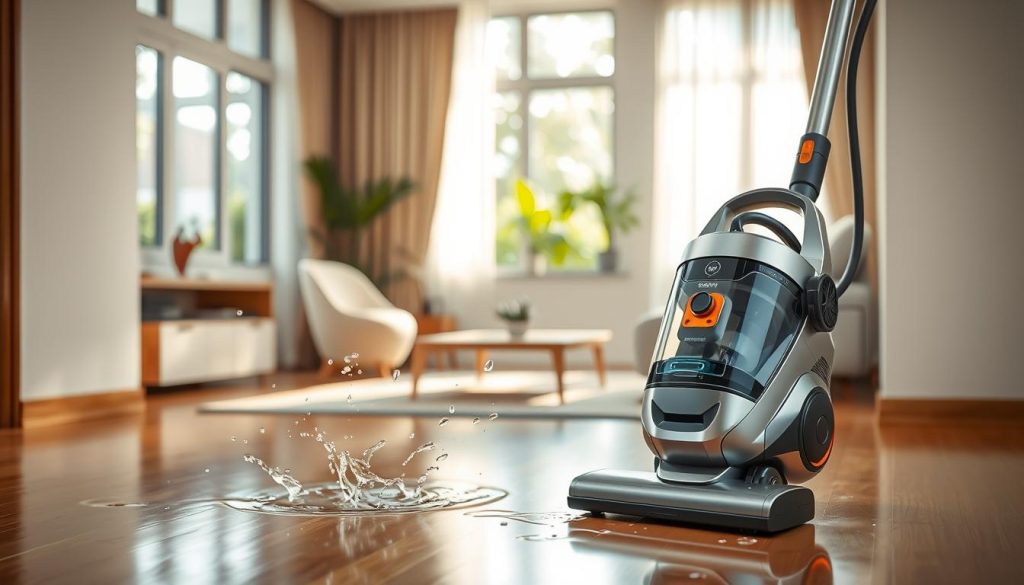
We see three common types in local shops: a dry vacuum cleaner for dust, a wet vacuum for liquid jobs and a wet dry vacuum that handles both. Wet dry vacuum models give the most flexibility for kitchens, balconies and cars.
Key practical features
Sealed system and a float shut-off are essential for safe wet pickup. Choose a sensible tank size for your flat so emptying fits your routine.
Filtration and disposal choices
Swap a pleated or HEPA filter for a foam one before wet work. For dry dirt, a paper or fleece bag makes disposal neater. Good filters keep exhaust air cleaner for allergy sufferers.
| Need | Best option | Why it matters |
|---|---|---|
| Kitchen spill | Wet dry vacuum | Swift change between dry and wet modes |
| Car interiors | Cordless wet dry | Portability for parking areas and tight spaces |
| Renovation dust | Corded wet dry with HEPA | Continuous suction and high-grade filtration |
Power, attachments and final pick
Strike a balance between suction and nozzle geometry. The right hose and nozzle set often matters more than headline watts. We check attachments and storage before we buy.
How to use vacuum cleaner with water without damaging the motor or filters
A careful prep routine makes wet pickup safer and keeps parts working longer. We always confirm the model is wet dry‑rated and that plugs and sockets are dry before we begin.
Preparing the machine: switch off and unplug, remove any paper or fleece bag, and fit a foam filter. This step protects the motor and airflow path.
Choosing hose and nozzle
Pick a wide floor nozzle for puddles, a narrow one for controlled pick‑up and a crevice tool for edges. Not every attachment suits wet work, so check labels.
Wet pickup technique
Start at the spill edge and work inward. Keep the nozzle flat and steady to control suction and avoid splashes.
Managing the tank and stopping safely
Watch sound and pull strength for signs the tank is near full. If a float shut‑off trips, stop, switch off and empty into a drain.
Aftercare
Empty the container, rinse and wipe the hose and nozzles, then air‑dry components fully before reinstalling dry filters or a bag. This prevents mould and corrosion and readies the unit for the next job.
“A quick check and correct filters save us repair time and keep suction consistent.”
Using wet/dry vacuums for dry debris, dust and everyday cleaning
For daily dust and debris, a wet/dry unit can be our one‑machine solution if we switch it back properly and fit the right parts. Small steps keep suction consistent and protect motors and filters.
Switching back to dry mode: filters, bags and keeping suction consistent
Wait until every component is fully dry, then replace the foam with a pleated or HEPA dry filter. This preserves airflow and prevents fine dust reaching the motor.
For frequent dry dirt and hair, fit a paper or fleece bag. Bags reduce mess on emptying and keep the drum cleaner, which maintains suction longer.
Best attachments for carpets, floors and upholstery in our home
Choose a floor head for tiles and hard floors, a carpet tool for rugs and an upholstery nozzle for sofas and fabric chairs.
Keep wet pickup away from fabric tools unless the part is rated for extraction; trapped moisture can cause smells and damage.
Handling fine dust and renovation mess: why higher‑grade filtration matters
Renovation dust can be very fine. Pleated or HEPA filters stop particles from returning to the air, which helps allergy sufferers and keeps rooms cleaner.
We check and replace filters on a schedule, clear the hose if suction drops, and avoid overfilling bags to prevent restriction.
“A simple filter swap and a bag give us the convenience of one machine without the trade‑offs.”
| Task | Recommended tool | Benefit |
|---|---|---|
| Daily dust and hair | Dry filter + fleece bag | Neat emptying and steady suction |
| Carpets and rugs | Carpet tool | Better agitation, fewer passes |
| Fine renovation dust | Pleated/HEPA filter | Cleaner exhaust air, reduced allergens |
| Upholstery | Upholstery nozzle | Gentle fabric care, effective dirt removal |
For more on wet/dry routines and safe handling, see our practical guide on wet‑dry machine care.
Where wet vacuuming helps most: real-life cleaning scenarios
Quick response keeps damage and mould at bay. We often face balcony puddles, kitchen spills and bathroom overspray in Singapore. A wet dry appliance gets the job done fast and cuts drying time.
Hard floors and wet areas
Tiles, grout and balconies: start at edges and work inward with a wet nozzle. Keep slow, steady strokes and check corners so thin films of liquid do not remain.
Car interiors and tight gaps
For mats and seats we fit a crevice tool and focus on mats first. Strong suction shifts sand and grit, while small nozzles reach rails and seams.
Garages, patios and DIY jobs
Muddy footprints, small stones and accidental spills are awkward for a mop. The appliance handles mixed dirt and liquids; empty the container and dry components straight away.
Outdoor and specialist situations
At flooded spots keep the appliance body clear of pools and use an extension hose. Stop often to check tank capacity and avoid overfilling.
- Checklist: foam filter for wet work, correct nozzle, watch the tank level, clean and dry the container after use.
- When not to wet-vac: tiny clean spills are faster with a cloth; hazardous liquids need specialist handling.
“A quick extraction can clear water in minutes and cut drying time significantly.”
For further examples and uses for a wet and dry device in the home, see practical household uses.
Conclusion
, A reliable wet dry vacuum is the safest way to tackle spills while protecting parts and air quality.
Non-negotiable rule: never let standard vacuum cleaners pick up liquid. Only a wet vacuum or a wet dry model with a sealed system is acceptable.
Our repeatable method keeps risk low: remove bags, fit a foam filter, choose the correct nozzle, work from edges inward and stop before the tank overfills.
Aftercare matters: empty and dry the tank and hose promptly. This prevents odour, mould and strain on the motor and keeps filters working well.
When buying, favour float shut-off, suitable tank size, strong suction and good filtration. A well‑maintained unit gives us daily cleaning and reliable spill recovery.

