

We introduce compact, multi-use machines that suit Singapore homes and small businesses.
These units handle dry grit, hair and the odd spill while shifting between drum-style heavy-duty formats and cordless stick models with mopping functions.
In this roundup we set clear expectations. We compare formats, list buying criteria, and call out practical trade-offs for HDB flats, condos, landed houses, cars and small offices.
We also preview known brands — Electrolux for domestic ease and Kärcher for tougher commercial tasks — and show which models match specific routines.
Value is judged on real-world performance, hygiene and filtration, usability in tight spaces, and maintenance effort over time rather than on headline price alone.
For a close look at a compact wet & dry option that fits small Singapore homes, see the Lura wet & dry model.
Why we’re recommending wet and dry vacuum cleaners for Singapore homes and workspaces
For city homes where tiled entries meet rugs, we favour a hybrid system that handles loose grit, tracked-in sand and sudden spills. Wet dry flexibility reduces the need for separate tools across mixed surfaces. It also helps during monsoon months when entrances often get damp.
Common local messes these machines handle well
Fine particles from corridors, food crumbs on tiles and puddles after heavy rain are everyday examples. A wet dry vacuum saves time by switching modes for dry debris or liquid pickup without extra kit.
Home vs commercial expectations: what changes in real use
At home, users prefer quieter, lighter models for spot cleaning and weekly upkeep. In workshops or renovation sites, suction, robust filters and tank capacity become priorities.
“Real capability often trades off with size — heavier, louder units usually deliver more power.”
- Decide by pattern: cordless sticks suit quick tidy-ups; drum formats work for deep cleans.
- Health matters: commercial use needs stricter filtration for fine dust and better user protection.
What a wet dry vacuum is and how it differs from a dry vacuum cleaner
We begin by defining what a wet dry vacuum does in everyday terms. A wet dry vacuum is a multi-function machine built to handle pooled liquid, damp debris and loose solids without harming the motor.
Wet, damp and dry dirt: what “wet dry” actually covers
Wet means pooled liquid that triggers float shut-off or automatic cut-off to protect the motor. Damp refers to slightly moist debris that needs separation before reaching filters. Dry pickup uses standard filtration and can clog if filters are not cleaned regularly.
Drum-style vs stick-style wet dry systems
Drum-style systems offer larger tanks, stronger suction and are often corded for continuous power. They suit renovations, garages and outdoor use.
Stick-style machines are lighter, usually cordless, and pair basic suction with mopping for daily floor care indoors. They trade capacity for agility.
“Using a dry-only unit on liquids risks motor failure; wet dry systems add simple safeguards such as float cut-offs.”
- Switching modes: separation of liquid, filter handling and fitting wet-compatible accessories matters.
- Where each excels: heavy-duty drum for large jobs; stick for quick, routine floor cleaning.
When a dust and water vacuum cleaner makes more sense than a regular vacuum
We outline common scenes where a dual-purpose unit clearly outperforms a standard household model.
Kitchen spills, bathroom puddles, post-mopping pickup
Kitchen accidents and bathroom puddles happen often in Singapore. A wet dry vacuum picks up liquids fast, reducing slip risk and lingering smells.
Post-mopping pickup speeds drying on tiled surfaces. This matters in humid months when slow evaporation causes odour.
Cars, garages and renovation mess
Cars and small workshops need stronger suction for grit, pet hair and occasional wet patches. A drum-style model with robust containers handles this better than a light dry vacuum.
Renovation areas produce fine particles that clog basic filters; commercial-style filtration avoids performance loss.
Pet hair, sand and everyday floor care
Pets bring hair plus wet paw prints. Choosing a wet dry vacuum reduces the need to vacuum then mop later. This saves time in tight living areas.
“Choosing the right model depends on whether you need occasional liquid pickup or frequent wet cleaning.”
- Occasional spills: compact stick formats may suffice.
- Regular wet work: prioritise tank size, filtration and suction.
The key features we look for before we recommend any models
Before we pick any model, we run each machine through a strict checklist that reflects real Singapore homes.
We prioritise suction power and motor performance first. High suction power matters for wet patches and heavier dry dirt. Motor build affects sustained performance during long sessions.
Tank capacity and container design come next. A well-shaped container is easier to empty and limits splash-back when handling dirty water. Ergonomics save time and keep storage neat in small space.
Filtration, corded reach and handling
We compare basic filter setups against HEPA-style filters for allergy-prone homes and renovation work. A HEPA option is worth the cost when fine particles matter.
Corded reach versus cordless runtime is a practical trade-off. For flats, a longer cord often beats short cordless runtime for uninterrupted cleaning.
“Accessories only matter if they get used — crevice tools, upholstery heads and wet nozzles are the ones we keep.”
| Feature | Why it matters | What we recommend |
|---|---|---|
| Suction power | Pick-up on wet patches and heavy dirt | High continuous power rating |
| Container design | Easy emptying, no splash-back | Wide mouth, stable base |
| Filter type | Air quality and fine particle capture | HEPA for allergies; standard for routine use |
| Accessories | Versatility for cars, sofas and corners | Crevice + upholstery + wet nozzle |
For practical maintenance tips on keeping filters working well, see our guide on how to clean a filter.
Electrolux wet and dry vacuum cleaners at a glance
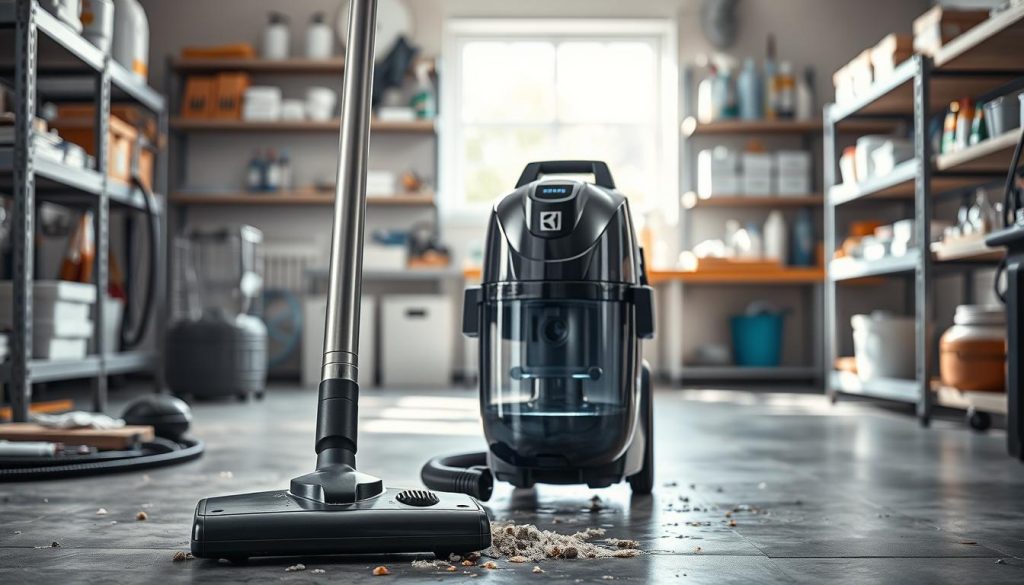
Our snapshot shows how Electrolux balances power, convenience and promotions for buyers in Singapore.
Benefits when buying from Electrolux Singapore
Official-store perks shift the value proposition. Free delivery and 0% interest instalment plans make higher-spec products easier to afford.
Time-limited promotions—sometimes up to 47% off—can change which model represents the best deal for tight budgets.
Drum models vs cordless stick models
Drum formats suit heavy-duty wet dry work, large volumes and workshop use. They prioritise capacity and sustained power over portability.
Cordless stick models target daily floor care with a 3-in-1 design that vacuums, mops and light-dries in one pass. They are lighter and simpler to store.
Signature features worth noting
TriAction nozzle combines brushing and liquid pickup so hard floors get simultaneous suction and mopping. It can replace a separate mop for routine jobs.
Smart dirt detection adjusts effort on the move, saving runtime and improving efficiency.
“Self-cleaning cycles reduce manual nozzle work, but users must still remove and dry filters and check rollers regularly.”
Our recommended Electrolux picks for wet dry cleaning
We shortlist three Electrolux options that cover budget, premium cordless and hygiene-focused needs for Singapore homes.
Electrolux Flexio Power Z823
Why it suits budget-led buyers: This model is a 3-in-1 wet/dry/blow unit with a 1600W motor. It offers onboard accessories storage and 360° manoeuvrability for tight corridors.
Often seen with a 15% promo. Practical for garages or small renovation tasks where blower function adds value.
Electrolux 800 EFW81713 (Cordless)
Why we rate it: A premium cordless model with an inverter motor, detachable hand unit and TriAction nozzle rated at 99% debris pick-up. Self-cleaning and smart dirt detection cut maintenance time.
Typical promos run near 24%. Best where cordless convenience and strong suction matter for daily cleaning.
Electrolux UltimateHome 700 EFW71711
Hygiene-first choice: Offers wet/dry suction with antibacterial tanks claiming 99.9% bacteria elimination and fast floor drying. Self-cleaning nozzle reduces manual upkeep.
Often on deep promotions (for example, 42% off). Ideal for humid flats where quicker drying stops odour build-up.
“Match the model to your routine — accessories and upkeep matter as much as headline specs.”
| Model | Key feature | Best for |
|---|---|---|
| Flexio Power Z823 | 1600W, 3‑in‑1 + blower | Budget, garage, workshops |
| 800 EFW81713 | Cordless, TriAction, self‑cleaning | Daily cordless use, spot cleans |
| UltimateHome 700 | Antibacterial tanks, quick drying | Hygiene‑focused homes |
Electrolux price expectations in Singapore and how we assess value
We set realistic local price ranges so buyers know what to expect before they start comparing models. Electrolux products in Singapore span a wide range that captures entry drum units up to premium cordless options with smart features.
Typical pricing range and what drives the difference
At the low end, the price buys basic power and a compact tank suited to occasional wet use. As you move up, cordless convenience, built-in wash cycles and smarter sensing explain the jump.
Main cost drivers include cordless battery systems, integrated cleaning reservoirs, auto-clean nozzles, and higher sustained power for longer sessions. These features cut cleaning time but add to the sticker figure.
How promos, gifts and instalment plans change the real cost
Promotions—sometimes up to 47% off—plus bundled gifts and 0% instalment plans can reduce the effective price substantially. Official-store perks such as free delivery also improve value for money.
“Compare cost per use, likely maintenance time and whether one product replaces separate mopping tools.”
- Assess cost per use over expected years of ownership.
- Factor service, cartridge or filter replacements into running costs.
- Watch major sale periods in Singapore but avoid relying on guaranteed discounts.
Decision framework: buy premium if you need frequent wet pickup, faster drying and smart features that save time. Choose simpler models if core cleaning needs are occasional and budget is tight.
For market context and wider price trends, see this regional report on household vacuum cleaners market.
Kärcher wet and dry vacuum cleaners for commercial and industrial cleaning
Kärcher positions its trade range for contract, hospitality and industrial use where uptime matters.
Durability shows in reinforced housings, heavy‑duty rollers and long cables built for daily handling.
NT Tact — high‑suction use with self‑cleaning filter technology
NT Tact models use Triggered Air Cleaning to blast the filter and keep suction steady. This system suits fine abrasive dust on sites where clogging is common.
Ap class — semi‑automatic filter cleaning for all‑round work
Ap models are flexible for dry, damp and wet dirt. Semi‑automatic filter cleaning reduces downtime for small to medium fine‑particle jobs.
Standard class — large liquid volumes and coarse debris
Standard units favour big container capacity and robust intake paths. They work well for hospitality spills and coarse debris during night shifts.
Safety options for hazardous applications
Certified safety machines protect operators from respirable particles, including asbestos. Explosion‑proof Zone 22 models are available.
- Selection cues: check container volume, power‑tool extraction ports and whether filter bags are needed or optional.
“Choose the right class by job profile: fine‑particle work needs advanced filter systems; large‑volume cleanups need capacity.”
Filter cleaning and dust classes explained for safer vacuum cleaning
A filter’s job often decides whether a machine keeps performance steady or fails when fine material fills the container.
Why “a vacuum cleaner is only as good as its filter”
We treat filtration as a health and performance issue rather than a spec-sheet line item.
Poor filter upkeep raises airborne particle levels during emptying and service. Certified filters cut that risk for users.
Dust classes L, M and H: what they mean in practice
L class tolerates permeation ≤1.0% and suits lime, plaster and similar work.
M class limits permeation to
H class is for the worst hazards: permeation
When automatic filter cleaning matters most
Automatic cleaning keeps suction steady, saves time and reduces manual contact with fine remnants.
It is most useful for bagless fine-particle work, continuous tool extraction and long shifts where interruptions matter.
“A vacuum cleaner is always only as good as its filter.” — Kärcher
- Buyer outcome: fewer stops, less exposure and more stable system performance.
- Safety note: choose certified systems for hazardous tasks rather than generic marketing claims.
How wet and dry vacuuming works for liquids and for dry dust
Float systems and automatic cut-off to prevent overfilling
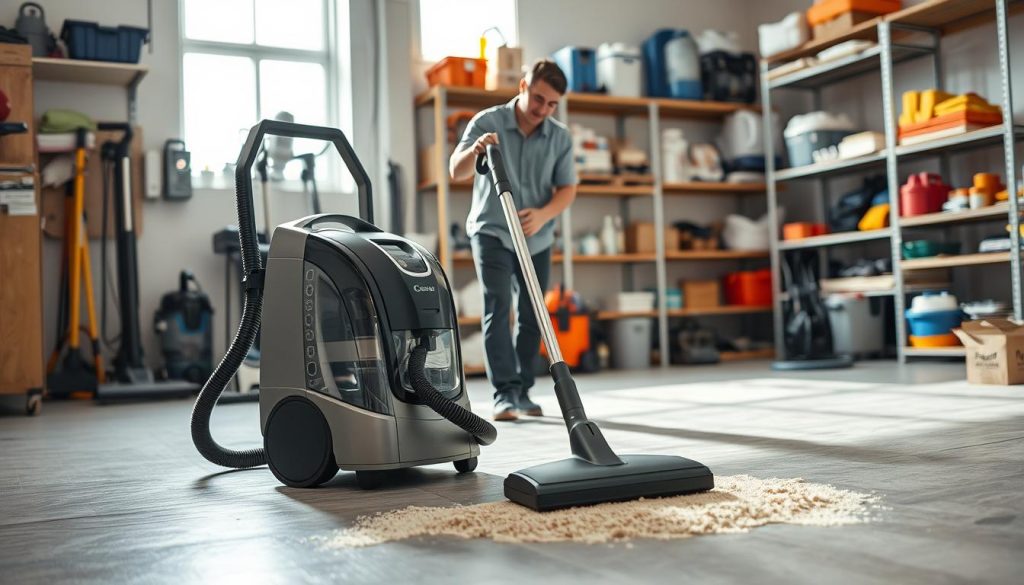
When a liquid rises, it reaches a mechanical float that blocks the intake or an electronic cut-off that stops the motor. These safeguards prevent messy overflows and protect motor life.
Follow max-fill marks on the container to avoid poor hygiene and reduced performance. Emptying before the mark keeps seals and valves working well.
Dry dirt separation, cyclone-style rotation and filter clogging
For dry pickup, airflow created by a bypass blower carries debris into the chamber where filters trap fine particles. Over time, small particles build up and reduce suction and overall performance.
Some designs use cyclone rotation so heavy dirt drops straight into the container. This keeps filters cleaner longer and suits jobs with mixed grime.
“Automatic filter cleaning and sensor-controlled intervals save time on renovation sites where clogging is frequent.”
- Manual: lowest cost, needs regular stops to shake filters.
- Semi-automatic: fewer interruptions via a timed blast or lever.
- Automatic: sensor-driven pulses keep steady suction for long shifts.
| Feature | Benefit | Best for |
|---|---|---|
| Float / cut-off | Prevents overfill and motor damage | Liquid pickup |
| Cyclone separation | Less filter clogging, sustained suction | Mixed debris jobs |
| Auto filter cleaning | Consistent performance with less manual work | Renovation and commercial use |
Do: switch modes only after emptying and drying filters to avoid damp smells. Don’t: ignore max-fill marks or run the machine with soaked cartridges.
Best wet and dry vacuum cleaner picks in Singapore beyond Electrolux and Kärcher
We list strong third‑party options that target specific chores: smart floor washing, pet hair, hot‑water mopping, edge cleaning, budget value and odour control.
Tineco Floor One Switch S7 Stretch
Smart floor washing: iLoop sensor tech and a dual‑side brush give near‑edge cleaning on hard floors. Good for quick daily upkeep where consistent cleaning matters.
Bissell CrossWave X7 Cordless Pet Pro
Pet‑focused model: modes for hair and stains combine wet dry pickup with strong suction power for carpets and tiles in one pass.
Dreame H15 Pro Heat
High‑spec option: up to 22,000 Pa and hot‑water mopping at 85°C. Traction assist improves manoeuvrability for stubborn messes.
Narwal S20 Pro
Lightweight handling: AI Dirt Sense, triple‑sided edge cleaning and long runtime make this a good pick for daily floor maintenance.
Simplus Cordless Wet‑Dry
Budget entry: solid suction figures and foldable design keep initial price low. Expect trade‑offs in materials and accessory range.
Shark HydroVac
Hygiene angle: antimicrobial rollers focus on odour control in humid conditions. Beneficial where quick drying and roller hygiene matter.
Practical tip: compare after‑sales support, consumables and local availability before you buy. For wider market context, see our guide to the best vacuum cleaners in Singapore.
Does Dyson have a wet and dry vacuum for Singapore buyers?
Dyson does not sell a traditional wet dry vacuum in the same way as drum-style floor washers. Instead, in Singapore the brand offers cordless stick models fitted with Submarine style heads that manage light liquid pick-up and quick spill response.
Who the V12s Origin Submarine and V12s Detect Slim Submarine suit
We recommend the V12s Origin Submarine and the Detect Slim Submarine to buyers who prioritise lightweight cordless use, premium build and easy storage. These units work well for spot cleaning, pet hair and tiled flats where agility matters.
What you’re paying for: filtration, design and cordless convenience
Dyson’s higher price reflects R&D, cyclonic engineering and refined design. Expect strong suction bursts, efficient power management and tighter seals that protect air quality.
Choose the Detect Slim if HEPA-class filters are important. Opt for the Origin if you want slightly lower cost but similar handling. Both remain an excellent cordless option for quick cleans, though heavy liquid work still needs a dedicated floor washer.
“Dyson trades tank volume for mobility and advanced filtration — good for daily touch-ups, not large wet jobs.”
- Best for quick spot work and mixed surfaces.
- Not a replacement for large-capacity wet cleaners.
Choosing the right option for your floors, space and cleaning routine
Matching size, manoeuvrability and head design to your living area saves time and regret later. Start by mapping the main floors you clean and the storage space you can spare.
HDB flats and condos: storage, weight and turning radius
In compact homes, a lighter system with a small turning radius beats raw power. Cordless units ease navigation in tight corridors and stacked storage.
Check lift access and cupboard height before you buy. Handles that fold or detach make daily use simpler for most users.
Hard floors vs rugs: matching the head and brush design
Soft rollers pick up spills and fine debris on hard floors without scuffing. Motorised brush heads work better on rugs but can snag fringe.
Choose an interchangeable head if you have mixed zones. Smart sensing that shifts intensity helps preserve carpets while keeping tiles clear.
Quick daily cleans vs deep weekly cleans: picking a system that fits
Quick passes favour cordless design and lightweight build for fast turnaround. Deep weekly work calls for larger tanks, stronger corded power and robust filtration.
| Scenario | Best system | Key feature | Why |
|---|---|---|---|
| Small flat, daily touch-ups | Cordless stick | Compact head, light weight | Easy storage, fast cleaning time |
| Mixed rugs and tile area | Interchangeable heads | Soft roller + motor brush | Protects floors, lifts fibres |
| Large weekly deep clean | Corded drum-style | Large tank, steady power | Less stopping, higher pickup |
Decision tip: if you mostly need liquid pickup choose a high-capacity option; for dry control prioritise filtration and brush design. For multi-user homes, favour simple controls and repeatable results.
Maintenance essentials for better performance and cleaner air
Small, regular steps in filter care and tank handling prevent common performance drops over time.
Filter care, drying and replacement intervals
We recommend inspecting the primary filter after every two uses for light jobs and after each heavy session. Paper and HEPA filters must be dried thoroughly if exposed to liquid; damp filters reduce airflow and cause odours.
Replace high‑efficiency elements per the maker’s schedule or sooner if wear shows. Automatic cleaning helps, but it does not replace scheduled swaps.
Tank hygiene, odour prevention and self-cleaning functions
Empty the container promptly. Rinse, dry and store open to avoid stagnant smells in humid Singapore conditions.
Self-cleaning cycles on selected Electrolux models reduce manual nozzle work and an antibacterial tank can slow odour build-up. Still, seals and nozzles need occasional manual cleaning to keep the system healthy.
Accessories to keep on hand for corners, upholstery and cars
Keep a crevice tool, an upholstery head and a compact car nozzle ready to handle corners and sofa spills. These accessories save time and extend the usable life of the machine.
“Regular upkeep is the single best way to protect suction and air quality.”
Conclusion
Our final word is simple: match capability to routine and storage to space before you commit.
Choose by the problem you face most often — spills, fine dust or heavy renovation dirt. For many Singapore homes, a wet dry system gives daily convenience with simpler upkeep.
Electrolux suits home use with user-friendly features, promos (frequent discounts up to 47%), free delivery and 0% instalments across the price range.
Kärcher remains the pick for professional tasks — Tact, Ap and standard classes, automatic filter cleaning and L/M/H safety choices keep suction power steady on tough jobs.
Focus on suction power, filtration, container hygiene, manoeuvrability, accessories and total ownership effort. Treat price as one part of value.
Shortlist two to three models, match them to your space and routine, then buy with confidence knowing which features will improve daily cleaning.

