
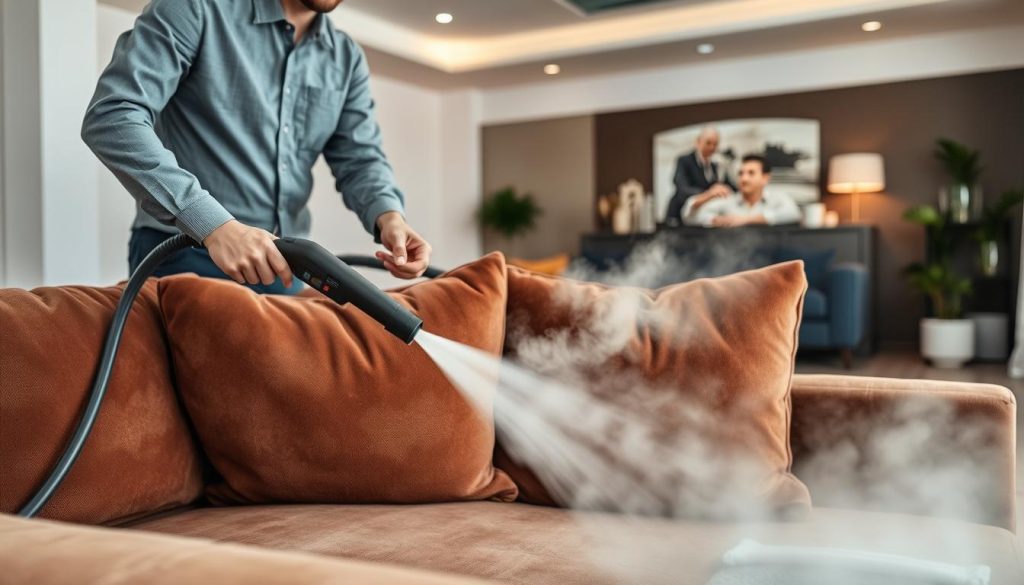
We review the best steam water vacuum cleaner options for buyers in Singapore. This introduction sets expectations on what the device is and why many shortlist it when they want faster, more hygienic cleaning with fewer steps.
Our guide supports commercial intent by focusing on what to compare and what to avoid. We explain which format fits HDB flats, condos and landed homes, taking storage, humidity and mixed floors into account.
We preview the core decision points: surfaces at home, workflow, drying expectations, maintenance and total cost of ownership. We also state how we will evaluate specs such as steam pressure and suction, accessories, tank sizes and after-sales support in Singapore.
Good means chemical-free cleaning where possible, consistent deep performance and practical daily usability rather than marketing claims. Use this guide to pick a model that works in real life, not just on paper.
Who this guide is for in Singapore homes
Here we match everyday Singapore home routines with the appliance types that deliver the best results. Our focus is practical: storage limits, mixed floors and allergy needs shape what works in real life.
Fast cleaning for HDB flats, condos and landed properties
In smaller HDB layouts a compact design matters. We recommend lightweight units that store easily and let us finish quick weeknight cleaning in little time.
Condos often need versatile models for mixed floors. Landed homes demand higher capacity and longer sessions to cover large area and heavier mess.
What “commercial intent” buyers typically need before purchasing
Buyers want clear comparisons, realistic pros and cons, and a short-list by price band. We also flag surface compatibility, accessory needs and how much time maintenance will take.
| Scenario | Recommended type | Storage | Typical session time |
|---|---|---|---|
| Small flat (HDB) | Compact mop/handheld | Small closet | 15–30 minutes |
| Condo | All-round model for mixed floors | Medium cupboard | 30–60 minutes |
| Landed house | High-capacity wet dry system | Garage or utility room | 60+ minutes |
Steam cleaner vs steam vacuum cleaner: what’s the real difference?
Understanding function and everyday impact makes buying easier for Singapore homes. We focus on how each unit operates and what it changes in routine.
How a steam cleaner works
A steam cleaner heats liquid to produce hot vapour that loosens grime. We finish the job by wiping with a pad or cloth to remove the residues.
How a steam vacuum cleaner works
A combined unit applies vapour and then uses suction to lift moisture and dirt in one pass. This one-pass function reduces manual wiping and streaking.
Day-to-day pros and cons
Mobility and weight: Combined systems are typically heavier due to suction hardware. That affects manoeuvrability in smaller flats.
Drying and hygiene: The suction stage speeds up drying and leaves fewer streaks. This is useful in humid Singapore conditions.
Upkeep: More tanks and parts mean higher maintenance time. That trade-off is worth considering against faster cleaning sessions.
| Feature | Single-purpose unit | Combined unit |
|---|---|---|
| Main action | Loosens dirt; requires wiping | Loosens and lifts in one pass |
| Drying time | Longer drying | Faster drying |
| Weight / mobility | Lighter, easier to store | Heavier, less manoeuvrable |
| Maintenance | Simple upkeep | More parts to clean and service |
Why a steam water vacuum cleaner can be a smart upgrade
A one-pass unit can simplify chores, cutting the usual two-step routine into one. By applying heat then picking up the residue, we avoid the classic “heat, then wipe” loop. That saves time and reduces streaks on hard surfaces.
Chemical-free cleaning is a clear benefit for families and allergy sufferers. Removing the need for fragranced detergents helps maintain indoor air quality in compact Singapore homes.
For pet households, look for strong suction and upholstery tools. These features handle fur, accidents and odours more reliably than a plain steaming pass.
Deep cleaning here means lifting grease on kitchen tiles, dissolving bathroom residue and extracting grime from textured surfaces. Prompt pickup of dirty moisture prevents it from cooling and leaving streaks.
Expect faster drying, but not instant dryness. Humidity, room airflow and material type still affect wait times. Even so, the combined system shortens the interval before an area is usable.
- Less manual wiping after treatment
- Better upholstery and carpet pick-up for pet homes
- Reduced chemical use for sensitive households
Micro dry steam technology: when “drier” steam is better
When we need near-dry heat that cleans without soaking, micro dry steam is the feature to prioritise. It is extremely hot and contains roughly 5% moisture, so it behaves more like cleaner steam with far less residue.
Why drier vapour leaves less residue
Because the vapour has minimal liquid content, it penetrates pores and lifts grime without pooling. That reduces streaking and speeds return-to-use on high-gloss and natural finishes.
Best-fit surfaces and floors
- Parquet & natural stone: lower moisture means less swelling risk and gentler care.
- Glass & stainless steel: less smearing and easier polishing after treatment.
When higher hygiene standards matter
Micro dry systems support deep cleaning where touchpoints and food prep areas matter most. Catering, medical and busy kitchens benefit from hygienic results without heavy chemicals.
We must still match settings and technique to each surface — drier vapour is hot and can affect sensitive materials.
Consider paying more for this technology if you clean shared spaces often and want consistent, low-residue results.
Choose your format: steam mop, handheld steamer or steam vacuum
Selecting the right format depends on whether you prioritise floors, upholstery or whole-home speed.
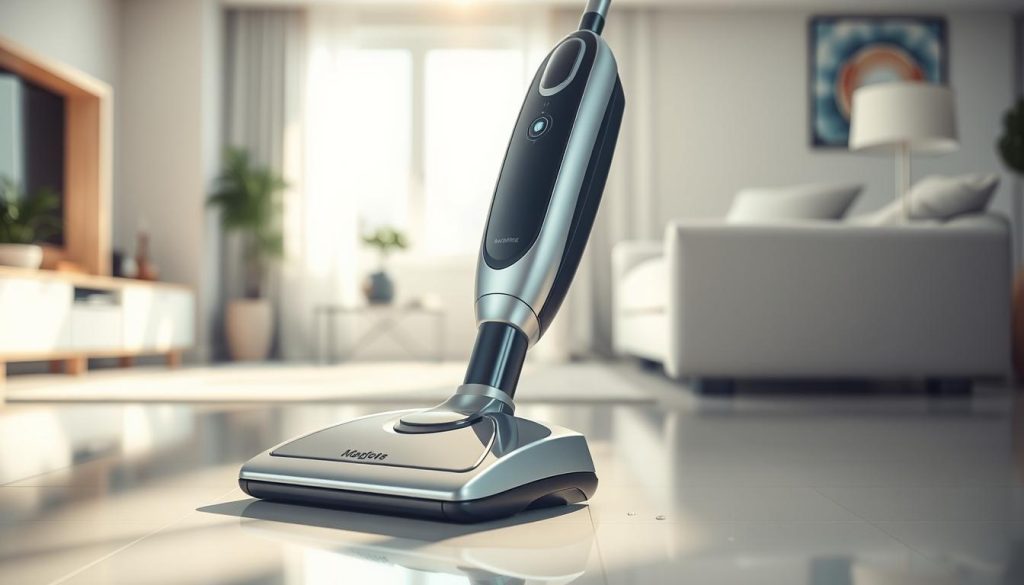
Steam mops for sealed hard floors and quick weekly maintenance
Steam mops suit sealed hard floors and fast weekly refreshes. They are light, simple and cost-effective for flats with limited storage.
Handheld units for corners, grout lines and spot jobs
Handheld devices reach grout, tracks and tight corners well. They work best for quick spot treatment, though we still need a pad or cloth to lift residue.
Wet dry steam vacuums for large areas and one-pass cleaning
Wet dry steam vacuums combine heat and suction for one-pass results across a larger area. These models speed up drying and cut chores in homes that cover more floor space.
Portable spot cleaners that steam, scrub and vacuum upholstery
Spot machines that steam, scrub and vacuum are ideal for sofas, car seats and fabric chairs. They prevent repeat stains and are more practical than a general-purpose unit for upholstery work.
| Format | Best for | Storage | Key trade-off |
|---|---|---|---|
| Steam mop | Sealed hard floors | Small | Limited debris pick-up |
| Handheld | Grout, corners, spots | Very small | Needs wiping to remove grime |
| Wet dry steam vacuum | Large areas; one-pass cleaning | Medium | Heavier; more upkeep |
| Portable spot cleaner | Upholstery & fabric stains | Small–medium | Not ideal for full-floor work |
Where you’ll use it: matching the machine to surfaces
Matching appliance choice to each surface lets us avoid damage and get reliable cleaning performance.
Tiles and bathroom grout in humid Singapore conditions
Tiles and bathroom grout trap moisture and odour in humid climates. We use lower output and immediate extraction to speed drying.
Tip: Run a single pass with extraction where possible to reduce lingering damp and mould risk.
Sealed hard floors, laminate and vinyl: what to check
Check manufacturer guidance and any “sealed hard” labels before applying heat. Edge sealing and adhesive stability matter.
For laminate and vinyl, avoid long dwell times. We make short passes and lower settings to prevent swelling or lifting.
Carpets, rugs and deep cleaning carpets without over-wetting
Carpet spot work refreshes fibres and lifts stains. For deep cleaning carpets, prioritise controlled moisture and strong extraction to avoid over-wetting.
Upholstery, mattresses and car interiors
Use handheld tools for sofas, mattresses and car seats. Controlled moisture and suction protect fillings and trim.
Decision lens: choose the machine that is safest for your most sensitive surface, not only the dirtiest area.
Core specs to compare before we buy
Before we buy, a quick spec checklist keeps surprise chores and poor performance at bay.
Heat-up time and workflow
Fast heat-up suits daily touch-ups; a 15 second claim is handy for quick jobs. We must check whether the unit maintains output after continuous use.
Look for recovery time and sustained output rather than a single fast start figure.
Water tank size and refill convenience
Small tanks fit tight storage and are fine for short sessions. Larger tanks reduce interruptions for bigger flats.
Practical tip: note easy-fill ports and whether you can change tanks mid-session without a mess.
Pressure, heat and cleaning outcome
Higher pressure and heat lift greasy grime faster. But aggressive settings can harm delicate surfaces.
We balance raw power with safe settings for sealed floors and sensitive finishes.
Suction and wet pick-up performance
For combined systems, suction makes the real difference in drying speed and residue removal.
Check rated suction and real-world wet pick-up tests when possible.
Weight, compact design and reach
Weight affects liftability and stair use in Singapore flats. A neat design with tool storage eases daily stowing.
Cable length and operating radius decide if we need to move sockets or can clean a whole living area in one go.
- Time: consider heat-up and recovery to match your routine.
- Water tank: size vs refill frequency for session length.
- Suction: key for faster drying and less wiping.
- Weight & design: storage and portability matter in small homes.
Attachments and nozzles that actually change cleaning results
Attachments often determine real-world results more than headline power figures. The right nozzle, pad or head controls contact, agitation and extraction. That changes how well we lift residue from each surface.
Floor nozzles and microfibre pads for sealed hard floors
Floor heads and pad choice matter. Thicker pads trap more grime; dense fibres reduce streaking on sealed hard floors. For a steam mop, choose pads that compress but recover quickly.
Crevice tools and precision heads for corners and tracks
Slim nozzles reach grout, tracks and tight joints where debris hides. A narrow tip keeps pressure and heat focused so we dislodge grit without over-wetting adjacent surfaces.
Upholstery tools for sofas, curtains and car seats
Fabric heads with soft brushes protect furniture while allowing fast extraction. For car seats, compact heads plus a long hose beat brute tank size; manoeuvrability wins.
Carpet glides and rug-friendly add-ons
Glides help a unit slide over low-pile carpets and rugs. For deep stains on carpets, we prefer a dedicated spot extractor-style tool rather than a glide, which is best for gentle freshening.
“Pick attachments first — they expand what the machine can do.”
Hygiene and indoor air quality: filtration, sealed systems and allergens
Hygiene at home spans more than surface sanitisation; it includes how loosened grime and airborne particles are handled.
Why chemical-free cleaning can support better indoor air
Chemical-free cleaning using heated vapour can sanitise contact points without fragranced residues. That reduces lingering odours and volatile compounds in enclosed Singapore homes.
We note that heat kills or weakens microbes, but removal matters too. If loosened dirt is left to settle, allergy and odour risks remain.
HEPA filtration and sealed airflow on vacuum-equipped models
A model with a sealed airflow system and genuine HEPA removes fine particles that steaming alone cannot capture.
Choose a unit where the manufacturer confirms a sealed path from nozzle to filter and provides filter replacements locally.
| Feature | Why it matters | What to check |
|---|---|---|
| Sealed airflow | Prevents leaks of dust and allergens | Manufacturer test data; sealed rating |
| HEPA filter | Catches sub-micron particles | HEPA class, replacement cost |
| Extraction stage | Removes loosened debris and moisture | Rated wet pick-up; tank design |
“Steam loosens and sanitises; the suction stage or filtration manages particles and moisture.”
What we check on product pages: filtration type, filter availability, and whether the airflow route is sealed. Also confirm compatibility with your delicate surfaces and overall cleaning needs.
Maintenance and running costs we should factor in
Small, regular checks keep these one-pass systems running at peak performance. We find that upkeep is simple if scheduled, but it is unavoidable for reliable results.
Descaling routines for Singapore’s conditions
Mineral build-up affects heat output over months. Follow the manufacturer’s descaling advice and use recommended agents to protect boilers and seals.
Tip: softening or filtered water can reduce how often you descale and extend component life.
Cleaning pads, emptying dirty tanks and odour control
Microfibre pads need washing after each session to avoid transfer of grime. Filters and the dirty water tank must be emptied and rinsed promptly.
Do this: remove residues, air-dry parts and store units with lids open to prevent smells.
Self-cleaning systems and what they do (and don’t) replace
Self-clean cycles rinse internal pathways but do not remove scale from boilers or eliminate manual tank care. They save time, yet we still inspect seals and replace consumables.
Budget a few extra minutes after each session — a capable design can save cleaning time but adds small upkeep tasks.
- Consumables: pads, replacement filters and seals are ongoing costs.
- Check local availability and prices for spare parts in Singapore.
- Plan for periodic descaling to protect performance and warranty.
Safety and material care: avoiding damage while steam cleaning
We focus here on safe use and material care so your floors and fixtures stay intact.
Sealed vs unsealed floors: when steam is a bad idea
Only use heated vapour devices on floors that the manufacturer explicitly lists as sealed hard. Unsealed wood, some laminates and natural finishes can absorb moisture and swell.
Rule of thumb: if in doubt, do not apply heat. Test an inconspicuous patch and wait the suggested time before proceeding.
Heat control around adhesives, grout and delicate finishes
High heat over seams, edge-banding or adhesive joints can weaken bonds over time. This is especially true with vinyl and some click-fit laminates.
For grout and bathroom finishes, short passes help lift residue without dislodging fragile grout or coatings. Avoid aggressive brushing at high temperature on aged grout.
Safe workflow to reduce risk
Start on a low setting and increase only if needed. Keep the head moving; never dwell in one spot for extended time.
Faster treatment is not the same as hotter treatment — controlled technique often saves finish and reduces overall time spent on repeat repairs.
Test first, move steadily and respect the surface — that preserves finishes and gives reliable cleaning results.
- Confirm surface compatibility before use.
- Use buffered pads to reduce direct heat contact.
- Inspect seams and grout; avoid high heat where bonds look compromised.
Price guide in Singapore: what we get at each budget level
Knowing typical Singapore price bands makes it easier to match models to real needs. We map three practical tiers so you can pick the right appliance for your space, schedule and budget.
Entry level
These units suit light duty and quick weekly tasks. Expect smaller tanks, fewer attachments and basic design. Good examples include the Beldray and Cornell. Kenmore hybrids sit at the top of this band.
Mid-range
Here we get better build, stronger output and specialised tools for upholstery and carpets. The BISSELL SpotClean C5 is a typical mid-range option for targeted stain work.
Premium
Premium wet dry systems deliver one‑pass performance, larger tanks and superior extraction. Tineco Floor One S5 and S9 are the category leaders we watch.
When premium pays off: choose this tier if you have a larger home, frequent messes, pets or if you want to cut total cleaning time.
| Tier | Typical examples | What improves |
|---|---|---|
| Entry level | Beldray, Cornell, Kenmore SM2050 | Portability, low price, basic attachments |
| Mid range | BISSELL SpotClean C5 | Better upholstery tools, stronger spot extraction |
| Premium | Tineco S5, Tineco S9, Polti Rollysteam | One‑pass wet dry performance, larger tanks, stable output |
Real-world examples: popular models and what they’re best for
These examples show the practical strengths and trade-offs of models we often recommend. We describe what each is suited to in typical Singapore homes so you can shortlist by use-case and budget.
Hard floors and quick refresh
Kenmore SM2050 2‑in‑1 is a practical steam mop with a built‑in suction stage. It suits sealed hard floors where we want fast refreshes without hauling a large machine.
Compact, portable units
Kärcher SC 1 EasyFix and SC 1 Multi & Up are tiny steam cleaner options. We pick these for tight storage, grout and small spot jobs where portability matters.
Spot cleaning sofas and cars
BISSELL SpotClean C5 and the HydroSteam combine agitation and extraction. For upholstery and car messes, they shorten drying and lift stains more effectively than a mop alone.
Premium one‑pass wet dry systems
Tineco Floor One S5 and S9 Artist target larger homes and busy households. They offer stronger suction, automated flow control and longer sessions. Expect better performance, and a higher price.
Value options for light duty
Beldray and Cornell are entry-level steam mop choices. We recommend them for occasional spot work and quick weekly upkeep, not deep carpet restoration.
All‑in‑one floor systems
Polti Rollysteam WD20 is a platform hybrid that appeals to buyers who want steam plus extraction in one unit. It’s a mid‑to‑high price alternative to premium wet dry vacuum systems.
| Model | Main use |
|---|---|
| Kenmore SM2050 | Quick hard floors refresh |
| Kärcher SC 1 EasyFix / Multi & Up | Portable spot work, grout |
| BISSELL SpotClean C5 / HydroSteam | Upholstery, car, spot stains |
| Tineco Floor One S5 / S9 | Large areas; one‑pass wet dry performance |
| Beldray, Cornell | Light duty; weekly touch‑ups |
| Polti Rollysteam WD20 | All‑in‑one floor system |
“Pick the model that fits your surfaces and schedule — no single unit wins every time.”
For a broader comparison of popular models and buyer tips, see our recommended list of best steam cleaners.
How we recommend choosing based on your home and schedule
C. Practical choices come from pairing household needs with machines that fit space and schedule.
Decide by asking what matters most: speed, versatility, pet care or storage. That single question saves us time and avoids buying a model we then ignore.
If we want speed
One‑pass steam vacuum models win for quick turnaround. They reduce manual wiping and speed drying by extracting moisture as they clean. Choose these when you need fast room reuse and low downtime.
If we need versatility
Handheld steam cleaner units with multiple attachments suit kitchens, grout, tracks and small spots. They are handy for mixed tasks and reach tight areas without a bulky system.
If we have pets
Pick tools focused on upholstery and carpets. Strong extraction handles accidents and lifts hair. Controlled moisture and good suction help speed drying and reduce odour risk.
If we have limited storage
Prioritise compact design, low weight and on‑board accessory parking. A lighter unit with neat docking increases the chance we will actually use it for short, regular sessions.
“Buy the machine you will use — power helps little if setup time keeps it in the cupboard.”
| Priority | Best fit | Why it works |
|---|---|---|
| Speed | One‑pass steam vacuum | Fewer passes, faster drying |
| Versatility | Handheld with attachments | Reaches grout, corners, spots |
| Pets | Upholstery & carpet tools | Extraction for accidents, hair pick‑up |
| Storage | Compact design, light weight | Easy stowage and frequent use |
Buying checklist before checkout
Pause at the cart and verify key specs so the machine suits your home and routine. A brief pre‑purchase check prevents regrets like incompatible floors or hard‑to‑find consumables.
Confirm surface compatibility
Check the product page for explicit compatibility with sealed hard floors and other sensitive surfaces. Do not assume “multi‑surface” covers unsealed timber or delicate finishes.
Check included accessories and replacements
Ensure the box lists floor pads, precision nozzles, upholstery heads and carpet glides. Verify replacement pad availability locally and whether common consumables are stocked in Singapore.
Compare warranty, local support and spares
Look for local service centres, spare parts lead times and how long filters and pads are supported. A short warranty often signals higher running costs.
Validate tank sizes, drying expectations and noise
Match clean and dirty water tank capacities to session length. Confirm realistic drying times for humid homes and check operating noise if you clean at night or in small flats.
| Pre‑check | Why it matters | What to confirm |
|---|---|---|
| Surface compatibility | Prevents damage | Sealed hard or not? |
| Accessories | Real‑world use | Included pads & spares |
| Support | Long‑term costs | Local warranty & spares |
| Tank & noise | Session comfort | Capacity, drying, dB level |
For a deeper buying guide and model checks, see our detailed reference at steam cleaner buying guide.
Where to buy in Singapore and what to compare on product pages
Finding the right appliance in Singapore starts with choosing a trusted retailer and reading listings closely. We check major electronics stores, official brand pages and popular marketplaces so we can compare price, support and delivery options.
Reading listings carefully: modes, tank capacity and included tools
Product pages vary in how they present modes (steam-only, combined extraction, or spot modes). We verify whether the model supports multiple modes and how easy it is to switch during use.
Look for the stated suction rating, water tank capacity and heat-up time. These three items shape session length and drying time more than headline wattage.
Check the accessories list to confirm the nozzle types for floors, crevices, upholstery and car interiors. Missing tools can mean extra purchases later and change the true value proposition.
Comparing price-to-performance across Kärcher, Philips, Shark and Tineco
Brand matters, but features matter more. We compare how each brand aligns features to our needs: Kärcher often targets durability and multi-surface use, Philips balances design and usability, Shark emphasises suction tech, and Tineco focuses on automated flow control for hard floors.
Don’t fall for the spec trap: prioritise heat-up time, real-world suction and water tank handling over a long list of fancy features that rarely affect daily cleaning.
| Where to compare | Key listing items to verify | Why it matters |
|---|---|---|
| Official brand store (Kärcher, Philips, Shark, Tineco) | Warranty, spare parts, included tools | Local support and genuine consumables |
| Major retailers (Harvey Norman, Courts) | Price promotions, demo units, return policy | Try before you buy; easy returns |
| Marketplaces (Lazada, Shopee) | User reviews, bundle deals, seller rating | Real-world feedback; possible value bundles |
Practical tip: before checkout we confirm warranty length, local service centres and spare-part availability. If two models cost the same, choose the one with better support and an included nozzle set that matches your floors and upholstery needs.
For quick cost comparisons and carpet cleaning context, see our recommended pricing reference at carpet cleaning cost guide.
Conclusion
strong, simple rule: choose the machine that suits the chores you do most and the time you have each week.
To wrap up, a lightweight steam option gives versatility for quick refreshes and tight storage. A combined wet dry model with extraction speeds drying and often delivers higher hygiene for busy homes and pet areas. Micro dry technology is the upgrade for sensitive surfaces such as parquet, glass, stainless steel and natural stone.
Keep decisions grounded: check tank capacity, rated suction, heating time and overall design so the unit fits your storage and routine. Prioritise chemical-free cleaning when indoor air matters, and match accessories for upholstery, carpets and car jobs.
Quick checklist: confirm suitability for sealed hard floors, buy the right tools for fabric and carpet work, and pick a system we will actually use weekly.

