
We tested models built for spills and daily dirt to see what suits Singapore flats. Our goal is practical: one machine that manages wet messes and performs on hard floors and rugs.
Wet-and-dry units are heavier and often louder, but they offer stronger motors and larger tanks. We explain why an all-in-one approach matters for small homes, faster floor drying and fewer storage headaches.
In this roundup we cover what wet & dry means, how we test suction, filtration and edge cleaning, our top picks, and buying advice for floors, pets and budget.
We set expectations: “best” depends on use—daily hard floors, mixed rugs or tougher stains—so we highlight trade‑offs, not just features. For a deeper equipment primer see our linked review and testing notes here.
What to expect next: clear recommendations, fit-for-purpose advice and the models we would choose for typical Singapore layouts.
Why a wet dry vacuum makes sense for Singapore homes right now
For many flats, a single machine that handles spills and dust is more practical than juggling multiple tools. Our climate and lifestyle create frequent scenarios where a combined approach saves time and reduces drying hassles.
Everyday spills, humidity and quick floor drying expectations
High humidity and sudden showers mean entryways often bring damp footprints. A wet dry model speeds floor drying and cuts slip risk after mopping or a kitchen splash.
Kids, pets and mixed messes on hard floors and rugs
Children and pets create mixed debris: crumbs, hair and small puddles. A unit rated for both solids and liquids handles these combined messes on hard floors and area rugs with fewer tools to store.
Why wet & dry models tend to be heavier, noisier and bulkier
Expect trade-offs: more motors, extra tanks and sealing systems add weight and increase noise level. We accept a bit more bulk in exchange for one device that covers spill response and routine cleaning.
- Practical takeaway: choose by floor type and storage space rather than headline power numbers.
What we mean by a wet and dry model (and its limits)
Think of a wet-and-dry unit as a two-part tool: one mode handles crumbs and dry messes, the other manages small spills with a sealed liquid path. This hybrid approach keeps the motor safe and makes routine floor care simpler for Singapore flats.
How the system works:
- The clean water tank feeds a spray or roller for mopping.
- Dirty water is collected in a separate tank so hygiene and suction stay consistent.
- Separated tanks reduce smell and make emptying more sanitary.
Formats and practical trade-offs
Stick floor washers combine a compact motor and integrated tanks for daily hard-floor maintenance. They suit quick jobs and small storage spaces.
Drum-style models have larger capacity and often a blower mode. They are better for heavy debris, outdoor use or renovation clean-ups.
“Choose by floors and storage: sticks for daily upkeep, drums for heavy-duty jobs.”
What these units can’t do: they are not substitutes for deep steam cleaning and some may be harsh on untreated wooden floors. Consider tank capacity and service access when you decide which format suits your home.
How we test and shortlist a vacuum cleaner that picks up water
Our tests focus on real-floor performance rather than peak power figures alone. We measure suction power from manufacturer data, but we prioritise how each model handles common debris: hair, grit and crumbs on tiles and rugs.
Suction and debris pick-up
We compare numbers (Pa or Air Watts) with hands-on trials. A model with high suction may still struggle with hair if brush design is poor. We note both raw suction and sustained suction over time.
Tank capacity pairing
We list clean water tank and dirty water tank volumes as a pair. Capacity mismatch often causes more interruptions than low total volume.
Edge reach and flat-folding design
Edge cleaning tests check skirting lines and under low sofas. Flat-folding designs get extra credit for reach and simpler storage.
Modes, sensors and automation
We test cleaning modes and sensor technology to see if auto-adjust reduces manual switching and improves streak-free results.
Battery, runtime and weight
Battery life is measured in minutes and we track charge time and overall weight. These factors affect multi-room usability in Singapore flats.
Filtration and hygiene
HEPA filters, antimicrobial brush rollers and antibacterial tanks all feature in our hygiene checks. We also assess how easy each cleaning tool is to maintain.
“We buy performance that saves time and improves hygiene, not just headline specs.”
| Test area | What we measure | Why it matters |
|---|---|---|
| Suction & debris | Pa/AW, hair and crumb pick-up | Shows real cleaning effectiveness |
| Tank capacity | Clean water tank vs dirty tank (ml) | Prevents mid-clean interruptions |
| Edge & reach | Skirting, under-sofa reach, flat-fold | Important for compact Singapore layouts |
| Modes & tech | Auto-adjust, sensors, mode switching | Reduces effort and water use |
| Battery & runtime | Minutes runtime, charge time, weight | Determines practical use between rooms |
| Filtration | HEPA, antimicrobial rollers, tank hygiene | Allergen control and odour prevention |
Our top picks at a glance for wet & dry cleaning
Our at-a-glance picks focus on real-world cleaning, runtime and storage for small flats. Below we list the models we recommend for common Singapore needs: spills, pet hair and heavy stains.
Overall best for most homes: Tineco Floor One Switch S7 Stretch
Why buy: 22,000 Pa, 1,000 ml clean / 720 ml dirty, up to 50 minutes washer and 70 minutes vacuum. Smart iLoop controls make floor-one automation simple.
Best for pet hair: Bissell CrossWave X7 Cordless Pet Pro
Why buy: Up to 20,000 Pa, 820/420 ml, 30 minutes runtime. Designed around pet hair and stains on hard floors and rugs.
Best budget buy: Simplus Cordless Wet-Dry Vacuum Cleaner
Why buy: 21,000 Pa, 500/550 ml, 50 minutes. Flat-folding design and narrow 6.5 cm head suit tight layouts and lower price points.
Most manoeuvrable: Narwal S20 Pro
Why buy: 20,000 Pa, 790/720 ml, 60 minutes. AI Dirt Sense and triple-sided edge cleaning help in compact rooms.
Best for hot water mopping: Dreame H15 Pro Heat
Why buy: 22,000 Pa, 800/650 ml and 85°C hot water mode. Strong for oily kitchen marks, but note the heavier 6 kg design and flooring care needs.
Quick note: consider tank sizes, runtime in minutes and price when you shortlist—each design trades capacity for manoeuvrability.
| Model | Pa / Tanks (clean/dirty) | Runtime |
|---|---|---|
| Tineco Floor One | 22,000 Pa / 1,000 / 720 ml | 50–70 minutes |
| Bissell CrossWave X7 | 20,000 Pa / 820 / 420 ml | 30 minutes |
| Simplus | 21,000 Pa / 500 / 550 ml | 50 minutes |
| Narwal S20 Pro | 20,000 Pa / 790 / 720 ml | 60 minutes |
| Dreame H15 Pro Heat | 22,000 Pa / 800 / 650 ml | 70 / 25 minutes (hot) |
Tineco Floor One Switch S7 Stretch review: premium smart floor one performance
The Tineco Floor One Switch S7 Stretch feels premium because it removes guesswork with smart sensors and solid build quality.
Key specs: 1,000 ml clean water tank and a 720 ml dirty water tank. Peak suction reaches up to 22,000 Pa. The large tank pair reduces interruptions during multi-room cleaning.
iLoop technology senses soil level and auto-adjusts suction and water flow. In practice this cuts streaking and prevents over-wetting on hard floors. The LCD reports floor cleanliness so we see progress in real time.
Edge cleaning earns high marks thanks to the dual-side brush roller. The head reaches within about 0.5 cm of skirting lines, which helps in narrow Singapore corridors.
Runtime runs to 50 minutes in floor-washer mode and 70 minutes in stick mode, with a charge time near 4.5 hours. Switching between washer and stick configurations is simple and the design supports attachments for targeted cleaning.
Who should buy: multi-room flats, households with mixed messes and those who value automation. Not ideal for buyers who want the lightest possible design or the lowest price.
- Strengths: strong suction, smart technology and large tanks.
- Consider: weight and premium price for some budgets.
Bissell CrossWave X7 Cordless Pet Pro review: built for pet hair and rugs
The CrossWave X7 is tuned for households with fur and tracked-in grit; its tools and modes aim to tame pet messes quickly.
Key specs
820 ml clean water tank and a 420 ml dirty water tank. Peak suction reaches about 20,000 Pa. Runtime is around 30 minutes and charge time nears four hours.
Turbo Pet mode and cleaning solution
Turbo Pet increases brush action and suction to dislodge embedded hair and stains. We use the manufacturer cleaning solution for stubborn marks; it lifts oils and dried messes more reliably than plain water.
Cleaning solution adds running cost but improves stain performance on rugs and tiled surfaces. Use sparingly on textiles to avoid over‑wetting.
Hard floors vs area rugs
On hard floors the unit moves quickly and leaves a streak-free finish. Rugs need a slower pass; embedded dirt and hair require Turbo Pet or a second run.
Trade-offs
The clean tank is generous, but the smaller dirty capacity means more emptying in multi-pet homes. With about 30 minutes runtime it suits targeted sessions rather than whole‑home marathons.
| Feature | Spec | Implication |
|---|---|---|
| Clean tank | 820 ml | Good for several rooms; fewer refills |
| Dirty tank | 420 ml | May need emptying during heavier pet use |
| Suction | 20,000 Pa | Strong on hair and surface dirt |
| Runtime | ≈30 minutes | Best for spot jobs and short sessions |
Simplus Cordless Wet-Dry Vacuum Cleaner review: strong value for everyday spills
The Simplus aims to balance compact handling with usable tank sizes for everyday spills in small flats. Its specifications read well for the price: 500 ml clean water and a 550 ml dirty water tank, 21,000 Pa suction and up to 50 minutes runtime.
Key specs and practical meaning
Runtime: about 50 minutes, with a charge time near 4.5 hours — enough for spot sessions and single‑room refreshes in HDB flats.
Tank layout: the slightly larger dirty tank helps when handling wetter messes, so we empty less often during brief cleans.
Design and reach
The 180° flat‑folding frame and 6.5 cm brush head suit narrow gaps and edge cleaning along skirting boards. At 4.4 kg it is easy to carry between floors and tuck into a cupboard.
Practical takeaway: simple design, decent suction power and sensible tanks make this our recommended value pick for smaller homes and frequent quick clean‑ups.
- Best fit: compact homes, light mess frequency and buyers seeking solid performance at a modest price.
- Consider: no premium sensors or advanced automation — this is a practical wet dry option rather than a flagship model.
Narwal S20 Pro review: lightweight handling with AI Dirt Sense
The Narwal S20 Pro feels nimble in small rooms thanks to a low centre of gravity and smart power management. It combines a compact frame with AI controls to make routine wet dry jobs quicker and less fussy in Singapore flats.
Key specs and handling
The S20 Pro delivers 20,000 Pa suction and ships with a 790 ml clean water tank and a 720 ml dirty water tank. It weighs about 4.27 kg and charges in roughly 3.5 hours.
Edge reach, foldable frame and corners
Triple-sided edge cleaning reaches skirting and tight corners more effectively. The flat-folding design helps the head slide under low sofas and beds common in HDB layouts.
Smart modes and runtime
The unit offers five cleaning modes. AI Dirt Sense automatically raises intensity on soiled areas and eases back on light patches to save battery and water. Up to 60 minutes runtime means whole-flat sessions are possible without constant refills or pauses.
Practical takeaway: we like the S20 Pro for its easy handling, sensible tanks and adaptive technology. For its price, it suits buyers who want a versatile wet dry vacuum with good reach and simple operation.
Dreame H15 Pro Heat review: hot water cleaning for stubborn stains
The Dreame H15 Pro Heat aims to solve stubborn kitchen stains by combining high suction with a heated mopping cycle.
Key specs and runtime
We note a 800 ml clean tank and a 650 ml dirty tank, with 22,000 Pa suction. In normal mode runtime can reach about 70 minutes.
Using the 85°C hot water mode cuts runtime to roughly 25 minutes and raises power draw accordingly.
Hot-mop performance and oil spills
85°C hot water helps dissolve dried grease and sticky residues faster than cold rinses. For light oily marks it outperforms standard wet dry cycles.
Heavy grease still benefits from pre-wiping; do not expect hot-mop alone to remove puddles of cooking oil without some manual action first.
Handling, design and trade-offs
Flat-folding parts and auto-traction wheels aid manoeuvrability in tight flats. The cordless design makes room-to-room use simple.
Downside: the 6 kg build is noticeably heavier to lift between floors, and aggressive hot-mopping can be harsh on untreated wooden floors.
We recommend the H15 Pro Heat for kitchens and homes with stubborn stains, provided you accept shorter hot-mode sessions and the extra weight.
| Spec | Value | Implication |
|---|---|---|
| Clean tank | 800 ml | Good for multi-room short jobs |
| Dirty tank | 650 ml | Balances refills with hot-mop use |
| Suction | 22,000 Pa | Strong soil and debris lift |
| Runtime | 70 min / ~25 min (hot) | Plan hot sessions as short, targetted jobs |
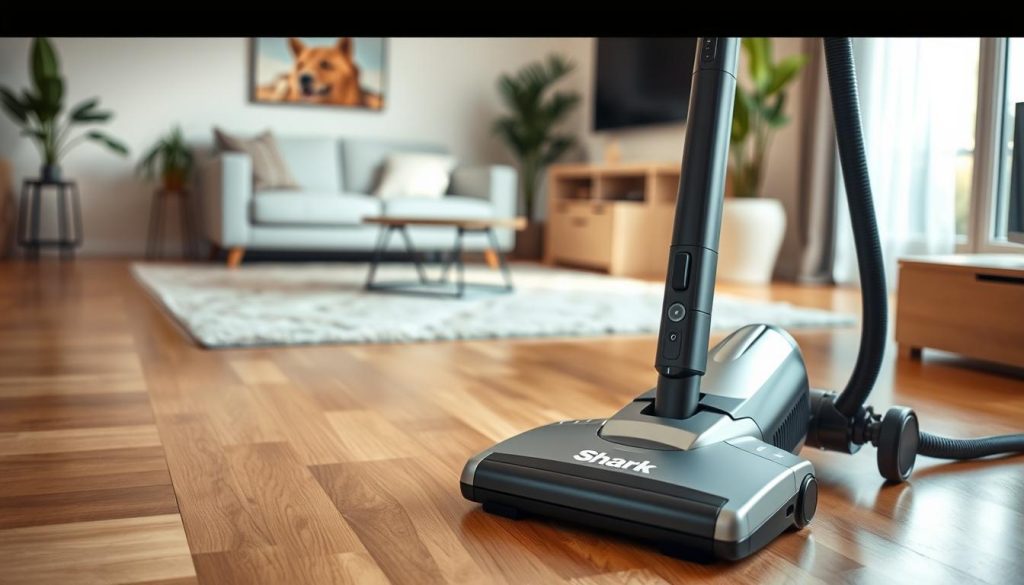
Shark HydroVac WD210SM review: odour control with antimicrobial brush rollers
The Shark HydroVac WD210SM focuses on odour control and low‑maintenance hygiene for fast daily touch‑ups.
Key specs
We note a 500 ml clean tank and a 360 ml dirty tank. Peak suction is modest at 2,700 Pa and runtime runs about 30 minutes with a charge time near four hours.
Where it shines
Core appeal: antimicrobial brush rollers minimise bacterial build‑up and help reduce lingering odours between major cleans.
The lower suction power sets expectations: this model is best for light daily maintenance on hard floors and area rugs, not heavy grit or renovation debris.
- Tank care: the smaller dirty tank means more frequent emptying in busier households — expect to empty during longer sessions.
- Mixed surfaces: use short passes and avoid over‑wetting; the design dries quickly and leaves minimal dampness on tiles and rugs.
- Practical buyers: ideal for those who value smell control, low maintenance and a competitive price over peak raw power.
“We find the HydroVac best for routine cleaning where hygiene and odour control matter more than high suction figures.”
Dyson wet & dry vacuums in Singapore: which Submarine model suits us
If manoeuvrability and advanced filtration matter most, Dyson’s Submarine models make a convincing case despite higher price tags.
Why Dyson costs more
Dyson’s price reflects tangible investments: extensive R&D, cyclonic suction engineering and lightweight cordless technology. These combined make everyday handling easier in tight Singapore flats.
Filtration is a standout. Dyson uses sealed pathways and HEPA filters to control fine dust and allergens better than many value models. That performance matters for allergy sufferers and households with pets.
V12s Origin Submarine — lightweight performer
Key figures: 130 Air Watts, 300 ml clean tank, up to 60 minutes runtime, charge time ~3.5 hours, weight ≈2.2 kg.
This model suits buyers who prioritise low weight and solid suction for routine sessions. The compact water tank trades longer sessions for easier handling and storage.
V12s Detect Slim Submarine — filtration and visibility
Key figures: 140 Air Watts, HEPA filters, Fluffy Optic head, up to 60 minutes, charge time ~3.5 hours, weight ≈3.1 kg.
The Fluffy Optic head helps spot fine dirt and hair on hard floors. Choose this if HEPA filtration and dust visibility justify the higher price for your home.
Digital Slim Submarine — slim design trade-off
The Digital Slim model prioritises a sleeker design and compact footprint. Expect shorter runtime — roughly 40 minutes — as the trade-off for the slim body and lower weight.
Who should buy Dyson vs choose a cheaper wet dry vacuum
We recommend Dyson when manoeuvrability, sealed filtration and lightweight engineering are priorities. The price buys consistent suction and better HEPA performance.
Opt for a cheaper wet dry vacuum when you need larger tanks, longer continuous washing sessions or stronger value-per-dollar. For daily upkeep, a robot vacuum can complement a wet dry unit by handling routine dust between deeper cleans, but it does not replace wet dry functions.
Dibea wet & dry options: larger tanks for fewer refills
Dibea models emphasise larger tanks and simple operation for less frequent refills in busy flats. We view them as practical choices when long runs beat advanced sensor features.
Dibea H8
The H8 pairs a 500 ml clean water tank with a 600 ml dirty water reservoir and lists 13,000 Pa suction. Runtime reaches about 38 minutes in auto mode with a charge cycle near 4.5 hours.
What stands out: a self-cleaning system reduces maintenance time and the slightly larger dirty tank helps during mixed-floor cleaning. Multiple modes suit wooden, marble and tile surfaces.
Dibea HC26
The HC26 offers equal 700 ml tanks for both clean and dirty hold, a longer 568 mm handle and the same ~38 minutes runtime.
Equal capacity simplifies planning for longer sessions. The extended reach helps taller users and makes access under low furniture easier without bending.
| Model | Clean tank | Dirty tank | Suction | Runtime |
|---|---|---|---|---|
| Dibea H8 | 500 ml | 600 ml | 13,000 Pa | ≈38 minutes |
| Dibea HC26 | 700 ml | 700 ml | 146,000 Pa (listed) | ≈38 minutes |
Practical takeaway: Dibea competes on tank capacity and simple systems. For buyers who prize fewer interruptions and clear capacity planning, these models offer strong value at a modest price point compared with premium cleaners.
Electrolux wet & dry vacuum cleaners: drum vs stick formats explained
Electrolux offers two clear format choices so buyers can match machine style to realistic cleaning routines in Singapore flats. We explain how each design suits specific jobs and budgets.
Drum models for heavy-duty clean-ups: wet, dry and blower function
Drum models work best for large debris loads and utility tasks. They usually include a blower function, larger tanks and robust attachments for renovation or garage use.
Corded power gives steady suction and long run times. Onboard storage and strong hoses make them practical for heavy mess and bulky debris.
Stick models for daily floors: cordless vacuuming and mopping with integrated tanks
Stick formats aim at routine floor care. They are lighter, cordless and often combine a 3-in-1 design: dry pick-up, mop and suction in one compact system.
Select models feature the TriAction nozzle, self-clean cycles, smart dirt detection and antibacterial water tanks — useful checkboxes for hygiene-conscious households.
Price expectations in Singapore: a broad range with promotions that vary
Expect Electrolux price bands to span entry level to premium in Singapore, depending on model, features and seasonal promotions. Match the design to your cleaning reality first, then hunt for a deal.
Practical tip: choose drum units for heavy jobs and stick models for daily upkeep; compare tank size, suction and onboard features before you buy.
Choosing the right specs: suction power, tank capacity and filtration
Picking the right specs boils down to three things: suction power, tank design and filtration. We focus on how these factors work together for real-floor cleaning in Singapore flats.
What suction power numbers mean (Pa vs Air Watts)
Pa and Air Watts measure different things. Pa shows pressure; Air Watts capture airflow and practical suction. Higher numbers help lift debris and surface dirt, but the head design and seals matter too.
Strong suction without a well‑engineered water path can leave streaks or residue. Match claimed suction with user reviews and tests rather than trusting specs alone.
Tank capacity planning: balancing portability with fewer trips to the sink
Large capacity tanks suit bigger homes and reduce emptying. For a studio or two‑room flat, a smaller water tank keeps weight and storage manageable.
Remember: bigger tanks add bulk and lower portability. Choose capacity that you will actually use regularly—otherwise a heavier machine sits in the cupboard.
Filter system priorities: standard vs HEPA for allergens
Standard filters handle everyday dirt and coarse debris well. If allergies or fine dust are concerns, opt for HEPA filters or sealed filtration systems to trap finer particles.
“Pay a little more for better seals and filtration; it often buys real hygiene benefits rather than marketing alone.”
Usability details that matter: edge cleaning, noise level and accessories
Practical details — from edge reach to noise — shape how often we actually use a wet dry model.

Edge cleaning for skirting lines and tight corners
In compact Singapore homes, good edge cleaning keeps skirting lines and corners free of trapped grit.
We favour heads that reach within a centimetre of skirtings. A narrow brush and flat-fold design make a real difference on tiled floors and near doorways.
Corded vs cordless: reach, convenience and battery compromise
Corded machines give steady power and unlimited run time, which helps for long sessions and higher power needs.
Cordless models win on convenience. Be realistic about battery life; advertised minutes often fall short in high-power modes.
Attachments and cleaning tools: brushes, wands and multi-surface heads
Useful accessories include extension wands, a soft brush for dust, and a multi-surface head for switching between floors quickly.
Our tip: choose systems with easy-fit heads so swaps take seconds and do not interrupt cleaning time.
Hygiene and maintenance: self-clean cycles, brush care and tank drying
Self-clean cycles and antimicrobial rollers reduce smell and maintenance. Emptying the dirty water tank and leaving the clean water tank open to dry prevents odour build-up.
Daily routine: rinse the brush and dry both tanks after use. This small habit keeps performance and power consistent over months.
| Factor | What to check | Why it matters |
|---|---|---|
| Edge cleaning | Narrow head, flat-fold reach | Removes grime in skirting and corners on small floors |
| Cord type | Corded vs cordless, battery minutes | Determines run time and convenience |
| Accessories | Brush, wand, multi-head | Makes multi-surface cleaning faster |
| Hygiene | Self-clean, tank drying | Prevents dirty water smells and reduces upkeep |
Which type of water-pickup vacuum should we buy for our floors and lifestyle?
Start by spotting where most messes happen in your home. The room with the most traffic should drive choices on tank capacity, weight and modes.
We turn features into fit: larger tanks for bigger flats, lighter designs for frequent use and smarter controls for mixed surfaces.
Hard floors first: condos, HDB flats and landed homes with tiled flooring
For hard floors quick drying is vital. Choose a model with a balanced tank pair so you can mop and collect spills without constant stops.
Rule: prioritise capacity and airflow over extra gadgets for long runs on tiles.
Rugs and mixed surfaces: when a multi-surface mode matters
Rugs need gentler, controlled wet dry output to avoid overwetting. Look for selectable cleaning modes and a head that adapts between tile and pile.
Tip: multi-surface modes and precise water control reduce drying time and protect woven fibres.
Pet hair households: brush design, cleaning solution and dirty water handling
If you live with pets, brush design and a larger dirty water tank make a real difference when dealing with hair and stains.
Use a mild cleaning solution for odours and stains, and choose a model with easy-empty dirty water access.
Pairing strategy: let a robot vacuum handle daily dust and crumbs, and reserve the wet dry unit for weekly deep cleans and spills.
| Need | Priority | Practical rule |
|---|---|---|
| Large tiled flats | Tank capacity | Bigger tank = fewer stops |
| Mixed rugs & tiles | Cleaning modes | Pick precise, multi-surface controls |
| Pet households | Brush & dirty water | Sturdy brush, easy-empty dirty tank |
| Frequent short use | Weight & runtime | Lighter model with decent runtime |
We convert specs into simple selection rules so your choice suits real life, not spec sheets. Use a robot vacuum for daily upkeep, and a wet dry unit for spills, stains and weekly deep cleans.
Conclusion
, The right wet dry system balances tank size, sustained suction and easy maintenance for real homes in Singapore.
Our takeaway: pick a model by floor type, mess frequency and how much time you will spend on routine care. For mixed tiles and rugs choose a unit with mode control and modest power; for pet households prefer a stronger suction and larger dirty water capacity.
Don’t forget: check filtration for allergens, weigh total price against upkeep and confirm runtime in minutes and tank volumes match your cleaning habits.
Final checklist — runtime, tank capacity, edge reach and whether technology actually saves effort. Match these and you will have a wet dry vacuum that fits your flat, schedule and budget.

