
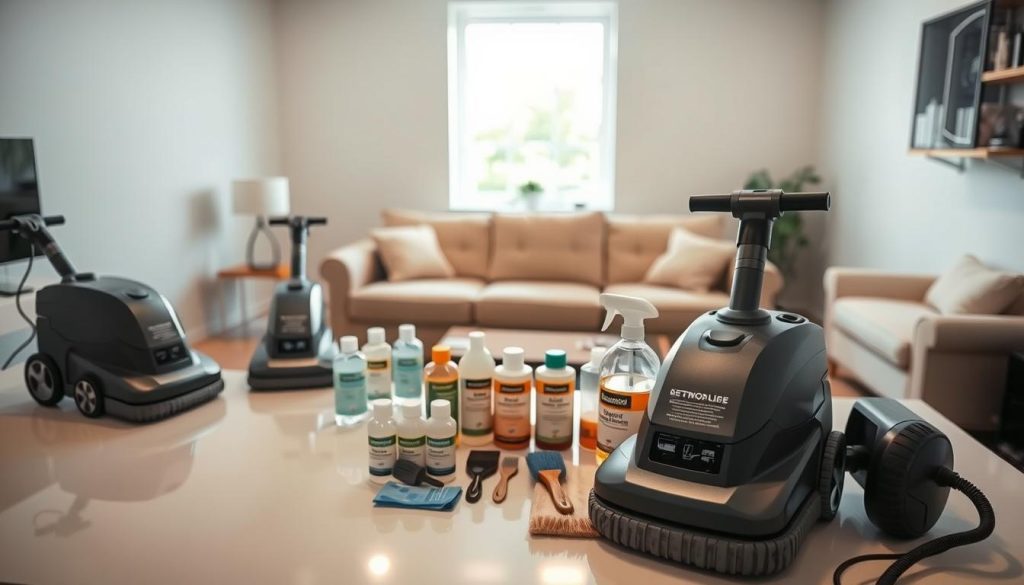
We present a tight, Singapore-focused roundup of wet dry vacuum options that cope with spills and loose debris without swapping machines.
Our short guide explains what to expect in real homes. We test performance on wet pick-up and loose matter. We judge real run time, ease of daily cleaning, and storage fit for HDB spaces.
We compare cordless home-friendly designs with more robust workshop models. Brands we shortlist include Tineco, Bissell, Simplus, Narwal and Dyson, plus a separate Electrolux list for direct local fulfilment.
Key focus: suction, filtration, safety for fine particles, wet pick-up design, and honest price comparisons with promotions common in Singapore such as 0% instalment and free delivery.
Read on for definitions, buyer guidance, our top models and deep dives so you can pick the right unit for your needs.
Why we’re recommending wet dry vacuums for Singapore homes and workplaces
In tropical Singapore, a single versatile unit makes short work of mixed messes that appear every day. We recommend models that cope with spilled liquids, tracked grit and settled fine particles without swapping tools.
Everyday spills, dust and debris in humid conditions
High humidity and tiled floors mean damp patches and grit often occur together. That combination calls for a wet dry approach that picks up liquid and loose debris in one pass.
When one machine must handle both wet and dry messes
Families with kids or pets benefit most, since kitchen spills, bathroom puddles and balcony grime all happen at short notice.
Workplaces such as pantries, service corridors and small retail outlets also gain faster response times. Quick pick‑up reduces slip risk and prevents tracking across floors.
- Trade‑offs: these units can be heavier and louder than a typical dry model, so choose by frequency of use.
- Compact cordless designs suit daily touch‑ups; larger drum types suit repeated cleanups and bigger volumes.
What a wet and dry vacuum cleaner is and how it differs from a dry vacuum
Understanding how models handle spills versus grit makes buying simpler. We define a wet dry unit in plain terms: it is built to collect liquids and solids safely, unlike a dry vacuum designed only for dry dirt.
Inside the system, wet pick‑up uses a container‑style tank and safety cut‑offs. Brands like Kärcher use float or electronic shut‑off to stop overfill and protect the motor. For dry pick‑up, airflow relies on filtration that will clog if not cleaned often.
Common formats shoppers see in Singapore include larger drum models for heavy‑duty jobs, cordless stick variants for daily floor care, and hybrid floor washers that vacuum while scrubbing in one pass.
“Wet dry is not a single grade of performance — the design intent changes what a machine does best.”
Drum types often have bigger tanks, blower functions and corded power. Stick units are lighter, cordless, and use integrated tanks for quick spills. Floor‑washer models separate clean water from dirty water and add a brush roll for scrubbing, which the drum layout does not.
- Format drives trade‑offs: capacity versus manoeuvrability.
- Choose by surface: rugs favour strong suction; hard floors gain from washer action.
For a deeper technical comparison, see our linked guide on wet and dry differences: wet and dry models compared.
Who should buy a water and dust vacuum cleaner
Choose a machine by who uses it most and the mess types you face. We help readers match profiles to the right format so you don’t overpay for unused features.
Families with kids, pets and frequent messes
Households with children or pets need a unit that handles toppled drinks, food crumbs and tracked grit. A wet dry model saves time because it copes with damp patches that a dry vacuum struggles with.
Tip: pick a brush roll that resists tangles for effective pet hair pick-up.
Drivers cleaning cars, garages and outdoor areas
Cars and garages carry coarse debris and occasional spills. We recommend compact drum types with strong suction and simple tank emptying for faster clearing.
Renovations, workshops and fine dust loads
For renovations, filtration matters. High dust loads clog filters fast; choose models with rated filters or safety class options for hazardous work.
| Buyer | Recommended format | Key feature |
|---|---|---|
| Family with pets | Cordless stick | Anti‑tangle brush, steady suction |
| Driver / garage | Small drum | Large inlet, easy emptying |
| Renovation / workshop | Industrial drum | Class-rated filtration, high capacity |
For unusual uses and tips on versatile tasks, see our short guide on unusual uses.
Our top rated picks in Singapore right now
Here are the top picks that balance runtime, tank practicality and everyday performance for Singapore homes. We present quick, decision‑ready recommendations tied to a clear “best for” scenario rather than raw specs.
Overall smart all‑rounder: Tineco Floor One Switch S7 Stretch
Why we like it: iLoop sensing shifts modes for mixed messes. It offers long minutes for cleaning—50 min as a floor washer, 70 min as a cordless stick—and large tanks (clean 1,000ml, dirty 720ml).
Best for pet hair: Bissell CrossWave X7 Cordless Pet Pro
Why we like it: Turbo Pet mode lifts hair from hard floors and rugs. Runtime sits at about 30 minutes with dual tanks for wet and dirty use and up to 20,000 Pa suction power.
Best budget wet dry: Simplus Cordless Wet‑Dry
Why we like it: Good runtime (50 minutes), compact tanks and an affordable price. It folds flat for storage and suits HDB flats with routine whole‑flat sessions.
Most manoeuvrable: Narwal S20 Pro
Why we like it: AI Dirt Sense, triple edge cleaning and 60 minutes per charge make it nimble near skirting lines and furniture legs.
Lightweight premium option: Dyson V12s Submarine range
Why we like it: Slim handling, around 60 minutes runtime and HEPA filtration for polished results. Air Watts performance yields strong pick‑up for everyday use.
- Quick checklist: minutes, charge time, tank sizes, suitability for hard floors or rugs.
Electrolux wet and dry vacuum cleaners we’d shortlist
Electrolux offers a clear line-up that helps Singapore shoppers choose between heavy‑duty drum units and nimble cordless sticks.
Why we single out Electrolux: buying from the official Singapore store brings free delivery, 0% instalment plans and periodic discounts up to 47%. That can narrow the price gap across tiers.
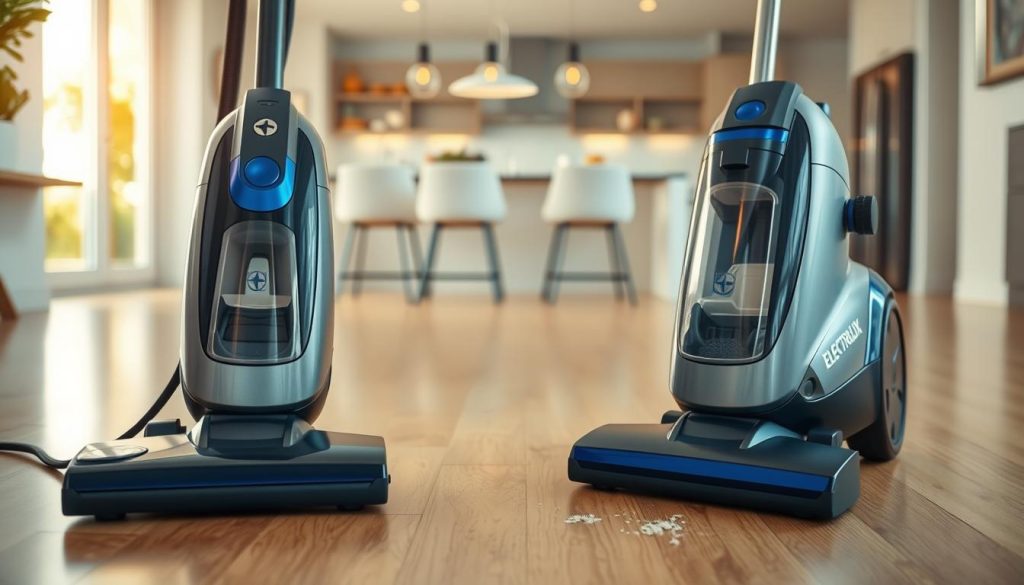
Flexio Power Z823 — entry drum, strong power
The Z823 packs 1600W of power in a 3‑in‑1 drum format: wet, dry and blow. It gives 360° manoeuvrability and onboard accessory storage for quick, grab‑and‑go tasks.
UltimateHome 700 EFW71711 — hygiene focused
This model targets odour and maintenance worries with antibacterial tanks that claim 99.9% bacteria elimination. A self‑cleaning nozzle speeds floor drying after wet use.
800 3‑in‑1 Cordless EFW81713 — premium stick
The EFW81713 uses an inverter motor with smart dirt detection and a TriAction nozzle that aims for 99% debris pick‑up. A detachable hand unit makes small jobs easier.
What “3‑in‑1” means: drum types add a blower function for outdoor tasks, while cordless sticks combine suction with mop routines for hard floors.
- Model segmentation: drum versus stick makes shopping simpler.
- Performance cues: nozzle design, self‑cleaning system and antibacterial components affect real use.
- Buying tip: promotions and instalment plans often make a single, higher‑spec unit more affordable than multiple devices.
| Model | Key features | Best for |
|---|---|---|
| Flexio Power Z823 | 1600W motor, 3‑in‑1, 360° handling, onboard tools | Garages, heavy spills, blow tasks |
| UltimateHome 700 EFW71711 | Antibacterial tanks, self‑cleaning nozzle, quick floor drying | Hygiene‑led homes, bathrooms, kitchen messes |
| 800 3‑in‑1 EFW81713 | Inverter motor, TriAction nozzle, smart dirt detection, cordless | Premium daily floor care, small flats |
Drum wet dry vacuum vs cordless stick cleaner: choosing the right design
We find that usage pattern — volume versus frequency — is the clearest guide when comparing formats.
Drum models for large liquid volumes, garages and heavy‑duty dirt
When volume and ruggedness matter, pick a drum format. Drum wet dry units offer larger container capacity, tougher housings and simple emptying for heavy loads. Brands like Electrolux and Kärcher build these for garages, renovations and outdoor areas.
They usually include blower functions and strong motors that suit coarse debris and large liquid spills. The result is less pausing to empty tanks during a big job.
Cordless stick models for daily hard floors, quick spills and storage
For daily care in flats, a cordless stick wins on convenience. These designs are lighter, quicker to set up and fit narrow storage in HDB flats. A stick with an integrated container for clean and dirty water makes short jobs faster.
They also reach under dining chairs and in tight corridors with less effort. Expect slightly smaller tanks and shorter runtimes compared with drums.
Blower function, onboard tool storage and 360° handling
Blower modes help dislodge grit from corners, balconies or car mats where suction alone struggles. Onboard tool storage keeps crevice nozzles and brushes to hand so we waste less time hunting for parts.
360° handling matters for fatigue and control. Swivel heads and low centres of gravity reduce wrist strain when we clean around furniture.
- Decision rule: choose drum when volume, ruggedness and long runs matter; choose cordless stick when frequency, reach and storage matter.
- Match this design choice to later specs: tank capacity, filter system and suction stability will have different priorities per format.
What to look for before you buy
Before you commit, we list the practical checks that separate a useful purchase from an impulse buy.
Suction power and motor performance for dirt, grit and liquids
Judge suction in context: headline Pa or watts matter, but look for stable suction under load so the unit won’t stall when handling mixed loads. Models with boost modes help for stubborn grit on hard floors.
Tank capacity: clean and dirty containers
Capacity affects workflow. Larger clean water and dirty containers reduce refill stops, but add weight and storage needs. For HDB flats we favour a middle ground that balances minutes of runtime with easy emptying.
Filter choices for air quality and allergies
Microfilters often suit routine use and lower maintenance. HEPA is worth prioritising if someone at home has allergies; it traps fine particulates that otherwise recirculate into the air.
Corded vs cordless, noise, weight and manoeuvrability
Choose corded for unlimited reach and steady power; choose cordless for quick touch‑ups and tight storage. Check battery minutes and recharge time in real‑world tests.
Expect wet dry formats to be heavier and louder than typical models. Low centre‑of‑gravity designs and swivel heads aid handling in tight Singapore flats.
Tools and accessories
Prefer kits that include floor nozzles for hard floors, a crevice tool for skirting lines, and a brush for upholstery or car seats. Spare seals and easy‑access filters save time in the long run.
- Checklist: stable suction under load; clean/dirty container sizes; microfilter vs HEPA; corded or cordless runtime; noise level; key nozzles included.
| Filter type | Best for | Maintenance |
|---|---|---|
| Microfilter | Everyday use, lower cost | Regular rinsing |
| HEPA | Allergy households | Replace as per manufacturer |
| Multi‑stage | Worksites, heavy fine particulates | Periodic deep clean |
Suction power explained: what matters more than the headline figure
A high headline figure does not always mean better real‑world pick‑up on floors. We look beyond the number to judge usable performance in Singapore homes.
Pa vs air watts vs watts: comparing like‑for‑like
Pa measures pressure. Some floor washers quote 20,000–22,000 Pa to show strong pressure for wet dry tasks.
Air watts (for example 130–140 AW on some premium sticks) link more directly to airflow at the nozzle. Watts only show electrical input and do not equal cleaning ability.
Pick‑up on hard floors, rugs and grouted tiles
Pick‑up depends on brush design, seal and the airflow path as much as raw power. A good nozzle lifts debris from grout while stable suction clears fine dirt in one pass.
“Prioritise consistent first‑pass pick‑up and edge cleaning over chasing peak numbers.”
- Tip: test normal‑mode suction for real minutes of cleaning, not just boost figures.
- Remember filters and seals affect sustained suction under load.
Filter systems and fine dust performance for cleaner air indoors
A well‑designed filter system separates grime at source and keeps indoor air healthier for longer.
Why suction falls when filters clog
Suction loss often feels like weak power, but the real cause is airflow restriction. As a filter traps fine particles, airflow narrows and the motor finds it harder to pull air through the system.
The symptom is longer cleaning time and repeated passes. Kärcher explains that trapped particles build up until the filter is cleaned or swapped.
HEPA and advanced filtration for allergy‑sensitive households
Standard and microfilter options suit general use, but HEPA grades trap far finer particulates.
Certified separation rates tell us how well a unit separates particles: M/L classes reach about 99.9% while H (HEPA) reaches roughly 99.995% at rated sizes. That matters in flats where fine dust can recirculate into the air.
- Practical tips: check seals and filter fit before use to avoid leaks that lower performance.
- Rinse or replace filters on a schedule, and avoid using dry‑only filters for wet tasks to prevent damage.
- Prefer systems with easy access to parts so maintenance does not spread fine dust around the home.
“Good filtration keeps first‑pass pick‑up high and the air in your flat noticeably cleaner.”
Next: some professional models add automatic cleaning stages to cut manual handling and keep suction steady during long jobs.
Automatic filter cleaning and “Tact” technology for uninterrupted suction

Triggered air cleaning matters when fine particles quickly clog a system and slow progress. We find it a key feature for trades, workshops and renovation work where sustained performance is critical.
How Kärcher’s triggered air cleaning technology works
Kärcher’s Tact system uses sensors to monitor differential pressure across the filter. When build‑up hits a threshold the machine briefly reverses airflow, blasting accumulated particulates off the filter so suction stays high without stopping.
Semi‑automatic vs fully automatic filter cleaning: who benefits most
Semi‑automatic (Ap) gives users control: trigger the cycle when you see load increase. Fully automatic runs at set or adaptive intervals (for example 7, 15 or 60 seconds or off), based on real‑time pressure readings.
Who benefits: trades and renovation teams prefer fully automatic for uninterrupted runs. Occasional home users may favour semi‑automatic to save energy and avoid extra cycles.
Why bagless fine‑particle systems reduce downtime and costs
Bagless systems let us use the full container volume without swapping consumables. That saves time on site and lowers running costs.
There is also a hygiene gain: we avoid frequent contact with debris, which reduces inhalation risk during maintenance. Filters such as PTFE M/L (99.9%) or H‑class HEPA (99.995%) keep air quality high while the cleaning cycle preserves performance.
“Automatic cleaning keeps suction steady and reduces the temptation to remove or shake filters mid‑task.”
- Practical gains: stable suction, fewer interruptions, less manual filter handling.
- Time savings: longer continuous run time and quicker task completion.
- Cost efficiency: fewer bags, fuller use of the container and lower maintenance hassle.
| Feature | Semi‑automatic | Fully automatic |
|---|---|---|
| Trigger method | User button | Sensor / interval (7/15/60s) |
| Best for | Occasional heavy cleaning | Trades, renovations, busy workshops |
| Interruption level | Low if user is attentive | Minimal — near continuous work |
| Hygiene | Better than manual shaking | Optimal — minimal contact with particles |
Commercial and jobsite considerations: dust classes and safety
On commercial sites the wrong class of equipment raises real health and compliance risks. For us, choice is about more than raw power; it is about containment, certified separation and safe disposal.
L class vs M class vs H class: choosing based on hazard level
Kärcher defines permeation rates that guide selection: L ≤1.0% for low‑risk materials (chalk, plaster); M
When safety vacuum cleaners are essential for hazardous dusts
We treat M class as the minimum for most renovation work in Singapore. Concrete and masonry produce fine particles that harm lungs over time.
Choose H class systems for asbestos, lead or confirmed mould. Consumer wet‑dry units are not a substitute for certified machines.
- Look for certified labels, sealed collection containers and HEPA‑grade filtration.
- Verify manufacturer data on permeation rates and safe disposal procedures.
- Prioritise sealed hoses and ease of emptying to keep respirable particles inside the unit.
“The goal is to keep fine particles inside the machine rather than recirculating them into the air.”
Wet cleaning performance: handling spills, leaks and large fluid volumes
Effective wet pick‑up is the difference between a quick tidy and a long, slippery mess. We focus on real tasks in Singapore homes and small workplaces: cups toppled in kitchens, leaks near appliances, and post‑mop puddles in corridors.
Float shut‑off and overfill protection
Safety starts inside the container. Mechanical float shut‑off blocks the suction channel when the container fills, while electronic cut‑offs stop the motor automatically.
Kärcher explains both methods protect the fan and prevent damage, which keeps units reliable during long jobs.
Quick floor drying and slip‑risk reduction
Large fluid capacity means fewer pauses to empty the container. That reduces the chance of spreading messes across adjacent floor areas.
Electrolux’s UltimateHome 700 highlights quick floor drying as a practical result of good nozzle design and steady airflow. Faster removal lowers slip risk in kitchens, bathrooms and corridors.
“Removing fluid volumes quickly and reliably is the single best way to reduce slip hazards.”
Wet pick‑up also affects odour and hygiene. Rinse the system and empty dirty water promptly to avoid lingering smells and bacteria build‑up.
| Feature | Why it matters | What to check |
|---|---|---|
| Float shut‑off | Prevents liquid reaching the motor | Visible float or auto cut‑off, clear indicator |
| Container capacity | Fewer stops for emptying, faster jobs | Litres listed, easy emptying design |
| Nozzle & airflow | Less residual moisture, faster drying | Wide mouth, sealed edge, brush or roller action |
Choice matters: drum formats suit large liquid volumes and long tasks; cordless sticks win for quick spills and tight storage. Whatever design we choose, disciplined maintenance keeps performance steady over time.
Hard floors, wooden floors and daily washing: getting the best results
Daily floor washing in Singapore needs a careful routine. We want fast results without leaving a sticky film or over-wetting sensitive boards. The right nozzle, roller dampness and product choice make cleaning efficient while protecting surfaces.
TriAction nozzles and edge-cleaning approaches for corners
TriAction-style heads combine centred suction with side channels to reach skirting lines and corners. Electrolux’s 800 cordless uses a TriAction nozzle plus smart dirt detection to boost performance only when needed.
Edge-cleaning strips or separate crevice tools help in tight corners where grit builds. We run a quick dry pick-up first to remove abrasive particles that would otherwise scratch floors during wet passes.
Using cleaning solution safely without leaving residue
Choose a manufacturer-recommended cleaning solution and dilute it as instructed. Over-concentrated products leave films that attract dust and make future cleaning harder.
Avoid foamy detergents and hot approaches that can harm varnished or laminate boards. For wooden floors, keep rollers only slightly damp and limit passes to one or two per area.
“Correct dilution and compatible consumables protect finishes and reduce maintenance time.”
- Clean-to-dirty direction: push debris toward a collection point.
- Separate dry pick-up from wet washing when grit is present.
- Ventilate or dry floors after washing to prevent moisture damage.
Final tip: match your selected solution to the machine’s design and follow the brand’s maintenance routine. That keeps floors bright, reduces residue build-up and means less time spent on repeat cleaning.
Pet hair, sand and debris: what to prioritise for real-world messes
Tackling fur, grit and tracked sand needs a clear plan that matches tools to real messes. We focus on brush geometry, airflow and sensible use of boost modes so routine cleaning stays quick and reliable.
Brush roll design and anti-tangle considerations
Brush shape matters. Soft, multi‑material rolls lift hair without pushing grit into grout. Comb-like guides, split rollers or rigid edges stop long hair wrapping around the axle and preserve suction.
Maintenance tip: clear the brush after each run to avoid clogs and shortened performance.
Turbo or boost modes for stubborn dirt
Use turbo for dried‑on dirt at thresholds, rug edges or tracked grit after park visits. High power clears embedded sand but drains battery faster, so reserve it for problem spots.
- Pick up large debris first to prevent blockages.
- Test normal mode for most passes; boost only if needed.
- Prefer machines where brushes and airflow match your main mess type, not just marketing claims.
| Brush type | Best for | Maintenance |
|---|---|---|
| Soft multi‑material roll | Hair, fine debris on hard floors | Weekly comb‑out |
| Rubber paddle roll | Pet fur on rugs | Monthly check for wrap |
| Stiff brush strip | Sand, ground grit | Rinse after sandy use |
“Bissell’s CrossWave X7 Turbo Pet mode shows why a pet‑oriented mode helps, but the real gain comes from brush design plus steady airflow.”
Price guide in Singapore and where the value sits
A clear budget frame helps us match features to real household needs.
Electrolux pricing range and what you get at each tier
Electrolux in Singapore lists wet dry vacuum models across a wide price range depending on model and promotion. At the lower end we expect useful drum-style versatility for garages and occasional spills.
Mid-tier models add hygiene upgrades such as antibacterial tanks, better sealing, and easier access for maintenance. Premium cordless models focus on usability: smarter sensors, superior filtration, longer life and simpler self‑clean routines.
Promotions, free delivery and instalment plans to watch for
Watch for bundled gifts, limited-time discounts up to 47%, free delivery and 0% instalment plans. These offers change effective price and reduce up-front cost.
Tip: compare total cost over the expected life of the device, not just sticker price. Consider spare parts, filter replacements and service when assessing value.
When a premium cordless model beats a cheaper wet dry unit
If we clean frequently, prefer low set-up time and value consistent results, a premium cordless option often pays back in saved minutes and effort. Runtimes range broadly — commonly 30–70 minutes — so check real-world tests for sustained performance.
- Quick rule: shortlist by use case, then buy when reputable local promotions make your preferred tier sensible.
Conclusion
Our final note: pick a unit that reduces weekly effort, not one that only shines in specs.
If we face both wet spills and loose grit often, a wet dry vacuum simplifies routines and cuts the need for multiple devices.
Format choice is simple: cordless stick for daily floors and quick spills; drum machines for larger liquid volumes and heavier-duty dirt. Prioritise stable suction, a filter suited to fine particles, sensible tank sizes and maintenance that fits our schedule.
Dry vacuum options still make sense for light, dust-only upkeep, and a robot vacuum helps with daily dry maintenance but cannot handle liquids. Revisit our top picks and the Electrolux shortlist, then choose the model that truly reduces effort across your weekly cleaning, not just the one with the biggest numbers.

