

We set clear expectations so readers in Singapore can buy with confidence. We explain what these machines can realistically achieve in a home, and what claims to treat cautiously.
In plain terms we define the common labels and how extraction differs from ordinary cleaning. This helps households match tools to real issues, such as allergy control or pet hair.
Our checklist covers suction and extraction, tools, filtration, noise, storage and ongoing costs. We also preview how we will compare formats — upright, canister, handheld, stick and wet-dry machines — against typical bedroom layouts.
This guide is for homes managing allergies, spills or humidity, and for anyone who wants a fresher sleep surface without overpromising “deep clean” miracles. We focus on practical outcomes: reduced odour, better hygiene and a visibly cleaner mattress.
Why we might need a dedicated mattress vacuum at home in Singapore
A mattress faces constant wear from tiny particles we rarely notice each day. Nightly movement works dust and debris deeper into fibres. Over weeks this build-up affects how a bed feels and how we sleep.
Everyday dust, debris and pet fur that settle into beds
Quick passes often miss hair and dander. Pet fibres cling to seams and tufted edges. A targeted, frequent pass with the right tool lifts what a general clean leaves behind.
Allergens and dust mites in the sleeping environment
We spend a third of our lives in close contact with bedding. That contact matters when allergens and dust mites feed on skin flakes and fine dust.
“Reducing food sources for mites supports better sleep and can ease allergy symptoms.”
Humidity, hygiene and odour considerations in local homes
Singapore’s humidity makes odour and perceived freshness a recurring issue, especially in smaller rooms with poor airflow.
- A regular, dedicated routine helps maintain hygiene and household health.
- Keeping a compact tool near the bedroom makes upkeep quick and consistent.
Wet vs dry mattress cleaning and what it means for our purchase
Different cleaning methods produce different results; matching method to need keeps our bed healthy and fresh.
Dry cleaning benefits
Dry cleaning benefits for quick, budget-friendly upkeep
Dry passes are fast and leave little moisture behind. This makes them ideal in compact Singapore flats with limited airflow.
We can use a regular dry vacuum or a brush tool to remove surface dust, pet fibres and reduce dust mites between deeper sessions.
Wet cleaning benefits for loosening fibres and extracting deep dirt
Spray-and-extract methods use a mild solution to loosen soil before recovery. That helps pull out ingrained grime, stains and many mites.
When extraction works well, liquid is taken back quickly and rarely soaks beyond about 2 cm into the filling.
Moisture and mould concerns, and why modern extraction reduces risk
Moisture worry is common, but proper extraction and light solution use cut the mould risk. Quick recovery rate and good ventilation finish the job.
When to choose dry-only, wet-only, or a wet dry vacuum
- Dry-only: regular upkeep, low stain risk, tight ventilation.
- Wet-only: targeted stain removal on older beds where deeper extraction is needed.
- Wet dry vacuum: best all-rounder if we want both routine dust control and occasional deep cleans with controlled moisture.
Decision rule: match method to mattress type, stain history and how often we can ventilate. We test machines by their recovery rate and tool design rather than bold “deep” claims.
Choosing a wet and dry vacuum cleaner for mattress that fits our routine
Our cleaning routine should drive which model we pick, not the flashiest spec sheet. We must decide if we need quick spot-cleaning after spills or scheduled deep cleaning every few months. Each use case points to different tank sizes, tools and set-up time.
Spot-cleaning spills and stains versus scheduled deep cleans
For spill response we favour compact units with small recovery tanks and fast setup. These are quicker to unpack and return to storage, which helps us act while the stain is fresh.
For full sessions we choose larger-capacity machines that let us work without constant emptying. A single full-bed pass needs more recovery space and a nozzle that keeps solution close to the surface.
How often we clean and how that affects capacity and power needs
Frequency shapes capacity. Weekly upkeep means small tanks and lighter weight work best. Quarterly deep cleaning calls for bigger tanks and reliable suction over longer runs.
Power in practice is about consistent suction under load, not only peak watts. Look for machines that maintain flow when brushes or extraction heads meet resistance.
What “deep extraction” claims can realistically mean in practice
Deep extraction should imply multiple slow passes and good recovery, not aggressive soaking. We get better results by loosening fibres gently, then extracting repeatedly until the liquid is mostly reclaimed.
Care and use matters: plan setup time, handle solutions safely and confirm storage fits our flat. A model we actually use every month beats a larger unit that spends most of its life in a cupboard.
For a practical primer on techniques and health-focused cleaning, see our detailed guide on mattress care and cleaning.
Suction power and extraction performance on mattresses
Removing embedded dust and debris demands targeted suction at the nozzle, not only impressive power figures on a spec sheet. We focus on how the tool translates motor output into steady pull where the fabric meets the head.

Strong pull to lift deep particles
Dust sits inside upholstery fibres and resists simple brushing. Strong, sustained suction lifts these particles rather than moving them around the surface.
Spray-and-extract: keep liquid close to the surface
Controlled spray volume loosens soil without soaking the fill. We make slow, overlapping passes so extraction recovers most moisture and the surface dries quickly.
Edge-to-edge cleaning for seams and borders
Seams, tufts and borders trap hair and crumbs. A narrow nozzle or shaped head preserves contact and avoids missed areas during a full-bed pass.
Good extraction looks like consistent recovery, minimal residual dampness and less re-soiling after use. For an effective tool that suits local needs, consider an option such as order Lura wet‑dry unit to trial these features in practice.
Brush heads, nozzles and agitation tools that make a difference
A well-chosen set of attachments turns a routine clean into a noticeable improvement. We focus on tools that change outcomes through agitation, reach and control rather than gimmicks.
Motorised brushes that agitate and lift
Motorised brush heads use rotating bristles to agitate fibres and free trapped debris. This is especially useful when pet hair or fine dust cling to fabric.
Look for consistent brush speed and easy access to remove tangled hair. These features keep suction steady and maintenance simple.
Soft brushes for delicate surfaces
Soft brush attachments protect delicate covers and stitched panels. They lift surface dust without fuzzing or causing abrasion.
Smaller head widths help reach tufted areas while preserving fabric texture.
Crevice tools for edges and tight areas
Long, narrow nozzles reach bed frames, seams and skirting gaps where dust accumulates. They stop debris from migrating back onto bedding.
Choose a shape that keeps airflow focused; flat or angled tips often work best in narrow spaces.
Upholstery attachment: the workhorse
Upholstery heads cover wider areas on mattresses, sofas and headboards. They let us switch between surfaces without changing machines.
Pay attention to visibility, width and whether the head disassembles for cleaning. Easy-clean designs prevent clogs and preserve suction.
Quick comparison
| Attachment | Best use | Key design feature |
|---|---|---|
| Motorised brush | Embedded hair, deep fibres | Removable roller, steady RPM |
| Soft brush | Delicate covers, stitched panels | Natural or soft nylon bristles |
| Crevice nozzle | Edges, frames, skirting | Angled slim profile for focused airflow |
| Upholstery head | Beds, sofas, headboards | Wide mouth, lint-free pads, easy disassembly |
For bulk parts or replacement brush heads, consider sourcing direct from a supplier with stock and compatibility details, such as brush head wholesale. This keeps our kit ready and effective for regular cleaning tasks.
Filtration, HEPA filter choices and allergy-friendly design
Choosing the right filter affects what we breathe after a cleaning session. Good filtration reduces tiny particles that resettle close to our heads during sleep.
HEPA or S-class filtration to trap fine pollutants
HEPA and S-class systems capture very small particles, including many allergens and mites. In practice, this means less dust returning to the room air after use.
Sealed systems and why they matter
A sealed design prevents leaks from joints, lids or poorly seated parts. That keeps captured particles inside the unit rather than re-entering our bedroom environment.
Bags versus bagless: emptying with minimal fuss
Bagged systems contain debris during removal, which suits allergy-prone households that want safer disposal. Bagless models save on consumables but need careful emptying outdoors to avoid stirring dust.
Quick guidance: if allergies or asthma affect anyone at home, we favour a model with genuine hepa filter stages and a sealed path. Regular care — correct seating, timely replacements and gentle handling during emptying — keeps filtration performing well and protects household health.
Upright vacuums for multi-surface homes and when they suit mattress care
When we want one reliable machine to manage the whole home, upright designs often make sense. They pair strong, steady suction with simple swapping of heads so the same unit tackles floors, rugs and the bed area.
Why plug-in uprights are powerful, reliable and versatile
Experts such as Marki Williams note that plug-in uprights deliver extra-strong suction and long runtime. That stability helps during longer cleaning sessions where repeated passes improve extraction on a mattress without overheating the motor.
Attachments that matter around the bed
- Hose reach and a long wand let us reach headboards and shelves without moving heavy furniture.
- Upholstery tool and a narrow crevice head tidy seams and borders.
- Swappable brush heads (motorised for rugs, soft for floors) protect delicate covers while lifting embedded hair.
Trade-offs: weight on wrists and cord realities
Uprights can feel heavy on the wrists during extended use. If mobility or one-handed work matters, a lighter format may suit us better.
We must also accept cords: they limit reach without nearby sockets and need basic management in compact flats. For many households, a durable model such as the SEBO Felix Premium pays off through longevity, sealed filtration and bagged disposal that helps allergy-prone homes.
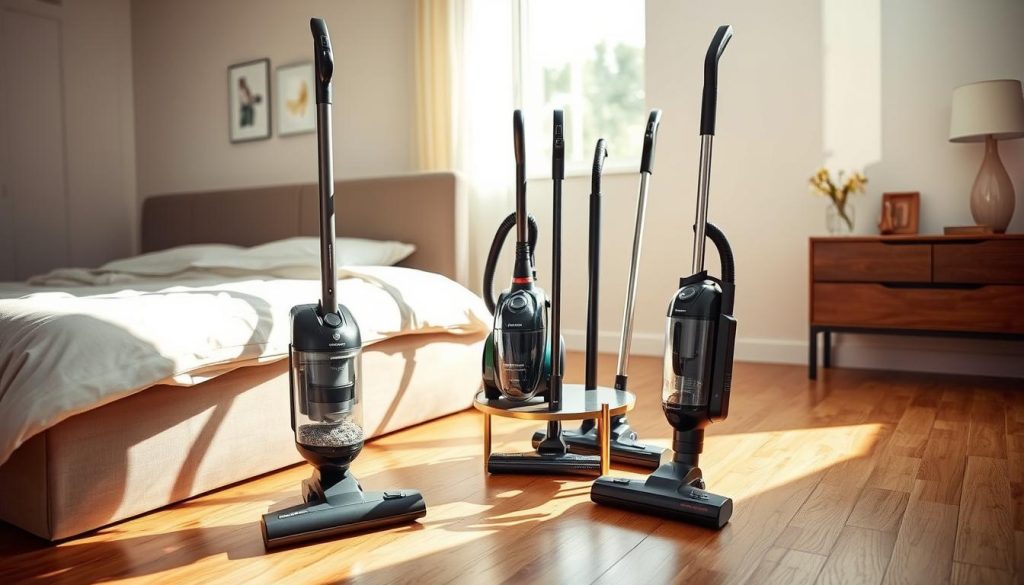
Wet-dry, canister, handheld and stick models: which format suits our bedroom setup?
Some formats excel at stains and extraction while others win on reach and speed. We pick a machine that matches how we clean, the space we have and how much time we can spend.
Stain removal and deeper extraction
Wet-dry machines are best when we need to tackle old spills and embedded soil. Expect a longer setup and a drying interval after extraction.
Tip: Plan an open-window period after use so the bed surface dries faster and stays fresher.
Reach under beds and around furniture
Canister designs shine in compact rooms. Their flexible hose and long wand let us access low frames, behind headboards and narrow gaps without moving heavy pieces.
They often keep steady suction over long runs, which matters when we want consistent performance across surfaces.
Quick touch-ups and grab-and-go use
Handheld units are ideal for crumbs, pet hair and short maintenance on the mattress. They save time and live by the bedside.
Remember they rarely match extraction power, so reserve them for surface upkeep rather than deep cleaning.
Corded versus cordless: time, runtime and consistent suction
Corded machines deliver constant power and reliable suction during long sessions. Cordless units offer speed and convenience for short jobs and quick spot-cleaning.
Decide by use: choose corded if we expect lengthy extraction passes; pick cordless if we need rapid, frequent touch-ups that save storage space.
- Compare formats by real tasks: surface touch-ups versus full-bed deep cleans.
- Expect more setup and drying time with extraction-heavy machines.
- Canisters give superior reach in tight Singapore bedrooms.
- Handhelds are handy but limited on deep extraction.
- Balance power and convenience so the unit earns its storage space.
Key features to compare before we buy
A short checklist of practical features helps us compare models quickly and avoid costly mistakes. We focus on what affects day-to-day results in a small Singapore flat.
Tank capacity and recovery rate
The tank size decides how often we stop to empty during an extraction session. Recovery rate is how fast the unit reclaims liquid after a pass.
Practical rule: choose a larger tank if we plan full-bed sessions; choose faster recovery if we need quicker drying and less downtime.
Noise levels for evening cleaning
Noise matters when we clean at night or while others sleep. Look for decibel figures and user reviews that mention neighbour disturbance.
Weight, manoeuvrability and storage
Check turning radius, handle comfort and storage footprint. A lighter, compact design saves time and makes routine cleaning easier in tight spaces.
Build quality, repairability and warranties
Value comes from serviceable parts and clear warranty terms. Confirm parts availability and local support. A longer warranty often lowers the total cost of ownership when we use the unit frequently due to pets or allergens.
- Compare recovery rate, tank size and real-world drying time.
- Prioritise low noise if we clean in the evening.
- Seek solid build, spare parts and at least a two-year warranty.
Safe mattress cleaning technique with a wet and dry vacuum
A clear, repeatable method keeps our bed fresh without risking excess moisture. Follow a sequence that begins with dry removal, uses minimal solution, and finishes with good ventilation.
Pre-vacuuming to remove loose dust and debris
First, we pre-treat by running a dry pass to lift surface dust, pet hair and crumbs. This prevents muddy residue when we later apply liquid.
Tip: Use a motorised brush on stubborn hair, then switch to an upholstery head for seams and borders.
Use minimal solution and repeat extraction passes
We dilute the cleaning solution as manufacturer recommends and spray sparingly. Over-wetting is the main risk to fillings and to indoor air quality.
Make several slow, overlapping extraction passes rather than one heavy soak. Each pass reclaims most moisture and helps avoid soaking beyond about 2 cm.
Pressure, pace and seam care
Keep light, even pressure. Avoid pressing hard along seams or tufts to stop liquid being pushed deeper into the filling.
Work methodically: divide the bed into sections and clean one side at a time so the other side stays usable while the first dries.
Drying, ventilation and timing
Choose a time with the best airflow. Open windows, run a fan or use air-conditioning to speed drying in Singapore’s humid environment.
Allow several hours and check dampness before remaking the bed. If any area feels cool or clammy, continue airflow until it feels fully dry.
“Multiple light passes and good ventilation protect fillings, reduce allergens and cut mould risk.”
Hygiene and health checkpoints
Stop if the extracted water looks heavily soiled; consider a follow-up professional clean for very old stains. Empty and rinse tanks outdoors where possible to avoid reintroducing dust indoors.
| Step | Why it matters | Practical action |
|---|---|---|
| Pre-vacuum | Removes loose dust and debris | Use upholstery head, then crevice tool on seams |
| Light solution | Prevents over-wetting | Mix to low concentration; spray sparingly |
| Multiple passes | Improves extraction and drying | Make slow, overlapping strokes until recovery is clear |
| Drying | Reduces mould and odour risk | Ventilate, run fan/AC, check surface before use |
Maintenance that protects suction, air quality and lifespan
Small, frequent checks are the best way to protect suction and keep air quality high. A short routine after each heavy session stops minor faults from becoming costly repairs.
Filter care and replacement intervals
Check filters monthly if we use the machine often. Tap exterior pre-filters outdoors and wash washable elements by manufacturer instructions.
Replace true HEPA or fine stages on the schedule stated in the manual. That keeps captured particles out of the room and protects our household hygiene.
Cleaning brush rolls, hoses and nozzles
Remove tangled hair and fibres from brush rollers after each mattress job. Use scissors close to the roller, then pull debris out by hand with a glove.
Run a quick inspection of hoses and nozzles. Blockages reduce flow and harm suction; clear them before they worsen.
Emptying tanks and preventing odours after wet cleaning
Empty recovery tanks outdoors when possible. Rinse, air-dry parts fully and store lids off to avoid trapped moisture that causes smells.
“Dry parts thoroughly and replace filters on time to extend life and preserve performance.”
Handy tips:
- Work over a bin and wear a simple mask if dust is heavy.
- Keep spare filters and a small tool kit so routine care stays quick.
- Good upkeep directly extends lifespan and reduces long‑term costs.
Budgeting and value: what we get at different price points
Paying attention to price brackets helps us match features to real needs in a small flat. A modest spend can cover routine upkeep, while a higher budget buys stability, serviceability and better filtration.
Paying more for stronger suction, better tools and better filtration
Higher tiers buy sustained suction under load, not just headline watts. This means steady performance during long jobs and fewer passes to reach the same result.
Better toolsets—motorised heads, specialised nozzles and robust hoses—arrive at higher prices and make cleaning quicker and more effective.
When a premium upright with sealed filtration can be worth it long-term
For allergy-prone homes, a sealed path with genuine hepa stage and bagged disposal reduces airborne return of fine dust.
NYT Wirecutter notes some premium uprights, like the SEBO Felix Premium, last many years with serviceable parts and long warranties. With care, the lifespan can exceed a decade.
“A durable, sealed machine often saves money over time by avoiding early replacement.”
Avoiding false economy: durability, parts availability and servicing
Cheap units may lose suction, break early or make maintenance unpleasant. That often leads to less frequent upkeep and poorer indoor comfort.
Check local support: parts availability, authorised service centres and clear warranties matter in Singapore. These reduce downtime and extend useful life.
| Tier | Typical strengths | What to expect in Singapore |
|---|---|---|
| Entry | Lightweight, basic heads, limited filtration | Good for spot upkeep; may need replacement sooner |
| Mid-range | Stronger suction, motorised brush, better seals | Balanced for regular use; service parts usually available |
| Premium | Stable suction under load, sealed HEPA, repairable parts | Longer lifespan, authorised servicing, better allergy control |
Our practical rule: budget intent first. Choose a durable dry vacuum cleaner for regular upkeep, or invest in a higher‑end model when stains or allergies demand stronger extraction and filtration.
Where to buy in Singapore and what to check before checkout
Before we buy, it pays to confirm local compatibility and practical support for the model we choose.
Voltage, plug type and local warranty support
Check the rating plate for 230–240V and the local plug type. Confirm the retailer supplies a Singapore plug or adaptor.
Local warranty should state service centre addresses, expected turnaround times and which parts are covered. We prefer a warranty that includes motor and sealed filtration stages, plus clear contact details.
Consumables we should price in
Budget for replacement bags, fine filters and cleaning solution for wet dry vacuum use. These items add recurring cost and affect long‑term value.
- Filter replacements: frequency listed in the manual.
- Bags or canister seal kits: price and availability matter.
- Manufacturer‑approved solution: use recommended mixes to protect fabric.
Delivery, returns and testing manoeuvrability at home
Ask about box size and whether the retailer will carry goods up flats and into lifts. Confirm return windows and any restocking fees.
During the trial period, run a simple at‑home test: manoeuvre around the bed, reach seams and under frames, check storage fit and emptying is straightforward without wasting time.
“A quick in‑home trial repays us with confidence and avoids bulky returns.”
Final quality checklist before checkout
Before we pay, verify included tools, availability of spare parts locally and whether the model suits our routine, not just its power figure. Prioritise proven quality, clear local support and costed consumables to make the best long‑term choice.
| Check | Why it matters | Action |
|---|---|---|
| Voltage & plug | Prevents incompatibility and extra adapters | Confirm 230–240V and Singapore plug supplied |
| Local warranty | Speedy repairs and covered parts | Note service centres, turnaround and inclusions |
| Consumables cost | True total cost of ownership | Price bags, filters, and solution before buying |
| Delivery & returns | Avoid bulky handling problems | Check lifting service, return window and fees |
| At‑home test | Ensure usability in our space | Try manoeuvrability, storage and emptying during trial |
Conclusion
Finally, match the machine to our routine: quick upkeep, stain removal or an all‑round approach that keeps mattresses ready to use.
What truly matters for better sleep is reducing dust mites, mites and allergens in the sleeping environment while avoiding lingering moisture that harms health and air quality.
Buying shortcut: choose by filtration and sealed design for allergy control, by extraction power for stubborn stains, and by tools that reach seams and edges to clean the surface properly.
Keep habits simple: sealed hepa stages, careful emptying and regular maintenance preserve performance and protect our sleep. Quality and fit‑for‑routine beat the big spec sheet every time.

