

We present a concise guide to help Singapore households choose a practical sofa vacuum cleaner for everyday upkeep. Regular upkeep removes dust, crumbs and pet hair, and helps keep indoor air fresher.
Our aim is clear: we explain what a good vacuum cleaner does and where it stops. It excels at lifting surface dirt and allergens, but deep stains may need spot treatment or professional upholstery shampooing.
We base recommendations on real usability, filtration, nozzle design and performance on common upholstery fabrics. That is how we choose the best vacuum for busy homes.
We also preview categories — upright, cordless stick, canister, handheld and allergy-friendly models — so you can jump to the style that suits your space and habits.
For a practical how-to on treating stains and pre-clean steps, see our linked guide: cleaning and stain prep tips.
Why a sofa vacuum cleaner is essential for a fresher, more hygienic home
Regular upkeep of upholstered seating keeps our living rooms healthier and more welcoming. Small particles build up quickly; removing them is simple and effective for everyday hygiene.
What it removes from upholstery: dust, crumbs, pet hair and allergens
Upholstery traps dust, food crumbs, grit and pet hair that make fabrics look tired and harbour odours. Routine suction lifts loose dirt and reduces the dust that circulates when aircon runs.
How regular vacuuming helps preserve sofa fabric and overall condition
Grit works like sandpaper in fibres. By clearing dust and debris we slow wear and keep fabrics softer for longer.
Practical routine: we recommend weekly sessions for most homes, and more frequent passes in households with children or pets. This habit is quicker than hand-brushing and makes consistent maintenance realistic.
- Allergen control: routine cleaning limits what settles into fibres and lowers what enters indoor air.
- Odour reduction: removing food particles and dust cuts mild smells; tougher odours may need baking soda or fabric-safe treatments.
For step-by-step stain and prep guidance, see our short guide on cleaner sofa maintenance. Next, we look at convenience features that make upkeep easy so households actually keep the habit.
What to consider when choosing a vacuum cleaner sofa owners will actually use
A practical pick must balance reach, power and storage. We define the key decision criteria we use when choosing vacuum cleaner options for upholstery. This keeps recommendations useful for small flats and family homes in Singapore.
Size and weight
Light, compact formats make manoeuvring around armrests and under seats straightforward. Heavy machines discourage routine use, so weight matters as much as footprint.
Attachments that matter
Upholstery brush for broad surfaces, a crevice tool for seams and an extension wand for reach. These three attachments deliver most of the daily benefit without unnecessary extras.
Suction, motor and filtration
Consistent suction and a reliable motor lift embedded dirt from fibres better than headline wattage. HEPA filtration or sealed systems cut fine dust and allergens and reduce re-release during emptying.
Power source, noise and storage
Cordless design offers speed and flexibility for quick passes. Corded models give longer runtime for heavy jobs. Low noise helps in shared living spaces and for evening cleaning.
- Storage: wall mounts, slim sticks or compact handhelds suit tight Singapore homes.
- Fit-to-lifestyle checklist: match attachments, suction power and cordless design to your cleaning needs before choosing vacuum cleaner options.
Vacuum cleaner types for different cleaning needs and various surfaces
Not every cleaning job needs the same machine; choice depends on mess, surface and habit.
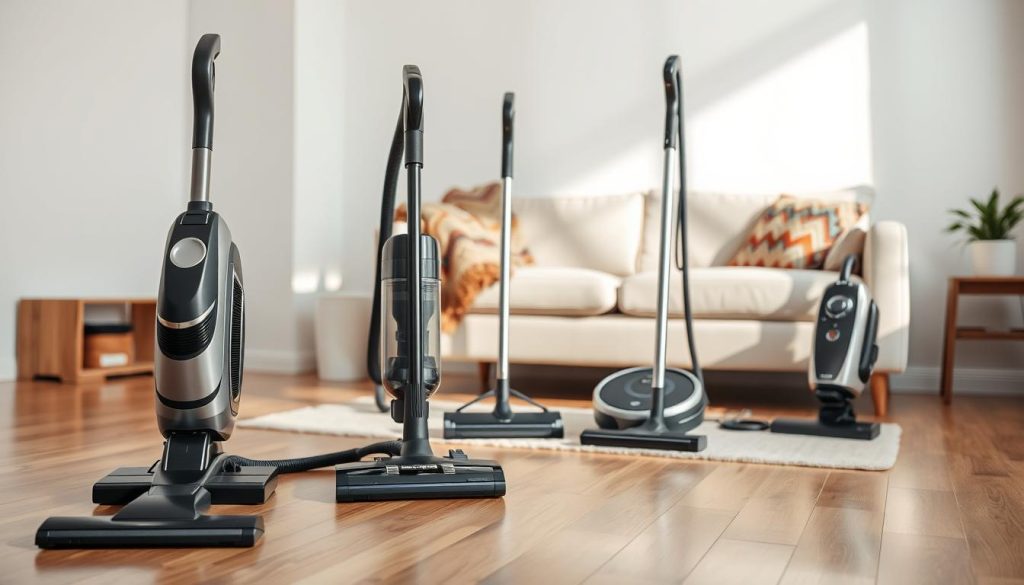
Handheld models are ideal for fast touch-ups on cushions and armrests. They handle visible crumbs and light debris quickly. We use mini motorised tools for hair and seams.
Cordless stick options are our go-to for routine cleaning. They offer flexible reach and easy grab-and-go use for fabric, leather and rugs in small flats.
Upright machines deliver strong power for larger debris and deep cleaning across floors and upholstery. Choose one when you want a single device for heavy-duty jobs.
Canister vacuum designs combine reach and comfort. With a wand and specialised nozzles, they work well on various surfaces without hauling the body over furniture.
Wet & dry / spot-cleaning machines complement dry maintenance. They handle spills and stains but do not replace dry suction for dust and allergens.
“Pick a primary type first, then confirm the accessories cover seams, corners and tight gaps.”
| Type | Best for | Key attachments | When to choose |
|---|---|---|---|
| Handheld | Quick touch-ups, crumbs | Crevice tool, mini motorised brush | Fast resets before guests |
| Cordless stick | Routine upkeep, light debris | Upholstery brush, extension wand | Compact homes, frequent passes |
| Upright | Powerful suction, larger debris | Turbo brush, wide head | Combined floor and upholstery jobs |
| Canister / Wet & Dry | Versatility across surfaces, spills | Multi-nozzle set, spot tool | Homes needing both dry and spot cleaning |
Buying tip: choose your main type first, then ensure the accessory set covers seams, tight gaps and upholstery brushes for various surfaces.
Our top picks for effective sofa cleaning in Singapore homes
We tested a range of machines to find models that suit tight Singapore flats and busy family rooms.
How we judged them: reach into seams, manageability in compact layouts, and the balance of suction and convenience for regular upkeep.
Best upright power pick: Shark Stratos Upright
Why it stands out: a 1,416W motor with a 30ft cord, LED lights and odour‑neutralising tech deliver strong, room‑to‑room performance. It is about 16lb, so we recommend it where raw power matters more than light handling.
Best cordless flexibility pick: Shark Stratos Cordless
The dual brushroll (soft front, bristled rear) and anti‑hair wrap work well on fabric and rugs. CleanSense IQ adjusts power to save battery while keeping good suction for quick passes.
Best budget performer: Bissell Cleanview Swivel Pet
A corded upright with a square brush head and a foot pedal for swivel handling. Onboard attachments and a 6ft hose make it practical for upholstery and tight corners.
Best for pet hair: Dyson V8 Animal Extra
Lightweight and cordless, it converts to handheld and resists clogging during frequent fur pickup. We favour it in homes with shedding pets.
Best canister for longevity and all‑round use: SEBO Airbelt K3 Premium
Durable canister design with wand and hose gives precise control on upholstery and floors. It suits households that want a lasting, multi‑surface solution.
Best handheld for crumbs and crevices: Ryobi 18V One+ Performance Hand Kit
Compact cordless unit with strong suction, adjustable nozzles and long battery life. Ideal for quick daily resets and tight gaps.
Best for allergies and asthma: SEBO Felix Premium
The bagged, sealed system is our pick for indoor air quality. Adjustable settings and controlled dust disposal make it a sensible choice for allergy sufferers.
| Model | Strength | Best use | Trade‑off |
|---|---|---|---|
| Shark Stratos Upright | High power (1,416W), odour tech | Deep cleaning, large rooms | Heavier to carry (~16lb) |
| Shark Stratos Cordless | Dual brushroll, anti‑hair wrap | Flexible, quick daily passes | Battery limits long sessions |
| Bissell Cleanview Swivel Pet | Budget friendly, swivel head | Upholstery touchups, pet mess | Basic filtration compared to premium |
| Dyson V8 Animal Extra | Excellent for pet hair, handheld mode | Frequent fur pickup, light homes | Smaller bin needs more emptying |
| SEBO Airbelt K3 / Felix | Durable canister / bagged sealed system | All‑round use / allergy focus | Higher price, larger footprint |
Match your pick to the mess: choose a handheld for crumbs, a cordless for quick upkeep, a powerful upright for deep jobs, and a bagged unit if indoor air matters most. For stain prep and step‑by‑step tips, see our guide on cleaning with a carpet cleaner.
How we match suction, brush design and attachments to sofa fabrics
Matching tool design to fabric makes everyday maintenance faster and safer. We start by identifying the material and then choose brushes and nozzles that protect fibres while lifting dirt.
Brushroll and nozzle choices for fabric versus leather
Woven upholstery can trap gritty dirt deep in threads. A powered brushroll agitates fibres and helps lift embedded debris.
By contrast, leather needs a soft, non-abrasive nozzle to avoid scuffs and streaking. Use a gentle upholstery tool and low suction for smooth surfaces.
Mini motorised tools and turbo brushes for embedded hair and grit
Mini motorised heads and turbo pet-hair brushes excel at pulling out hair and stubborn dirt debris from seams and piping.
They make a real difference where a standard brush skates across the surface.
Adjustable suction to prevent snagging delicate upholstery
We recommend lowering suction near trims, tassels and loose weaves to prevent pulls. Use more powerful suction on durable panels.
Practical tip: keep the nozzle moving slowly and avoid overworking one spot to prevent distortion and uneven wear.
“Right attachments cut cleaning time and improve results, especially around seams and arm edges.”
Choosing the best vacuum for pet hair, kids’ mess and high-traffic sofas
High-traffic seating faces a daily onslaught of crumbs, tracked-in grit and pet shedding that can undo a tidy living room fast.
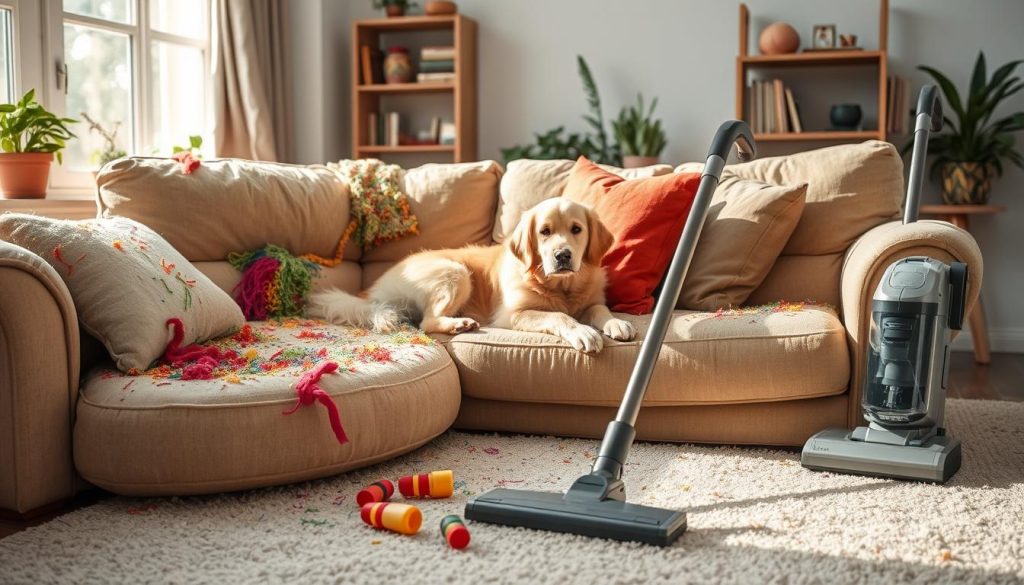
Anti-hair wrap designs matter for households with pets. Brushrolls branded as hair‑friendly reduce tangles and keep suction steady during frequent fur pickup. Models like the Dyson V8 resist clogging and the Shark Stratos Cordless limit hair wrap while adjusting power to debris levels.
Capacity and emptying frequency
Small dust bins suit quick passes but fill fast when pets shed or children snack on the couch. If we clean daily, a compact bin is acceptable.
For heavier shedding or multi-person homes we recommend a larger capacity or a bagged option to cut interruptions and save time during routine cleaning.
When a compact handheld is enough — and when to choose a corded model
We split use cases into three simple scenarios:
- Quick daily spot cleans: compact handhelds win for speed and grab‑and‑go convenience.
- Weekly deep cleans: choose a more powerful unit with larger bin capacity and robust brushrolls.
- Mixed multi-room routines: corded models offer steady suction for longer sessions and larger areas.
Cordless tools are ideal for rapid response to kids’ mess, while corded options give reliable power for tougher dirt and longer chores. Maintainability is key: a design that is easy to empty and de-tangle is the one people keep using.
“If you clean daily and dislike setup, go lightweight and cordless; if you need fewer sessions but heavier lift, pick corded power.”
For further reading on models that handle pet hair well, see this independent review on best vacuums for pet hair.
Allergies, asthma and filtration: what to prioritise for cleaner indoor air
Every sit or shuffle can resuspend fine particles that have settled into soft furnishings. These particles add to indoor dust and raise exposure for allergy and asthma sufferers in a compact Singapore home.
Why sealed, bagged designs help indoor air
Sealed, bagged systems contain dust during use and disposal. That means less puff-back when you empty the bin or change the bag, which protects indoor air at the point of disposal.
We favour models like the SEBO Felix Premium for allergy-prone households because they combine a bagged approach with a fully sealed pathway.
HEPA and S-class filtration made simple
HEPA filtration captures very small particles such as pollen and fine dust that ordinary filters miss. S-class filtration offers a comparable level in some premium machines; the critical factor is a properly sealed system that prevents leaks.
Strong suction lifts deep-set dirt from fibres, but filtration determines whether those particles stay trapped or re-enter the home. For day-to-day sofa cleaning, pair consistent quick passes with a reliable filter and schedule filter or bag changes to keep performance high.
“Check seals and certified HEPA or S-class ratings rather than marketing claims alone.”
- Prioritise sealed systems for allergen control.
- Use HEPA filtration where possible for fine dust and pollen capture.
- Keep filters and bags replaced on schedule to retain features and suction performance.
How to clean a sofa properly with a vacuum
We offer a simple, repeatable five-step method that delivers a cleaner sofa without risking damage to upholstery. Follow the sequence and use the right attachments to make routine cleaning faster and more effective in Singapore homes.
Prepare the seating
Remove cushions, pillows and throws. Shake loose crumbs outside or over a bin so you do not grind grit back into the fabric.
Select the right nozzle
Use an upholstery brush for broad surfaces and a crevice tool for seams, edges and between cushions. The correct attachments shorten cleaning time and protect fibres.
Vacuum slowly
Move the nozzle in slow, overlapping strokes. Gentle, deliberate passes lift embedded dust from fibres rather than just skimming the surface.
Target gaps and corners
Focus on armrest joins, seat-back seams and the base where crumbs and pet hair collect. Change angles and use the crevice tool to reach tight spots.
Finish and maintain
Scan for missed areas using a light. Reset cushions neatly so the seating looks refreshed. After cleaning, empty the dustbin, clear hair from brushrolls and clean filters monthly to keep suction steady.
- Prepare — remove soft furnishings and shake out debris.
- Attach — choose upholstery brush or crevice tool.
- Clean — vacuum slowly, cover all panels.
- Detail — target seams, corners and edges.
- Maintain — empty, clear and service the machine.
“Good technique reduces time spent cleaning and keeps the seating presentable between deeper cleans.”
Conclusion
Choosing the right tool makes routine maintenance feel quick and worth doing. We focus on real‑world usability: comfortable handling, the right brush and attachments, and dependable suction for upholstery.
Match the model to your household. Pet homes need anti‑hair tech and stronger tools. Those with allergies should favour sealed systems and HEPA‑grade filtration. Small flats benefit from compact size and easy storage.
Remember technique matters: the correct nozzle for the area — an upholstery head for broad panels and a crevice tool for seams — gives the best results with less effort.
Buy the unit you will actually use weekly. Cordless models win for fast touch‑ups; corded or a canister vacuum suits longer, heavier sessions.
Care tip: keep filters and brushrolls clean, empty bins often and store in a cool, dry spot to protect performance. Review our top picks to choose confidently for your budget and home.

