

We test products against lab-style criteria: stain removal, fabric safety and ease of rinsing. Our roundup mixes multi-stain trials and long-term home use notes to suit Singapore flats and condos.
Quick heads-up: portable extraction machines perform differently to sprays and dry granules. Machines suit heavy soiling and pet accidents; sprays work for quick touch-ups and light stains.
We set realistic expectations: older marks often need repeat passes and some scrubbing, especially on tufted or textured fabric. We also cover sofa cleaning codes (W/S/WS/X) and practical tips for drying in humid climates.
For lab-style testing notes and multi-stain comparisons, see our reference at The Spruce roundup. Our aim is practical guidance so you can choose the right product and method for your home.
Our top picks at a glance for sofa stains and spills
Use this concise roundup to decide between portable machines, sprays and low‑moisture options. We list compact extractors, heavy‑duty units and quick sprays so you can match a tool to the mess.
Bissell Little Green Multi‑Purpose
Compact and versatile: the bissell little green combines a spritz, gentle brush and extraction. A long wrap‑around hose and small nozzle reach tight edges on W/WS fabrics.
Shark StainStriker HairPro
Powerful on fresh and set‑in stains: pet‑focused extras include a hair filter, collection cup and a pet mess extractor plus onboard self‑cleaning flush.
Kenmore SpotLite Portable Carpet Spot Cleaner
Value choice: large clean and dirty tanks with strong suction. Good on day‑old stains, though the hose needs manual rinsing and the clean‑tank opening is small.
Woolite INSTAclean, Bissell Professional and Capture granules
- Woolite: fast oxy‑style spray for quick spot work (avoid silk, velvet, leather).
- Bissell Professional: enzyme formula that needs a damp cloth left over the area to tackle odour.
- Capture: dry granules for delicate fabrics—brush in, wait, then vacuum.
Want step‑by‑step machine use? See our guide on how to clean a sofa.
How we chose these upholstery cleaners for Singapore homes
We tested devices and sprays in situations you face every day in Singapore: quick spill response, humid drying conditions and pet messes. Our focus was on practical cleaning performance and sensible maintenance.
Testing approach: fresh versus set-in marks and odour
We staged fresh and set-in stains such as red wine, chocolate and butter to mirror The Spruce and Good Housekeeping protocols. Fresh stains usually lift quickly; older marks need more dwell time or repeated passes.
Odour checks: humid homes amplify smells, so we rated how well a solution removed odour, not just visible stain.
Ease of use: spray control, scrubbing and extraction
We looked for balanced spray patterns and clear fill markings. Triggers must be intuitive and hoses manageable to avoid mess near walls or floors.
Good extraction meant lifting dirty water out of fabric rather than just spreading it. We scored the speed of stain removal and how much cloth or brushing was needed.
Maintenance reality: tank emptying and hose rinsing
Maintenance influenced ratings heavily. We noted whether the dirty tank emptied easily and whether hoses could be flushed to stop stale odour—Southern Living warns this is essential.
| Check | Why it matters | What we observed |
|---|---|---|
| Fresh vs set-in stains | Determines dwell time and method | Fresh: quick lift. Set-in: repeat passes or enzyme/Oxy needed |
| Spray control | Prevents overspray and waste | Targeted sprays scored higher than wide mists |
| Extraction & tanks | Lifts dirty water; prevents re-soiling | Clear fill marks and easy-empty tanks gave better results |
| Maintenance time | Impacts long-term odour and hygiene | Hose flushing and prompt tank emptying reduced odour |
best upholstery cleaner for sofas: what to buy for your fabric and your lifestyle
Choose cleaning gear that suits how often you spill, the fabric you own and the space you keep.
Machines vs sprays: Machines penetrate and extract more effectively, so they are best when large areas or heavy soiling are common. A spray is ideal for quick spot work but usually needs some manual agitation.
Machines vs sprays: when each type makes sense
Machines suit big stains, pet accidents and car interiors where deep extraction helps. Compact portable carpet units also work well in tight Singapore homes.
Sprays are handy for fast lifts on fresh marks and for delicate fabric patches where water is risky.
If you have pets: prioritise enzyme formulas and pet-specific tools
Pet messes benefit from enzyme solutions and devices with pet attachments like hair filters. We favour enzyme products and pet-focused tools that neutralise odour rather than just mask it.
If you entertain: plan for red wine, coffee and sauce stains
Coloured spills such as red wine often respond to oxygen-based or dedicated wine removers. Act quickly and consider a targeted spray that rinses clean to avoid set‑in marks.
If you’re short on storage: compact, lightweight options that still work
Small extractors such as the Little Green are car- and closet-friendly. They balance portability with real extraction power, so you can tackle sofas and car seats with one tool.
“Choose gear that fits your habits first; storage and attachments often decide whether you actually use a purchase.”
| Lifestyle | Recommended option | Why it fits |
|---|---|---|
| Pet owner | Machine + enzyme spray | Deep extraction and enzymes remove odour and protein stains |
| Entertainer | Targeted wine remover + spray | Quick action on coloured spills prevents set-in stains |
| Compact home | Portable carpet spot machine | Small footprint, car-friendly, and enough power for routine spots |
For a wider product roundup and lab-style comparisons see our reference at Good Housekeeping’s roundup.
Check your sofa’s cleaning code before you start
Always begin by locating the manufacturer’s cleaning code — it saves time and prevents mistakes. The small care tag tells us which methods and products are safe for the fabric and which risks to avoid.
Code W: water-based methods are OK
Use water sprays, extraction machines or gentle water-based solutions. Test first to avoid rings or shrinkage.
Code S: solvent-only
Solvent cleaners are required. Do not wet the fabric with water, as colour bleed or texture change can occur.
Code WS: either water or solvent
You can use either type of product. We still patch-test to be sure colour and feel remain stable.
Code X: vacuum only
Do not apply liquids. If stains persist, call a professional rather than risk damage.
Patch-test method
How we test: pick a hidden area, apply a small amount of the chosen cleaner, blot with a white cloth, then let it dry. Check for colour transfer and texture change.
If the tag is missing, treat the piece as high-risk. Start with the gentlest water-free option and only step up if the patch test passes. This simple step prevents upholstery stain spread and costly repairs.
Best upholstery cleaner machine overall for most sofas
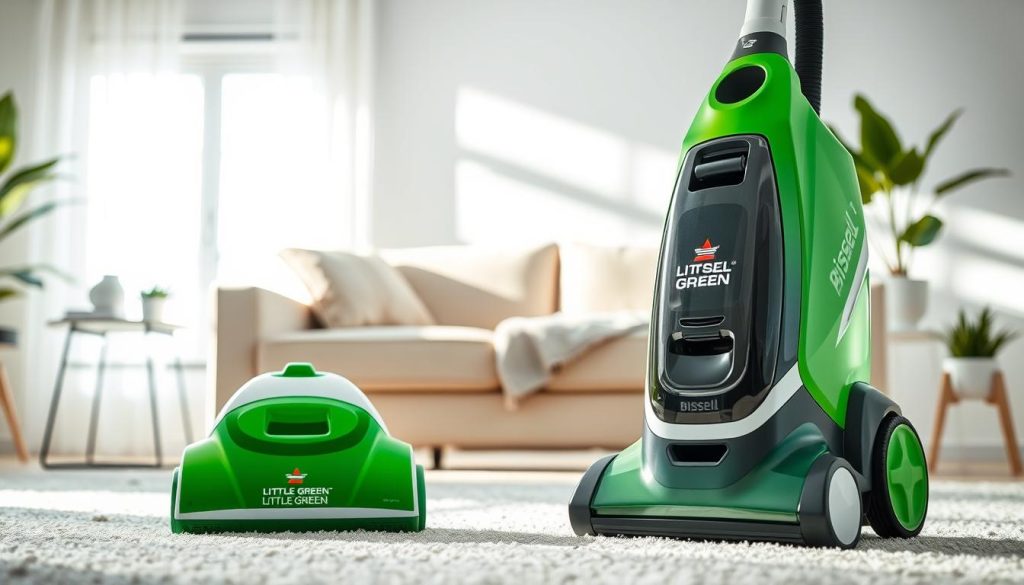
When we need a reliable portable machine that fits a small flat, one model keeps returning to the top of our list. The bissell little green balances extraction power with compact form and straightforward controls.
Why we rate it so highly
The little green lifts common stains quickly and stores easily in a cupboard. It works well on W/WS fabric codes and copes with everyday spills without heavy fuss.
What to know: noise, crevices and car portability
Expect a somewhat loud motor during extraction, but the long hose and compact nozzle reach armrests, seams and tight crevices. Its size makes it a handy portable carpet option to use in the flat or in the car.
How it works in practice
Fill the water tank with warm water and the recommended solution, spritz the spot, agitate with the small brush, then extract until the dirty water clears in the tank. Treat fresh stains fast, avoid over-spraying, and run extra extraction passes to speed drying.
Most powerful upholstery cleaner machine for tough stains
When heavy traffic and pets meet humid Singapore air, you need a machine built to lift the toughest marks. We rate the Shark StainStriker HairPro as the go-to option where suction and fast stain lift matter most.
Impressive suction and faster stain lift
Performance: The unit removes fresh and set-in stains quickly thanks to strong extraction. The Spruce noted it lifted stains fastest in their tests, and we saw similar results in real-use trials.
Pet-focused extras that reduce hassle
Design: Hair filters, a hair collection cup and hair-gripping fins prevent tangles. The pet mess extractor keeps semi-solids in a separate chamber so disposal is neater.
Self-cleaning means the system runs an onboard flush through hoses and attachments to cut lingering odour and lower maintenance time.
When it can take longer
Older stains, tufting and textured surfaces slow progress. These areas often need extra passes, targeted agitation and a little patience to get good results.
| Feature | Why it helps | Real-world note |
|---|---|---|
| Suction power | Extracts water and soil for faster drying | Lifted many fresh marks in one pass |
| Hair-handling parts | Prevents blockages and eases cleaning | Reduced hose clogs during multiple pet messes |
| Self-cleaning | Flushes hoses to reduce odour and buildup | Easier maintenance between uses |
| Separate pet chamber | Keeps semi-solids away from main tank | Cleaner disposal and less tank contamination |
For step-by-step use with a portable extractor, see our guide on how to clean a couch with a carpet.
Best value portable spot cleaner with larger tanks
If you run frequent spot sessions across dining chairs and sectionals, a larger tank saves time and hassle.
Kenmore SpotLite highlights: strong suction and generous tank sizes make this a sensible value pick. The clean tank holds 76.8 oz and the dirty tank 64 oz, so we rarely paused mid-session to empty or refill.
Real-world use
We used the unit on pet vomit, paw prints, litter debris and day-old stains. With firm passes and the included attachments, many marks lifted after one or two cycles.
Practical advantage: larger tanks reduce refill frequency when tackling several cushions or a sectional. That makes regular cleaning less disruptive in compact Singapore flats.
What it lacks
The trade-offs are clear. There is no self-cleaning hose, so you must suction clean water through the hose after use to avoid lingering odour.
The clean-tank opening is small, so filling can be fiddly. We recommend a small funnel or a steady pour to avoid spills.
Heads-up: good suction and tank capacity give strong stain lift, but routine hose flushing is essential to keep the unit fresh.
| Feature | Spec / note | Why it matters |
|---|---|---|
| Suction | Strong | Extracts water and soil for better stain removal and faster drying |
| Clean tank | 76.8 oz | Fewer refills during multi-spot sessions |
| Dirty tank | 64 oz | Large capacity to collect used water and debris |
| Attachments | Two included | Useful for crevices and flat surfaces |
| Maintenance | No self-cleaning hose | Must flush hose with water to prevent odour |
Best upholstery cleaning spray for quick results
When a spill needs a quick fix, a targeted spray can lift colour and cut drying time. We often reach for a fast-acting product rather than a machine when time is short.
Woolite INSTAclean uses Oxy-style ingredients (hydrogen peroxide) that act like a fabric-safe bleach. It works rapidly—about one minute dwell—then blot to remove the mark. The formula is EPA Safer Choice certified, which we view as a useful reassurance.
How we use it
Spritz the spot, wait roughly a minute, then blot with a white cloth. Blotting avoids spreading and helps lift the pigment. Repeat once or twice on older marks, and use minimal water to control drying in humid homes.
When not to use it
Avoid silk, velvet, vinyl and leather—these materials can suffer from peroxide. If in doubt, test a hidden area first as Good Housekeeping recommends.
“A quick spray and careful blotting often rescue fresh food and drink stains without a machine.”
Best plant-based upholstery stain remover for everyday spills
For everyday spills, a gentle, green solution often balances performance and safety. We rate Method Stain and Odour Treatment as a go-to when you want a plant-derived option that is simple to use and kind to fabrics.
Method Stain and Odour Treatment: when you can spare 10 minutes
How we use it: spray the spot, leave the product to dwell for about 10 minutes, then blot with a clean cloth. Repeat once or twice on older marks.
Scent and residue: why a non-sudsy formula is easier to blot out
The clear, non-sudsy formula leaves less residue on fabric. That means simpler blotting, quicker rinsing and lower risk of attracting dirt back to the area.
In our testing the spray removed a stubborn mark from a white damask chair after a few passes. The pleasant Spearmint Sage scent gives a light freshness, which many will prefer in compact Singapore homes.
“Plant-based solutions can need slightly longer dwell time, but they often reduce lingering residue and re-soiling.”
We recommend good ventilation during drying. Allow extra minutes on set-in stains and expect to repeat the routine if the mark is deep.
Best upholstery cleaner for pet messes and odours
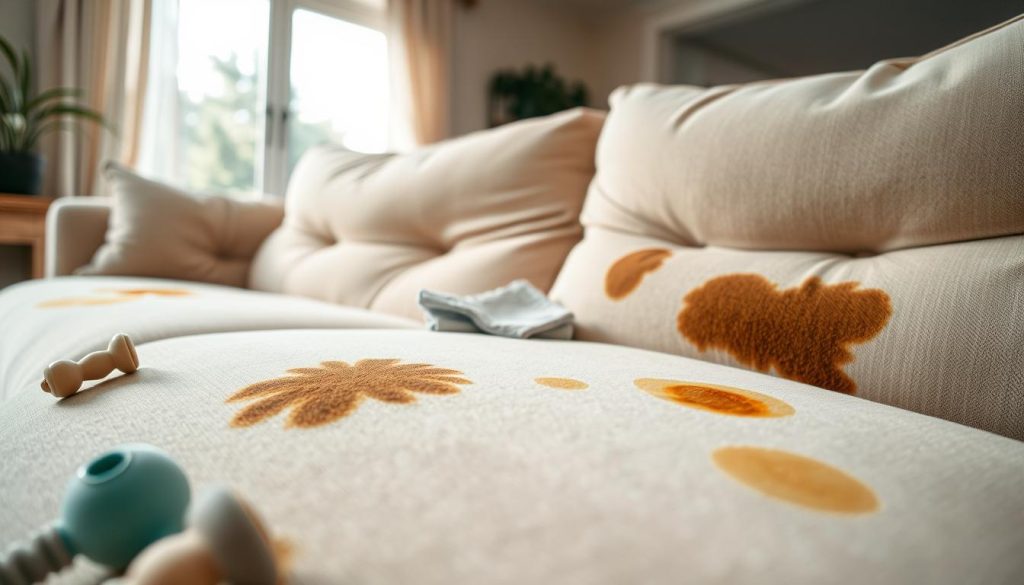
Pet accidents pose a different challenge than food spills because bacteria, not just pigment, often causes repeats. We focus on enzyme-based products because they break down organic matter rather than merely masking smell.
Why enzymes matter and why odours come back
Enzymes digest urine and vomit residues at fibre level. That stops bacteria from continuing to produce odour and reduces the chance pets return to the same spot.
How to use an enzyme solution for best results
Apply the stain remover, blot excess with a clean cloth, then reapply lightly. After initial blotting, lay a moist cloth over the treated area and leave it damp to extend enzyme action.
Timing: odour eradication can take 12–72 hours depending on depth and severity. Rushing drying often leaves residues and invites repeat incidents.
| Step | Why it helps | Practical note |
|---|---|---|
| Apply enzyme solution | Targets organic matter | Works on carpets, mattresses and soft furniture |
| Blot with cloth | Removes liquid and excess soil | Use white cloth to monitor transfer |
| Keep area damp | Extends enzyme dwell time | Cover with moist cloth 12–72 hours as needed |
| Ventilate | Speeds drying and lowers humidity | Essential in Singapore to avoid lingering scent |
“Enzymes remove the source of smell; they are not air fresheners.”
Best upholstery stain remover for red wine accidents
Tackling red wine requires speed, the right product and a calm, measured technique. A prompt response limits pigment spread and reduces dwell time on light fabrics and textured weaves.
Wine Away performance: fading on contact and easy rinsing
Wine Away proved highly effective in independent tests. Colour starts to fade on contact, so we can see progress instantly and avoid heavy scrubbing.
The formula is not sudsy, which helps when we rinse; it leaves little residue and rinses away with controlled water and blotting. It also lifts other red spills such as berries and fruit juice.
Fresh vs set-in red wine: what results to expect
Fresh red wine stains can be removed fully with the spray when treated immediately. Set-in marks usually lighten substantially but may need repeat treatments or extraction passes.
- Why red wine is high risk: deep pigment plus rapid spread on wet fabric.
- Key advantage: colour fades on contact, reducing the need to scrub.
- Rinsing note: use minimal water, blot repeatedly, or run extraction to avoid overwetting.
- Host tip: keep the spray handy and work from the outside in to limit spread.
“Treat a red wine spill fast, blot gently and follow with controlled rinsing for the best results.”
Best options for delicate upholstery fabrics, including velvet
Velour and silk respond poorly to heavy moisture, so we favour low‑moisture methods first.
Why water can harm sensitive textiles
Delicate fabric can show water spots, pile flattening and uneven texture after wet cleaning. Slow drying in humid Singapore increases the risk of rings and mustiness. Many delicate pieces carry S or X codes that warn against wet methods.
Capture dry granules: how we use them
Step one: sprinkle granules generously across the affected area. Use a soft brush to work the powder into fibres.
Step two: leave the product to act for around 30 minutes, then vacuum thoroughly. The granules absorb soil and freshen without wetting the textile.
What to expect and when to stop
Dry methods brighten and freshen well, but they are less reliable on old, set‑in stains that have bonded with fibres. If the fabric code is unknown, a patch test shows colour bleed, or stains are widespread or on valuable pieces, we advise calling a professional.
“When in doubt, avoid water and seek expert help to protect treasured pieces.”
Best for leather sofas and car seats
Leather in cars endures unique stresses, so we favour targeted products and careful technique. Light leather, especially in car interiors, picks up body oils and denim dye quickly in humid Singapore conditions.
Furniture Clinic Leather Care Kit: clean, condition, then protect
Two-step system: a dedicated cleaner followed by a protector. The kit includes an applicator sponge and a buffing pad to reach grain without over-wetting.
What it’s great at: removing grime and dye transfer without drying leather
In our trials the kit removed grime trapped in the leather grain and erased blue dye transfer from jeans on a leather car seat. The protector made future stains lift more easily and kept the finish supple.
How we use it: apply the cleaning solution with the sponge, wipe with a clean cloth, then buff and apply the protector. Let the protector cure before using the seat.
Tip: never treat leather as you would cloth upholstery. Avoid standard fabric stain removers and keep leather out of harsh sunlight where possible to prevent fading and drying.
“A proper clean then protect routine preserves look and feel across furniture and car interiors.”
How to use an upholstery cleaner on a sofa for the best results
Treating a spill like a mini project — with prep, the right tool and measured moisture — gets better results. We follow a repeatable workflow that protects fabric and reduces drying time.
Prep steps: vacuum first and lift solids
Start by vacuuming cushions, seams and under cushions to remove dust and loose grit. Scoop or blot solids with a spoon or paper towel before any wet cleaning.
Patch-test any cleaning solution in a hidden area and check the fabric code first.
Spot-cleaning vs whole-cushion cleaning
Spot-clean a small area for a single spill. For armrests, cushions or light fabrics, clean whole panels to keep colour and texture even.
Controlling moisture and drying time
Apply the minimum water and solution needed. Run extra extraction or blotting passes to avoid soaking foam cores.
Use fans, AC or open windows in Singapore to speed drying and prevent mustiness.
Brush, tool and attachment tips
Use crevice tools for seams and a small head for tufting. A soft brush prevents fibre damage.
Empty and rinse the tank and flush hoses after machines use to avoid odour.
Aftercare
Keep pets off until fully dry. Lightly brush pile back into place and schedule routine cleaning to prevent buildup.
“A careful prep and measured moisture are the keys to safe, effective upholstery cleaning.”
Conclusion
, In closing, match cleaning type to stain type and your home’s drying options.
Start with the sofa’s code, then choose a tool that suits your spills and routine. Machines work well for repeated messes and deep extraction; a quick spray handles fresh spots. Dry granules or professionals are safer for delicate textiles.
Our picks reflect real-world use in Singapore: Bissell Little Green for most households, Shark StainStriker for pet-heavy homes and tough marks, and Kenmore SpotLite when tank capacity and value matter. Keep a wine-specific solution to hand for red wine incidents and act fast for the best results.
Patch-test first, avoid overwetting, rinse tanks and hoses after use, and store products dry to prevent lingering smells at home.

