

We provide professional, results-focused solutions in Singapore for homes and workplaces that want cleaner, safer indoor air. Our approach is systematic and evidence-led, not a best-effort quick fix. We handle each job with care and respect for your space.
Our process includes pre-treatment readings, protective coverings, careful handling of carpentry and furniture, a thorough spraying treatment, and post-treatment readings. Follow-up checks give reassurance and help with decision-making. Reviewers such as Eve Ngoh, Samuel Loo, Shenghuai Ji and Alan Chan note punctual arrival, careful preparation and verification testing.
On this page we set clear expectations: the pollutants we address, our process, equipment options and how to book a site visit for accurate scoping. We tailor recommendations by space type, usage and risk profile. For more on residential testing and solutions, see our residential indoor air quality guidance.
Cleaner indoor air for Singapore homes and offices
In Singapore’s humid indoor environments, small changes to ventilation and materials can make a big difference to comfort and wellbeing.
Why indoor air quality matters for daily comfort and long‑term health
We spend most of our time inside, so indoor air quality influences how we feel each day.
Poor conditions—excess humidity, enclosed ducts or new furnishings—can trigger eye irritation, sneezing and headaches for many people.
Clean air is practical: fewer chemical odours, lower measured pollutant levels and a space that feels comfortable to live and work in.
It is not a single number. Different pollutants behave differently depending on ventilation, materials and occupant habits.
- Homes: bedrooms and nurseries need quiet, low‑risk solutions tailored to long rest periods.
- Offices: meeting rooms and shared areas require approaches that protect many people and high‑traffic zones.
We match our approach to actual exposure risks for families and teams and offer professional consulting to scope the right steps.
Common indoor air pollutants we help you remove
Post-renovation spaces commonly harbour hidden pollutants that reduce comfort and safety. We identify the main risks and treat both the source and the pathway to lower exposure.
Formaldehyde and TVOCs after renovation
New carpentry, laminate and sealants can emit formaldehyde and other volatile organic compounds. These chemicals cause eye irritation and headaches until levels drop.
Odours from paint, cabinets and building materials
Persistent smells may remain long after builders leave. Alan Chan reported strong cabinet odour that irritated his eyes; treatment brought clear improvement and follow-up testing confirmed safer levels.
Airborne dust, allergens and irritants
Daily activity, vents and soft furnishings stir up dust and allergens. Families and workplaces often see sneezing, itchy skin and worse symptoms when levels rise.
Microbes: bacteria and viruses in shared spaces
Bacteria and viruses travel via both surfaces and the air. We target both pathways so that occupants, especially children with sensitivities, regain comfort.
| Pollutant | Common source | Typical symptoms | Our focus |
|---|---|---|---|
| Formaldehyde / TVOCs | New carpentry, paint, adhesives | Eye irritation, headaches | Source reduction and measured removal |
| Odours | Paint, cabinets, building materials | Throat/eye irritation, discomfort | Elimination, not masking |
| Dust & Allergens | Furnishings, AC, activity | Sneezing, itchy hives | Filtration and targeted cleaning |
| Bacteria & Viruses | High-touch surfaces, shared zones | Infections, allergic reactions | Surface and airborne control |
air purifying services tailored to your space and risk level
Each property needs a plan that reflects its layout, materials and how people use the rooms. We assess ventilation pathways, likely pollutant sources and daily routines before recommending any options.
Newly renovated homes and move-in readiness
For newly finished homes we prioritise reducing chemical fumes and settling odours so a family can move in with confidence.
Our move-in readiness pathway stages treatment by room and by risk level. This gives measurable improvement before occupants arrive.
Offices, commercial properties and shared indoor spaces
In offices and commercial settings we focus on shared exposure, higher occupancy and recurring odour or hygiene concerns.
We match coverage to the actual space: a single room, several zones or a whole-property plan depending on the site assessment.
- Risk factors—children, elderly occupants, allergy sufferers or high-traffic zones change the recommended solution.
- Adaptability—we scale methods and equipment so one approach does not try to fit every layout.
For a detailed, measured proposal book a professional assessment so we can recommend the right level of treatment for your space.
Our professional process for safer, fresher air
We follow a repeatable, step-by-step workflow so each room gets the right treatment and measurable results.
Pre-treatment air quality assessment and readings
We begin with baseline readings to identify zones with the highest load. This establishes the scope and informs our plan.
Protective preparation and careful handling of your home environment
Our team lays protective coverings and works around furniture and carpentry with care to minimise disruption.
Targeted application and deep cleaning approach
We apply treatments to problem areas rather than a uniform spray. That focused cleaning produces better, verifiable results.
Post-treatment readings and follow-up checks
Post-treatment readings confirm improvements. Where needed we return for follow-up checks to reassure families and occupants.
Reviewers note punctual, thorough technicians and a consistent workflow that matches our written plan.
| Step | Action | Purpose | Typical time |
|---|---|---|---|
| 1 | Pre-treatment readings | Baseline identification | 15–30 mins |
| 2 | Protective preparation | Minimise disruption and protect finishes | 20–40 mins |
| 3 | Targeted cleaning | Deep, room-specific treatment | 30–90 mins |
| 4 | Verification & follow-up | Confirm results and offer reassurance | 15–30 mins |
Formaldehyde removal and VOC reduction you can measure
Concrete, demonstrable results matter: we record pollutant levels before treatment and again afterwards to show real change.
Reducing formaldehyde and TVOC levels with documented before-and-after results
We focus on measurable reduction in each room. Technicians take baseline readings, apply targeted treatment and retest to verify improvement.

Why this matters: VOC reduction supports better air quality and improved health for the whole family. Samuel Loo reported noticeably fresher air and reduced chemical odour after our work.
Odour elimination where chemical smells linger
Lingering paint or cabinet smells are often signs of ongoing emissions. Our approach aims to reduce the source impact, not just mask the scent.
Shenghuai Ji and Alan Chan saw formaldehyde and TVOC levels fall and confirmed results with follow-up testing. We treat the space as a long-term investment for years of safer occupancy.
| Measure | What we record | Outcome |
|---|---|---|
| Pre-treatment reading | Formaldehyde & TVOC baseline | Scope and plan |
| Treatment | Targeted source reduction | Reduced emissions and odour |
| Post-treatment reading | Verification data | Confirmed improvement |
| Follow-up | Re-test after occupancy | Long-term assurance over years |
UV-C air purifiers and air sterilisation solutions
Ultraviolet-C technology offers a targeted way to reduce microbial load in shared rooms and high-touch zones.
How UV-C targets germs, pathogens and airborne pollutants
UV-C light inactivates bacteria and viruses by disrupting their genetic material. Manufacturers and providers describe systems that expose circulating microbes to a measured UV dose to reduce viability.
Laboratory-tested performance and industry claims
Some products state laboratory-tested ranges and rapid reduction figures — for example, claims up to 99.9% within minutes. We present these as vendor claims and consider them alongside independent verification and real-world placement factors.
Where UV solutions fit alongside other indoor air quality steps
UV units add value in shared indoor settings by lowering recirculated contamination risk and boosting hygiene confidence.
- Complementary role: ventilation, source control and targeted chemical reduction remain essential.
- Format choice: ceiling, wall, portable (wheeled) and floor-standing products suit different room sizes and use patterns.
- Selection focus: match a purifier format to coverage, occupancy and maintenance capacity.
We recommend UV-C as one measured element of a broader plan, not a standalone cure for formaldehyde or VOC issues.
Room-by-room solutions for homes
Different rooms behave differently, so we design a layered approach that fits each space and routine. This lets us focus effort where occupants spend most time or where new materials emit most.
Bedrooms and nurseries
We prioritise bedrooms and nurseries because overnight exposure matters. A quieter, healthier layer of protection reduces cumulative exposure while people rest.
For sensitive children we treated built-in wardrobes to lower emissions and give families peace of mind. Where ventilation is limited, we recommend targeted interventions and measured follow-up.
Living rooms and common areas
Living rooms see frequent movement, soft furnishings and dust accumulation. We focus on reducing dust and allergens in fabrics and on high-touch surfaces.
Practical solutions here balance ongoing use with low disruption so the family can continue daily activities.
Kitchens and cabinetry zones
Kitchens and cabinets often hold lingering odours and fumes from new fittings. One customer, Alan Chan, reported strong cabinet smell that irritated his eyes; treatment made a clear improvement.
We tailor solutions by room function, ventilation and new materials so homeowners get measurable results, not a generic fix.
- We propose a room-by-room plan so homes are prioritised, not treated blindly.
- Solutions vary by room function, ventilation and presence of new cabinetry or painted surfaces.
- We address dust and allergens in soft furnishings to reduce irritation triggers.
Office and commercial air quality services
Busy workplaces need targeted plans so every shared space keeps occupants comfortable and confident.
We offer office and commercial solutions designed for high-traffic zones where many people share the same indoor environment daily.
Meeting rooms, reception areas and high-traffic spaces
Meeting rooms and receptions see occupancy spikes. These zones can feel stale and affect concentration.
We scope by zone — front-of-house, meeting rooms and staff areas — and match coverage to risk and use patterns.
Schools, clinics and other hygiene-prioritised environments
In schools and clinics we balance hygiene demands with minimal disruption to routines.
Our approach complements routine cleaning and fits around working hours, sensitive areas, and practical constraints typical in offices.
- Planned around occupancy: treatments scheduled outside peak times.
- Focused coverage: equipment and treatment tailored to each zone.
- Measured outcomes: we aim to improve comfort and confidence where ventilation or recirculation is unavoidable.
| Space | Focus | Typical goal |
|---|---|---|
| Meeting rooms | Peak occupancy comfort | Reduced stale feeling |
| Reception/front-of-house | First-impression comfort | Consistent freshness |
| Schools & clinics | Hygiene support | Complement cleaning routines |
Building air-con and HVAC system support
Large buildings recirculate conditioned air continuously. Treating only a single room can leave contaminants circulating through ducts and coils. We therefore combine targeted room work with system-level interventions so improvements hold across zones.
Improving air quality produced by air-conditioners
We address hygiene where the system creates or moves contaminants. That means cleaning coils, checking drains, and treating surfaces that host microbial growth. Regular HVAC cleaning reduces odour, lowers particulate re-circulation and supports consistent comfort in every tenancy.
Duct and off-coil steriliser options for building systems
Market products fall into clear categories: duct sterilisers and off-coil sterilisers. GERMITROL lists both as practical building air-con options. These solutions treat the system pathway rather than masking symptoms in single rooms.
“Gelair effectively treats the entire HVAC system.”
Gelair is also listed by the Singapore Green Building Council and is a recognised option for whole-system treatment.
Whole-system treatment approaches used in commercial buildings
In commercial settings we prioritise consistency across multiple zones. Whole-system approaches deliver that consistency and scale better than many room devices.
Comparing approaches:
| Approach | Where it fits | Operational impact | Typical budget |
|---|---|---|---|
| Room devices | Small offices, rental units | Low installation, flexible placement | Low–medium |
| Off-coil sterilisers | Per AHU treatment | Targeted hygiene at coil/drain points | Medium |
| Duct sterilisers / whole-system | Multi-zone commercial buildings | Consistent coverage, centralised control | Medium–high |
We help decision-makers compare a variety of options and select the right system, balancing coverage, maintenance and cost. For building managers in Singapore, proven products and a clear maintenance plan make the difference between a short-term fix and lasting results.
Surface and microbe control options for a cleaner environment
A targeted surface programme closes gaps routine cleaning may leave. Settling particles and frequent touchpoints in shared indoor spaces create reservoirs where bacteria collect and pathogens persist.
Equipment choices such as misting and fogging for surface hygiene
We use proven equipment choices aligned with GERMITROL recommendations, including Bio‑Mist and Bio‑Fogging. These methods apply a fine mist that reaches high surfaces, edges and crevices that daily wiping often misses.
Reducing bacteria and viruses beyond routine cleaning
Surface treatment is an additional protective layer rather than a replacement for regular cleaning. Misting and fogging aim to reduce bacteria levels and lower viral load on hard-to-reach areas.
- Where it helps: clinics, schools and high-contact commercial spaces.
- What to expect: brief access windows, a short drying time, and coordination with existing cleaning schedules.
- Outcome: cleaner-feeling spaces and greater hygiene confidence without overstating a single method’s effect.
| Operational factor | Typical note | Impact |
|---|---|---|
| Access | Clear rooms for 30–60 mins | Full surface coverage |
| Drying | Allow 20–40 mins | Safe re-entry |
| Coordination | Align with cleaning | Layered protection |
Choosing the right air purifier equipment for your space
We guide clients to select the best products by matching coverage to layout, occupancy and daily use. A short checklist—room area, ceiling height, footfall and whether you need continuous operation or portable support—keeps the choice practical.
Ceiling-mounted steriliser options for large areas
Ceiling sterilisers suit broad zones where floor space is limited. GERMITROL ceiling units commonly cover around 1000 sq ft and work well in open-plan rooms and large meeting areas.
Wall-mounted systems to save space
Wall systems free floors and corridors. They are discreet and ideal for smaller rooms that still need constant protection.
Portable units with wheels for flexible placement
Wheeled products offer flexible deployment across rooms. The GERMITROL 300 portable model covers about 1000 sq ft and suits multi-zone properties or rotating needs.
Floor-standing units for bigger coverage requirements
Floor-standing units deliver higher capacity for larger spaces. For example, GERMITROL 520 covers up to 2000 sq ft and reduces the number of devices needed in big rooms.
- We balance coverage, practicality and daily use when recommending a purifier.
- Choose a system that matches room size and maintenance capacity.
What results you can expect after treatment
After treatment, many clients notice a clear uplift in comfort and smell. We set realistic expectations so you understand the likely outcomes for your home or office.
Noticeably fresher air and reduced chemical odour
Fresher-feeling rooms are the most common feedback. Samuel Loo reported a marked drop in cabinet odour after our work. That change is both perceptible and practical.
Improved comfort when indoor air irritants trigger symptoms
Reducing irritants often lessens eye, throat or headache episodes for sensitive occupants. Outcomes depend on source removal, ventilation and daily habits.
Confidence backed by readings, not guesswork
We verify improvements with before-and-after readings. Reviewers such as Eve Ngoh and Alan Chan used post-treatment measurements to confirm lowered pollutant levels.
| Outcome | What to expect | Typical setting |
|---|---|---|
| Fresher rooms | Reduced chemical odour and stale smells | Single rooms to multi-room homes |
| Better comfort | Fewer irritation episodes for occupants | Bedrooms, nurseries, offices |
| Verified change | Before-and-after readings for reassurance | All treated zones |
Real customer experiences in Singapore
Real feedback from Singapore households shows how targeted treatment changes daily comfort.
Professionalism, punctuality and care throughout the process
We arrive on time, lay protective coverings and handle furniture and carpentry with respect. Eve Ngoh praised Freddie and our team for kindness, clear pre-treatment readings and careful work.
“Kind, professional work with pre- and post-readings and an extra follow-up reading days later.”
Reduced formaldehyde/TVOC levels and eliminated paint odours
Customers report measurable changes. Samuel Loo noticed fresher air and reduced chemical odour after anti-formaldehyde treatment.
Shenghuai Ji and Alan Chan saw formaldehyde/TVOC reduction and paint or cabinet odours eliminated, with follow-up testing confirming safer levels.
Follow-up testing that builds trust and reassurance for families
M brought us in after a child’s severe reaction to newly renovated air. We treated built-in wardrobes and took extra readings to track improvement.
These customer stories show our method: assessment, careful execution, verification and aftercare. They prove the real-world results families expect from our services.
Why our team and approach stand out
We focus on explaining each step so you know how the recommended solution will affect your room and routine.
Clear explanations so you understand the solution and the process
We walk clients through the proposed solution and the process in plain language. This helps people make informed choices and set realistic expectations.
Attention to detail from protective coverings to careful handling of furniture
Our technicians take care to protect finishes and carpentry. Protective coverings and careful handling reduce disruption and safeguard your fittings.
Experience-driven recommendations based on usage and risk level
We tailor advice by room use, occupancy and risk level. Our experience guides practical choices rather than one-size-fits-all packages.
- Clear communication: informed decisions and confident planning.
- On-site care: protective coverings and respectful handling of furniture.
- Evidence-led: planning, discipline and verification through readings.
“Freddie explained the approach clearly and handled our wardrobes with great care.”
| Focus | What we deliver | Typical level |
|---|---|---|
| Communication | Clear briefings on plan and outcome | Client-ready |
| Care | Protective coverings and gentle handling | High |
| Recommendation | Experience-based, room-specific choices | Tailored |
Booking our services and planning your treatment
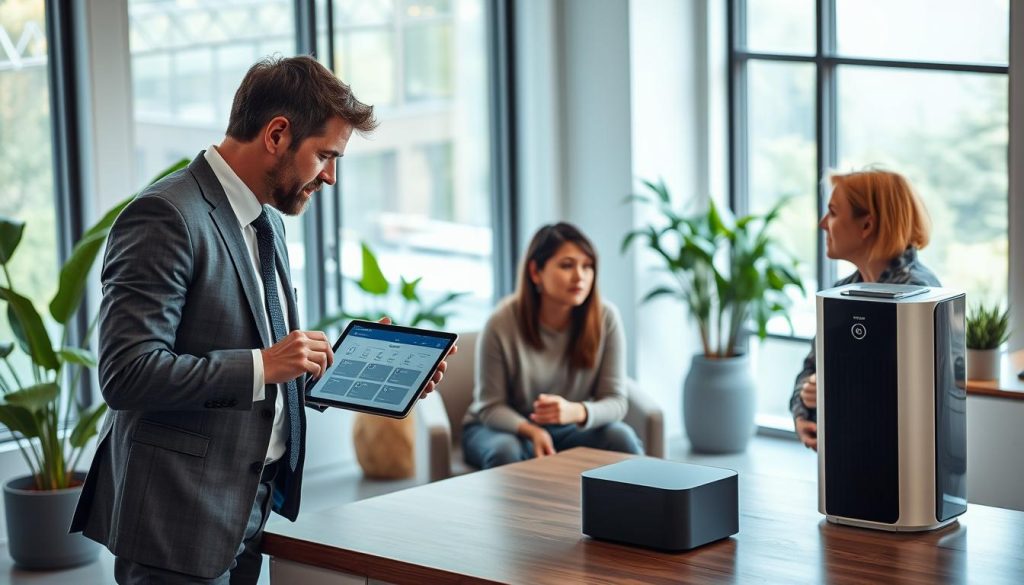
A smooth booking and treatment day starts with a short checklist of property facts and accessibility notes. Share these details early and we can give an accurate quote and faster turnaround.
What we need to quote accurately for your home or office
- Property type: home or office and number of rooms.
- Renovation status and key odour zones.
- Any known sensitivities or medical concerns.
- Access notes and preferred timing for the visit.
How to prepare your space before our team arrives
Clear small items and grant access to key rooms. For occupied spaces, plan around peak hours and keep pets away.
Newly renovated areas should be ventilated where possible and left accessible for treatment and readings.
Aftercare steps to maintain indoor air quality and long‑lasting freshness
Simple routines make a big difference: sensible ventilation, regular cleaning and avoiding reintroduction of strong odour sources.
Consider follow-up checks if you add new furniture, repaint or change room use.
| Item | What to provide | Why it matters |
|---|---|---|
| Scope | Room count, renovation note | Accurate quote and correct materials |
| Access | Keys, parking, entry time | Smoother, faster treatment day |
| Aftercare | Ventilation plan, cleaning routine | Longer lasting results for indoor air quality |
Share full details upfront and we can plan a clear, efficient visit that respects your space and schedule.
Conclusion
We offer practical, professional air purifying services that help households and workplaces in Singapore regain comfortable rooms after renovation or when odours persist.
Our promise is simple: assessment, targeted treatment and verification readings so results are measurable and clear. This structured approach reduces pollutants, adds UV‑C where suitable and supports system‑level HVAC options for broader coverage.
Choose products and plans that match your room size and risk profile—a room‑focused route or a whole‑system upgrade, depending on need. Improved indoor air is an investment in daily comfort and long‑term life quality.
Next step: contact us with property details to schedule an assessment and receive a tailored recommendation.

