

We set out to test how a single machine can replace sweeping, vacuuming and mopping in Singapore homes. Our round-up targets sealed hard floors typical in HDB flats and condos and the fastest one-device routine for busy households.
This guide defines the category as machines that vacuum and wash in a single pass. We explain who benefits most — pet owners, families with frequent spills — and who might still need heavy-duty carpet tools.
We compare Dyson, Dreame, Bissell, Roborock and Tineco across performance, upkeep and real-world cost. Expect practical notes on maintenance, from dirty-tank emptying to roller washing, and how those chores affect total ownership and long-term price.
Read on for a quick top-picks table, model-by-model detail and a buying guide mapped to local layouts. For further testing depth, see our reference roundup at TechRadar’s wet-dry guide.
Why a wet and dry vacuum mop makes sense for Singapore homes
In tight HDB flats and condos, an all-in-one unit that cleans and washes floors saves space and time. We focus on sealed surfaces — tile, vinyl and laminate — where daily upkeep matters more than heavy deep cleaning.
Hard floors in small homes: faster daily cleaning
Wet dry devices cut the usual mop-and-bucket routine into a single pass. They pick up fine dust, crumbs and hair while laying down light cleaning solution. That feels quicker and needs fewer tools for small flats.
How these machines work in plain terms
A vacuum mop lifts loose debris and washes the surface at once. Self-propelling heads and paired tanks mean one operator can finish more of the flat without repeated trips to the sink.
When you still need a separate dry vacuum
Many units struggle with true corners, tight skirting gaps and carpets. We keep a dedicated dry vacuum for rugs, edges and deep dirt. Use the combined device for routine refreshes, and the dry tool for detailed jobs.
| Use case | Best tool | Why |
|---|---|---|
| Daily crumbs, dust, small wet spills | Wet dry unit | One-pass cleaning, less storage |
| Rugs, pet hair in corners | Dry vacuum | Better edge reach and carpet care |
| Sticky dried mess | Manual spot wipe | Targeted force and detergents |
For tips on keeping a hard surface fresh without a mop, see our guide on how to clean the floor without a.
How we tested and compared these water vacuum cleaners
We built a hands-on test bench to see how these all-in-one floor machines cope with everyday household mess. Our goal was to copy real Singapore use: small flats, frequent foot traffic and quick tidy-ups between chores.
Real-life messes we used
We tested dust, hair, loose debris, wet spills and light stains on sealed floors. Each run used the same spill types so results are comparable.
Scoring criteria
Scores reflect measured suction and the effectiveness of different cleaning modes. We also graded edge reach, ease of manoeuvre and post-use maintenance.
| Metric | What we checked | Why it matters |
|---|---|---|
| Suction | Lift of fine dust and hair | Core cleaning performance |
| Cleaning modes | Auto, eco and max behaviours | Flexibility and power use |
| Design | Weight, parking, reach | Practical use in tight homes |
What runtime means in practice
We tie runtime to the water tank level and roller saturation. Marketing minutes often assume ideal conditions, but dirty tanks and soaked heads reduce practical runtime.
Availability and value in Singapore
We checked official stores, common marketplaces and part availability. Our value assessment balances the price point against time saved per clean and consumable costs.
Fair baseline: a model that cleans superbly but is disliked due to heavy upkeep scores lower than a slightly weaker model people will use every day.
Water vacuum cleaner review: our top picks at a glance
Below we present quick top picks to match common Singapore needs and flat sizes. Each entry names the main reason to buy, the ideal surface, one watch-out and who should skip the model.
Best complete cleaning system: Dyson V15s Detect Submarine
Why buy: Modular system with separate heads for carpets and sealed floors.
Best used on: Mixed flats where a single device must handle rugs and tiles.
Specs & note: 300ml wet head, rated for ~1,000 sq ft. Watch-out: added weight and upkeep.
Skip if: You need low-maintenance, purely cordless simplicity.
Best for hot-water deep cleaning: Dreame H15 Pro Heat
Why buy: Hot water roller (~85°C) targets greasy kitchen messes.
Best used on: Heavily soiled sealed floors in kitchens.
Specs & note: Self-clean/dry base. Watch-out: heavier and larger base footprint.
Skip if: You cannot handle bulky docks or noise during dock cycles.
Best steam option for hygienic cleaning: Bissell CrossWave HydroSteam Pet
Why buy: Corded triple mode: dry, wet and steam for sanitising.
Best used on: Homes with pets and frequent spills; handles rugs lightly too.
Specs & note: 820ml clean / 640ml dirty effective tanks. Watch-out: corded range and post-use care.
Skip if: You need cordless flexibility for whole-flat runs.
| Model | Main strength | Water tank / runtime |
|---|---|---|
| Roborock Flexi Pro | Edge access, lies flat under furniture | 0.73L / 0.43L; smaller tanks may need refills |
| Tineco iFloor 5 | Best value; simple vacuum-and-mop | ~30+ min eco runtime; self-cleaning head |
| Tineco Floor One S5 Extreme | Smart auto mode, suction-only and max modes | 800ml / 700ml; good for whole-flat sessions |
“We aimed to balance real-world use with specs so you pick a machine that fits your flat, not just the price tag.”
We kept battery life and water tanks in mind relative to typical HDB layouts. If you have a larger unit or many rooms, prioritise larger tanks or longer battery life over the lowest price.
Key features to look for before you buy
Picking the right model comes down to a few core features that shape performance, upkeep and daily convenience. Below we explain the practical differences so you can match a machine to your flat and family routine.
Separate clean and dirty tanks
Why it matters: Dual water tanks prevent cross‑contamination and give real clean dirty water performance.
The waste tank captures grey water, grit and hair clumps. That means you empty and rinse more often after heavy runs, but you avoid smearing yesterday’s grime back onto floors.
Brush roll design for hair-heavy homes
A well‑designed brush roll with anti‑tangle scrapers cuts maintenance time. Soft and mixed‑material rolls reduce streaking and residue.
Look for removable rollers that rinse easily and spare parts that are widely available in Singapore.
Head geometry and self-propelling systems
For narrow corridors and furniture-dense rooms, head shape and self‑propel matter more than raw suction power. A low, flat head reaches under cabinets.
Self‑propelling systems ease long cleans and reduce strain on the operator.
Auto mode vs max mode
Use auto mode for daily dust and small spills; it balances power and battery life. Reserve max mode when sticky or heavy mess needs extra power and short bursts of higher suction.
Self-cleaning and drying bases
These bases save time and control odour by flushing and drying the roller. They are especially useful in small flats where storing a damp head invites smells.
Hot water and steam
Hot water and steam can help break down grease and speed drying, but they need correct contact time and safe detergents. Brands like Dreame and Bissell offer heated or steam options, yet some models restrict very hot liquids or bleach.
- Quick checklist: dual tanks, tangle‑resistant brush roll, low head, useful auto mode, and a self‑clean base.
- Match tank size and battery claims to your flat size — that combination determines how often you stop to refill or recharge.
Battery life, runtime and charging time comparisons
Battery performance often decides whether a cordless model fits daily life or just weekend deep cleans. We tested claimed minutes against real use and tracked charge times for common models in Singapore homes.

What the claims mean in practice
Manufacturers cite long minutes in low‑power modes. In real cleaning, high flow, max suction and self‑propel cut that figure sharply.
| Model | Claimed | Practical range |
|---|---|---|
| Dyson V15s Detect Submarine | Up to 60 min | ~35–50 min |
| Dreame H15 Pro Heat | Up to 70 min | ~40–55 min |
| Roborock Flexi Pro | Up to 50 min | ~30–45 min |
| Tineco iFloor 5 / S5 Extreme | 30+ / 35 min | 20–35 min |
Charge times and second batteries
Most units recharge in about 4–5 hours. That makes daily short cleans practical, but full flats can need a spare pack. Models with swappable batteries (Dyson) or a second battery option remove the need to pause mid‑clean.
Practical tip: For 3–5 room flats, expect 20–35 minutes of real cleaning per run. If you own a larger home, consider models with swappable packs or longer claimed minutes. For a wider cordless comparison see best cordless models.
Water tank capacity and what it means for whole-home cleaning
Tank capacity often decides whether a single run will finish your whole flat or force multiple stops. In practice, that changes how pleasant a routine clean feels in an HDB or condo.
Small tanks and compact designs
Compact heads often use smaller reservoirs to save space and weight. That helps manoeuvring and storage.
Trade-off: you will refill and empty more during deeper cleans or when using higher flow. The Dyson Submarine head holds 300ml, which is fine for touch-ups but can need topping up for larger flats.
Large dual tanks: fewer interruptions
Models with larger clean and dirty tanks reduce stops. This suits open-plan living rooms and kitchen-to-lounge transitions.
Examples: Roborock Flexi Pro packs 0.73L clean and 0.43L dirty (semi‑opaque). Bissell HydroSteam Pet offers 820ml clean and ~640ml effective dirty capacity. Tineco S5 Extreme uses 800ml clean and 700ml dirty.
Managing dirty tanks and semi‑opaque designs
Empty the dirty reservoir immediately after use to avoid residue build-up. Rinse and air‑dry parts to reduce odour.
Semi‑opaque tanks save weight but make level checks harder. That can interrupt flow if you must open a dock to confirm levels mid‑clean.
- Why size matters: even strong suction and rollers become annoying if you stop too often.
- For a typical 3‑room Singapore flat, aim for 700–800ml clean capacity for fewer refills.
- Dry and rinse tanks after every heavy session to keep performance and smell in check.
| Model | Clean tank | Dirty tank |
|---|---|---|
| Dyson V15s Submarine (wet head) | 300ml | Manufacturer spec varies; small internal reservoir |
| Roborock Flexi Pro | 0.73 L | 0.43 L (semi‑opaque) |
| Bissell CrossWave HydroSteam Pet | 820 ml | ~640 ml effective |
| Tineco Floor One S5 Extreme | 800 ml | 700 ml |
Best complete modular system for hard floors and carpets
A versatile stick that swaps heads quickly often fits Singapore flats better than single-purpose devices.
Dyson V15s Detect Submarine pairs a Submarine wet roller head with separate carpet and hard-floor heads. The modular system means one power unit covers most jobs in mixed-floor homes. We like the flexibility for bedrooms with rugs and living areas with sealed floors.
What to know about use and design
The unit weighs 3.75kg and uses a trigger to run the wet head. Self-propulsion eases long passes, but holding the trigger for extended sessions can tire your hand. This model suits light, regular mopping rather than deep scrubs.
Runtime, tank size and practical coverage
The Submarine head holds 300ml, which Dyson states covers around 1,000 sq ft. You can expect up to 60 minutes of run time and about 4.5 hours to recharge. A swappable battery is useful if you need continuous cleaning across larger flats.
| Feature | Spec |
|---|---|
| Weight | 3.75 kg |
| Submarine head capacity | 300 ml |
| Runtime / charge | Up to 60 minutes / ~4.5 hours |
Practical note: the drain trench can leak if overfilled, so mind the water tank level during long runs.
Best steam cleaner for hygienic results on pet messes
When fur and tracked-in stains are daily problems, a steam-capable unit deserves attention. The Bissell CrossWave HydroSteam Pet is a corded wet dry vacuum offering dry, wet and steam modes in one machine.
Bissell CrossWave HydroSteam Pet: three practical modes
Dry is fastest for loose fur and crumbs. Use it for quick passes before guests arrive.
Wet lays down cleaning solution for sticky mess and light stains.
Steam adds sanitising heat for pet accidents and deeper odour control.
Tanks, runtime and real-world use
The clean tank holds 820ml and the effective dirty tank is ~640ml. That size means fewer stops for a typical 3‑room flat and less interruption during longer cleaning sessions.
Maintenance and practical downsides
The unit weighs 5.67kg, is cable‑limited and can be noisy at peak power. Self‑cleaning reduces residue, but we still rinse tanks, clear gunk and air parts to avoid odour.
| Feature | Spec | Why it matters |
|---|---|---|
| Clean tank | 820 ml | Fewer refills for whole-flat runs |
| Dirty tank (effective) | ~640 ml | Captures dirty water and grit |
| Modes | Dry / Wet / Steam | Flexible cleaning for pet homes |
Who should buy: pet owners prioritising hygiene and consistent power. Who should skip: those who value cordless convenience and minimal post‑use care.
Best hot-water cleaner for greasy kitchen floors
For greasy kitchen floors a specialist heated-head system often gives cleaner results than room-temperature passes. We found the Dreame H15 Pro Heat excels where oil and baked-on spills are common. Its heated roller loosens grime so you need fewer passes and the floor dries faster.
Dreame H15 Pro Heat: heated roller and self-cleaning base
The H15 Pro Heat uses a hot-roller that runs at roughly 85°C. The dock can flush and dry the head using up to 100°C, cutting lingering odour if you maintain the roller.
Lie-flat head and edge coverage
The head lies flat to 180°, letting us reach beneath cabinets and into toe-kicks. Dreame claims 0mm edge coverage, which helps pick up crumbs and splatters that collect at cabinet bases.
Performance and practical notes
Stated suction hits 22,000Pa and the manufacturer quotes up to 70 minutes battery life. In practice, heavy hot-flow and high power modes reduce those minutes, so expect shorter runs on tougher grime.
Trade-offs and who it suits
The unit weighs about 6kg and the dock is bulky. Self-clean cycles are loud (~74dB), so you need a permanent corner for the base in compact Singapore flats.
- Best fit: frequent home cooks and families with toddlers who need fast, hygienic cleaning.
- Consider: the heavier design and dock noise before you commit to a permanent storage spot.
| Spec | Detail |
|---|---|
| Suction | 22,000Pa (stated) |
| Heated roller | ~85°C; dock clean/dry up to 100°C |
| Head | 180° lie-flat, 0mm edge claim |
Best for edge cleaning and low-furniture access
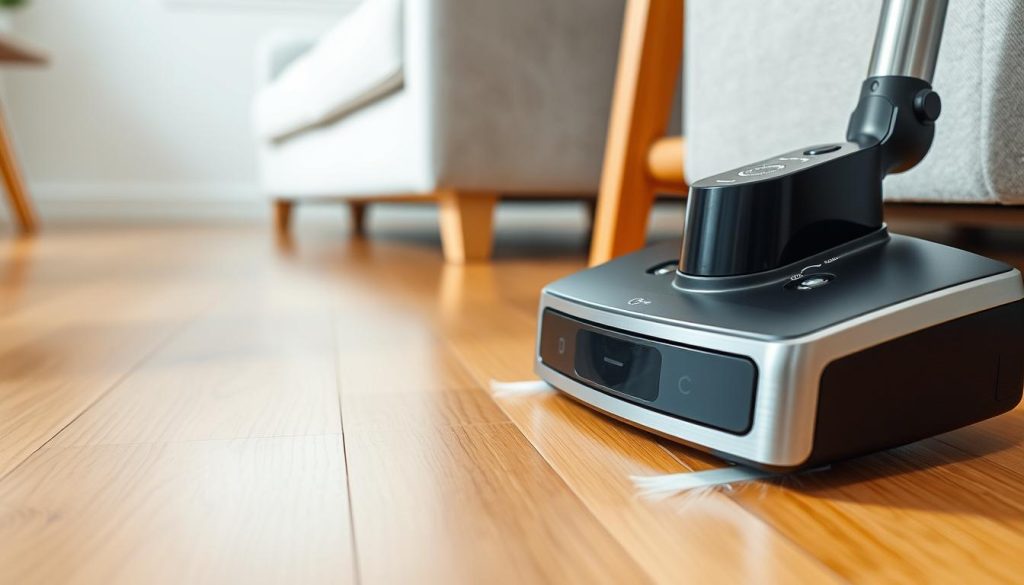
Tight gaps under platform beds and low TV consoles are a common nuisance in Singapore flats. The Roborock Flexi Pro targets those spots with a low, tilting head and strong near‑edge performance that cuts follow‑up work.
Roborock Flexi Pro: head design and access
Head geometry lets the unit lie flat, so we reach beneath sofas, dining benches and TV cabinets without dragging chairs around. That access reduces visible dust and crumbs in shadowy zones.
Near‑edge pickup means less wiping along skirting boards. Perfect corners still need a crevice tool, but most daily grime is dealt with in one pass.
Battery life and charge time
The manufacturer states up to 50 minutes of cleaning time. In practice, expect shorter runs on high power. Recharge takes about four hours, so plan sessions or split tasks across time slots.
Tank size, self‑clean and limitation
The Flexi Pro uses semi‑opaque built‑in tanks (0.73L clean, 0.43L dirty). Those smaller reservoirs mean more frequent refills and empties during deeper cleans.
It includes a self‑clean cycle, which helps maintenance. Note the unit has no stand‑alone dry mode, so we still keep a separate dry vacuum for carpets, high shelves and tight corners.
| Feature | Spec | Practical effect |
|---|---|---|
| Head | Lie‑flat, low profile | Reaches under furniture and low consoles |
| Near‑edge performance | Enhanced edge pickup | Less skirting‑line wiping required |
| Battery life | Up to 50 minutes stated | Real runs shorter on high power; 4‑hour recharge |
| Water tanks | 0.73 L clean / 0.43 L dirty (semi‑opaque) | Smaller tank means more refills and level checks |
Best value pick for sealed hard floors
Not every flat needs app controls; sometimes a reliable daily cleaner that just works is best. For sealed hard floors we pick the Tineco iFloor 5 as the value choice that combines simple controls with solid performance.
Tineco iFloor 5: efficient vacuum-and-mop cleaning without extra smart features
Why buy: It vacuums and mops in one pass, is self-propelling and has a self-cleaning mode that cuts roller upkeep.
Battery expectations and modes
The manufacturer states over 30 minutes in eco and over 20 minutes in max. In practice, choose eco for routine cleaning and switch to max for heavier mess. Charge time is about 4–5 hours.
Practical limits and who it suits
It cleans close to walls but cannot lie flat and will not fully reach tight corners. For edges and stubborn spots we still recommend a small handheld or dedicated dry tool.
Best for: smaller flats, couples and households that prefer frequent light cleaning over deep, infrequent sessions.
- Value definition: fast daily cleaning, simple controls and lower ongoing cost compared with app‑heavy models.
- Note on detergent: some brands recommend proprietary solutions, so factor that into long‑term price.
| Feature | Spec | Effect |
|---|---|---|
| Runtime | 30+ / 20+ minutes (eco/max) | Enough for most 3‑room flats in one run |
| Self‑clean | Yes | Reduces manual roller rinsing |
| Access | Cannot lie flat | Limited under‑furniture reach |
Best smart wet dry cleaner for everyday auto mode cleaning
We tested models to find one that makes regular upkeep simple without constant fiddling.
Tineco Floor One S5 Extreme suits frequent cleaning in Singapore flats because its auto mode adjusts power and flow as you move between dusty and cleaner areas. That means fewer button presses and a more guided experience for routine runs.
Modes explained: suction-only, auto and max
The floor one offers three practical modes. Use suction-only for quick wet spills and faster drying. Choose auto mode for everyday cleaning; it balances performance and battery life. Switch to max for stubborn patches.
Large tanks and what to expect with spills
With an 800ml clean and 700ml dirty water tank, the unit reduces refill stops on typical 3‑room flats. Expect the dirty reservoir to fill quickly after heavy spills, so plan to empty and rinse after messier sessions.
Hair and hardened dirt: when to use a dry vacuum first
We found the S5 Extreme struggles with long hair and baked‑on grime. For clumped hair or grit, run a small dry vacuum first to lift debris. That prevents smear and improves final results.
Maintenance note: rinse the roller and empty dirty water immediately to avoid odour. The unit is heavy (about 4.5kg) and does not steam, so it works best as a regular maintenance tool rather than a deep‑clean solution.
- Best for: frequent, guided daily cleaning using auto mode.
- Not ideal if: you need edge‑perfect reach or heavy-duty grime removal without a prior dry pass.
Best all-floor option including rugs and carpets
B) When rooms shift from tile to rug, the convenience of a unit that works across both surfaces becomes clear fast.
Bissell CrossWave OmniFind vacuums and mops simultaneously on hard floors and also refreshes rugs and carpets. That reduces the need to swap machines mid‑clean and speeds up open‑plan living and dining areas where debris moves between surfaces.
FurFinder headlights and practical effects
The FurFinder headlights are genuinely useful. They show crumbs and hair in shadowy zones under beds and sofas, so we spot hidden debris before we pass the head over it.
Watch-outs and handling notes
Expect roughly 25 minutes of maximum run time. Small tanks drain fast, so refill time may interrupt larger sessions. The unit also struggles at tight skirting lines and will not reach corners perfectly.
“This model suits mixed-floor homes that value speed over edge‑perfect cleaning.”
- Keep a small handheld or dry tool for skirting boards and tight corners.
- Mind the posture: the unit can power off if held too upright during use.
| Feature | Effect | Practical note |
|---|---|---|
| Dual-mode head | Simultaneous mop and vacuum action | Good for quick transitions between rooms |
| FurFinder headlights | Spot hidden debris | Helps in low-light corners under furniture |
| Runtime / tanks | ~25 minutes; small tanks | Expect refills on larger flats |
| Edge reach | Limited | Use a supplement tool for skirting lines |
Maintenance, cleaning solutions and long-term running costs
We set a realistic baseline: every water-based floor cleaner needs simple post‑use care, and running cost is measured in both money and time.
Choice of plain water versus proprietary detergents
Many brands permit plain water or mild, diluted detergents for everyday cleaning. Others allow specific proprietary solutions for better streak control.
Avoid bleach: manufacturers often ban bleach and very hot water because seals, hoses and rollers degrade, and warranty terms exclude chemical damage. Dyson, for example, permits diluted detergent but not bleach.
Brush roll care and self-clean cycles
Self‑clean modes rinse the roller and flush tanks, which reduces sludge build-up. They do not remove hair knots, string or trapped grit.
We still remove tangled hair manually and inspect the brush roll and scrapers regularly to keep performance high.
Odour prevention and storage for small flats
Empty dirty water immediately after each run, rinse tanks and air‑dry parts. Run any available drying cycle before parking the unit.
Store the machine in a ventilated spot, not a damp cupboard, to prevent smells and mould.
Consumables and long-term price
Parts that affect long‑term cost include replacement rollers, filters and seals. Hair-heavy homes wear parts faster, raising lifetime price.
| Item | Typical life | Why it matters |
|---|---|---|
| Brush roll | 6–24 months (usage dependent) | Affects cleaning head performance and streaking |
| Filters | 6–12 months | Maintains suction and hygiene |
| Seals / hoses | 2–5 years | Prevent leaks and keep warranties valid |
Practical tip: check local Singapore availability and spare part price before purchase so an attractive headline price does not become expensive over time.
Choosing the right model for your home and budget in Singapore
Choosing the right model depends on your flat size, cleaning routine and how much time you will spend on upkeep.
Small flats vs larger homes
For small apartments, compact heads and modest water tanks keep storage easy and runs short. Smaller tanks suit quick daily passes.
In larger homes a bigger tank and longer runtime matter more than headline suction. Bigger reservoirs cut refill stops for whole-flat sessions.
Mostly hard floors vs mixed flooring
If you have mainly hard floors, a single wet head works well. For mixed layouts with carpets, modular heads or a separate dry unit prevent wet smearing and protect rugs.
Pet hair and long hair
Prioritise anti-tangle brush design and strong suction. Even then, we often pre‑vacuum long hair to avoid winding and maintain roll life.
Value by price point
Premium features that truly save time include self‑clean/dry docks, lie‑flat reach and superior edge pickup. App extras and voice prompts are nice to have but not essential.
| Flat size | Suggested tank | Practical runtime |
|---|---|---|
| Studio / 1‑bed | ~300–500ml | 15–25 minutes |
| 2–3 room | ~700–800ml | 25–40 minutes |
| 4+ room | >800ml or swappable battery | 40+ minutes |
Final tip: shortlist two or three models that match floor area, storage and price point, then choose based on maintenance tolerance and local support.
Conclusion
We find the best solution is the one you will actually use each week, not the most feature-packed model on paper. Choose a unit that fits your floors, mess type and willingness to do simple upkeep.
For mixed homes pick a modular option; for pet-heavy flats favour steam or heated heads for hygiene. If edge access matters, prioritise low-profile design and near-edge performance.
Balance raw suction and cleaning results against tank size and battery life. Expect real runs to fall short of claimed minutes; plan for top-ups and post-use rinsing.
Keep a small dry vacuum or handheld for carpets, corners and above‑floor dust so expectations match reality.
Buy with confidence: confirm consumable availability locally, measure dock storage space, and pick a model you will use weekly in Singapore.

